
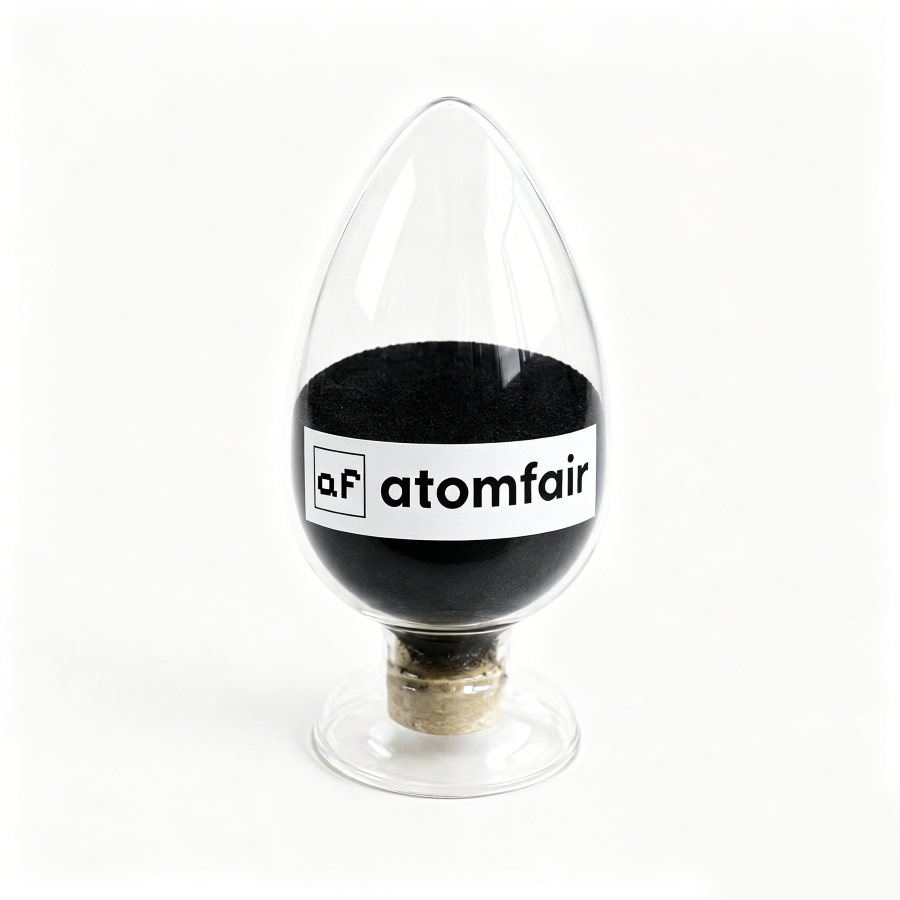
NVP Sodium Vanadium Phosphate Cathode 113mAh/g ATOMFAIR®

Price range: $280.00 through $500.00

Institutional Procurement & Supply Compliance: As a verified US supplier, Atomfair accepts formal institutional Purchase Orders (POs), contract billing schedules, and custom procurement loops for university and national laboratories, and corporate R&D departments globally.

ATOMFAIR® research grade NVP sodium vanadium phosphate cathode powder: ≥113 mAh/g at 0.1C, ≥95% first cycle CE. Polyanionic NASICON matrix. In stock.

Description

NVP Sodium Vanadium Phosphate Powder (113 mAh/g High-Rate Cathode)

COMMERCIAL GRADE · PRODUCTION

Product Overview

High-power energy storage matrices and ultra-fast charging platforms require superior polyhedral network frameworks, and this premium sodium ion battery positive electrode material supplies unmatched structural stability under high current cycling operations. Formulated around an in-situ carbon coated high conductivity polyanionic cathode material matrix, this monoclinic NASICON active powder drives fast-charge electron migration loops without structural breakdown. The submicron primary aggregate morphology delivers optimized paste wetting characteristics during slurry processing steps, balancing sodium vanadium phosphate price constraints with top-tier verification data. This uncompromised chemical powder integrates cleanly into mainstream grid energy storage testing protocols and low-temperature diagnostic applications. Research entities can systematically prevent sodium vanadium phosphate from moisture hazards by following standard handling profiles, ensuring repeatable initial coulombic efficiencies and high rate data metrics across coin and pouch cell validation routines.

Technical Specifications

ELECTROCHEMICAL & LATTICE PARAMETER TECHNICAL SPECIFICATION RATINGS
Active Phase Crystalline Formula Na&sub3;V&sub2;(PO&sub4;)&sub3; (Monoclinic NASICON Polyhedral System Framework)
0.1C Discharge Specific Capacity ≥ 113.0 mAh/g (Tested Window: 2.5 V – 4.3 V vs. Na/Na&sbsp;)
0.2C / 1.0C Discharge Capacity ≥ 110.0 mAh/g (@ 0.2C) | ≥ 108.0 mAh/g (@ 1.0C Run)
Initial Coulombic Efficiency (ICE) ≥ 95.00% under 0.2C Rate Evaluation Methods
Stoichiometric Elemental Ratios Sodium: 15.1 ± 0.8% | Vanadium: 22.1 ± 1.0% | Phosphorus: 20.4 ± 1.0%
In-Situ Carbon Matrix Coating 3.0 ± 0.5% (Verified via Carbon-Sulfur Infrared Analysis)
Intrinsic Powder Conductivity ≥ 1.0 × 10³ S/cm (Four-Probe Meter Measurement)
Aqueous Suspension Matrix pH 9.0 – 11.0 range (10% Slurry Dissolution Test)
Karl Fischer Moisture Threshold < 1000 ppm Upper Limit Boundary
Particle Diameter Boundaries D10 ≥ 0.4 μm | D50: 2.0 ± 1.0 μm | D90 ≤ 15.0 μm
BET Specific Surface Area 25 ± 2 m²/g Gas Adsorption Matrix
Loose Bulk & Tapped Density Bulk Density ≥ 0.4 g/cm³ | Tap Density ≥ 0.7 g/cm³
Mechanical Compaction Boundary 1.8 – 2.1 g/cm³ under a 20 MPa Load Application
Alternative Catalog Items Explore our complete chemical catalog for alternative layered transition metal oxides, high-conductivity hard carbon powders, polyimide current collectors, or automated multi-channel battery testers.

Key Features & Advantages

  • Superb Fast-Charge Kinematics: Highly integrated in-situ carbon networks coupled with a monoclinic lattice drive a superior baseline conductivity (≥ 1.0 × 10³ S/cm) to maintain high capacity retention under intensive 1C discharge loads.
  • Engineered Submicron Aggregates: Powder microstructure consists of specialized submicron primary particles clustered into uniform secondary spheres, ensuring rapid slurry wetting without active phase separation.
  • Minimal Lattice Dilation Framework: Rigid NASICON 3D open spatial structure accommodates fast alkaline ion flux loops with negligible structural volume change, extending continuous cycle stability.

APPLICATION SCOPE: Highly recommended for ultra-safe grid energy storage installations (ESS arrays), ultra-fast charging electronic devices, sub-zero low-temperature operations, and advanced polyanionic sodium-ion electrochemical prototyping cells.
PACKAGING & LOGISTICS: Hermetically sealed under absolute protective vacuum boundaries within multi-layer aluminum-plastic composite film barriers. This configuration preserves uncompromised baseline characteristics for a 12-month storage window under dark, dry conditions.
OPERATIONAL COMPLIANCE NOTICE: Keep containment envelopes tightly closed and completely isolated from aggressive organic or mineral oxidizing environments. To successfully solve how to prevent sodium vanadium phosphate from moisture and minimize hydration side paths, handle the active powder strictly within low-humidity dry rooms or anhydrous glovebox chambers prior to liquid formulation actions. Avoid loose processing steps under elevated ambient temperatures.

TAILORED SOLUTIONS FOR RESEARCH
Contact our engineering team for technical support or official institutional quotations.
EMAIL: INQUIRY@ATOMFAIR.COM
Manufacturer: PRODUCTION DIVISION · ADVANCED ENERGY STORAGE DIVISION
Brand: INDUSTRIAL TESTING HARDWARE
Specifications are representative and subject to change without notice. For the latest version and compliance certificates, contact official sales channel.

The NVP cathode powder must be stored in a sealed container under dry, inert gas to prevent moisture absorption and maintain electrochemical integrity. Ambient air exposure can compromise the NASICON matrix structure, leading to surface degradation and reduced cycling performance.

  • Atmospheric Sensitivity: Keep the container sealed in an argon-filled glovebox or dry room with < 1 ppm water and oxygen levels to minimize moisture and contamination.
  • Temperature Stability: Store at temperatures between 15 °C and 25 °C and avoid thermal cycling to preserve the crystalline NASICON structure.
  • Containment and PPE: Use conductive, sealed packaging and wear appropriate PPE, including nitrile gloves and safety goggles, during all handling operations.

How does the carbon matrix coating of 3.0±0.5% affect the electrical conductivity and rate performance of this NVP cathode powder?

The 3.0±0.5% carbon matrix coating, verified by carbon-sulfur infrared analysis, provides an electrical conductivity of ≥1.0×10⁻³ S/cm measured by four-probe meter. This enables high-rate performance with 1.0C discharge specific capacity ≥108.0 mAh/g while maintaining first-cycle coulombic efficiency ≥95.00% at 0.2C, balancing conductivity with capacity retention.

What is the appropriate voltage window for half-cell testing, and how does it relate to the NASICON structure stability of this NVP powder?

The half-cell testing voltage window is 2.5V–4.3V as specified in the core electrochemical design. Within this window, the monoclinic NASICON polyhedral lattice (Na3V2(PO4)3) delivers ≥113.0 mAh/g at 0.1C and ≥110.0 mAh/g at 0.2C, with first-cycle coulombic efficiency ≥95.00%, indicating stable redox cycling without structural degradation.

What storage and handling precautions are required given the moisture content and alkaline pH of this NVP cathode powder?

The powder has a bound moisture content <1000 ppm (Karl Fischer) and a suspension pH of 9.0–11.0 in a 10% suspension test, indicating alkalinity. It must be stored in dry, sealed containers to prevent moisture uptake beyond the low ppm threshold, and handled with appropriate personal protective equipment due to its basic nature, avoiding direct contact with skin or inhalation.

ATOMFAIR NVP cathode powder offers high-rate sodium-ion performance with 113 mAh/g capacity and 1.0×10^-3 S/cm conductivity, but its alkaline slurry and high surface area demand careful electrode processing and dry handling.

Positive

  • High specific capacity across C-rates: Delivers ≥113 mAh/g at 0.1C and ≥108 mAh/g at 1.0C, enabling consistent baseline testing and high-rate capability.
  • High electronic conductivity NASICON matrix: With ≥1.0×10^-3 S/cm electrical conductivity from carbon coating, this material supports fast charge/discharge kinetics.

Trade-offs

  • Alkaline suspension pH: With a pH of 9.0–11.0 in 10% suspension, this powder requires compatible binder systems and slurry processing conditions to avoid degradation.
  • High specific surface area: BET surface area of 25±2 m²/g increases binder demand and may promote electrolyte side reactions if not properly formulated.

Every advanced material, component, equipment, and instrument in our catalog is backed by rigorous testing. We maintain strict internal quality management frameworks and align with CE conformity metrics to deliver transparent, reproducible performance data via our public open-science repository.

To request raw batch performance data, submit formal vendor registration paperwork, or execute a fast-turnaround R&D manufacturing loop, contact us at inquiry@atomfair.com.

Item is dispatched under the Atomfair Shipping & Delivery Framework (Free worldwide shipping on orders over $59 USD). Return is governed by the Atomfair Return & Refund Policy (7-day technical return window).
Additional information

weight

200g, 1000g