Sodium Vanadium Phosphate Cathode Sheet 30 mg/cm² ATOMFAIR®

$109.00

Institutional Procurement & Supply Compliance: As a verified US supplier, Atomfair accepts formal institutional Purchase Orders (POs), contract billing schedules, and custom procurement loops for university and national laboratories, and corporate R&D departments globally.

Research-grade NVP cathode sheet with 30 mg/cm² dry coating, 94.50% active material, 120 × 90 mm area, and 5 sheets/pack. Order now.

Quantity Price
1 – 4 $109.00
5+ $99.00
SKU: AF-BM-S-CNVP-AS30-5P00
Category:
Brands:

ATOMFAIR® NVP CATHODE SHEET (SODIUM VANADIUM PHOSPHATE) | DRY PROCESS, 30 MG/CM² HIGH LOADING | SINGLE SIDE COATING

RESEARCH GRADE MATERIAL

Product Overview

The Atomfair NVP-S06 is a premium Sodium Vanadium Phosphate (NVP) cathode sheet engineered for high-performance sodium-ion battery research. Manufactured using our proprietary solvent-free dry process, this electrode features a high areal density of 30 mg/cm², providing the highest active material ratio in its class for advanced electrochemical testing, baseline testing control, variable elimination, and electrolyte validation platform benefits while meeting premium institutional specifications.

Electrode Sheet Design Parameters

PARAMETER VALUE
1. Core Device & Electrochemical Design
Product Code S06
Coating Process Dry Process
2. Cathode (Positive Electrode) Parameters
Coating Material NVP (Sodium Vanadium Phosphate)
Active Material Ratio 94.50%
Capacity 110 mAh/g
3. Anode (Negative Electrode) Parameters
Compaction Density
4. Separator & Physical Package Metrics
Coating Density (Areal Density) 30 mg/cm²
Coating Area 120 * 90 mm
Coating Type Single-sided
Substrate Material Carbon-coated aluminum foil
Current Collector Areal Density 4.4 mg/cm²
Substrate Thickness 12 +0.5 +0.5 μm
Substrate Size 90 * 140 mm
Pack Size 5 sheets/pack
Manufacturing Rules Processed under strict ISO 9001 standard compliance conditions to prevent secondary contamination.
Alternative Options Explore our related catalog or custom dimensions. For urgent technical custom requests or bulk inquiries, please contact our support team.

Electrode Calculation Guide & Example

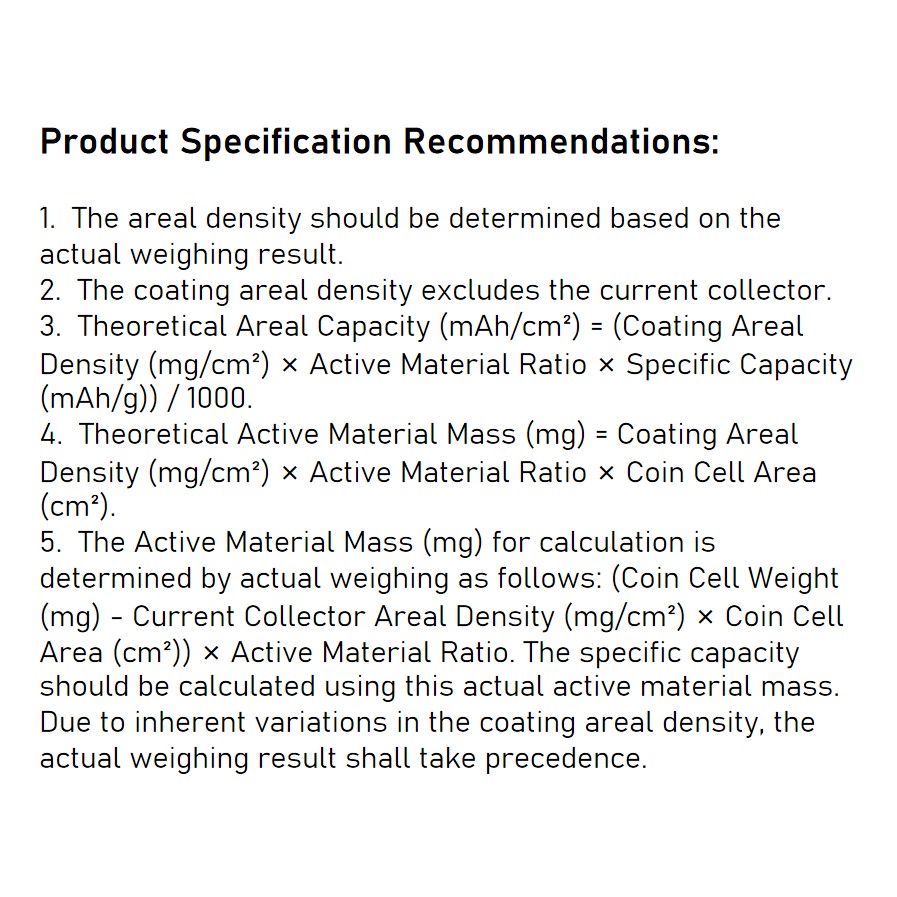
To ensure precision in your electrochemical analysis, use the following formulas. For high-fidelity research, actual weighing should take precedence over theoretical averages. As the original manufacturer, we provide these calculation frameworks to help researchers eliminate variables in their testing. The specific capacity should always be calculated using the actual active material mass derived from your punched electrode weight to account for inherent micro-variations in high-loading coatings.
The Calculation Algorithm
1. Current Collector Weight:
Formula: Current Collector Areal Density (mg/cm²) × Wafer Area (cm²)
Example: 3.63 mg/cm² × 0.7854 cm² ≈ 2.851 mg
2. Coating Weight of the Sample:
Formula: Total Wafer Weight (mg) – Current Collector Weight (mg)
Example: 10.68 mg – 2.851 mg = 7.829 mg
3. Active Material Weight:
Formula: Coating Weight (mg) × Active Material Ratio (%)
Example: 7.829 mg × 0.945 = 7.398 mg
4. Actual Areal Density:
Formula: Active Material Weight (mg) ÷ Wafer Area (cm²)

Key Technical Advantages

  • High-Loading Performance: 30 mg/cm² areal density designed for high-capacity energy storage applications.
  • Dry Process Manufacturing: Solvent-free coating ensures superior binder distribution and enhanced environmental stability compared to traditional wet-slurry methods.
  • Optimal Material Ratio: Boasts a 94.50% active material ratio, maximizing energy density within the cell.
  • Carbon-Coated Substrate: Utilizes carbon-coated aluminum foil to minimize contact resistance and improve rate capability.

User & Application Guidelines

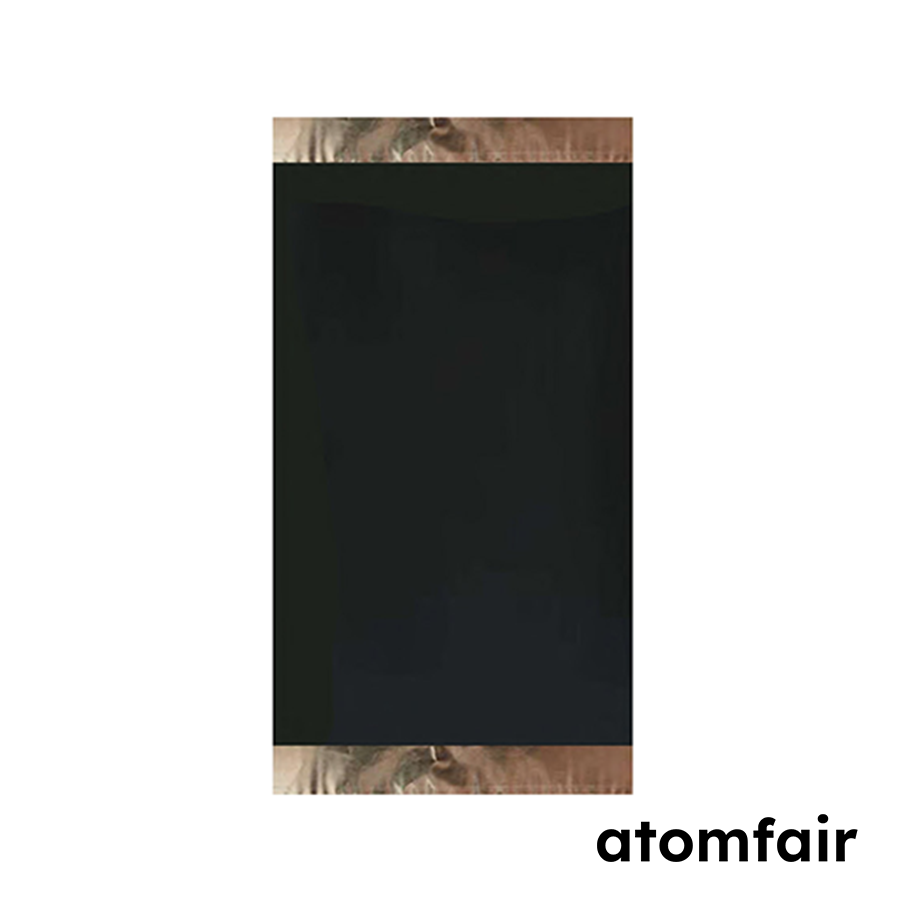
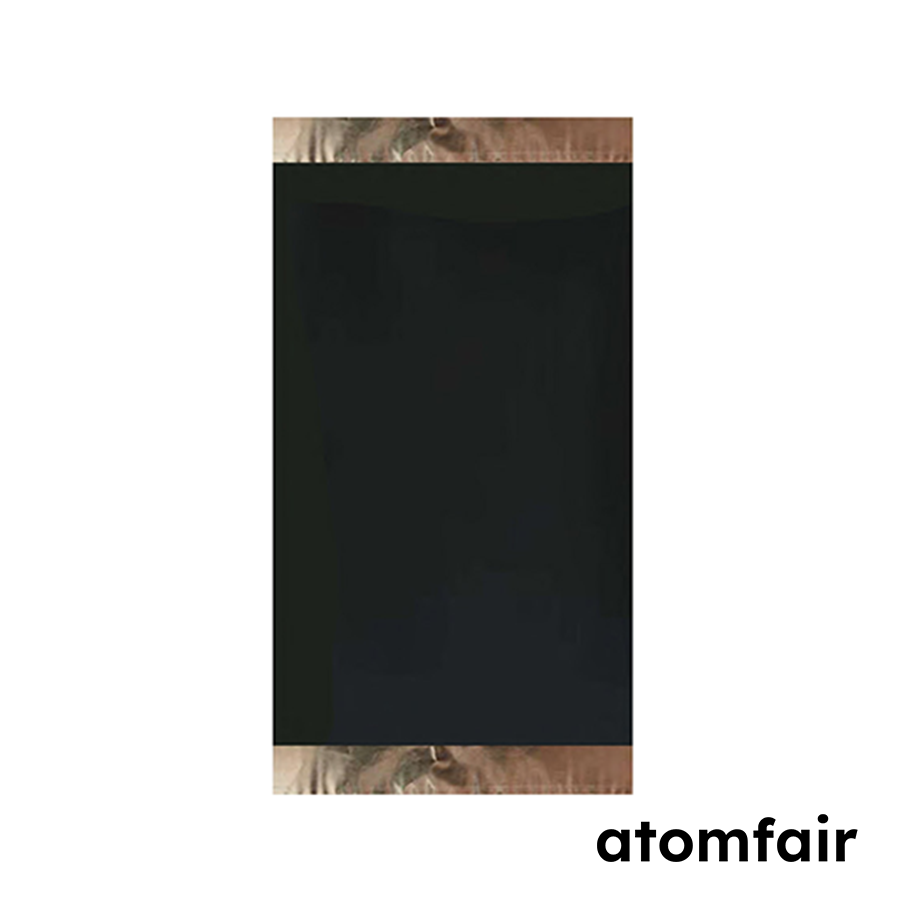
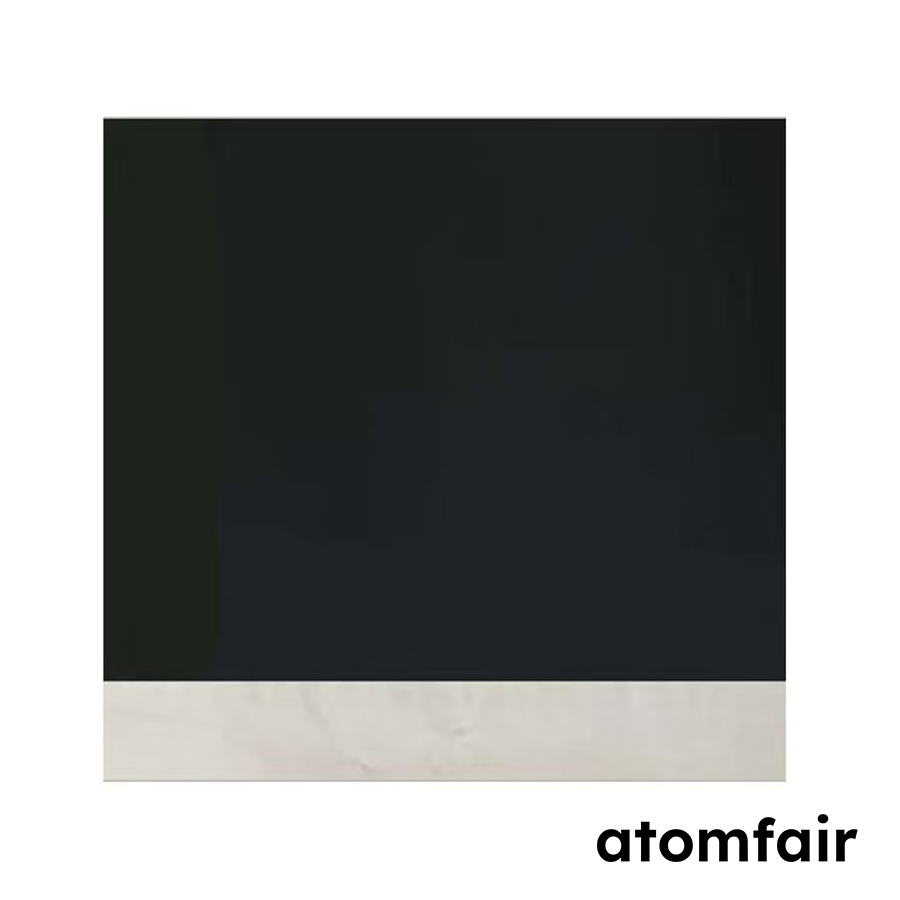
User Guide: Identifying Front vs. Back Front Side (Coated): Appears dark and matte. This is the active Sodium Vanadium Phosphate layer.
Back Side (Uncoated): Appears lighter and metallic. This is the exposed aluminum substrate viewable under natural or soft artificial light.
Research Applications This NVP electrode sheet is specifically optimized for:
• Sodium-ion Battery (SIB) R&D: Baseline testing for new electrolyte formulations.
• High-Loading Studies: Evaluating the kinetics of thick-electrode architectures.
• Dry Electrode Benchmarking: Comparing dry-process electrochemical performance against wet-coated benchmarks.

APPLICATION SCOPE: Sodium-ion Battery (SIB) R&D baseline testing, high-loading kinetics evaluation of thick-electrode architectures, and dry-process electrochemical performance benchmarking.
PACKAGING: 5 sheets per pack. Specialized laboratory packaging designed to preserve material integrity and surface consistency.
IMPORTANT NOTICE / DISCLAIMER: This material is sold exclusively for laboratory research and professional analytical purposes. Handle strictly according to precise laboratory protocols to avoid surface contamination before electrochemical validation.

TAILORED SOLUTIONS FOR RESEARCH
If you are interested, have any questions, or have specific customization requirements, please feel free to contact us.
EMAIL: INQUIRY@ATOMFAIR.COM
Manufacturer: Atomfair LLC
Brand: ATOMFAIR®

The NVP cathode sheet must be handled under strict ISO 9001 conditions to prevent secondary contamination. Surface contamination must be avoided before electrochemical validation to ensure accurate test results.

  • Contamination Prevention: The electrode sheet must be processed under ISO 9001 conditions to prevent secondary contamination.
  • Surface Handling: Surface contamination must be avoided before electrochemical validation by following precise laboratory protocols.
  • Active Mass Determination: Actual weighing of punched electrode wafers must be used to determine active material mass instead of theoretical averages.
  • Contact Resistance Mitigation: The carbon-coated aluminum substrate minimizes contact resistance and improves rate capability.
  • Dry Process Stability: The solvent-free dry process ensures superior binder distribution and enhanced environmental stability compared to wet-slurry methods.

This procedure outlines the steps to prepare electrode wafers from the NVP cathode sheet and calculate the active material mass. Accurate weighing and calculation are essential for reliable electrochemical testing.

  1. Identify Coated and Uncoated Sides
    Identify the coated front side as dark and matte and the uncoated back side as lighter and metallic.
  2. Punch Electrode Wafers
    Punch electrode wafers from the sheet to the desired size for coin cell assembly.
  3. Weigh Total Wafer
    Weigh the total wafer weight using an analytical balance.
  4. Calculate Current Collector Weight
    Calculate the current collector weight by multiplying the current collector areal density of 4.4 mg/cm² by the wafer area.
  5. Determine Coating Weight
    Subtract the current collector weight from the total wafer weight to obtain the coating weight.
  6. Calculate Active Material Weight
    Multiply the coating weight by the active material ratio of 94.5% to get the active material weight.
  7. Compute Specific Capacity
    Use the active material weight to calculate the specific capacity based on the theoretical capacity of 110 mAh/g.

What are the advantages of the dry process manufacturing for this NVP cathode sheet compared to traditional wet-slurry methods?

The dry process ensures superior binder distribution and enhanced environmental stability, as stated in the product description. This results in a high active material ratio of 94.50% and consistent electrochemical performance in sodium-ion battery research.

What is the role of the carbon-coated aluminum foil substrate in this NVP cathode sheet?

The carbon-coated aluminum foil substrate is used to minimize contact resistance and improve rate capability, according to the technical specifications. This is critical for high-loading (30 mg/cm²) studies where interfacial resistance can limit performance.

How can researchers distinguish the coated side from the uncoated side of the NVP cathode sheet?

The front side (coated) appears dark and matte, while the back side (uncoated) appears lighter and metallic under natural or soft artificial light, as described in the user guidelines. Proper identification is essential to avoid assembly errors in coin cells or pouch cells.

Atomfair NVP cathode sheet with 30 mg/cm² areal density, dry-process coating, and 94.5% active material ratio is optimized for high-loading sodium-ion battery research, providing a consistent baseline for electrolyte and kinetic studies.

Positive

  • High active material ratio and dry process: 94.5% active material ratio with solvent-free dry coating ensures superior binder distribution and enhanced environmental stability compared to wet-slurry methods.
  • Carbon-coated aluminum substrate: Carbon-coated aluminum foil minimizes contact resistance and improves rate capability, as explicitly stated in the product description.

Trade-offs

  • Single-sided coating constraint: Coating is applied to one side only, limiting direct use in full-cell assemblies that require double-sided electrodes; typical configuration is half-cell or symmetrical cell.
  • Surface contamination sensitivity: The dry-process NVP coating is susceptible to contamination from ambient moisture or handling, requiring strict laboratory protocols to preserve material integrity per the product disclaimer.

Every advanced material, component, equipment, and instrument in our catalog is backed by rigorous testing. We maintain strict internal quality management frameworks and align with CE conformity metrics to deliver transparent, reproducible performance data via our public open-science repository.

To request raw batch performance data, submit formal vendor registration paperwork, or execute a fast-turnaround R&D manufacturing loop, contact us at inquiry@atomfair.com.

Item is dispatched under the Atomfair Shipping & Delivery Framework (Free worldwide shipping on orders over $59 USD excl. heavy equipment). Return is governed by the Atomfair Return & Refund Policy (7-day technical return window).