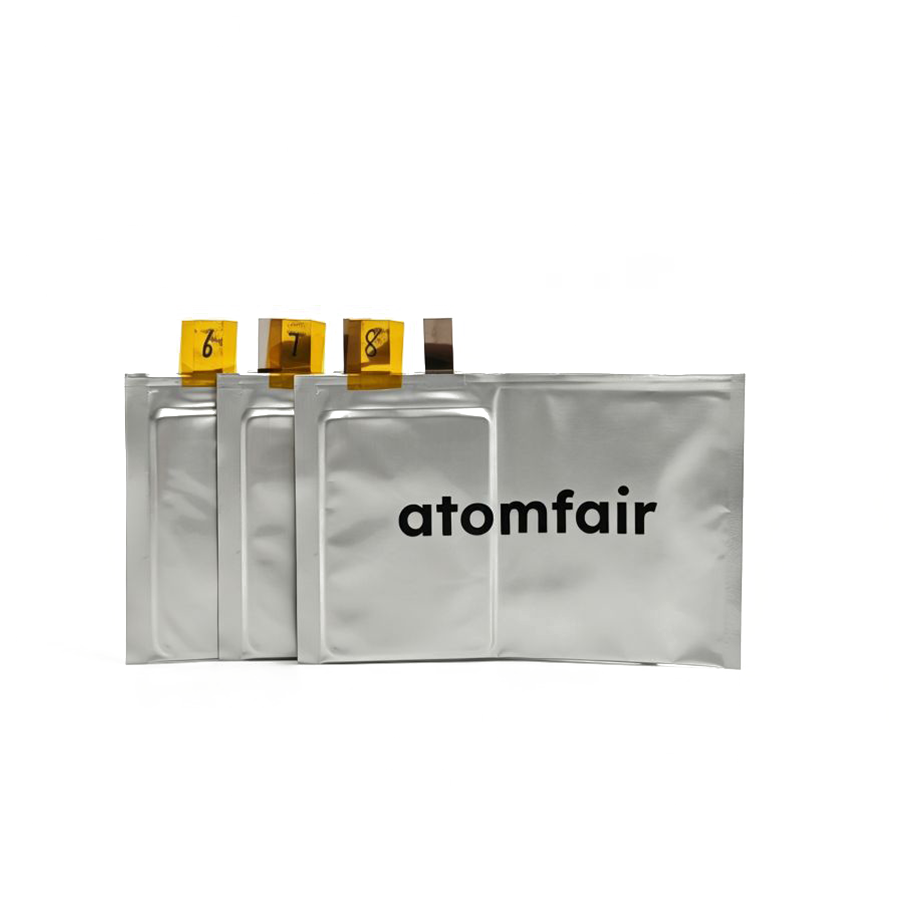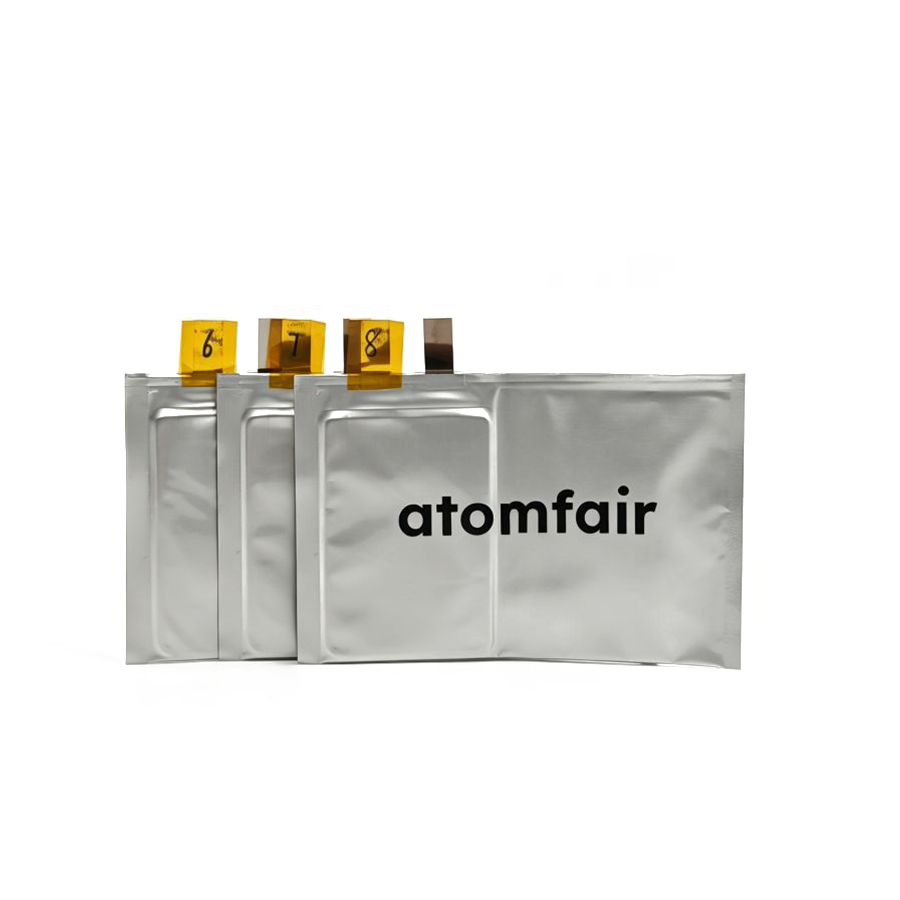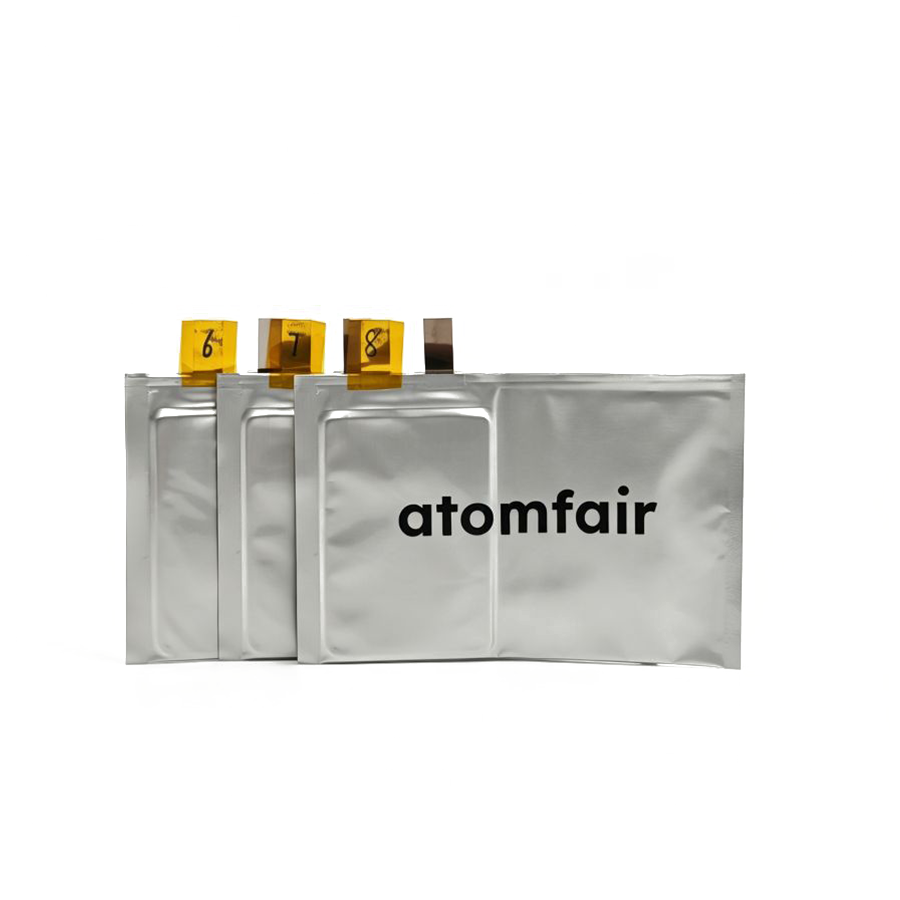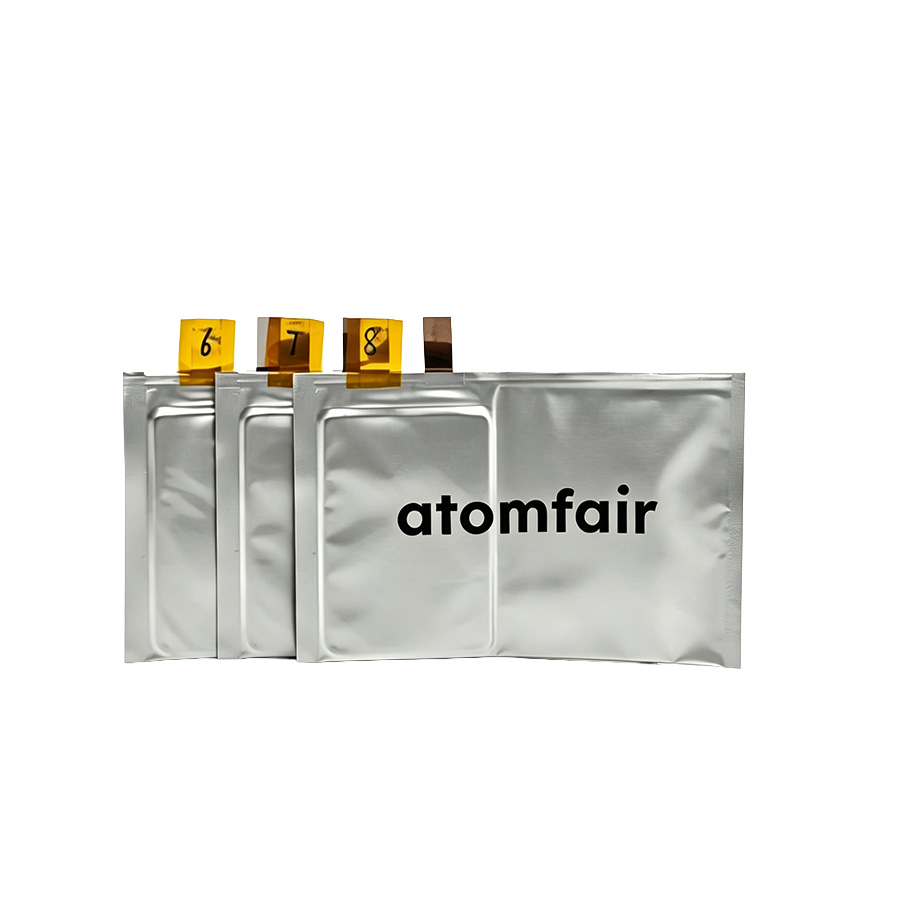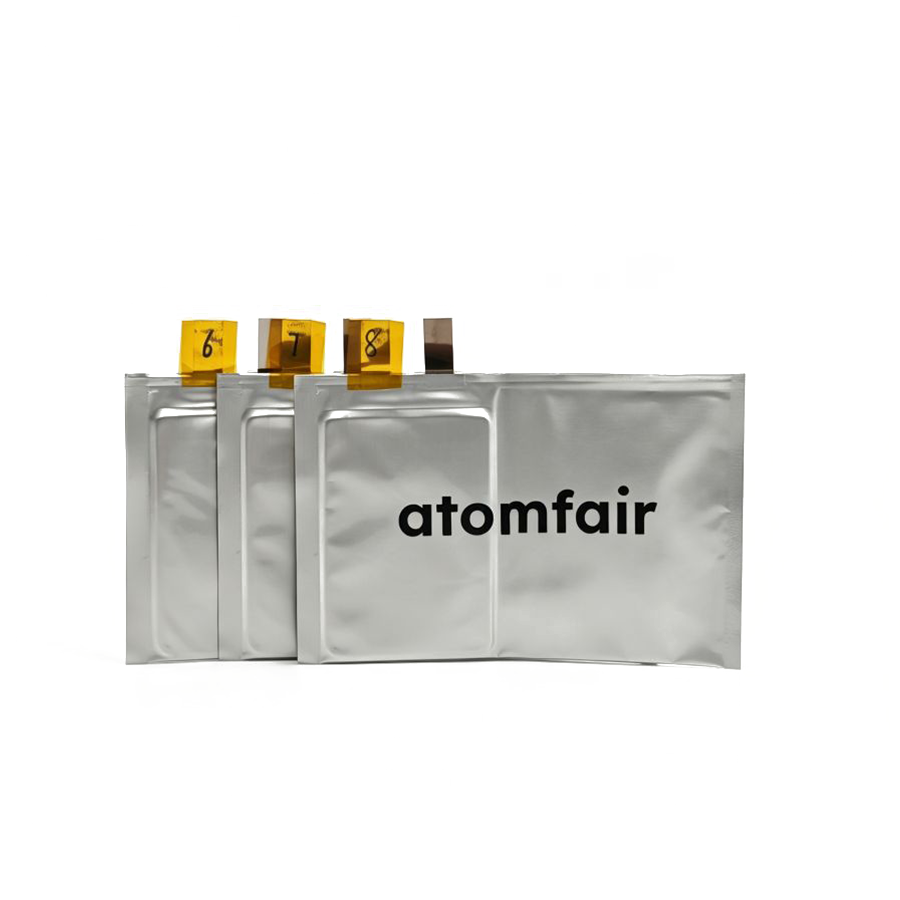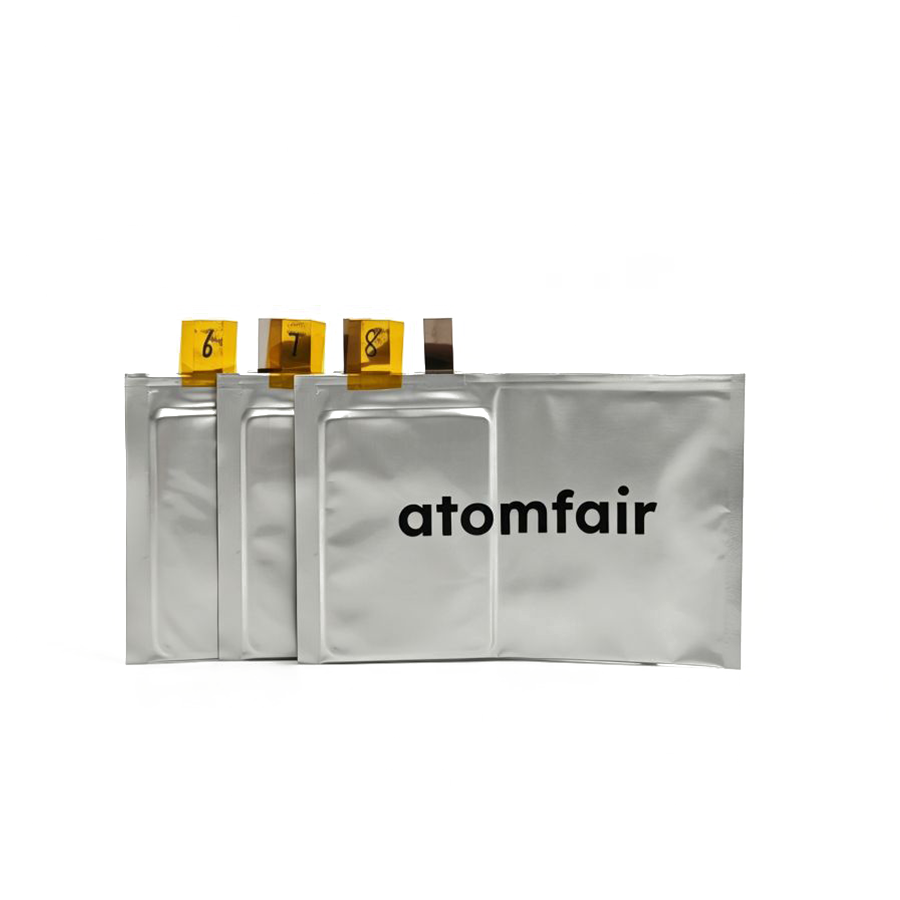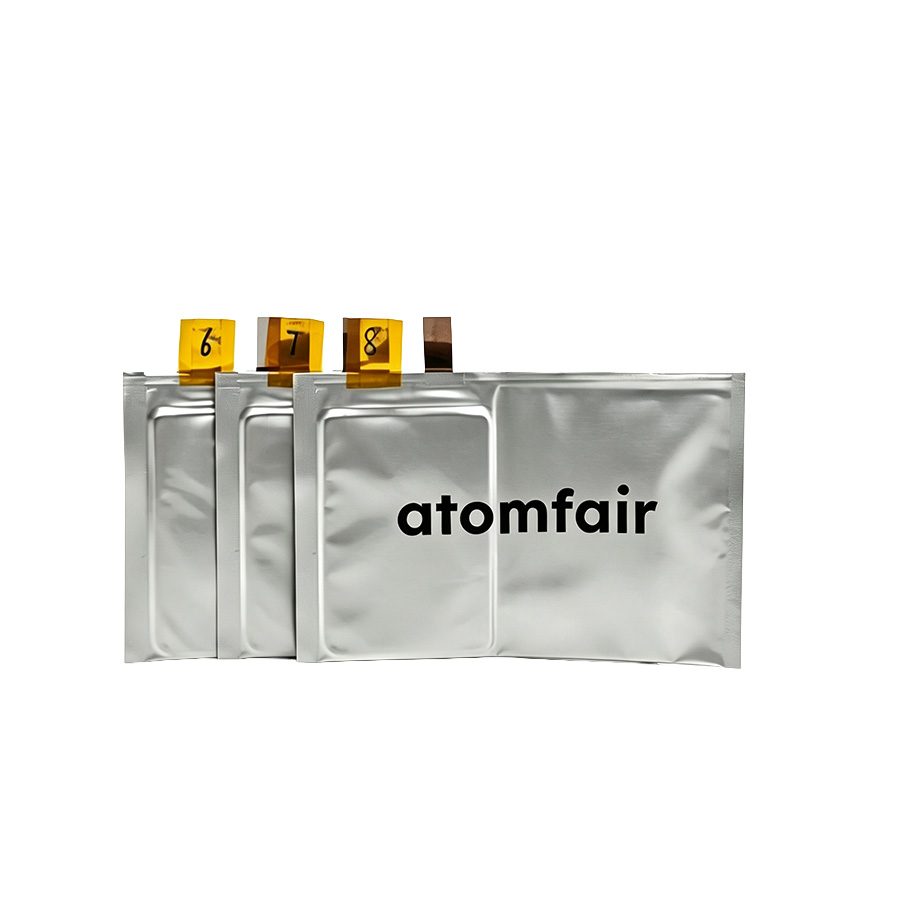
Ni95 Lithium-Ion Dry Pouch Cell (14 Ah, 36/37 Layers) – Li-Cu Composite AnodeProduct Type: Research-grade dry pouch cell
Research-grade laboratory product
|
||||||||||||||||||||||||||||||||||||||||||||||||||||||||
|
||||||||||||||||||||||||||||||||||||||||||||||||||||||||
This dry pouch cell contains a lithium composite anode that oxidizes rapidly upon exposure to atmospheric moisture. Handling must occur in a controlled inert atmosphere to preserve cell integrity and prevent safety hazards.
- Moisture Sensitivity: Store and handle the cell exclusively in an inert gas environment to avoid lithium anode oxidation.
- Short-Circuit Prevention: Use insulated tools and avoid contact between terminals to prevent dangerous discharge.
- Voltage Limits: Maintain the cell potential between 3 V and 4.3 V during handling and testing to ensure stability.
- Mechanical Integrity: Do not puncture, bend, or apply excessive pressure to the pouch; internal short circuits may cause thermal runaway.
This procedure outlines the safe receipt and preparation of the electrolyte-free dry pouch cell for laboratory assembly. All steps must be performed inside an argon-filled glovebox with active moisture and oxygen control.
Required Equipment: Argon-filled glovebox with oxygen and moisture sensors, Insulated tweezers or vacuum pickup tool, Digital multimeter with voltage measurement capability
- Transfer to Glovebox Antechamber
Place the sealed pouch cell into the glovebox antechamber and perform at least three purge cycles with argon. - Inspect Sealing and Appearance
Visually examine the pouch for any tears, creases, or electrolyte residue and confirm the cell is dry. - Measure Open-Circuit Voltage
Using a multimeter, measure the voltage across the positive and negative tabs and record the result as a baseline. - Prepare for Electrolyte Filling
Transfer the cell to a clean work area inside the glovebox and align it with your filling jig or sealing fixture. - Proceed with Assembly Protocol
Follow your standard electrolyte filling and vacuum sealing procedure, maintaining the specified voltage window throughout.
What is the specific capacity and coating areal density of the Ni95 cathode in this dry pouch cell?
The Ni95 cathode provides a specific capacity of 230 mAh/g with a coating areal density of 30 mg/cm2 and an active material content of 90%. This yields an approximate areal capacity of 6.9 mAh/cm2 for the cathode layer.
What are the dimensions of the cathode and anode electrodes in this 14 Ah dry pouch cell?
The positive electrode (cathode) has a footprint of 45.5 x 64 mm, while the negative electrode (anode) measures 46.5 x 65 mm. These dimensions are consistent with the 36/37-layer stack design for a nominal 14 Ah capacity.
Does this dry pouch cell include electrolyte, and what is its intended application?
This dry pouch cell is supplied electrolyte-free and is intended for laboratory lithium-ion cell assembly, electrolyte or activation studies, and electrochemical evaluation. Researchers must add their own electrolyte and control the finishing conditions, making it suitable for comparative electrode studies and dry core evaluation.
This 14 Ah dry pouch cell with Ni95 cathode and Li-Cu composite anode, in a 36/37-layer stack, is designed for laboratory-scale electrolyte optimization and electrode architecture studies; the unfilled format provides full control over cell finishing but requires external electrolyte filling and sealing capabilities.
Positive
- Li-Cu composite anode architecture: The Li-Cu composite anode integrates a copper current collector with lithium metal, enabling controlled lithium plating/stripping and improved mechanical stability compared to bare lithium metal anodes.
- Research-grade dry pouch for electrolyte control: The electrolyte-free dry pouch format allows researchers to introduce custom electrolytes, enabling systematic study of electrolyte composition effects on Ni95 cathode and Li-Cu anode performance.
Trade-offs
- Requires electrolyte filling and sealing infrastructure: The unfilled dry pouch cell must be filled with electrolyte and vacuum-sealed under inert atmosphere, requiring glovebox access and appropriate sealing equipment for proper cell finishing.
- Anode overhang reduces volumetric energy density: The Li-Cu anode dimensions (46.5 x 65 mm) are larger than the cathode (45.5 x 64 mm), creating a 1 mm overhang that lowers the effective volumetric energy density but is necessary to prevent lithium plating at the cathode edge.
Every advanced material, component, equipment, and instrument in our catalog is backed by rigorous testing. We maintain strict internal quality management frameworks and align with CE conformity metrics to deliver transparent, reproducible performance data via our public open-science repository.
To request raw batch performance data, submit formal vendor registration paperwork, or execute a fast-turnaround R&D manufacturing loop, contact us at inquiry@atomfair.com.
Item is dispatched under the Atomfair Shipping & Delivery Framework (Free worldwide shipping on orders over $59 USD excl. heavy equipment). Return is governed by the Atomfair Return & Refund Policy (7-day technical return window).