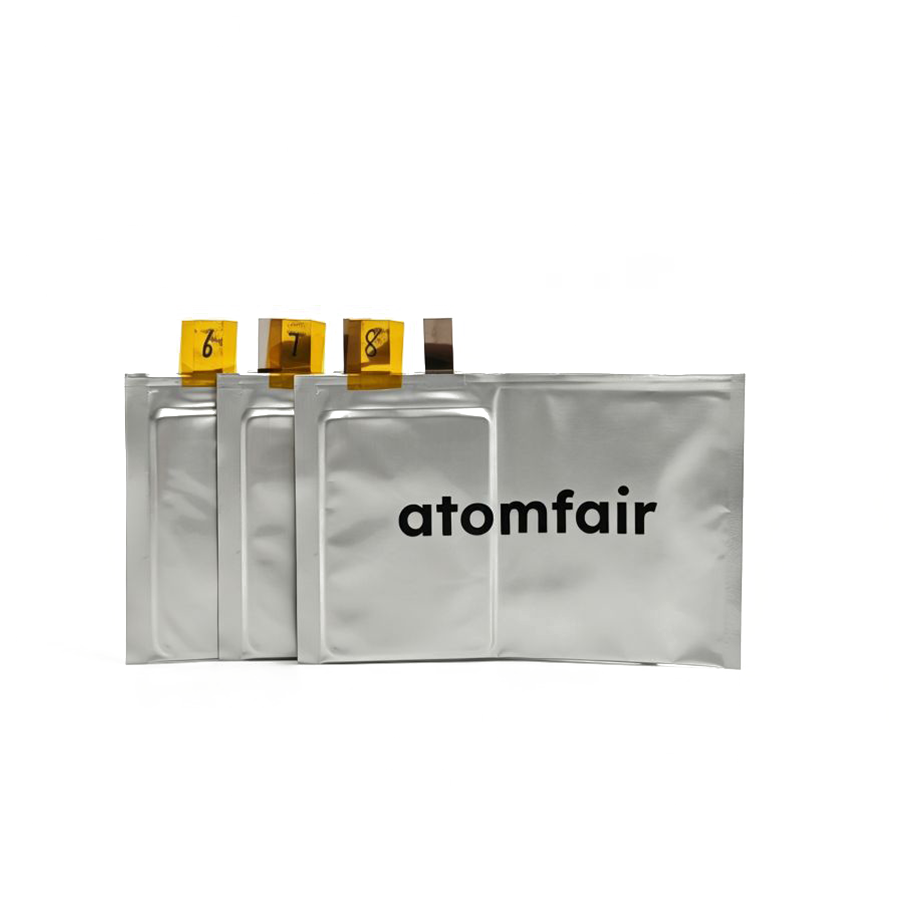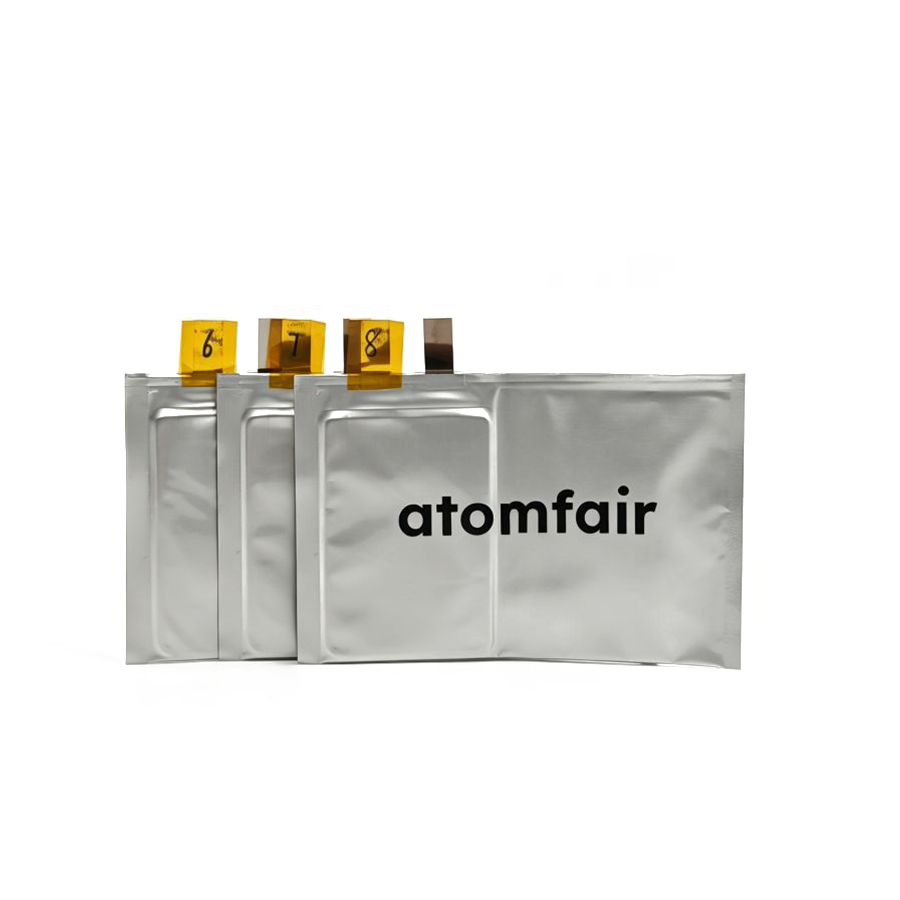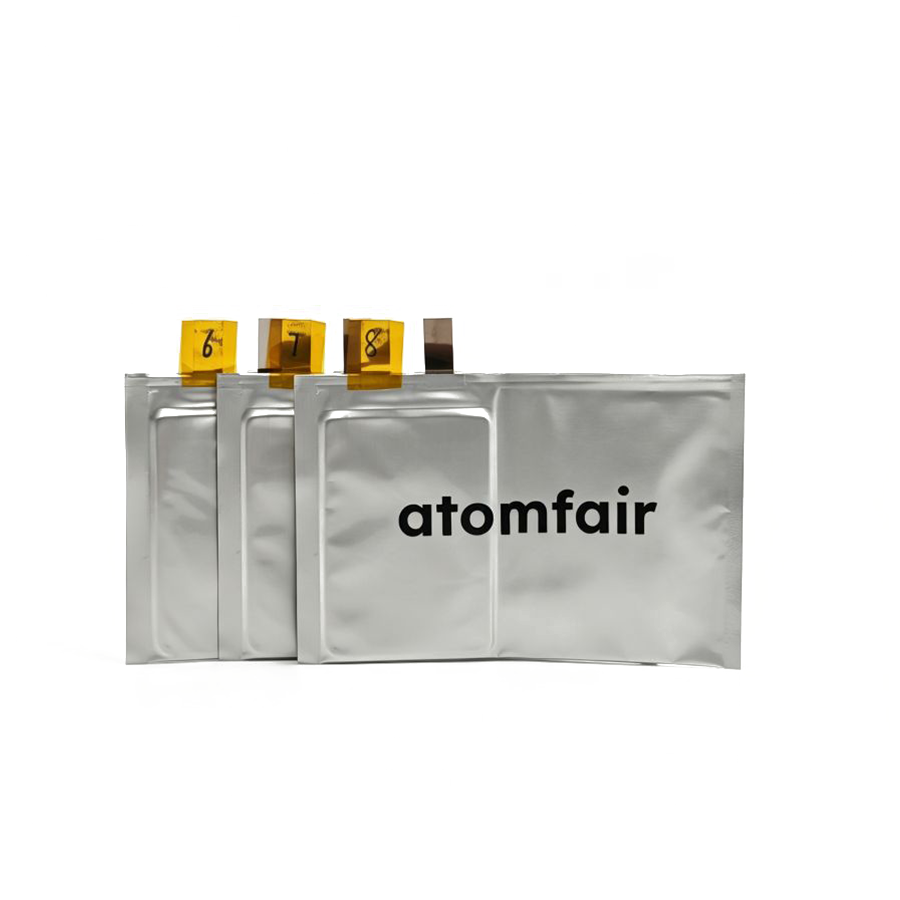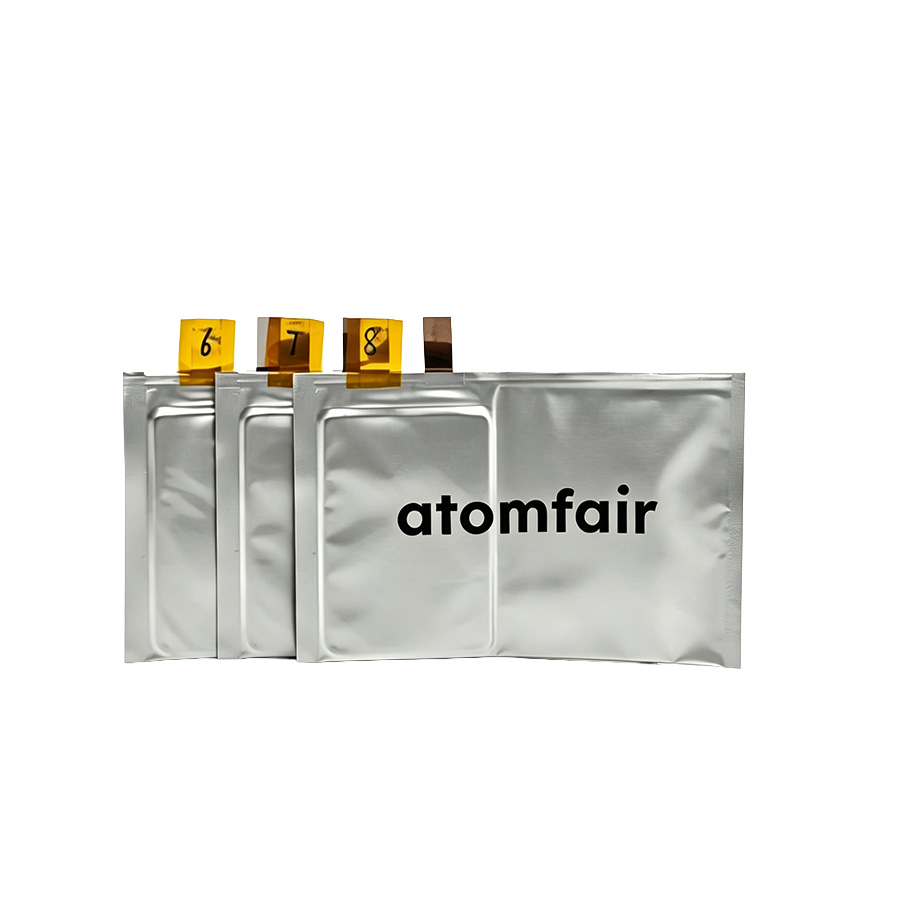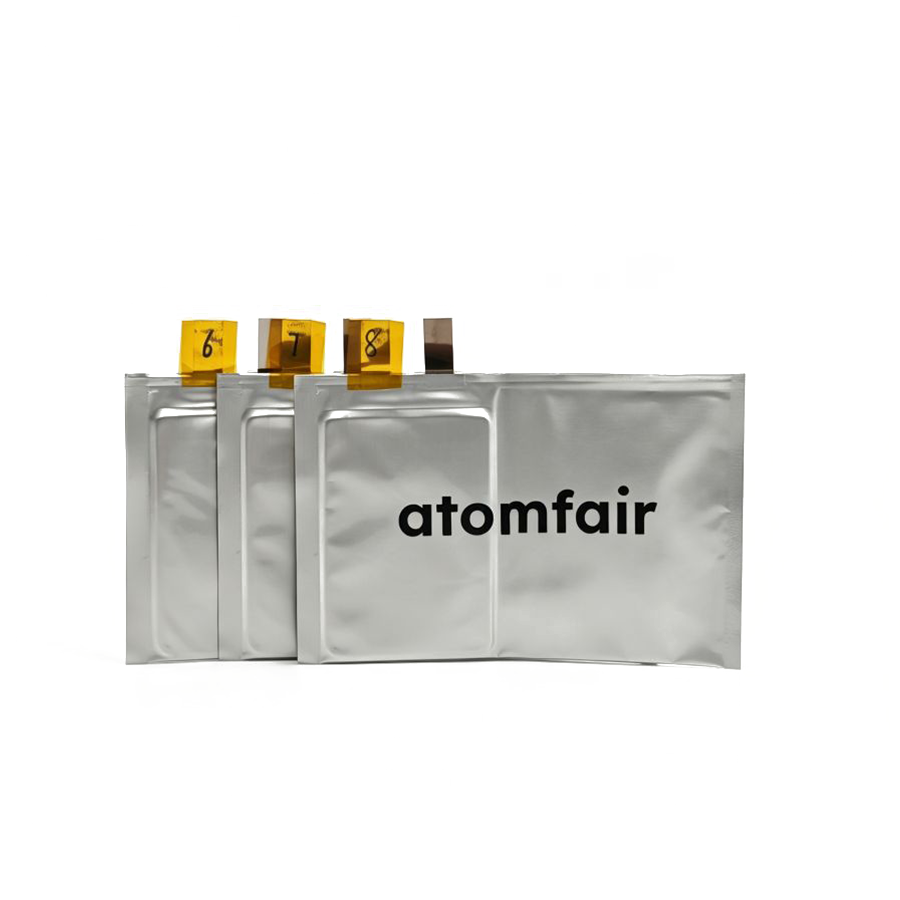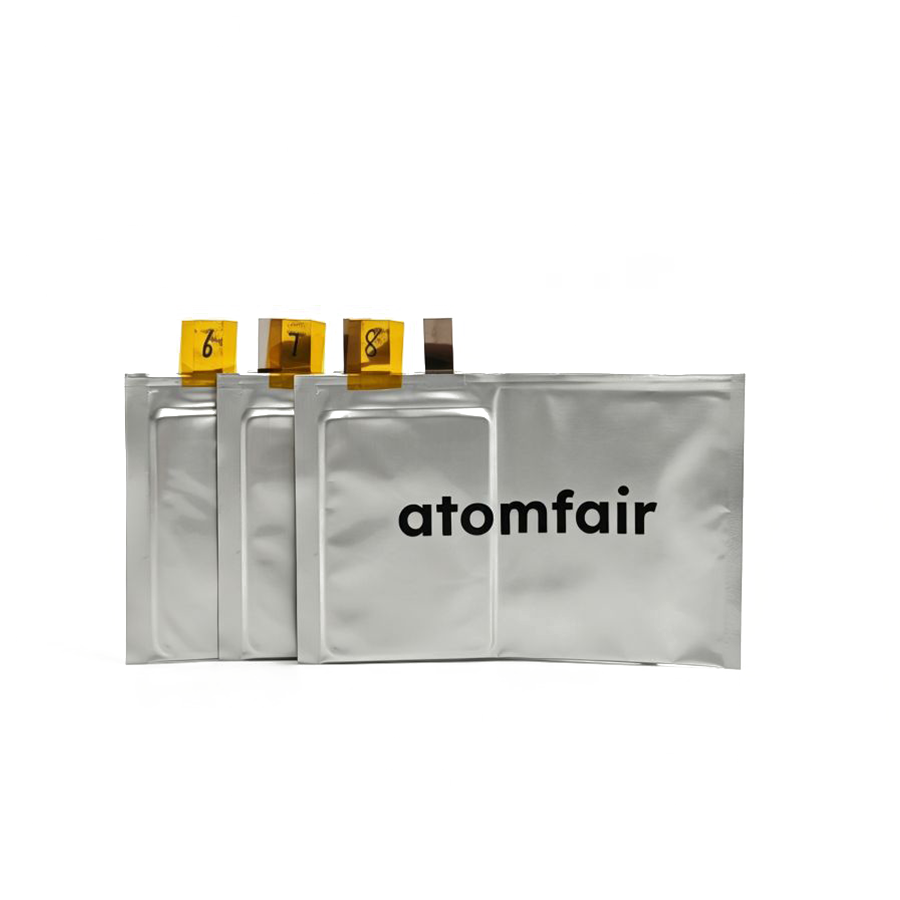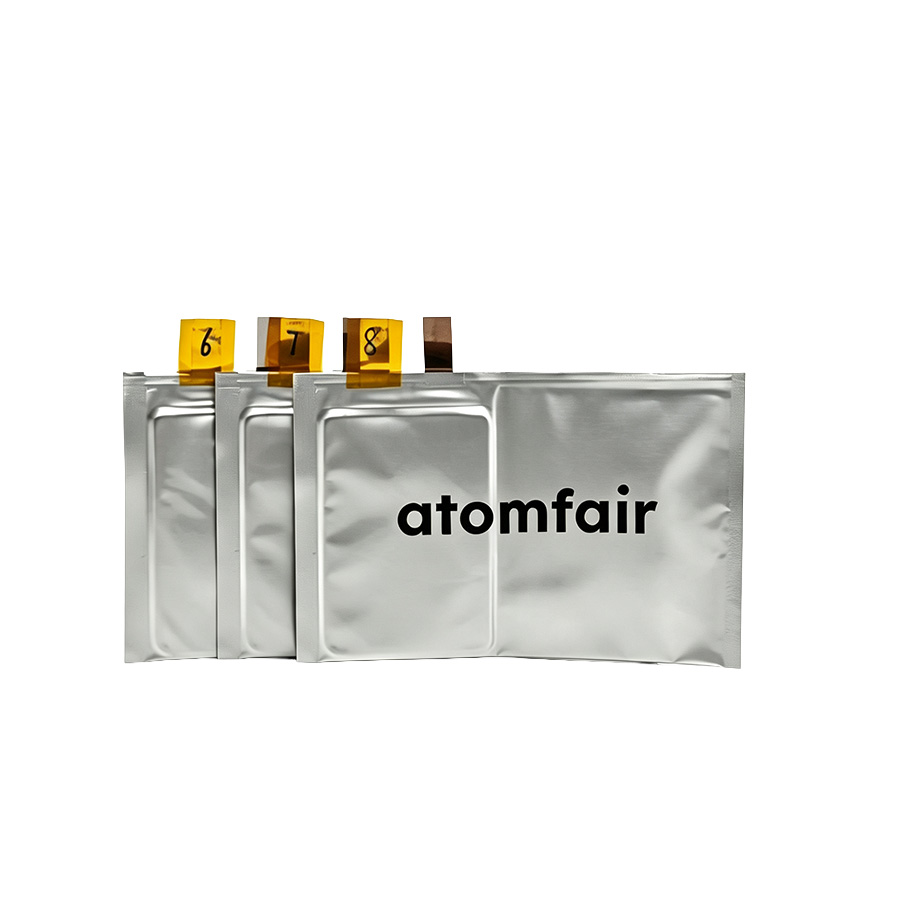
Ni90 Lithium-Ion Dry Pouch Cell (15 Ah, 21/22 Layers) – Si/C1100 AnodeProduct Type: Research-grade dry pouch cell
Research-grade laboratory product
|
||||||||||||||||||||||||||||||||||||||||||||||||||||||||||||||||||
|
||||||||||||||||||||||||||||||||||||||||||||||||||||||||||||||||||
This electrolyte-free dry pouch cell requires controlled atmosphere assembly to prevent moisture uptake and electrode degradation. The unfilled format must be stored in a dry environment below 25°C to maintain electrode integrity and prevent premature aging.
- Electrolyte filling requirement: The cell must be filled with electrolyte under inert atmosphere prior to activation to avoid lithium plating and capacity loss.
- Voltage window constraint: Operation is restricted to 2.3 V – 4.2 V to prevent over-discharge damage or overcharge-induced thermal runaway.
- Dry core handling: The dry pouch cell must be handled in a glovebox with <1 ppm H2O and O2 to prevent moisture contamination of the Si/C1100 anode.
This procedure describes electrolyte filling, formation cycling, and electrochemical evaluation of the dry pouch cell under controlled laboratory conditions. All steps must be performed in an inert atmosphere glovebox to preserve cell integrity.
Required Equipment: Argon-filled glovebox (<1 ppm H2O, <1 ppm O2), Battery cycler with voltage range 0 V to 5 V, Vacuum sealer for pouch cell
- Transfer cell to glovebox
Transfer the dry pouch cell into an argon-filled glovebox with <1 ppm H2O and O2 without exposing the cell to ambient air. - Fill with electrolyte
Inject the selected electrolyte into the dry pouch cell through the fill port under inert atmosphere, ensuring complete wetting of the electrode stack. - Seal the pouch
Seal the pouch cell using a vacuum sealer inside the glovebox to prevent electrolyte leakage and atmospheric ingress. - Perform formation cycling
Cycle the cell between 2.3 V and 4.2 V at a C/10 rate for three cycles to form a stable solid electrolyte interphase on the anode. - Evaluate electrochemical performance
Conduct rate capability and cycling stability tests within the 2.3 V to 4.2 V window to assess capacity retention and impedance growth.
How does the NP ratio of 1.023 affect the risk of lithium plating during cycling of this Ni90|Si/C1100 dry pouch cell?
The specified NP ratio of 1.023 indicates a design margin with excess anode capacity to reduce lithium plating risk. The cathode (Ni90) has a coating areal density of 22 mg/cm² and specific capacity of 197 mAh/g, while the anode (Si/C1100) has 4.2 mg/cm² and 1100 mAh/g, providing balancing within the 2.3–4.2 V window. Researchers should verify formation protocols to maintain this balance given the anode's volume expansion characteristics.
What electrolyte systems are compatible with the 12 µm PE + 2 µm ceramic separator in this dry pouch cell?
The separator is 12 µm polyethylene with a 2 µm ceramic coating, compatible with standard carbonate-based lithium-ion electrolytes. As an unfilled dry cell, researchers must select electrolytes that adequately wet the high-loading Ni90 cathode (22 mg/cm²) and the Si/C1100 anode (4.2 mg/cm²). The ceramic coating supports operation up to 4.2 V and enhances thermal stability during formation.
What post-delivery steps are required before this dry pouch cell can be cycled?
This 15 Ah dry pouch cell is supplied electrolyte-free with a 21/22-layer stack and must be filled with a compatible electrolyte under controlled laboratory conditions. Researchers then perform formation cycling within the specified 2.3–4.2 V voltage window to activate the Si/C1100 anode and stabilize the Ni90 cathode. The areal densities (cathode 22 mg/cm², anode 4.2 mg/cm²) require careful wetting to ensure uniform electrolyte distribution across all layers.
The AF-BM-C-90S1-150A-2131 is a 15 Ah Ni90/Si-C1100 dry pouch cell with a 21/22-layer stack and 12 µm PE + 2 µm ceramic separator, designed for laboratory electrolyte and activation studies where researchers need to control cell finishing conditions.
Positive
- Si/C1100 anode with high specific capacity: The Si/C1100 anode provides 1100 mAh/g specific capacity at 92% active material, enabling evaluation of high-energy-density anode architectures in a research pouch cell format.
- Dry pouch format for custom electrolyte filling: The electrolyte-free dry pouch allows researchers to control electrolyte composition, fill volume, and activation protocol, supporting studies on electrolyte interaction with Ni90 cathode and Si/C1100 anode.
Trade-offs
- Requires electrolyte filling and formation cycling: As an unfilled dry pouch cell, it must be filled with electrolyte and undergo formation cycling before electrochemical testing, adding preparation steps and potential variability.
- Thin ceramic-coated separator handling constraints: The 12 µm PE + 2 µm ceramic separator is thin and may require careful handling during lamination or filling to avoid mechanical damage or pinhole defects.
Every advanced material, component, equipment, and instrument in our catalog is backed by rigorous testing. We maintain strict internal quality management frameworks and align with CE conformity metrics to deliver transparent, reproducible performance data via our public open-science repository.
To request raw batch performance data, submit formal vendor registration paperwork, or execute a fast-turnaround R&D manufacturing loop, contact us at inquiry@atomfair.com.
Item is dispatched under the Atomfair Shipping & Delivery Framework (Free worldwide shipping on orders over $59 USD excl. heavy equipment). Return is governed by the Atomfair Return & Refund Policy (7-day technical return window).