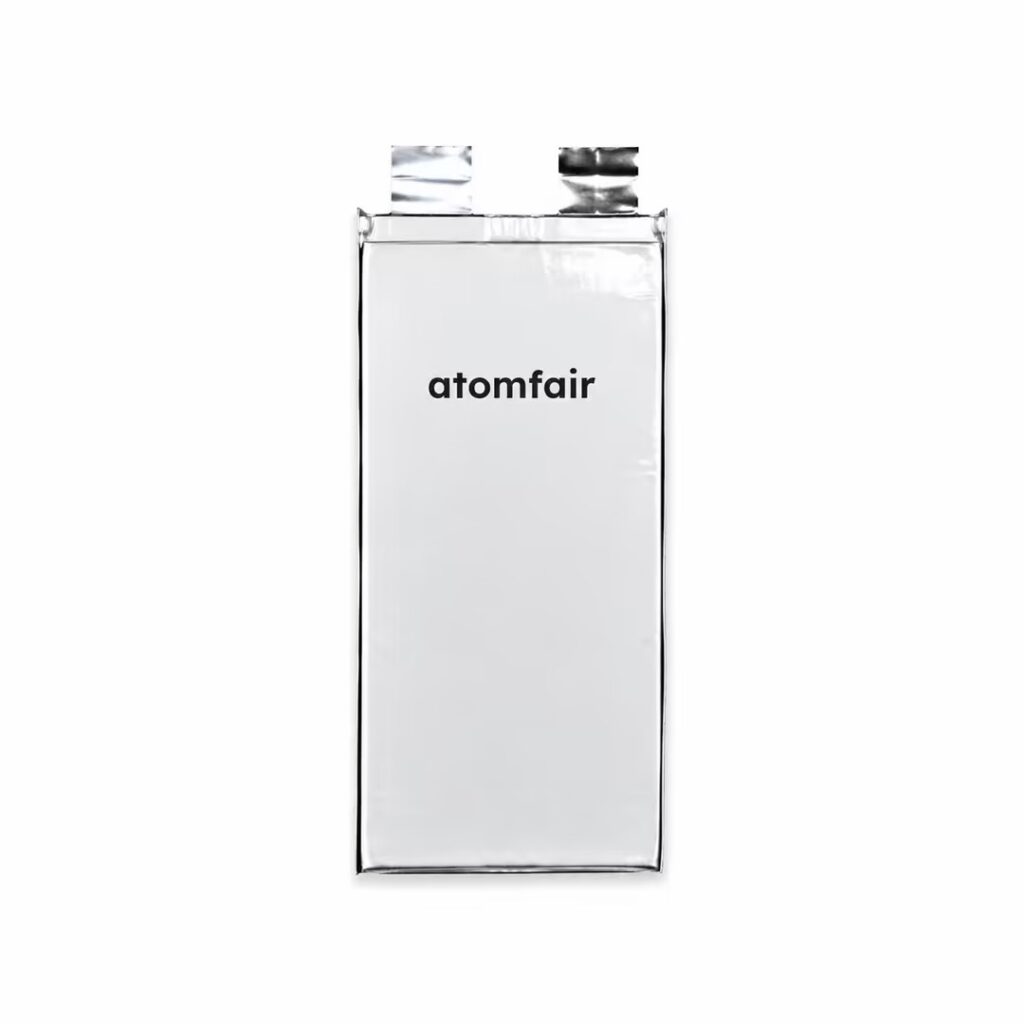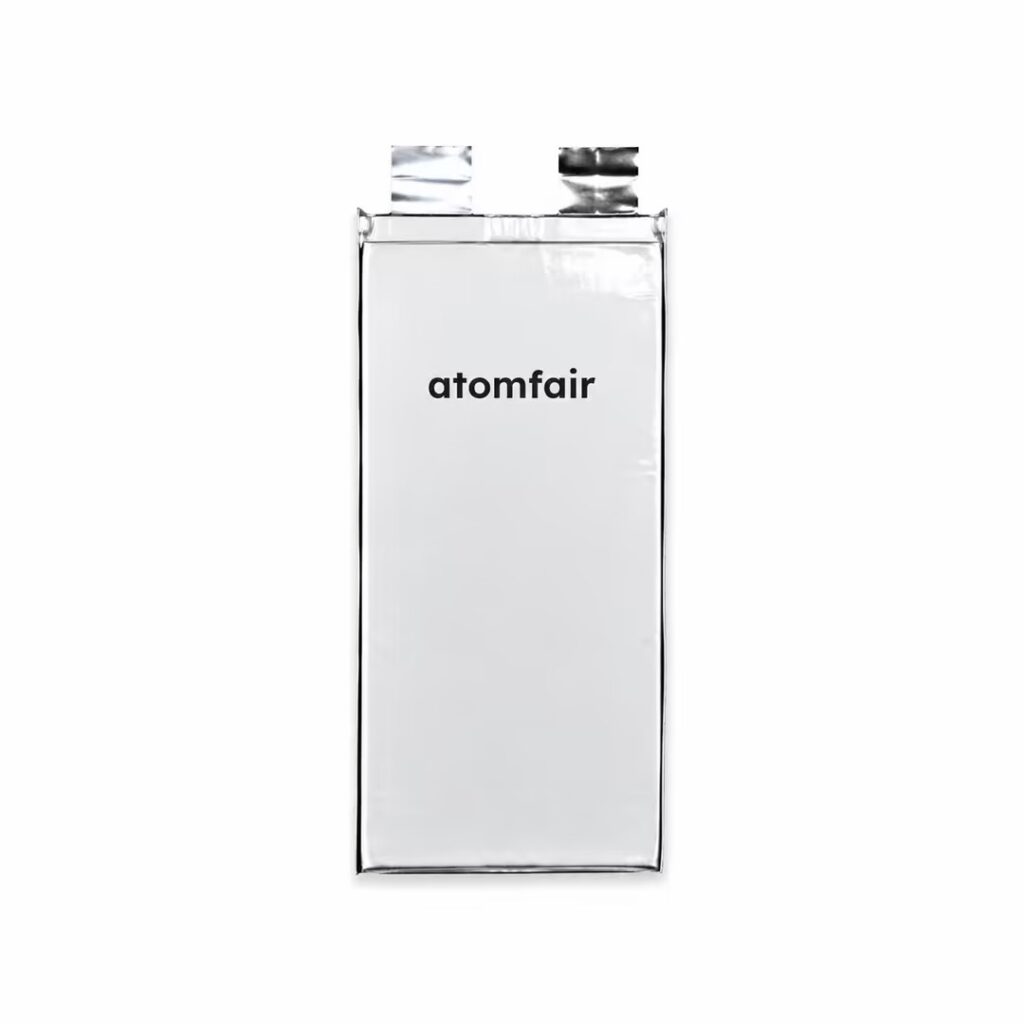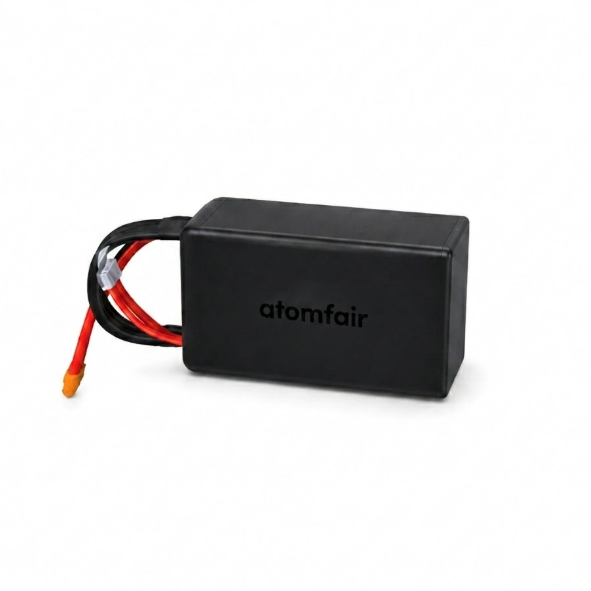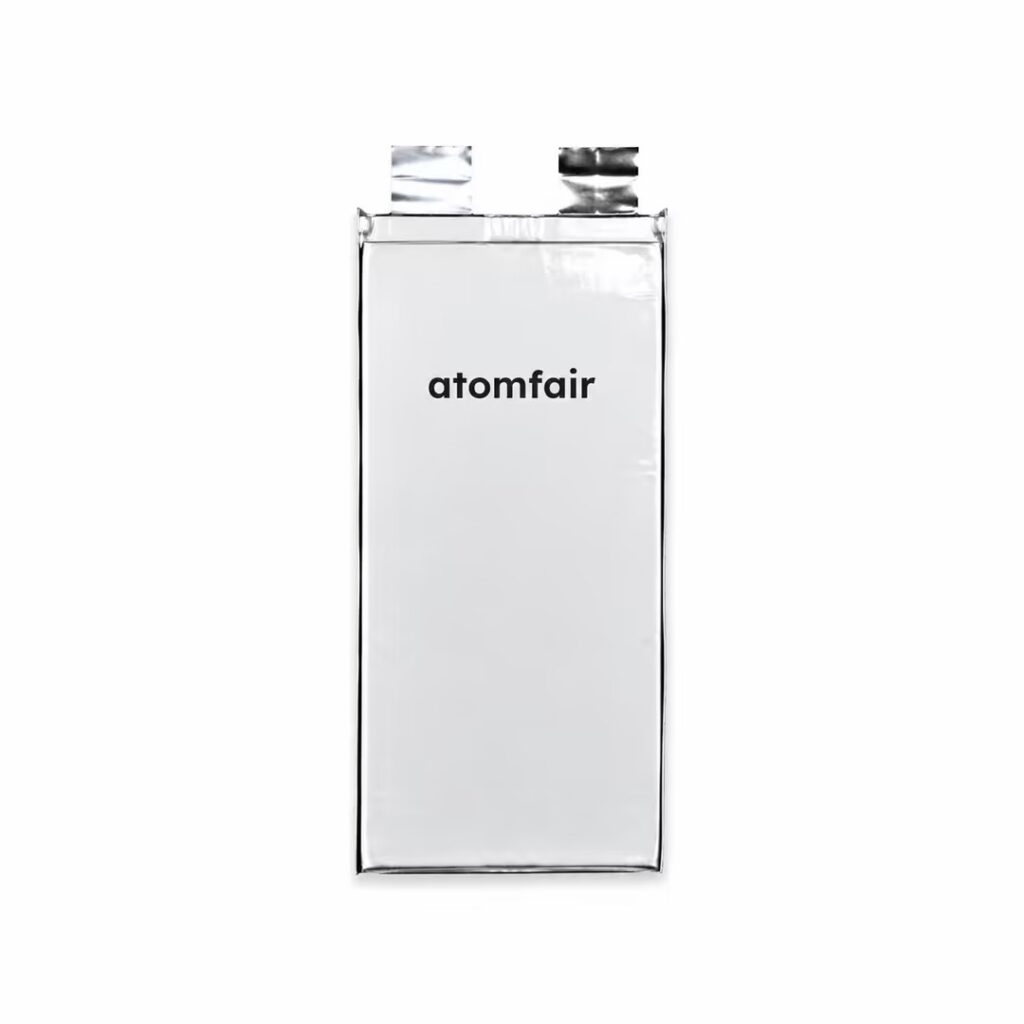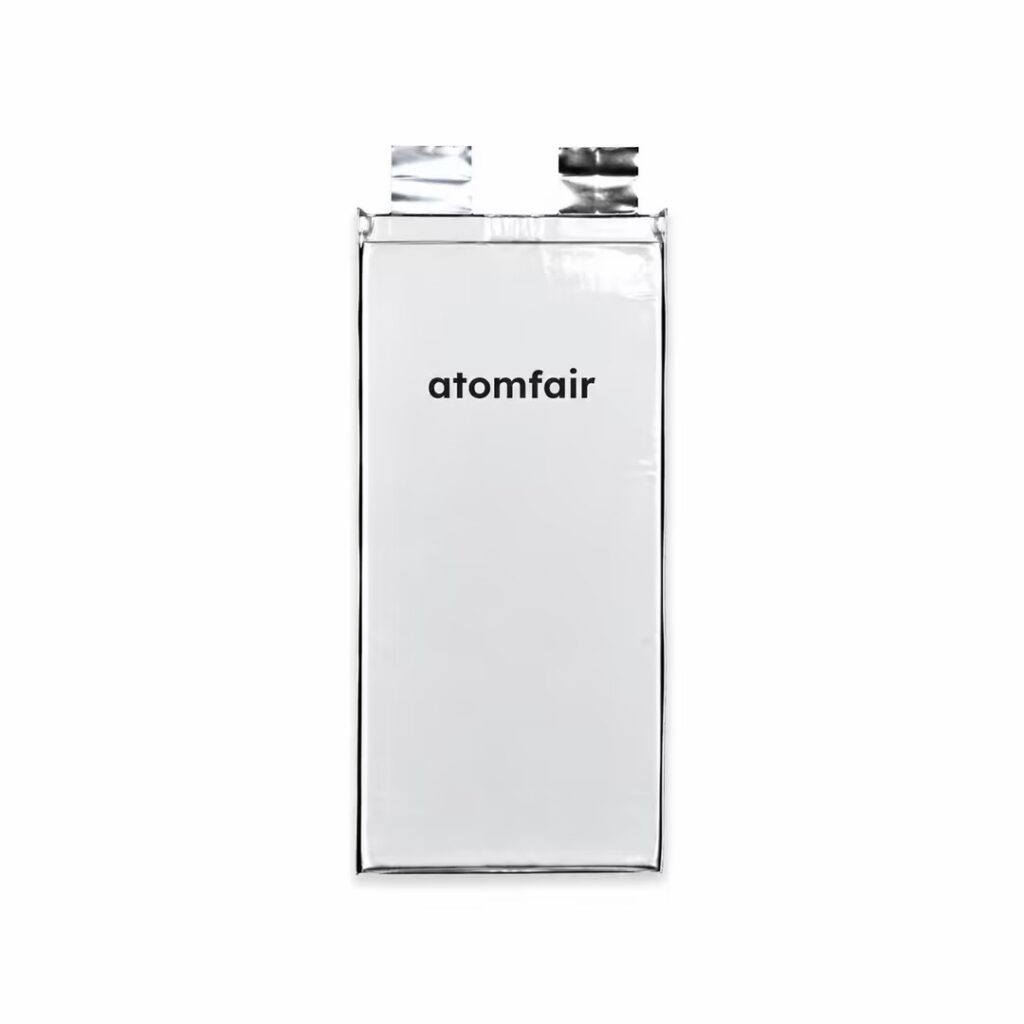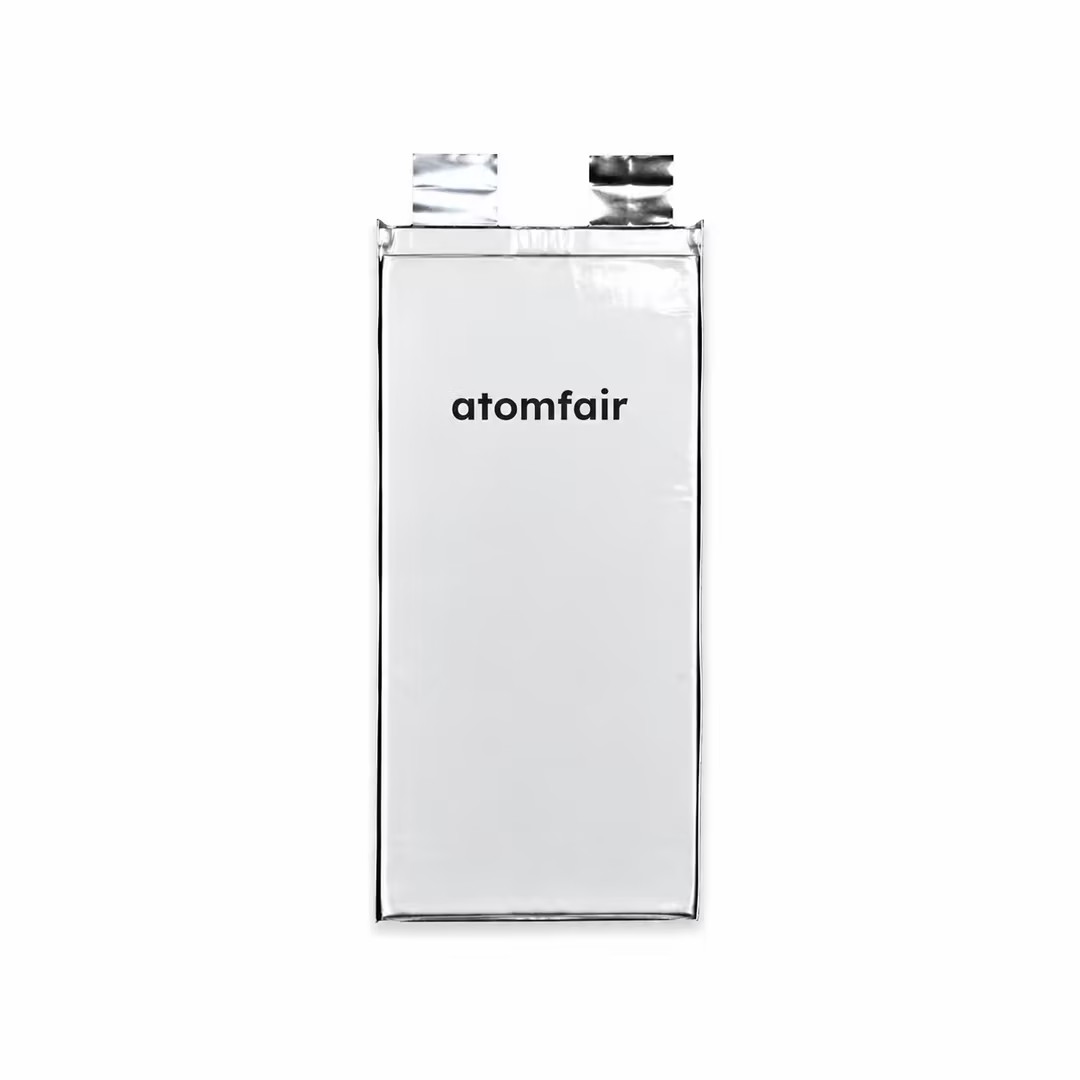
410Wh/kg HIGH ENERGY DENSITY Lithium-Ion POUCH CELL | ATOMFAIRCOMMERCIAL GRADE · PRODUCTION
|
|||||||||||||||||||||||||||||||||||||||||||||||||||||
|
|||||||||||||||||||||||||||||||||||||||||||||||||||||
|
TAILORED SOLUTIONS FOR RESEARCH
Contact our engineering team for technical support or official institutional quotations.
EMAIL: INQUIRY@ATOMFAIR.COM
|
|||||||||||||||||||||||||||||||||||||||||||||||||||||
|
MANUFACTURER: ATOMFAIR LLC
BRAND: ATOMFAIR®
|
|||||||||||||||||||||||||||||||||||||||||||||||||||||
This lithium-ion pouch cell requires storage in a dry, ventilated area between 15-30°C to prevent degradation. The cell is sensitive to mechanical stress and overcharge conditions, and must be handled using hazardous material transport packaging.
- Storage Temperature: Store the cell in a dry, ventilated area with ambient temperature maintained between 15°C and 30°C.
- Charge Temperature Limit: Charge the cell only within an ambient temperature range of 0°C to +35°C.
- Discharge Temperature Limit: Discharge the cell only within an ambient temperature range of -20°C to +45°C.
- Voltage Limits: Do not allow the cell voltage to exceed 4.30V or drop below 2.50V during operation.
- Mechanical Stress Sensitivity: Keep the cell in its original packaging until use to avoid mechanical stress and potential damage.
Follow these steps to safely handle and initialize the cell for first use. Ensure all environmental and electrical limits are observed to prevent damage or hazard.
- Inspect Packaging
Inspect the outer packaging for any signs of damage or deformation before unsealing the cell. - Store Properly
Store the cell in a dry, ventilated area with ambient temperature maintained between 15°C and 30°C until ready for use. - Connect Charger
Connect the cell to a charger configured to deliver a standard charge current of 0.2C and not exceeding 0.5C continuous charge. - Monitor Voltage
Confirm that the cell voltage remains between 2.50V and 4.30V throughout the charging and discharging process. - Discharge Within Limits
Discharge the cell only within the ambient temperature range of -20°C to +45°C, and do not exceed 2.0C continuous discharge.
How does the 410 Wh/kg energy density affect cycle life and discharge rate capability of this NMC silicon carbon pouch cell?
Despite its ultra-high gravimetric energy density of ≥410 Wh/kg, this cell maintains a cycle life of ≥500 cycles at 0.5C charge/0.5C discharge and a voltage window of 4.20V–2.75V. It also supports a maximum continuous discharge of 2.0C and a pulse discharge of 5.0C for 5 seconds, indicating balanced performance between energy density and power capability without sacrificing longevity.
What are the voltage limits and temperature requirements for charging and discharging this 70Ah pouch cell?
The cell operates within a voltage range of 4.30V to 2.50V. Charging must be performed at temperatures between 0°C and +35°C, while discharging is allowed from -20°C to +45°C. Standard charge/discharge current is 0.2C, with maximum continuous charge at 0.5C and maximum continuous discharge at 2.0C.
What storage conditions and handling precautions are recommended for this high-energy density lithium-ion pouch cell?
Store the cell in a dry, ventilated area at 15–30°C, keeping it in its original packaging until use. The cell is sensitive to mechanical stress and overcharge conditions, so follow the specified charge/discharge profiles (0.5C max charge, 2.0C continuous discharge) and avoid disassembly or exposure to fire. Each cell is shipped with a test report and certified hazardous material packaging.
This 70Ah NMC / Gr + SiC pouch cell achieves ≥410 Wh/kg gravimetric energy density and ≥850 Wh/L volumetric energy density with ≤1.0 mΩ internal resistance, enabling 2.0C continuous and 5.0C pulse discharge, but requires strict charge temperature control (0–35°C) and mechanical stress protection during handling and integration.
Positive
- Ultra-high energy density architecture: The NMC / Gr + SiC chemistry delivers ≥410 Wh/kg and ≥850 Wh/L, enabling compact, high-capacity system designs for EVs and stationary storage.
- Low internal resistance for high-rate discharge: With ≤1.0 mΩ ACIR, the cell supports continuous discharge up to 2.0C and pulse discharge up to 5.0C (5s), suitable for dynamic load applications.
Trade-offs
- Narrow charge temperature window: Standard and max continuous charge are restricted to 0°C to +35°C, limiting charging under cold or hot ambient conditions without thermal management.
- Mechanical stress sensitivity: The pouch cell is sensitive to mechanical stress and overcharge conditions, requiring careful handling, original packaging retention until use, and strict adherence to charge/discharge profiles.
Every advanced material, component, equipment, and instrument in our catalog is backed by rigorous testing. We maintain strict internal quality management frameworks and align with CE conformity metrics to deliver transparent, reproducible performance data via our public open-science repository.
To request raw batch performance data, submit formal vendor registration paperwork, or execute a fast-turnaround R&D manufacturing loop, contact us at inquiry@atomfair.com.
Item is dispatched under the Atomfair Shipping & Delivery Framework (Free worldwide shipping on orders over $59 USD excl. heavy equipment). Return is governed by the Atomfair Return & Refund Policy (7-day technical return window).