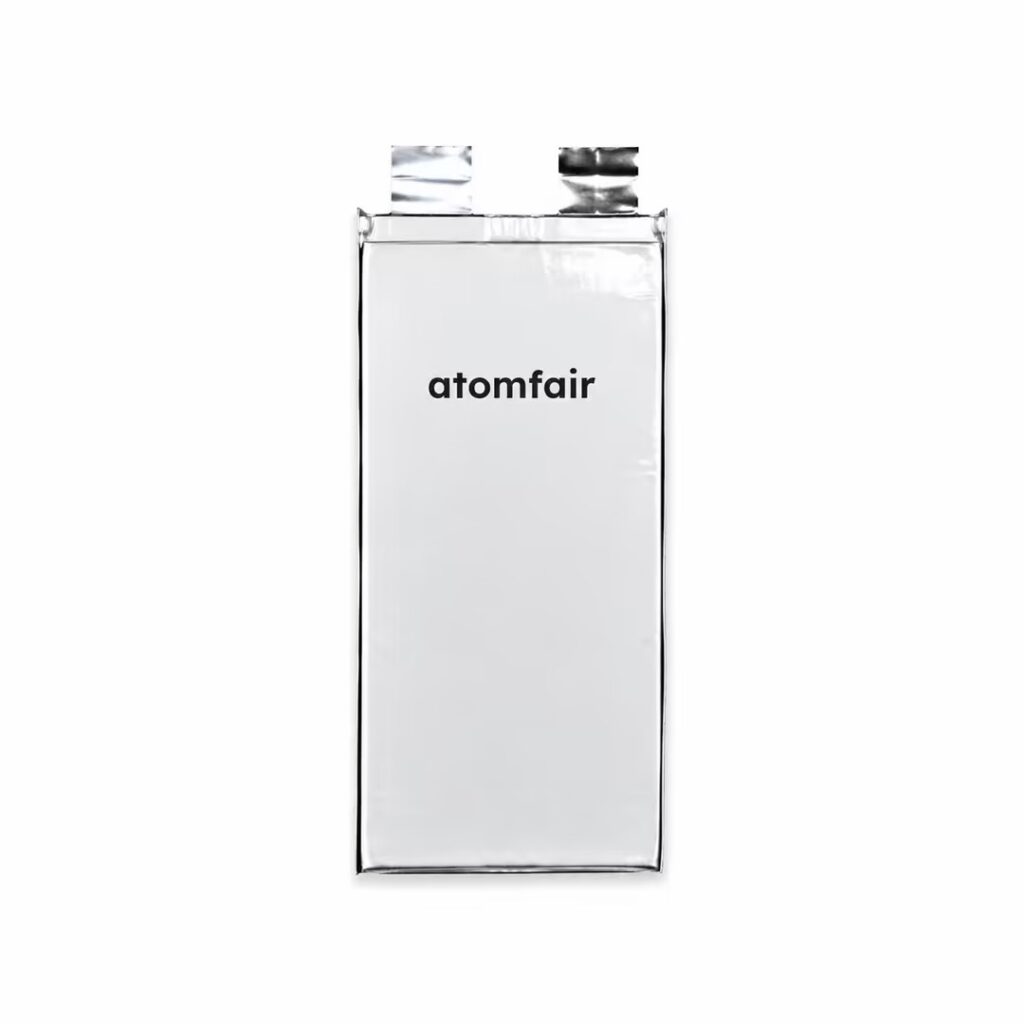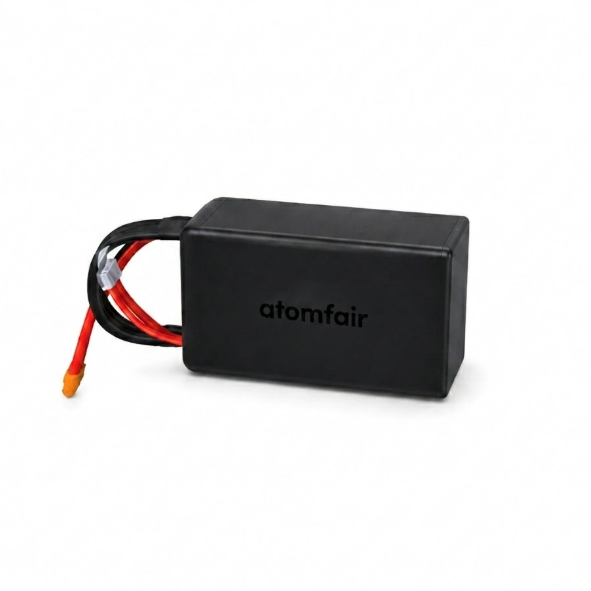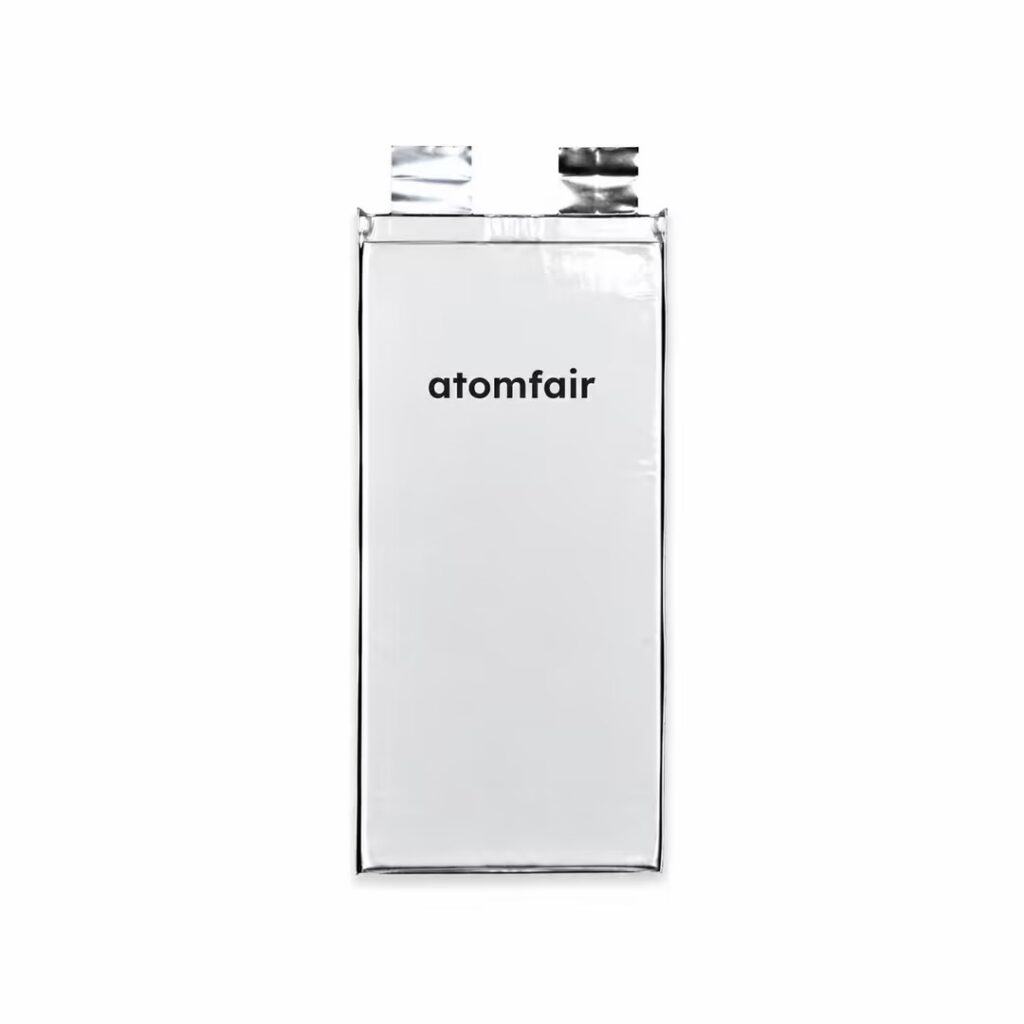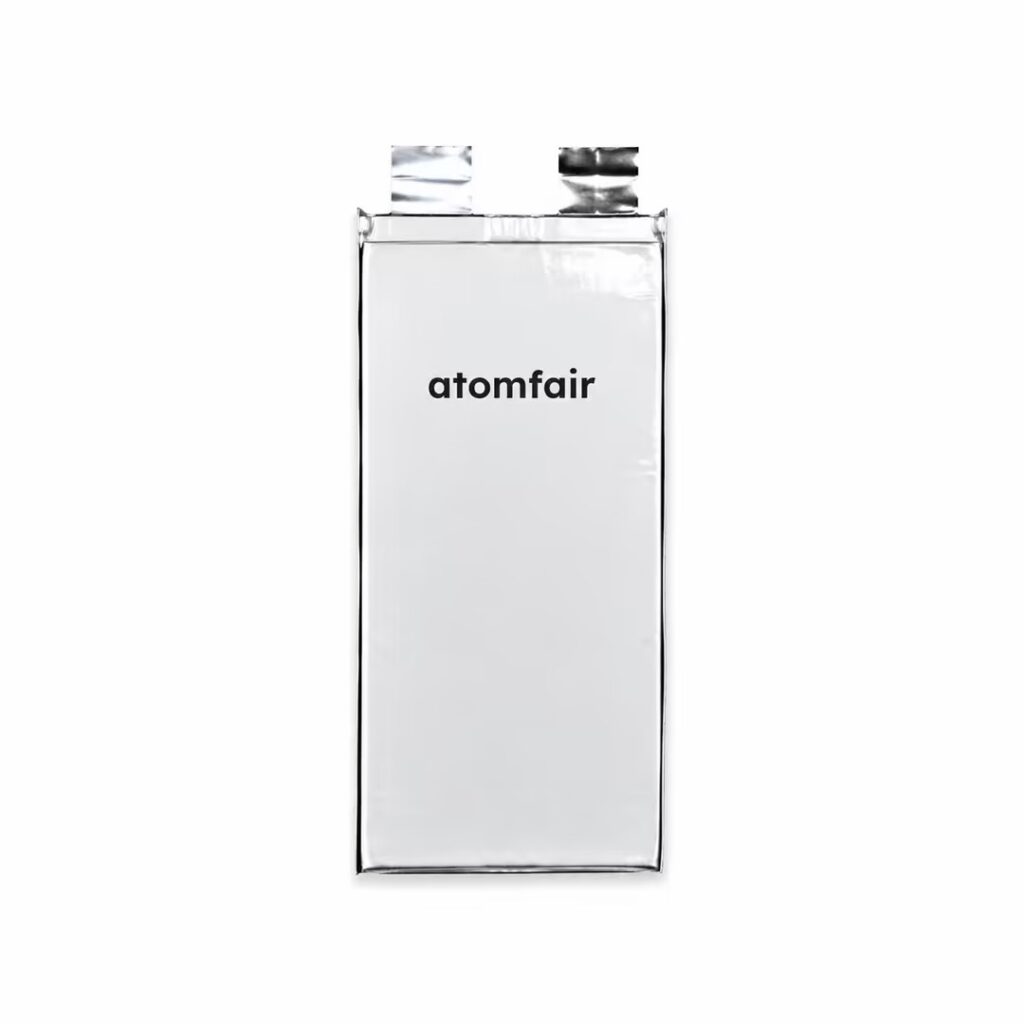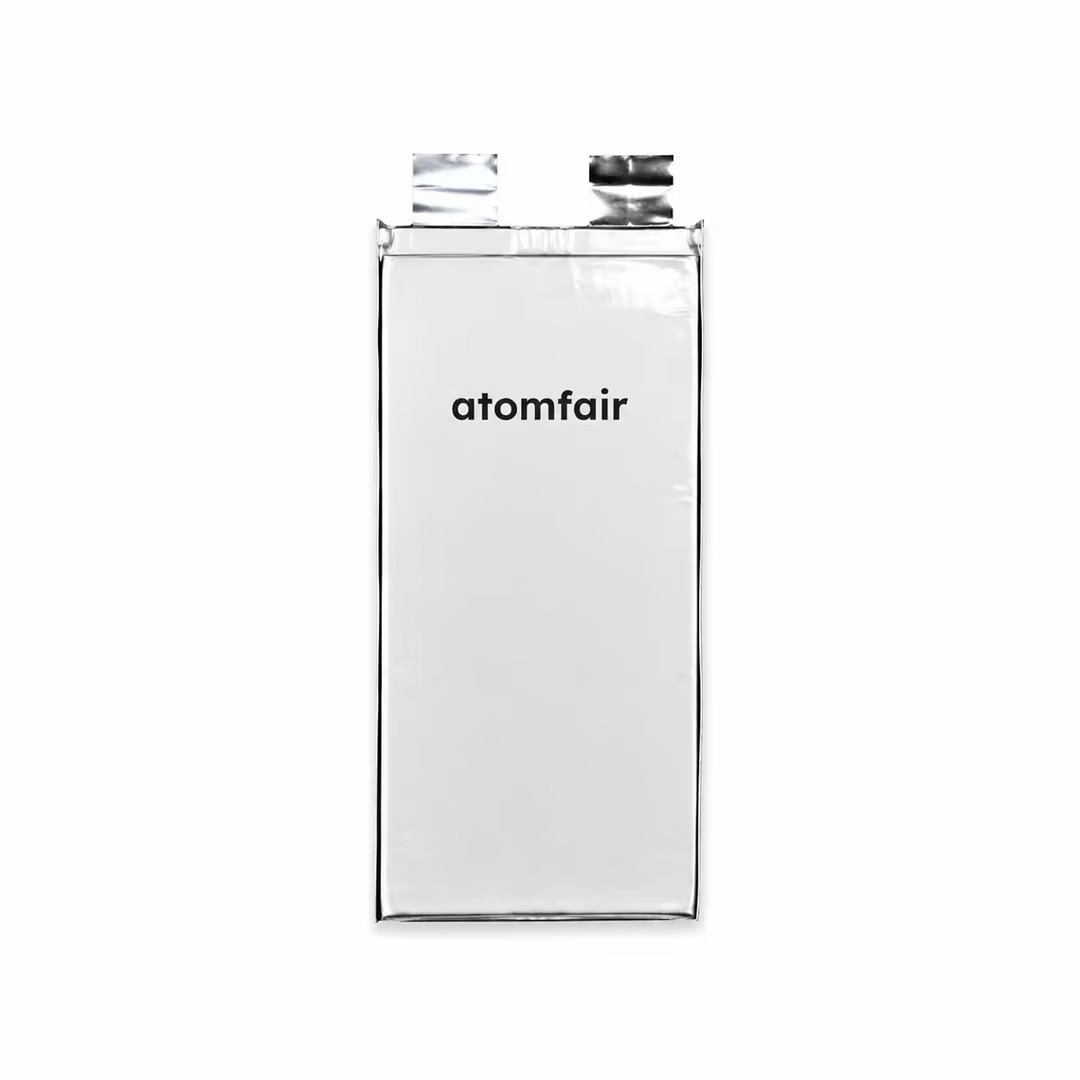
High-Energy-Density Anode-Free Battery Series | ATOMFAIRCOMMERCIAL GRADE · PRODUCTION
|
|||||||||||||||||||||||||||||||||||||||||||
|
|||||||||||||||||||||||||||||||||||||||||||
|
TAILORED SOLUTIONS FOR RESEARCH
Contact our engineering team for technical support or official institutional quotations.
EMAIL: inquiry@atomfair.com
|
|||||||||||||||||||||||||||||||||||||||||||
|
Manufacturer: Atomfair LLC
Brand: ATOMFAIR®
|
|||||||||||||||||||||||||||||||||||||||||||
These cells must be stored in moisture-barrier vacuum-sealed packaging and protected from mechanical pressure. Charge voltage must not exceed 4.2V and discharge voltage must not fall below 2.5V, with mandatory use of a compatible BMS.
- Humidity Sensitivity: Anode-free cells are sensitive to humidity and must be kept in moisture-barrier packaging.
- Mechanical Pressure Sensitivity: The cells require proper compression fixtures during assembly to maintain performance and safety.
- Voltage Limits: Never exceed 4.2V charge voltage or discharge below 2.5V to prevent damage or failure.
- BMS Compatibility: Always pair the cell with a BMS designed for high-voltage NCM chemistry.
- Safety Vent: The built-in safety vent provides overpressure relief in case of internal failure.
These steps ensure safe assembly and operation of the anode-free battery cells. Proper compression, BMS integration, and voltage limits are critical.
Required Equipment: Compression fixture, BMS (Battery Management System)
- Apply Compression
Apply proper compression fixtures to the cell during assembly to maintain mechanical pressure. - Connect BMS
Pair the cell with a BMS designed for high-voltage NCM chemistry. - Set Voltage Limits
Configure the BMS to limit charge voltage to 4.2V maximum and discharge cutoff to 2.5V minimum.
How does the anode-free architecture achieve >460Wh/kg while maintaining 5C continuous discharge?
The anode-free design eliminates inactive anode mass, boosting gravimetric energy density. Combined with a high-voltage NCM cathode (3.8V nominal), the cells achieve >460Wh/kg. The 5C continuous discharge is maintained without sacrificing energy density, as confirmed by the specification table for all three models.
What are the critical voltage and BMS requirements for integrating ATOMFAIR anode-free cells into an eVTOL battery pack?
The cells have a nominal voltage of 3.8V and must never exceed 4.2V charge or drop below 2.5V discharge. They require a BMS designed for high-voltage NCM chemistry. Additionally, proper compression fixtures are essential due to sensitivity to mechanical pressure, and humidity control is critical during assembly and operation.
What safety certifications and handling precautions are required for the ATOMFAIR anode-free pouch cells?
The cells pass nail penetration and overcharge tests with zero fire or explosion and include a built-in explosion-proof vent. Manufacturing complies with ISO 9001:2025 and IATF 16949. Handling requires moisture-barrier vacuum-sealed packaging, anti-static cartons, and strict voltage limits. Use compression fixtures during assembly and avoid humidity exposure.
The ATOMFAIR Anode-Free Battery series (AFEDA) achieves >460Wh/kg energy density with 5C continuous discharge and proven safety via built-in vent and nail penetration pass, but requires strict handling: compression fixtures, humidity control, and a BMS compatible with high-voltage NCM chemistry.
Positive
- Ultra-high energy density with high rate: Exceeding 460Wh/kg while supporting 5C continuous discharge enables lightweight, high-power designs for aerospace and EV applications.
- Proven safety in anode-free architecture: Built-in explosion-proof vent and passing nail penetration/overcharge tests with zero fire or explosion provide intrinsic safety without compromising energy density.
Trade-offs
- Sensitive to mechanical pressure and humidity: Anode-free cells require proper compression fixtures during assembly and are humidity-sensitive, imposing strict environmental controls and handling procedures.
- Requires compatible BMS and voltage limits: Must never exceed 4.2V charge or discharge below 2.5V, and demands a BMS designed for high-voltage NCM chemistry, adding system integration complexity.
Every advanced material, component, equipment, and instrument in our catalog is backed by rigorous testing. We maintain strict internal quality management frameworks and align with CE conformity metrics to deliver transparent, reproducible performance data via our public open-science repository.
To request raw batch performance data, submit formal vendor registration paperwork, or execute a fast-turnaround R&D manufacturing loop, contact us at inquiry@atomfair.com.
Item is dispatched under the Atomfair Shipping & Delivery Framework (Free worldwide shipping on orders over $59 USD excl. heavy equipment). Return is governed by the Atomfair Return & Refund Policy (7-day technical return window).