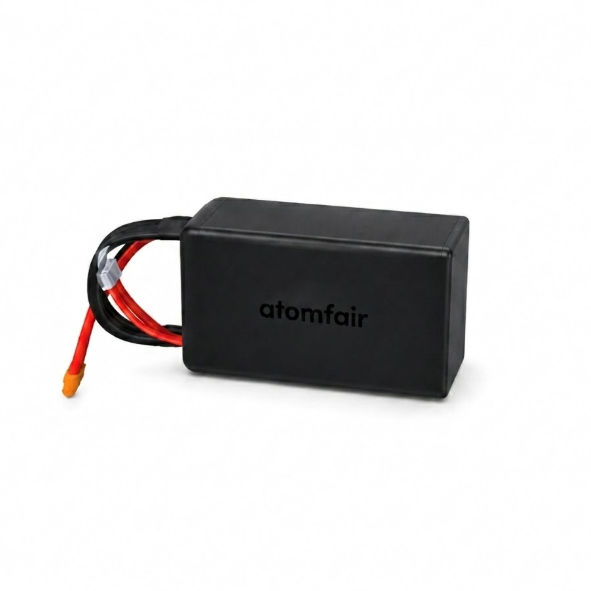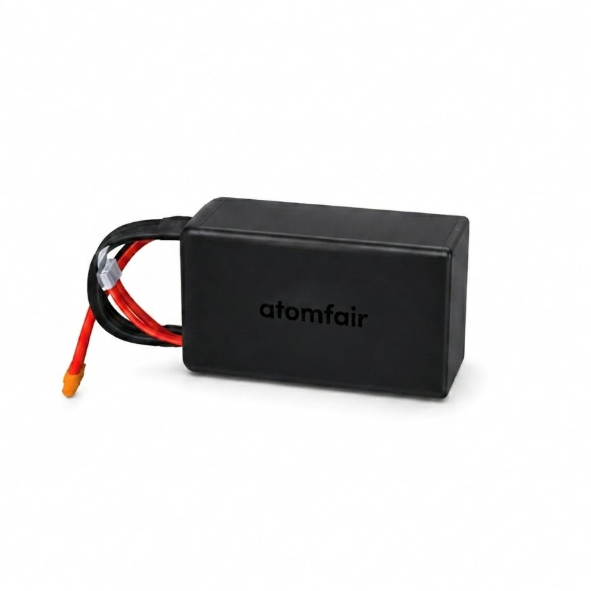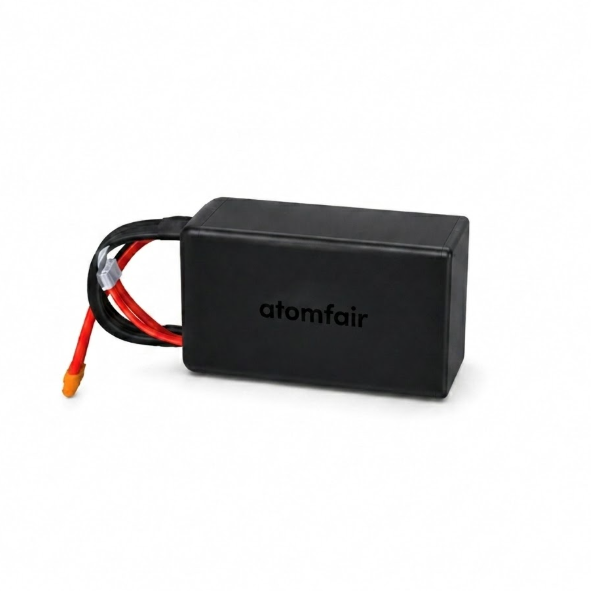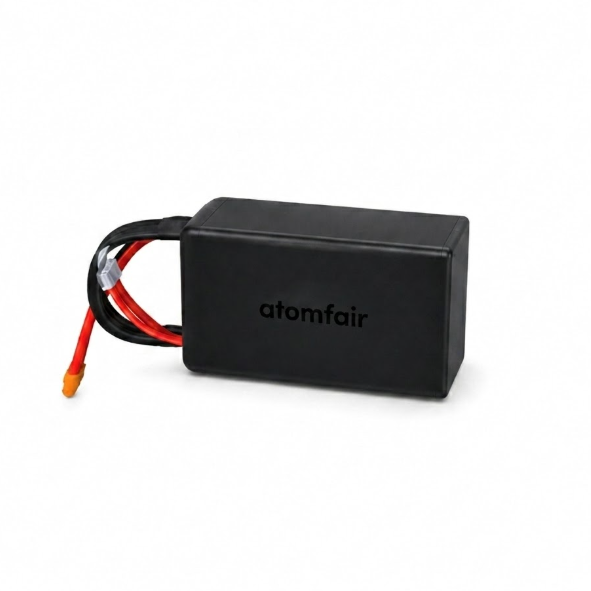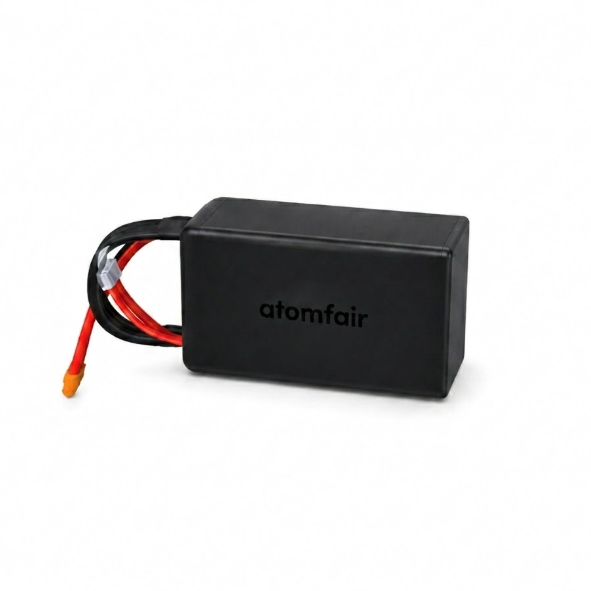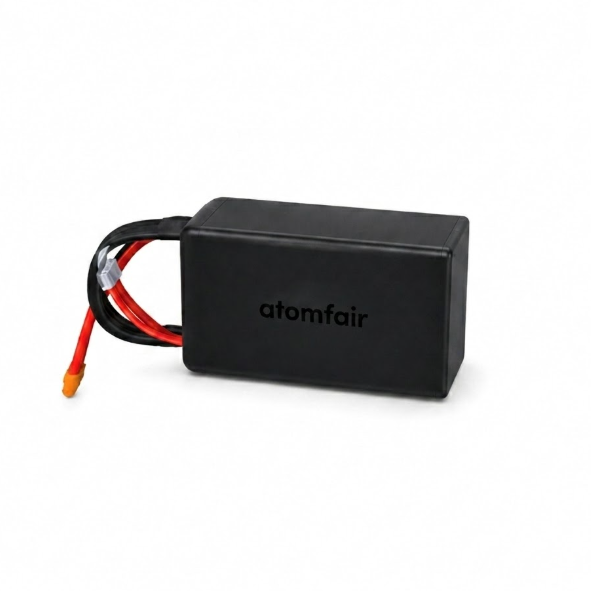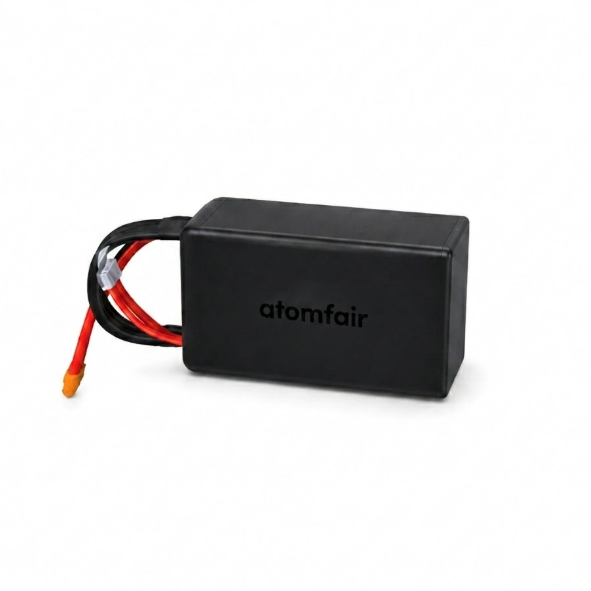
51.8V 14S Industrial High-Capacity UAV Battery Pack (320Wh/kg Series)| ATOMFAIRCOMMERCIAL GRADE · PRODUCTION
|
||||||||||||||||||||||||||||||
|
||||||||||||||||||||||||||||||
|
TAILORED SOLUTIONS FOR RESEARCH
Contact our engineering team for technical support or official institutional quotations.
EMAIL: inquiry@atomfair.com
|
||||||||||||||||||||||||||||||
|
Manufacturer: Atomfair LLC
Brand: ATOMFAIR®
|
||||||||||||||||||||||||||||||
This document outlines the critical environmental storage, operating temperature, and safety constraints for the high-energy-density lithium-ion battery pack. Strict adherence to intelligent battery management parameters and avoidance of physical impacts, deep discharge, and excessive heat are required to prevent degradation and ensure safe operation.
- Battery Management System (BMS) Requirement: Pair the pack with an intelligent battery management system (BMS) to monitor cell parameters in real-time.
- Physical Impact Avoidance: Avoid physical impacts to the battery pack during handling and installation to prevent structural damage.
- Deep Discharge Prevention: Do not discharge the pack below the minimum cutoff voltage to avoid permanent degradation.
- Temperature Exposure Limit: Store and operate the pack in environments with temperatures below 60 °C to prevent thermal damage.
- Connector Integrity: Use only approved heavy-gauge connectors and cabling to maintain electrical integrity and safety.
This guide provides chronological steps for safely initializing and deploying the high-capacity UAV battery pack. Follow these steps to ensure proper connection to a battery management system and avoid operational hazards.
Required Equipment: Compatible battery management system (BMS), Heavy-gauge connector cables (AS150, XT90-S, or military pins)
- Inspect the battery pack
Inspect the battery pack for any physical damage, deformation, or loose connectors before use. - Install the BMS
Install a compatible battery management system (BMS) to monitor cell voltage, temperature, and prevent over-discharge. - Set discharge cutoff limits
Set the discharge cutoff voltage on the BMS to the minimum limit specified for the pack to avoid deep discharge. - Attach connectors
Attach the appropriate heavy-gauge connectors (e.g., AS150, XT90-S) to the battery cabling as needed for the application. - Verify operating temperature
Verify the ambient temperature is below 60 °C before connecting the pack to the load or charger.
What is the maximum continuous discharge current for the 31 Ah and 36 Ah capacity variants of this 51.8V heavy-lift drone battery pack?
Both variants deliver a 7C continuous discharge rate. For the 31 Ah configuration, the maximum continuous current is 217 A; for the 36 Ah version, it is 252 A. This high current capability supports rapid acceleration and sustained power under heavy aerodynamic loads in industrial multi-rotor applications.
Which industrial connector options are available for integrating this battery pack into existing UAV systems?
The packs ship with heavy-gauge cabling and can be customized with connectors such as AS150, anti-spark XT90-S, or bespoke military power pins upon request. This flexibility allows direct integration with commercial fleet systems and research platforms requiring specific interconnect standards.
What operational safety measures are required for this high-voltage 14S lithium-ion battery pack?
Strict intelligent battery management system (BMS) balancing is required to control structural degradation. Avoid physical impacts, deep discharge cycles below minimum cutoff limits, and prolonged exposure to temperatures above 60 °C. The pack is approved under international transport safety parameters with official documentation for institutional operators.
This 51.8V 14S high-capacity UAV battery pack delivers 320 Wh/kg energy density with 7C continuous discharge up to 252A, enabling heavy-lift logistics and long-endurance UAV operations, but requires strict battery management and thermal protection to avoid degradation.
Positive
- High gravimetric energy density 320 Wh/kg: Strips deadweight from heavy airframes, maximizing useful commercial payload limits for industrial UAV applications.
- Aggressive 7C continuous discharge capability: Delivers massive continuous amperages up to 252A, satisfying rapid acceleration commands and high aerodynamic drag loads seamlessly.
Trade-offs
- Requires strict intelligent battery management: Demands advanced monitoring and balancing to control structural degradation trails; must be paired with management components for real-time cell parameter monitoring.
- Sensitive to deep discharge and high temperatures: Avoid physical impacts, deep discharge cycles below minimum cutoff limits, and prolonged exposure to heat zones above 60°C to prevent damage.
Every advanced material, component, equipment, and instrument in our catalog is backed by rigorous testing. We maintain strict internal quality management frameworks and align with CE conformity metrics to deliver transparent, reproducible performance data via our public open-science repository.
To request raw batch performance data, submit formal vendor registration paperwork, or execute a fast-turnaround R&D manufacturing loop, contact us at inquiry@atomfair.com.
Item is dispatched under the Atomfair Shipping & Delivery Framework (Free worldwide shipping on orders over $59 USD excl. heavy equipment). Return is governed by the Atomfair Return & Refund Policy (7-day technical return window).