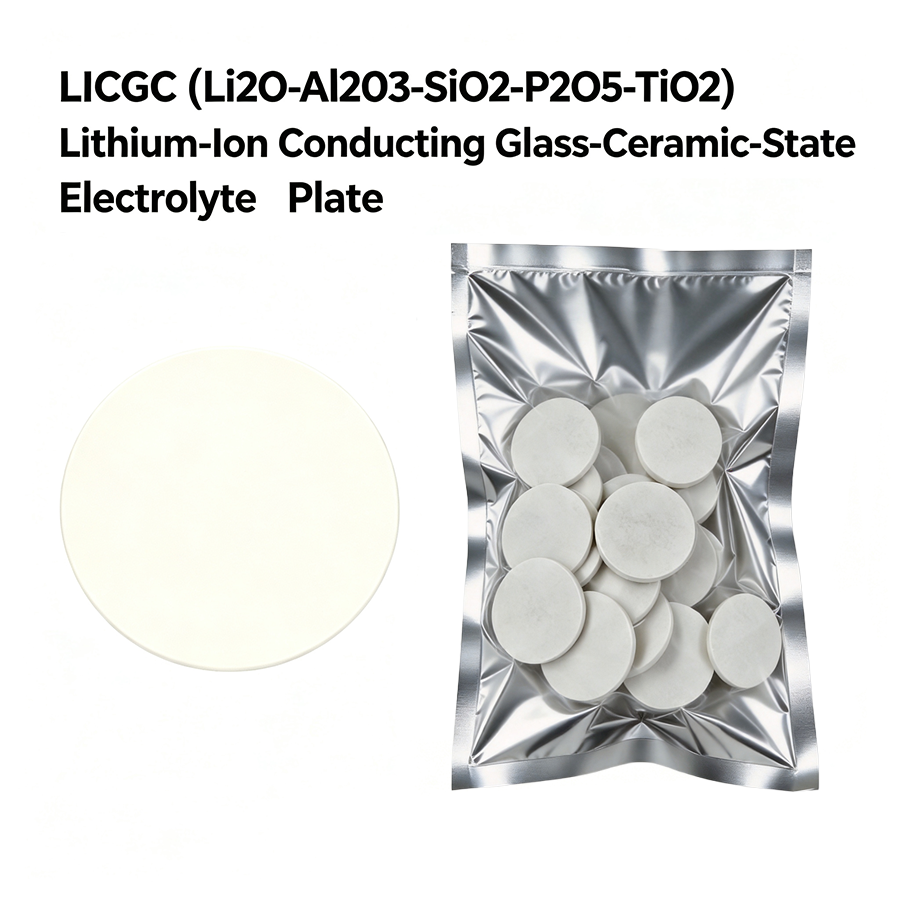
LICGC (Li2O-Al2O3-SiO2-P2O5-TiO2) Lithium-Ion Conducting Glass-Ceramic Solid-State Electrolyte PlateOxide Solid-State Electrolytes
|
|||||||||||||||||||||||
|
|||||||||||||||||||||||
|
Store the LICGC plate in a clean, dry, protected container to prevent moisture degradation. Confirm exact dimensions and handling requirements with the supplier to avoid mechanical damage during assembly.
- Storage and Handling Requirements: Store in a clean, dry, protected container and verify dimensions and handling specifications with the supplier prior to use.
What is the ionic conductivity of the LICGC plate at room temperature and what does it indicate for solid-state battery research?
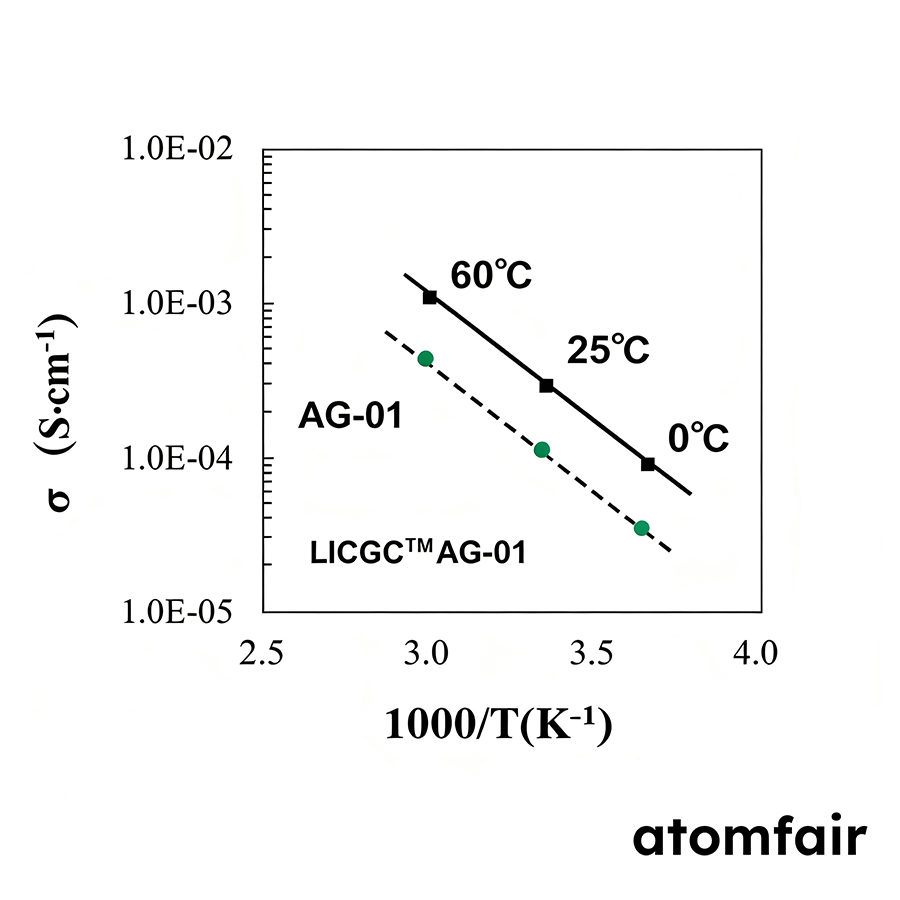
The LICGC plate exhibits an ionic conductivity of 3 × 10⁻⁴ mS/cm at 25 °C, as specified in the product data. This value is typical for lithium-ion conducting glass-ceramics and makes the plate suitable for electrochemical separator studies and all-solid-state lithium battery research.
What are the physical dimensions of the LICGC plate and how is it typically integrated into a solid-state cell assembly?
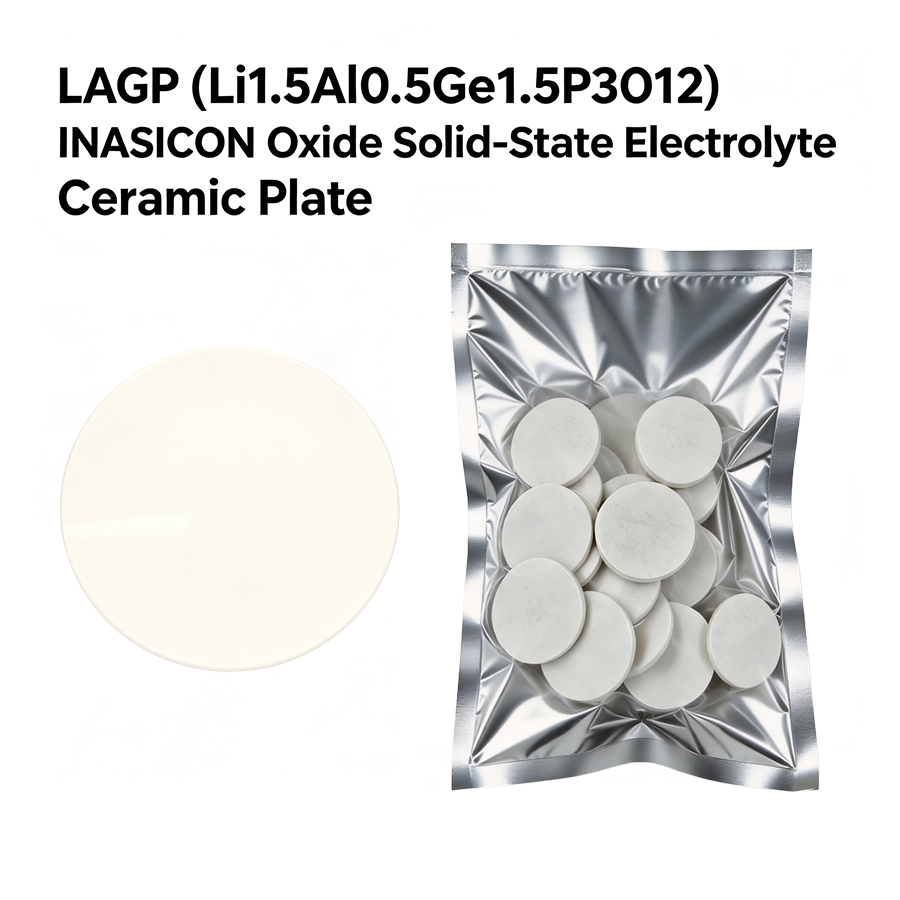
The plate is supplied as a preformed disc with a diameter of 19 mm and a thickness of 0.15 mm. It is designed for direct use as a separator or solid electrolyte in coin cells or custom test fixtures, enabling all-solid-state lithium battery and electrochemical transport measurements.
What are the recommended storage and handling precautions for the LICGC glass-ceramic electrolyte plate?
Store the plate in a clean, dry, protected container to avoid contamination or moisture uptake. Because it is a glass-ceramic material, handle with care to prevent mechanical damage such as cracking or chipping. Confirm specific handling requirements with the supplier prior to use.
This LICGC preformed plate offers a ready-to-use glass-ceramic solid electrolyte for all-solid-state battery research, with a measured ionic conductivity of 3×10⁻⁴ mS/cm at 25°C. Its fixed geometry and handling sensitivity are key considerations for experimental integration.
Positive
- Preformed glass-ceramic plate: Supplied as a ready-to-use plate, eliminating the need for powder pressing or sintering steps and enabling direct integration as a separator or solid electrolyte in solid-state cell assemblies.
- Lithium-ion conducting glass-ceramic: The Li2O-Al2O3-SiO2-P2O5-TiO2 composition provides chemical stability against lithium metal and mechanical integrity, making it suitable for separator and solid-state electrolyte studies.
Trade-offs
- Low ionic conductivity: The specified ionic conductivity of 3×10⁻⁴ mS/cm at 25°C is relatively low compared to other solid electrolytes, which may limit rate capability and performance in high-current-density applications.
- Fragile thin ceramic plate: The plate dimension of φ19 mm × 0.15 mm makes it mechanically fragile; it requires careful handling and storage in a clean, dry, protected environment to avoid fracture or moisture-induced degradation.
Every advanced material, component, equipment, and instrument in our catalog is backed by rigorous testing. We maintain strict internal quality management frameworks and align with CE conformity metrics to deliver transparent, reproducible performance data via our public open-science repository.
To request raw batch performance data, submit formal vendor registration paperwork, or execute a fast-turnaround R&D manufacturing loop, contact us at inquiry@atomfair.com.
Item is dispatched under the Atomfair Shipping & Delivery Framework (Free worldwide shipping on orders over $59 USD excl. heavy equipment). Return is governed by the Atomfair Return & Refund Policy (7-day technical return window).