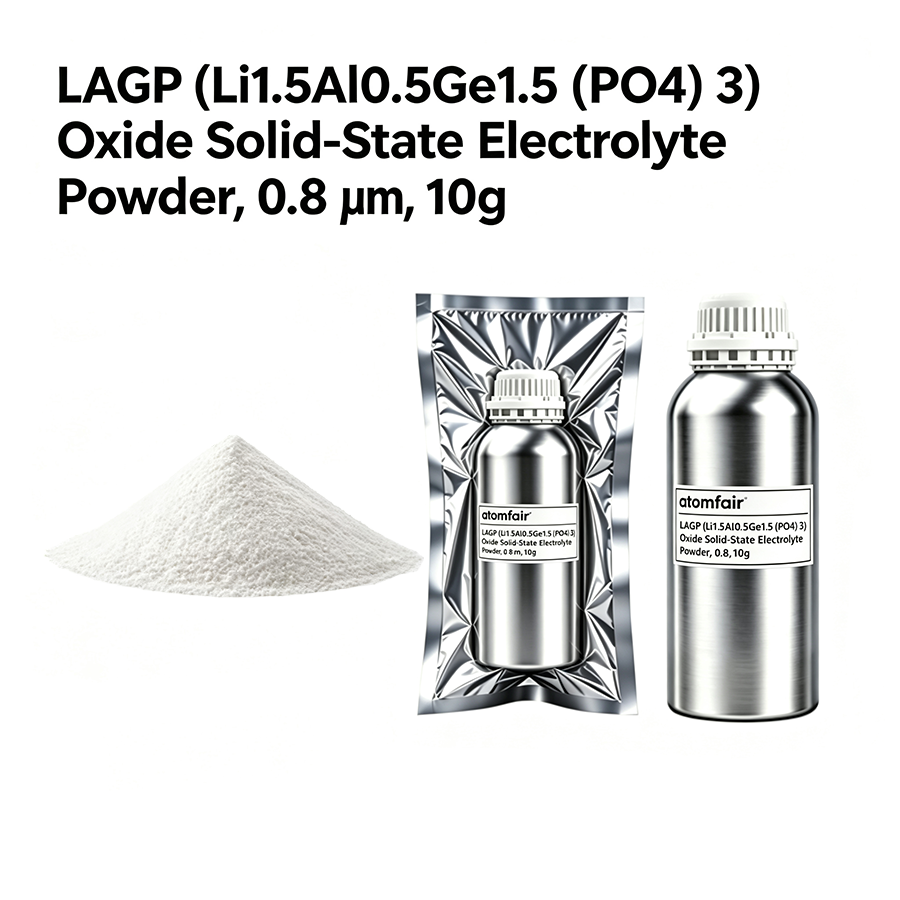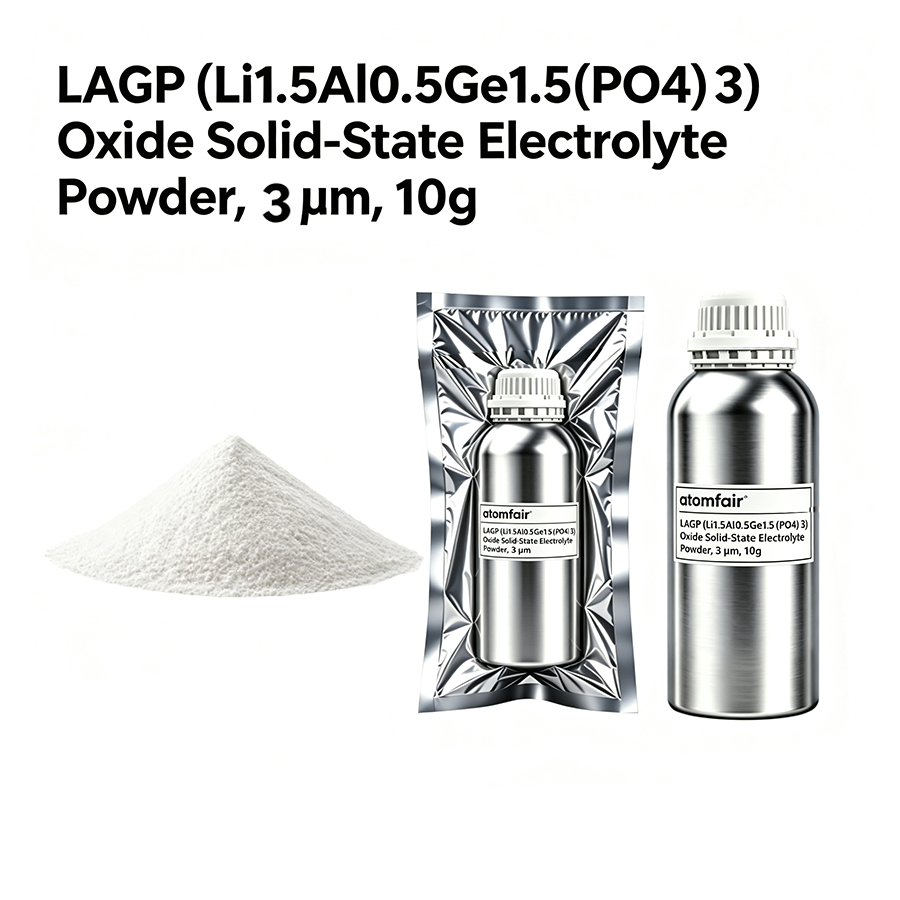
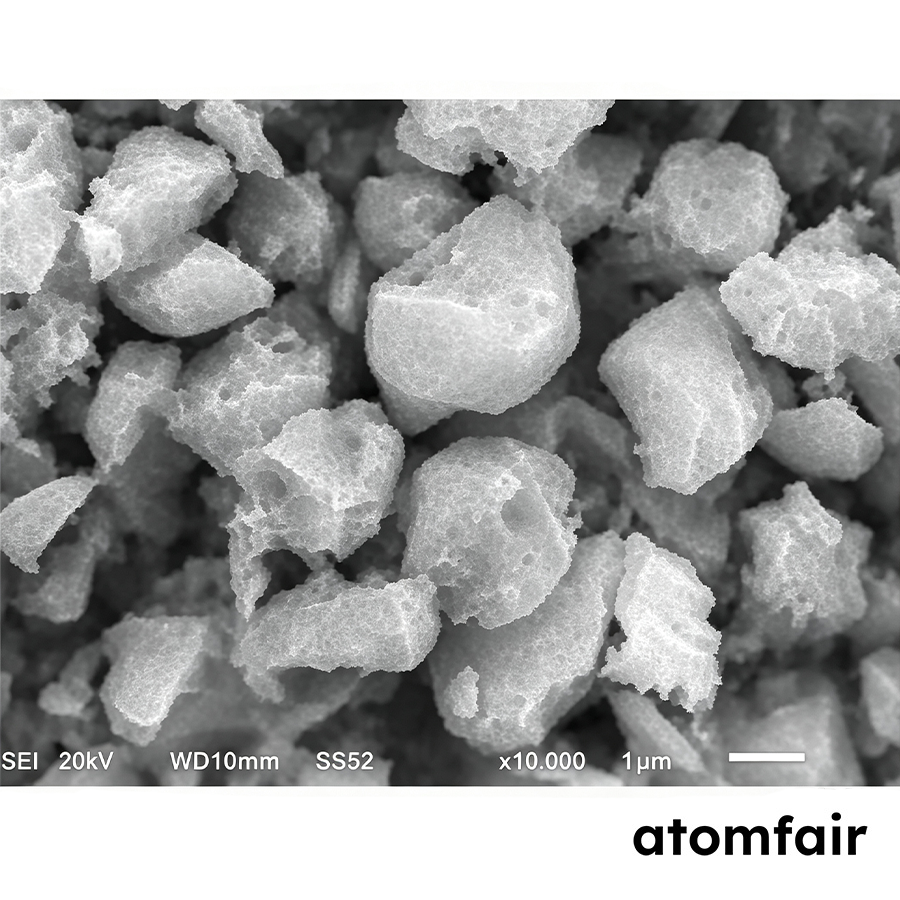
LAGP (Li1.5Al0.5Ge1.5(PO4)3) Oxide Solid-State Electrolyte Powder,3 UmOxide Solid-State Electrolytes
|
|||||||||||||||||||||||||||||
|
|||||||||||||||||||||||||||||
|
This material requires pressing into pellets and sintering at 800–900°C to form dense ceramic films. It is stable with high-voltage cathodes but demands interfacial engineering for direct contact with lithium metal anodes.
- Sintering Requirement: Pellets must be sintered at 800–900°C to achieve dense ceramic films for solid-state battery applications.
- Cathode Compatibility: LAGP is compatible with most high-voltage cathode materials and can be mixed to form composite catholytes.
- Lithium Metal Interface: Direct contact with lithium metal anodes requires interfacial coatings or layers to prevent dendrite growth and maintain stability.
- Storage Conditions: Store hermetically in a dry, well-ventilated environment away from heat, sunlight, and moisture to preserve performance.
This guide outlines the steps to process LAGP powder into solid electrolyte films or composite cathodes. It covers pressing, sintering, and assembly considerations for solid-state batteries.
Required Equipment: Uniaxial press, Furnace capable of 800–900°C, Mixing equipment for composite catholyte
- Press Pellet
Press the LAGP powder into a pellet using a uniaxial press at the desired pressure for initial compaction. - Sinter Pellet
Sinter the pellet in a furnace at 800–900°C to densify the ceramic electrolyte and achieve high ionic conductivity. - Prepare Composite Cathode (Optional)
Mix the LAGP powder with cathode active material before pressing and sintering to form a composite catholyte. - Apply Interfacial Layer
Apply an interfacial coating or layer to the LAGP surface when assembling cells with lithium metal anodes to ensure stable contact. - Store Powder Properly
Store the remaining powder in a hermetically sealed container in a dry environment to prevent moisture uptake.
What is the recommended sintering temperature range for LAGP powder to achieve optimal ionic conductivity?
The typical sintering temperature range for LAGP powder is 800–900 °C, which yields ionic conductivities of 3–6 × 10⁻⁴ S/cm as specified in the product data. The source does not state a single optimal temperature within this range; optimization depends on pellet densification and grain boundary resistance.
Is LAGP compatible with lithium metal anodes and high-voltage cathodes in solid-state batteries?
LAGP is stable with most high-voltage cathode materials and is commonly used as a catholyte in composite cathodes. However, direct contact with lithium metal anodes requires strategic interfacial engineering—such as coatings or intermediary layers—to promote stable anode/electrolyte interfaces and prevent degradation.
What are the recommended storage conditions for LAGP oxide solid-state electrolyte powder?
The powder should be stored hermetically at ambient or low temperature in a dry, well-ventilated environment, away from ignition sources and heat. Avoid sunlight exposure, high-temperature baking, and rain exposure during transportation to maintain purity and performance.
LAGP (Li1.5Al0.5Ge1.5(PO4)3) oxide solid-state electrolyte powder offers high ionic conductivity (3–6×10⁻⁴ S/cm) and superior mechanical strength for dendrite resistance, but requires high-temperature sintering (800–900°C) for pellet formation and interfacial engineering for lithium metal anode compatibility.
Positive
- High lithium-ion conductivity: Ionic conductivity of 3–6×10⁻⁴ S/cm enables efficient ion transport in solid-state battery and composite catholyte applications.
- Superior mechanical strength for dendrite resistance: Thin films exhibit strong mechanical properties that resist lithium dendrite growth and maintain structural integrity within battery cells.
Trade-offs
- Requires high-temperature sintering: Processing into thin films or pellets demands sintering at 800–900°C, adding thermal infrastructure and energy requirements.
- Interfacial engineering needed for lithium metal anode: Direct contact with lithium metal requires strategic coatings or intermediary layers to stabilize the anode/electrolyte interface.
Every advanced material, component, equipment, and instrument in our catalog is backed by rigorous testing. We maintain strict internal quality management frameworks and align with CE conformity metrics to deliver transparent, reproducible performance data via our public open-science repository.
To request raw batch performance data, submit formal vendor registration paperwork, or execute a fast-turnaround R&D manufacturing loop, contact us at inquiry@atomfair.com.
Item is dispatched under the Atomfair Shipping & Delivery Framework (Free worldwide shipping on orders over $59 USD excl. heavy equipment). Return is governed by the Atomfair Return & Refund Policy (7-day technical return window).