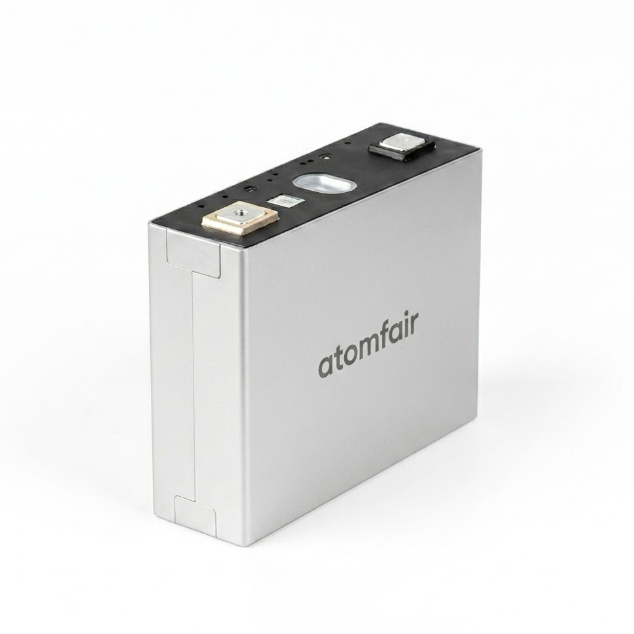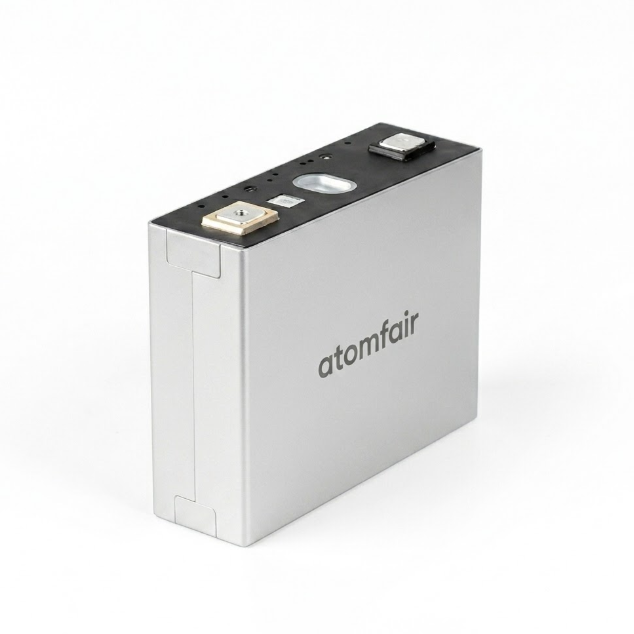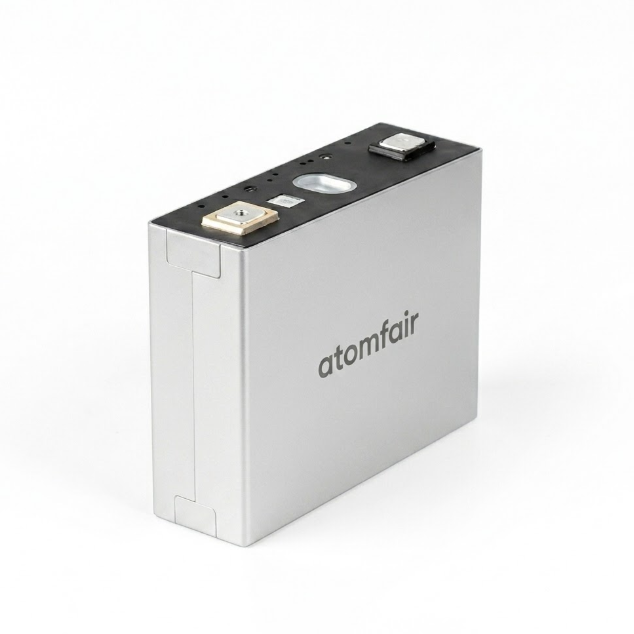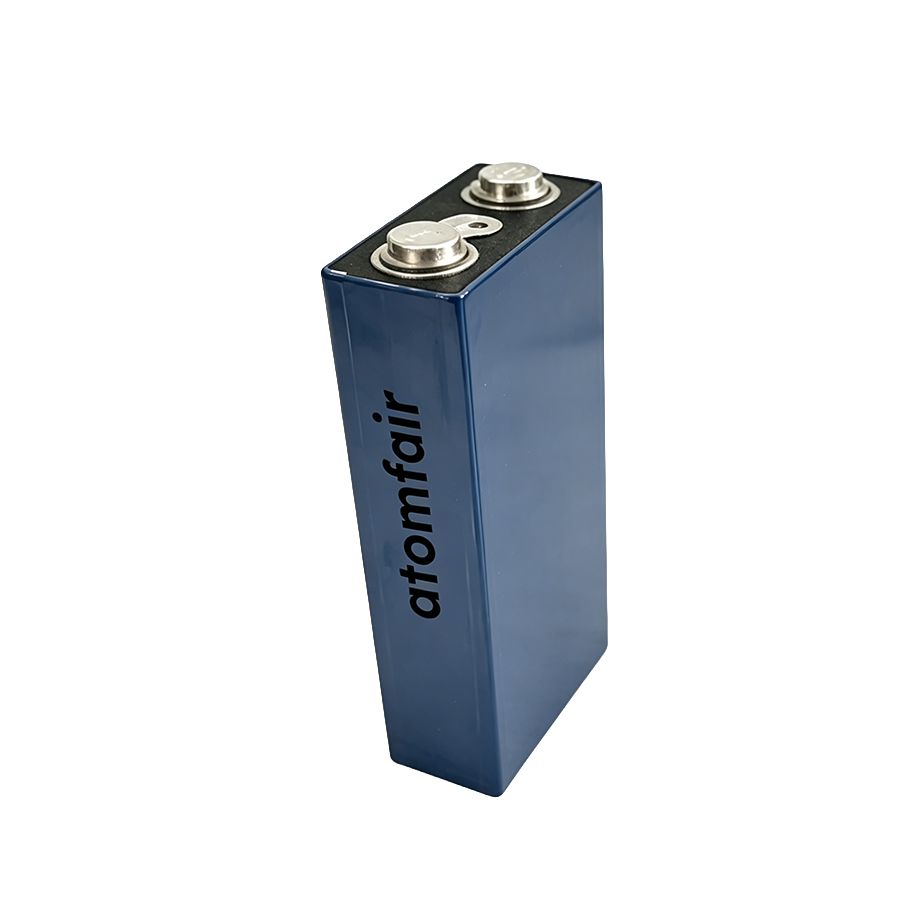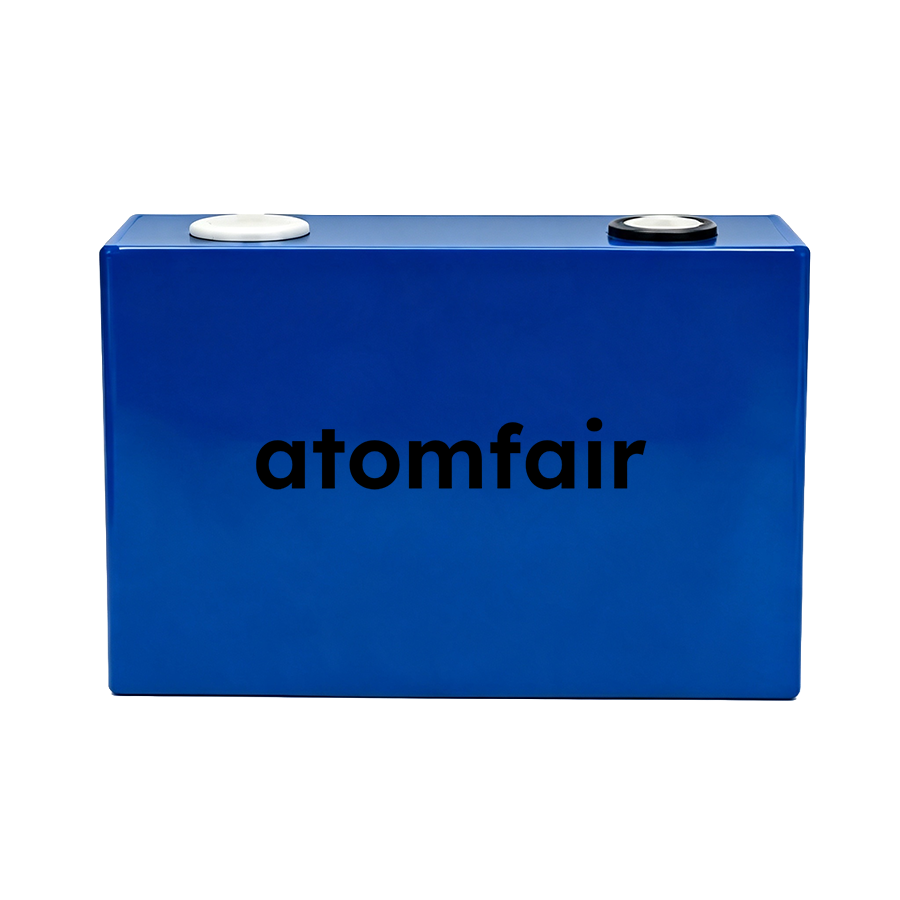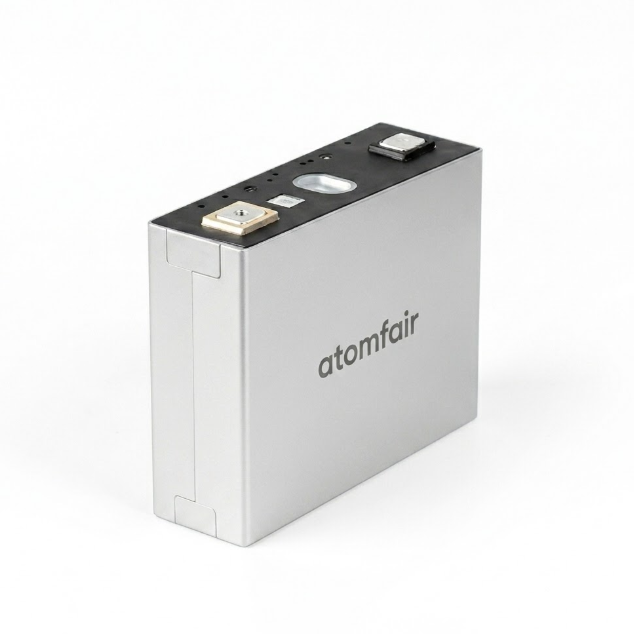
3.20V 50Ah LFP Prismatic Cell | ATOMFAIRCOMMERCIAL GRADE · PRODUCTION
|
|||||||||||||||||||||||||
|
|||||||||||||||||||||||||
|
TAILORED SOLUTIONS FOR RESEARCH
Contact our engineering team for technical support or official institutional quotations.
EMAIL: INQUIRY@ATOMFAIR.COM
|
|||||||||||||||||||||||||
|
Manufacturer: ATOMFAIR LLC
Brand: ATOMFAIR®
|
The cell requires a dedicated BMS with over-discharge, over-charge, short-circuit, and cell balancing protection. Storage and operation must be within the manufacturer's specified temperature range, and the cell must be protected from mechanical deformation, short circuits, and moisture.
- BMS Requirement: Always use a dedicated BMS with over-discharge, over-charge, short-circuit, and cell balancing protection.
- Voltage Window: Charge within the manufacturer's recommended voltage window.
- Rate Limits: Do not exceed the rated continuous charge or discharge rates.
- Temperature and Environment: Store and operate within the appropriate temperature range and avoid moisture exposure.
- Mechanical Integrity: Avoid mechanical deformation or short circuits.
This procedure describes the safe handling and initial deployment of the LFP prismatic cell. Steps include connecting to a BMS, verifying voltage limits, and pre-conditioning the cell before first use.
Required Equipment: Dedicated BMS with over-discharge, over-charge, short-circuit, and cell balancing protection
- Inspect Cell
Inspect the cell for any mechanical deformation or damage before handling. - Connect BMS
Connect the cell to a dedicated BMS with over-discharge, over-charge, short-circuit, and cell balancing protection. - Verify Voltage Window
Verify that the charging voltage does not exceed the manufacturer's recommended voltage window. - Confirm Rate Limits
Confirm that the charge and discharge current do not exceed the rated 1C continuous rate. - Pre-Condition Cell
Pre-condition the cell at a suitable temperature before first use as per the manufacturer's guidelines.
What is the maximum continuous charge and discharge rate for the ATOMFAIR 3.20V 50Ah LFP prismatic cell?
The maximum continuous charge and discharge rate is 1.0C (50A). At this rate, the cell achieves ≥4000 cycles to 80% capacity retention at 100% DOD. Exceeding the 1C rate is not recommended and may reduce cycle life or compromise safety.
What kind of battery management system (BMS) is required for the ATOMFAIR 50Ah LFP cell?
A dedicated BMS with over-discharge, over-charge, short-circuit, and cell balancing protection is mandatory. The cell must be charged within the manufacturer’s recommended voltage window. The BMS is critical for safe operation in energy storage systems.
What are the recommended storage and handling conditions for the ATOMFAIR 3.2V 50Ah LFP prismatic cell?
The cell is shipped in humidity-controlled vacuum sealed packaging with individual cell isolation. Store and operate within the appropriate temperature range for optimal cycle life. Avoid mechanical deformation or short circuits, and precondition cells at a suitable temperature before first use. Dispose of cells in accordance with local regulations.
This 3.20V 50Ah LFP prismatic cell offers a cycle life of ≥4000 cycles at 1C/1C and 100% DOD with 80% retention, making it suitable for deep-cycle ESS applications. Its LFP chemistry provides inherent thermal stability, but operation requires a dedicated BMS and strict adherence to temperature and voltage windows.
Positive
- Ultra-long cycle life at 1C/1C: ≥4000 cycles at 1C/1C, 100% DOD with 80% capacity retention enables reliable daily deep cycling in stationary storage applications.
- Intrinsic safety of LFP chemistry: Lithium iron phosphate chemistry provides excellent thermal and chemical stability, reducing the risk of thermal runaway and improving operational safety.
Trade-offs
- Requires dedicated BMS protection: A battery management system with over-discharge, over-charge, short-circuit, and cell balancing protection is mandatory for safe operation and to prevent damage.
- Performance sensitive to temperature and humidity: Optimal cycle life and capacity retention require operation within specified temperature range and storage in humidity-controlled conditions; preconditioning before first use is necessary.
Every advanced material, component, equipment, and instrument in our catalog is backed by rigorous testing. We maintain strict internal quality management frameworks and align with CE conformity metrics to deliver transparent, reproducible performance data via our public open-science repository.
To request raw batch performance data, submit formal vendor registration paperwork, or execute a fast-turnaround R&D manufacturing loop, contact us at inquiry@atomfair.com.
Item is dispatched under the Atomfair Shipping & Delivery Framework (Free worldwide shipping on orders over $59 USD excl. heavy equipment). Return is governed by the Atomfair Return & Refund Policy (7-day technical return window).