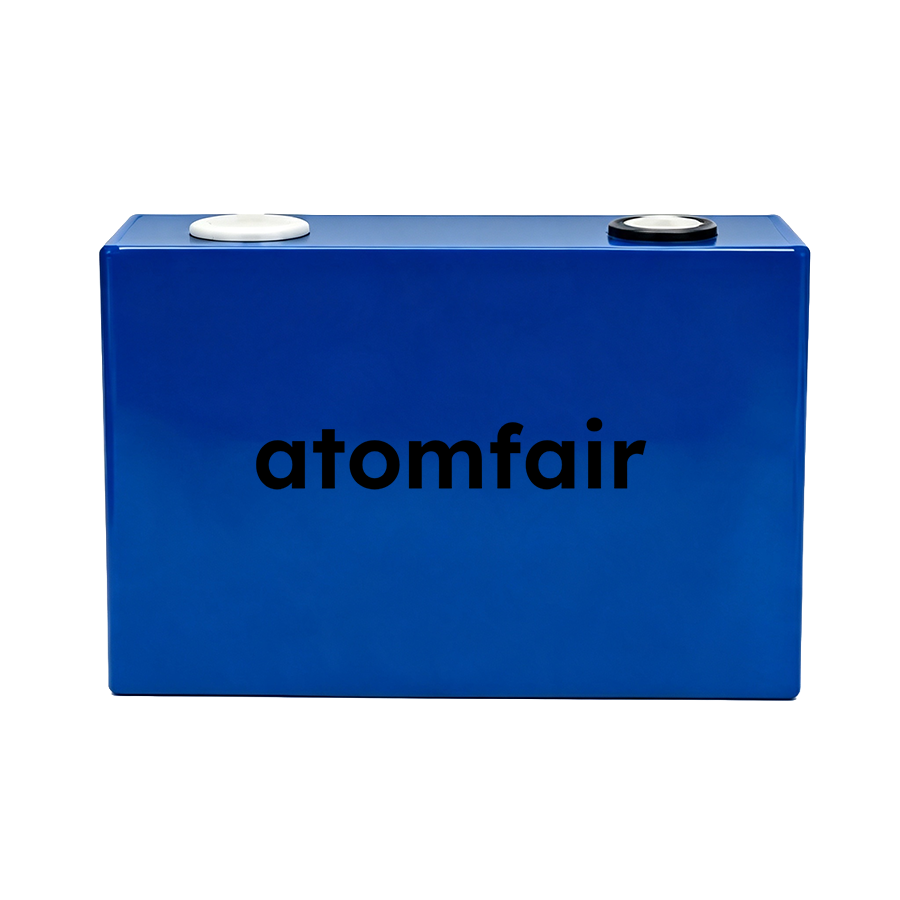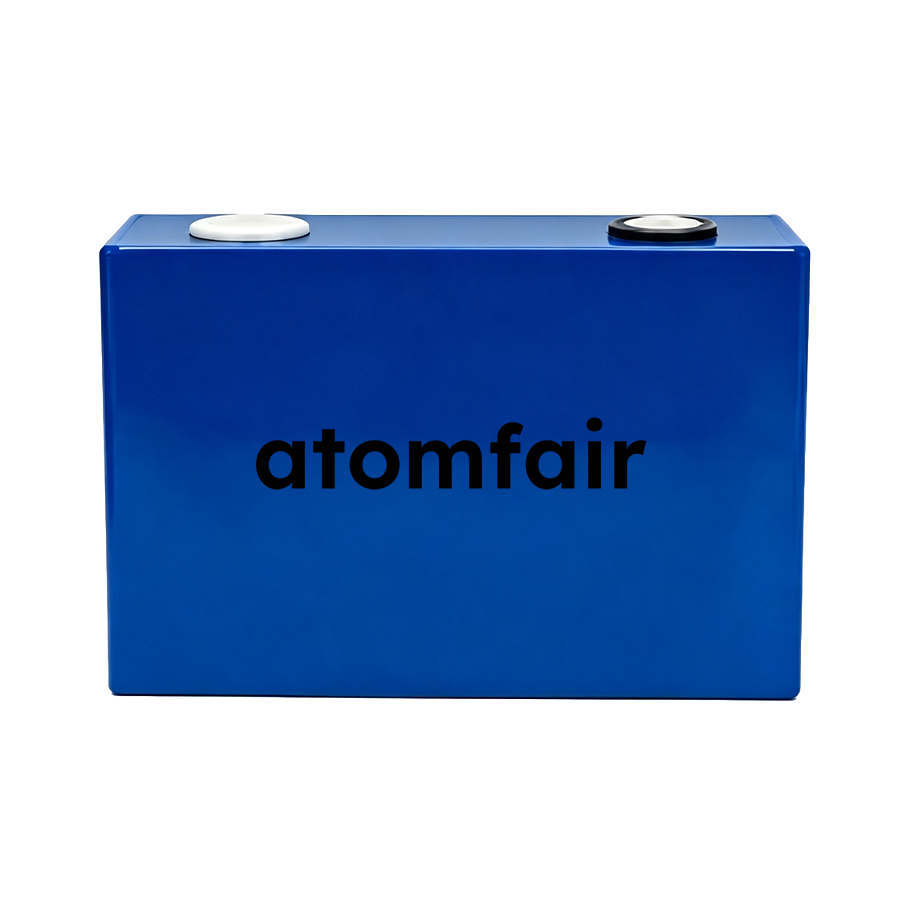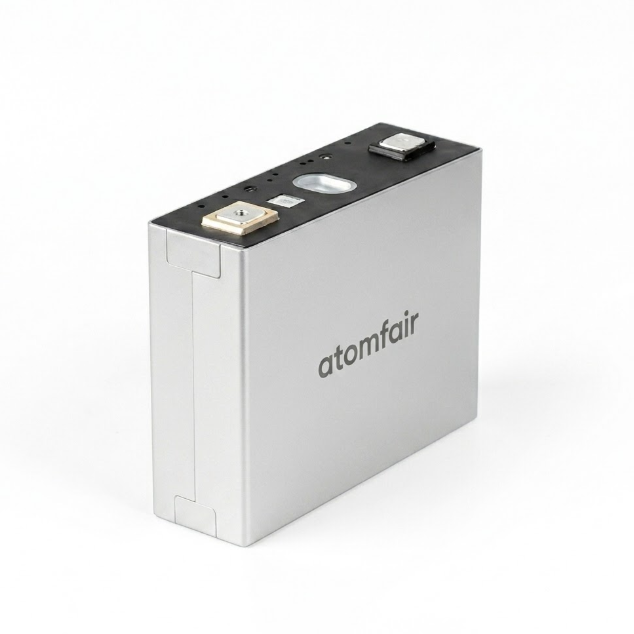
3.20V 588Ah LFP Prismatic Cell Series | ATOMFAIRCOMMERCIAL GRADE · PRODUCTION
|
|||||||||||||||||||||||||||||||||||||
|
|||||||||||||||||||||||||||||||||||||
|
TAILORED SOLUTIONS FOR RESEARCH
Contact our engineering team for technical support or official institutional quotations.
EMAIL: INQUIRY@ATOMFAIR.COM
|
|||||||||||||||||||||||||||||||||||||
|
MANUFACTURER: ATOMFAIR LLC
BRAND: ATOMFAIR®
|
This cell requires dedicated BMS protection and operation within specified voltage and temperature limits to ensure safety and longevity. Storage must be in humidity-controlled packaging with individual cell isolation to prevent mechanical damage and electrical hazards.
- Storage Environment: Store cells in the original humidity-controlled vacuum sealed packaging with anti-static foam lining to prevent moisture ingress and electrostatic discharge.
- BMS Requirement: Always connect the cell to a dedicated BMS with over-discharge, over-charge, short-circuit protection, and cell balancing functions.
- Voltage and Temperature Limits: Operate the cell strictly within the recommended voltage window and under suitable temperature conditions to avoid degradation or failure.
- Mechanical Abuse Prevention: Avoid mechanical abuse, deep over-discharge, or short circuits to prevent damage or thermal events.
- Disposal: Dispose of used cells in accordance with local regulations to ensure environmental compliance.
This procedure outlines safe unpacking, BMS integration, and conditioning steps for the first use. Proper execution minimizes risk of damage and ensures optimal performance within the cell's design limits.
Required Equipment: Dedicated Battery Management System (BMS) with over-discharge, over-charge, short-circuit protection, and cell balancing
- Inspect Packaging
Inspect the vacuum-sealed packaging for any signs of damage or punctures before opening the carton. - Connect BMS
Connect the cell to a dedicated BMS that provides over-discharge, over-charge, short-circuit protection, and cell balancing. - Condition Cell
Condition the cell under standard ambient conditions as advised prior to first use to ensure stable performance.
What is the cycle life difference between the AFLFP588-8K and AFLFP588-12K models, and which applications require the extended-life variant?
The AFLFP588-8K offers ≥8000 cycles, while the AFLFP588-12K offers ≥12000 cycles at 0.5C/0.5C, 100% DOD, 70% retention. The 12K variant is recommended for daily deep-cycling applications such as utility-scale storage requiring decades of service, while the 8K is suitable for standard ESS projects. Both variants share identical dimensions, weight, and energy density, so the selection depends solely on the required cycle life.
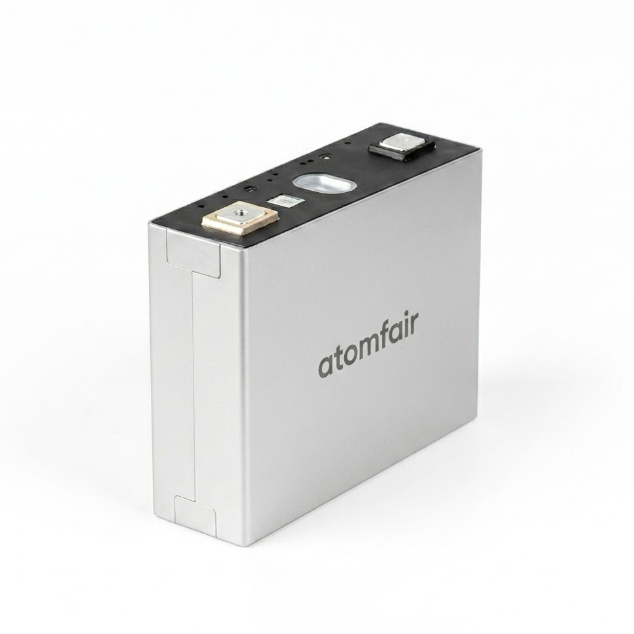
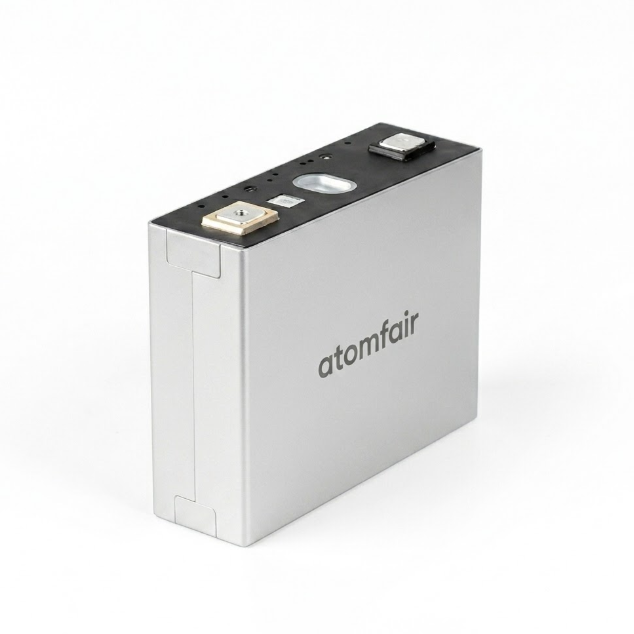
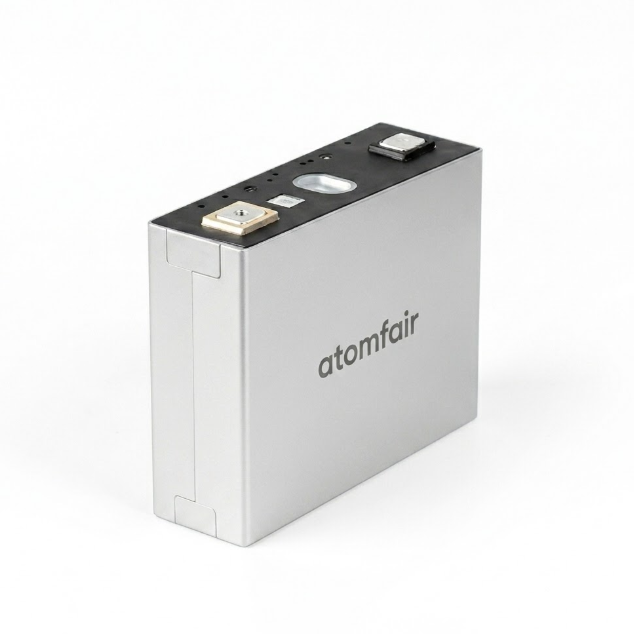
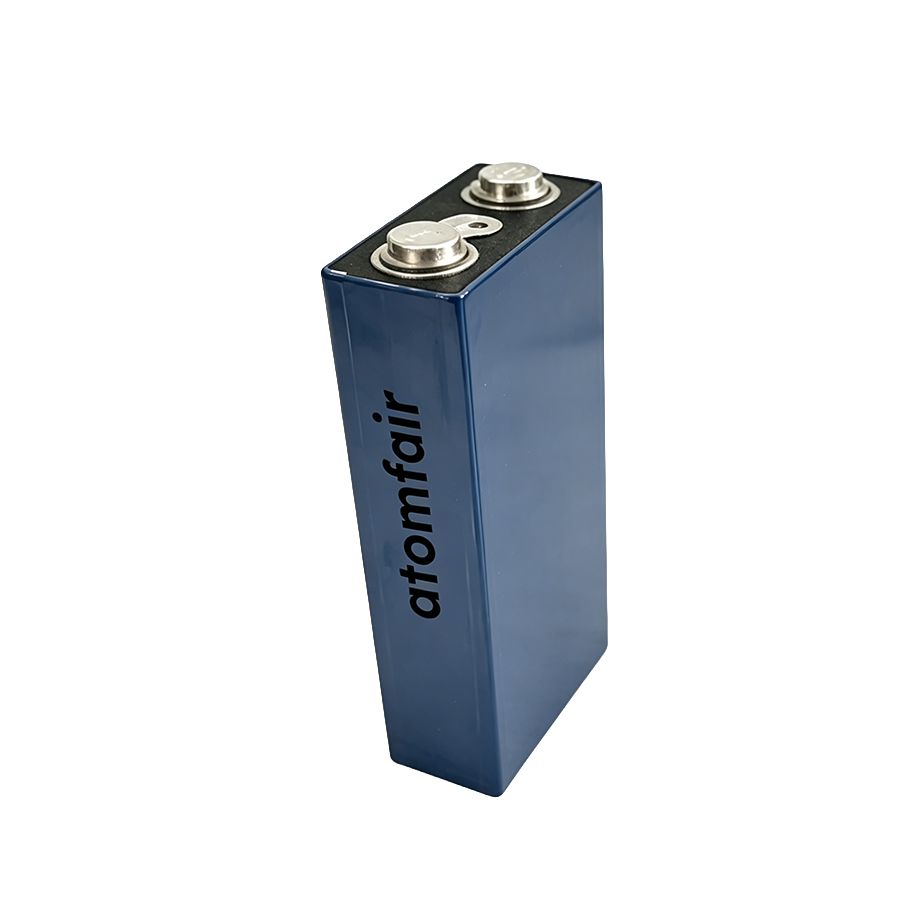
What are the exact mechanical dimensions of the 588Ah LFP prismatic cell, and how does the uniform footprint benefit pack integration?
Both variants measure 72.5 × 288.0 × 216.3 mm including the terminal, with a weight under 10.0 kg. The identical footprint enables drop-in replacement between the two models and simplifies pack design by eliminating the need for mechanical redesign when switching between the 8K and 12K variants.
Why is the 0.5C continuous charge/discharge rate optimal for ESS applications, and what are the performance trade-offs?
The 0.5C rate matches typical ESS duty cycles, balancing reliable operation with extended cycle life. It enables stable continuous charging and discharging for grid-scale, C&I, and renewable integration. The cell is not designed for higher rates; the 0.5C limit ensures thermal stability and supports the 8000–12000 cycle life ratings at 100% DOD.
The ATOMFAIR 3.20V 588Ah LFP prismatic cell series delivers 187Wh/kg energy density and dual cycle life options (≥8000 or ≥12000 cycles) for stationary ESS, but its 0.5C max continuous rate limits high-power applications, and it requires a dedicated BMS with strict voltage/temperature management for safe operation.
Positive
- Ultra-high energy density 187 Wh/kg: The 187 Wh/kg weight energy density reduces system footprint and total weight for utility-scale storage, enabling more compact ESS installations.
- Dual cycle life options for ESS: Offers ≥8000 cycles for standard projects or ≥12000 cycles for ultra-long-life applications at 0.5C/0.5C, 100% DOD, 70% retention, matching decades of daily cycling.
Trade-offs
- Limited to 0.5C continuous rate: Max continuous charge/discharge rate of 0.5C restricts use in applications requiring higher power throughput, such as fast charging or high-rate discharge scenarios.
- Requires dedicated BMS and controlled conditions: Operational safety and longevity depend on a BMS with over-discharge, over-charge, short-circuit protection and cell balancing, plus strict adherence to voltage window and temperature limits.
Every advanced material, component, equipment, and instrument in our catalog is backed by rigorous testing. We maintain strict internal quality management frameworks and align with CE conformity metrics to deliver transparent, reproducible performance data via our public open-science repository.
To request raw batch performance data, submit formal vendor registration paperwork, or execute a fast-turnaround R&D manufacturing loop, contact us at inquiry@atomfair.com.
Item is dispatched under the Atomfair Shipping & Delivery Framework (Free worldwide shipping on orders over $59 USD excl. heavy equipment). Return is governed by the Atomfair Return & Refund Policy (7-day technical return window).