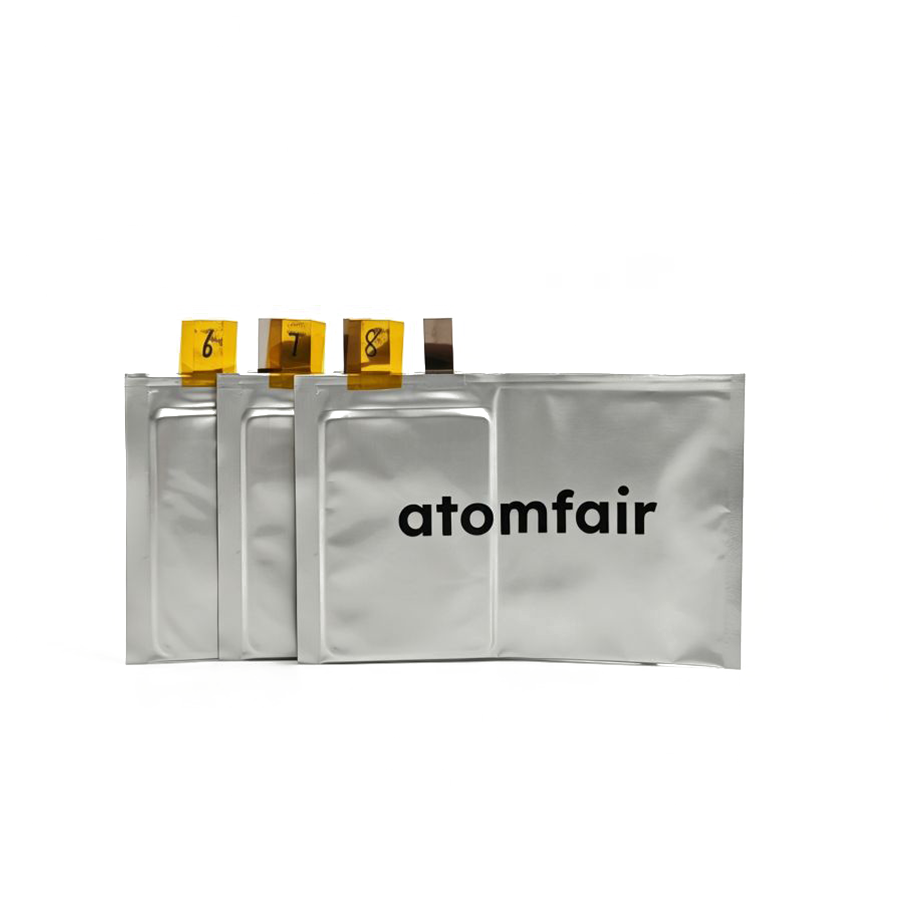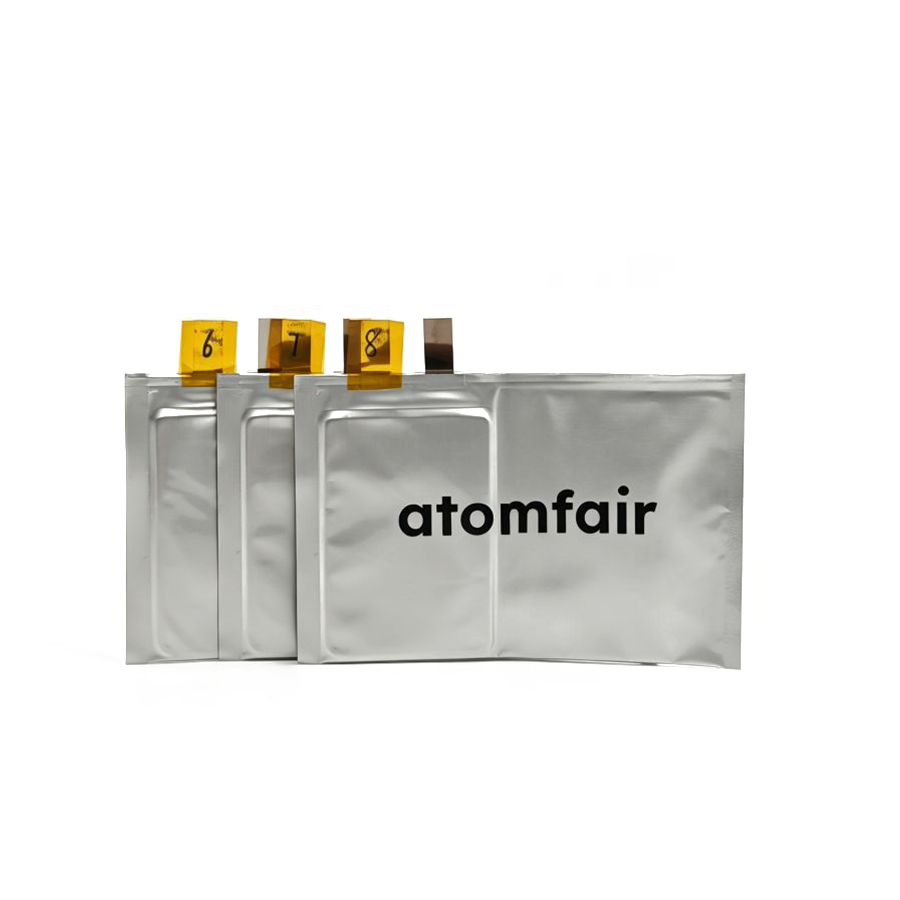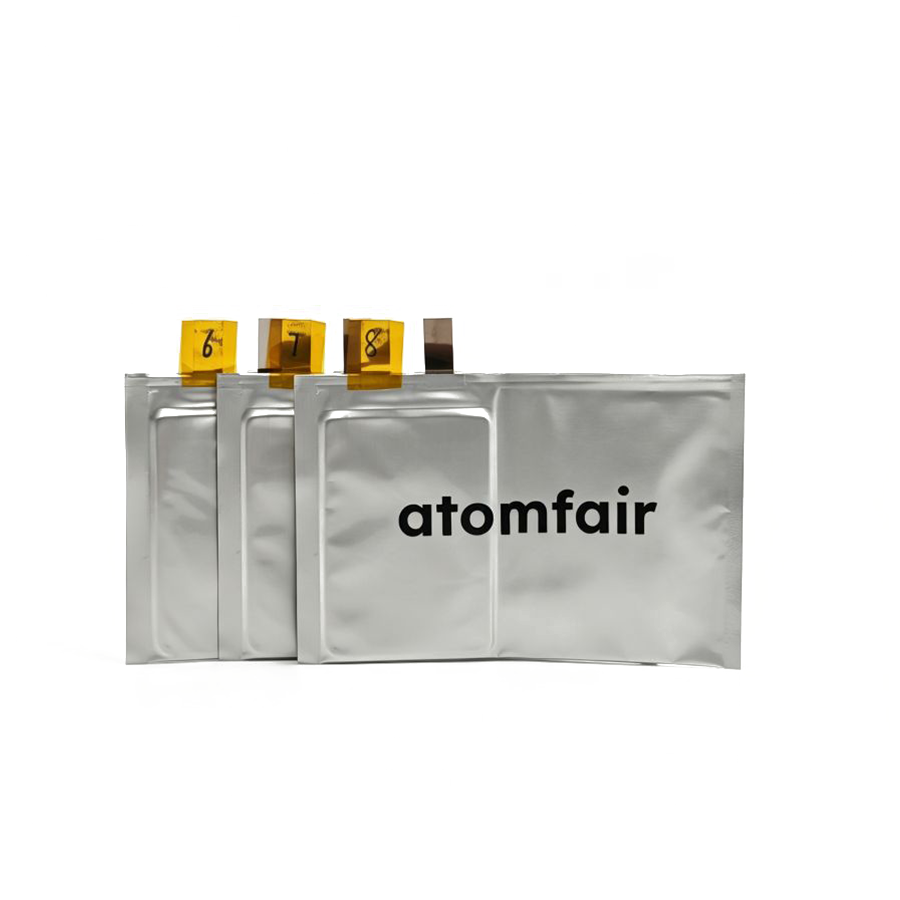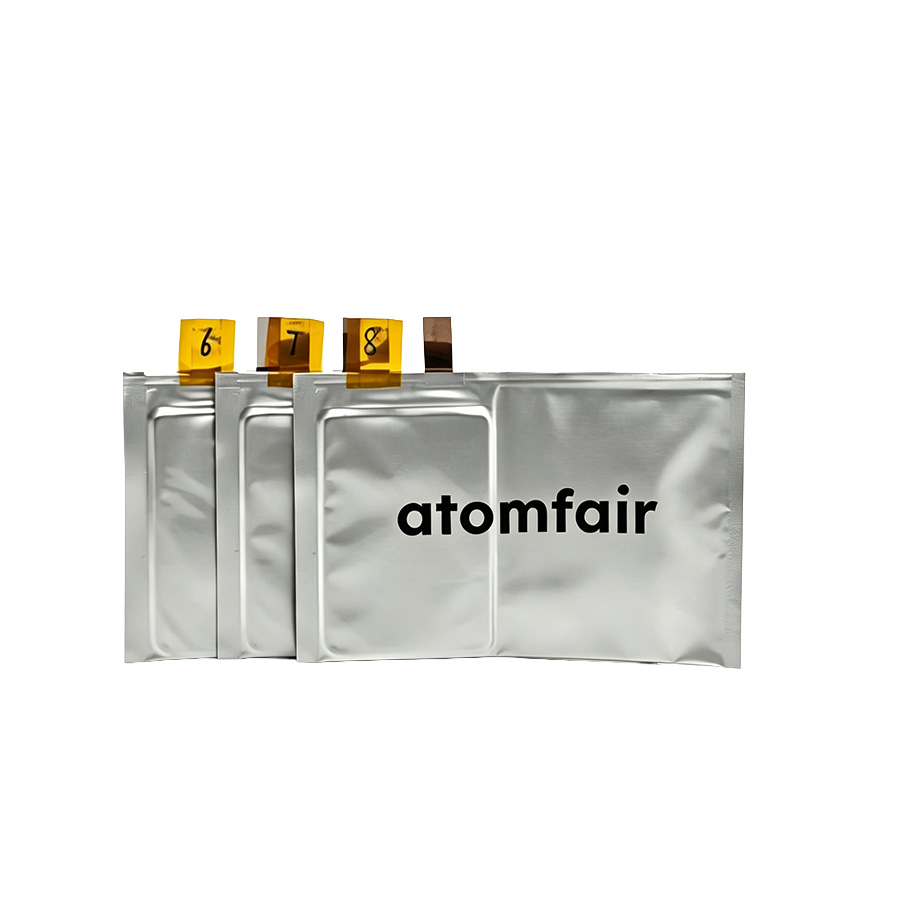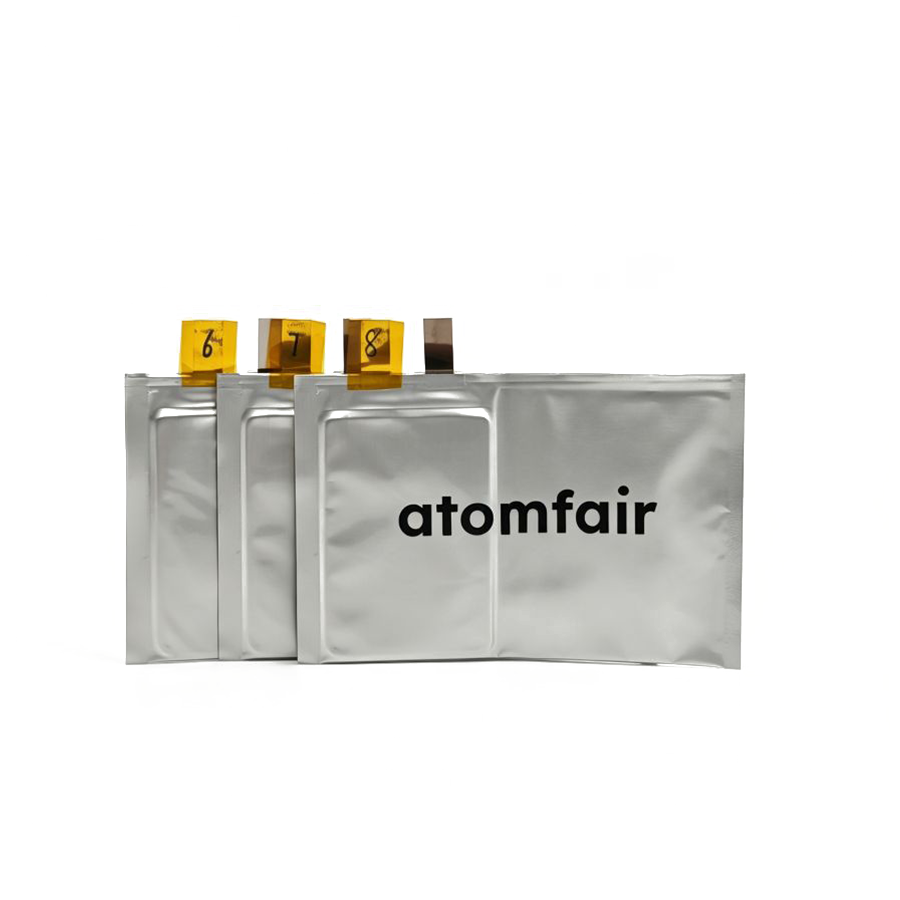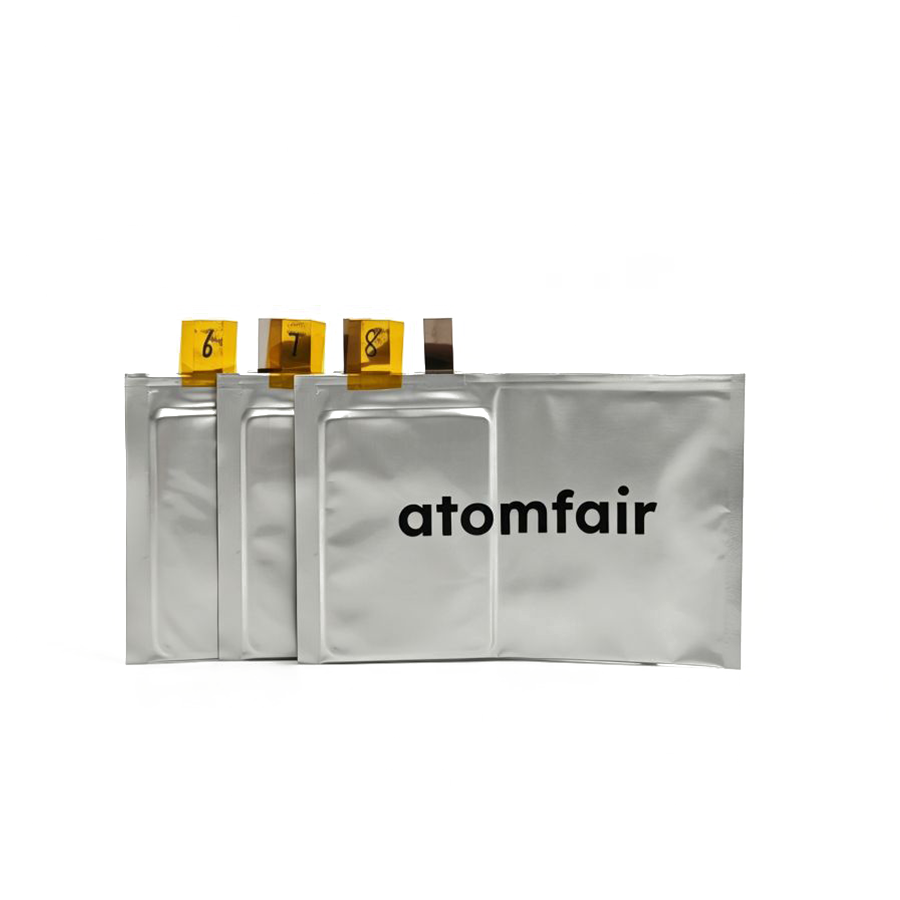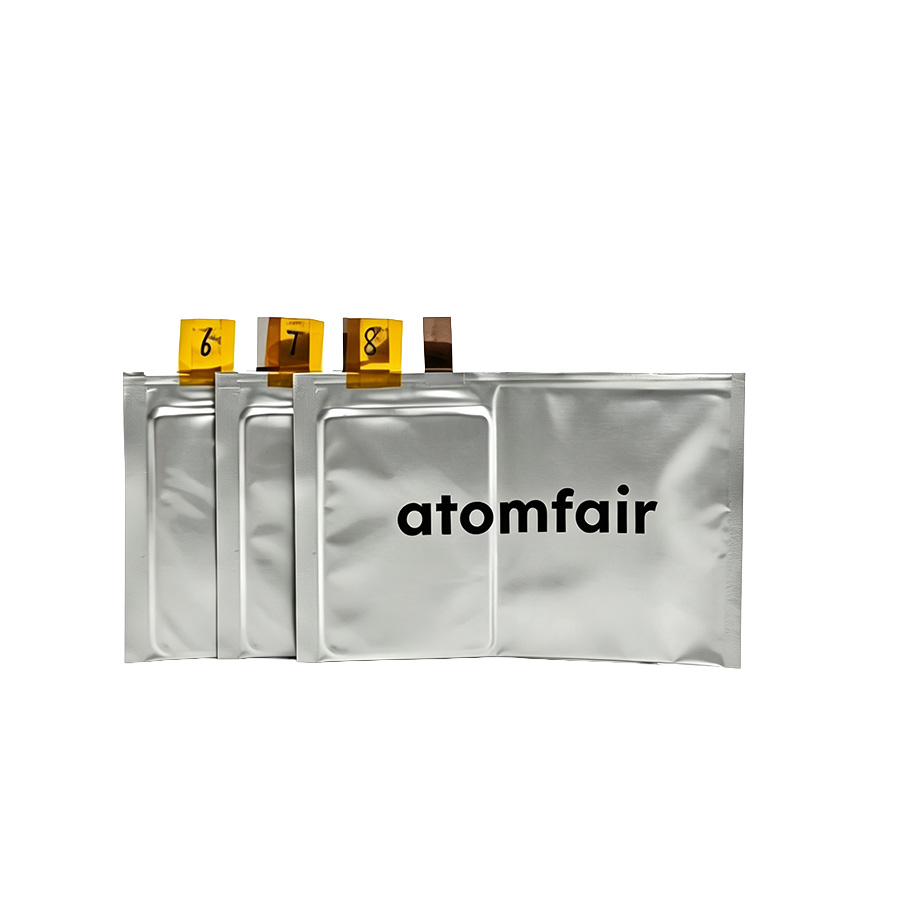
NCM811 Lithium-Ion Dry Pouch Cell (0.6 Ah, 2/3 Layers) – Li-Cu Composite AnodeProduct Type: Research-grade dry pouch cell
Research-grade laboratory product
|
||||||||||||||||||||||||||||||||||||||||||||||||||||||||||
|
||||||||||||||||||||||||||||||||||||||||||||||||||||||||||
This electrolyte-free dry pouch cell is moisture-sensitive and must be stored in a dry environment to prevent electrode degradation prior to electrolyte filling. Handling should be performed in an inert atmosphere glovebox to avoid air exposure of the Li-Cu composite anode and NCM811 cathode.
- Moisture Sensitivity: The unfilled dry pouch cell must be stored under dry conditions to prevent premature electrode reaction with ambient humidity.
- Anode Air Sensitivity: The Li-Cu composite anode may oxidize upon prolonged air exposure, requiring handling in an inert atmosphere glovebox.
- Separator Integrity: The 12 µm PE + 2 µm ceramic separator is mechanically fragile and should not be compressed or folded before cell assembly.
This procedure describes electrolyte filling, vacuum sealing, and initial formation cycling for a 0.6 Ah dry pouch cell. All steps must be performed in an inert atmosphere glovebox to maintain cell integrity.
Required Equipment: Inert atmosphere glovebox (< 0.1 ppm O2 and H2O), Vacuum pouch sealer with temperature control, Electrolyte dispensing syringe (polypropylene), Battery cycler (0.1–1 A range, 3–4.3 V)
- Transfer dry cell to glovebox
Transfer the unfilled dry pouch cell into an inert atmosphere glovebox without exposing the electrodes to ambient air. - Prepare electrolyte
Prepare an appropriate lithium-ion electrolyte (e.g., 1 M LiPF6 in EC/DMC 1:1) and degas under vacuum for 5 minutes. - Inject electrolyte
Inject the calculated electrolyte volume (typically 0.3–0.5 mL per layer) into the dry cell through the open seal edge using a polypropylene syringe. - Vacuum seal the pouch
Immediately vacuum-seal the pouch cell at a sealing temperature appropriate for the pouch film, ensuring a final vacuum hold of at least 30 seconds. - Perform formation cycle
Perform a C/10 formation charge step to 4.3 V, hold at 4.3 V until current drops to C/20, then discharge at C/10 to 3 V.
What is the layer configuration of the Li-Cu composite anode in this NCM811 dry pouch cell?
The Li-Cu composite anode has a thickness parameter of 20+6+20 um, consistent with a layered structure. The anode dimensions are 46.5 x 65 mm, and it is paired with a NCM811 cathode (45.5 x 64 mm, 24 mg/cm² areal density, 220 mAh/g specific capacity) in a 2/3-layer stack rated for 0.6 Ah and a 3 V – 4.3 V window.
What type of separator is used in this 0.6 Ah dry pouch cell and what are its key specifications?
The separator is a 12 µm polyethylene (PE) layer coated with 2 µm of ceramic, for a total thickness of 14 µm. This ceramic-coated PE separator is specified for the dry pouch format and is selected to provide mechanical integrity and thermal stability during laboratory assembly and electrolyte study.
What specific research applications is this electrolyte-free NCM811 dry pouch cell designed for?
This dry pouch cell is intended for lithium-ion laboratory assembly, electrolyte or activation studies, and dry-core electrochemical evaluation. The unfilled format allows researchers to control cell finishing conditions, compare electrode configurations, and study custom electrolyte systems without interference from pre-filled electrolytes.
This 0.6 Ah NCM811 dry pouch cell with Li-Cu composite anode and 2/3-layer stack is designed for laboratory electrolyte filling and activation studies, offering a 3–4.3 V window and 220 mAh/g cathode specific capacity, but requires controlled-environment handling due to its electrolyte-free dry state and ceramic-coated separator fragility.
Positive
- High cathode active material loading: The NCM811 cathode uses 97.4% active material with 24 mg/cm² coating areal density and 3.4 g/cc compaction density, enabling high specific capacity (220 mAh/g) for laboratory electrode performance benchmarking.
- Customizable dry pouch format: The electrolyte-free dry pouch cell allows researchers to control electrolyte composition, activation conditions, and electrode finishing, supporting flexible electrochemical evaluation and comparative studies.
Trade-offs
- Requires electrolyte filling and assembly: As a dry pouch cell without electrolyte, it necessitates laboratory infrastructure for electrolyte filling, wetting, and sealing, adding processing steps and potential variability in cell performance.
- Thin ceramic-coated separator fragility: The 12 µm PE + 2 µm ceramic separator is mechanically delicate and may be prone to damage during handling or lamination, requiring careful dry-room or glovebox procedures to maintain integrity.
Every advanced material, component, equipment, and instrument in our catalog is backed by rigorous testing. We maintain strict internal quality management frameworks and align with CE conformity metrics to deliver transparent, reproducible performance data via our public open-science repository.
To request raw batch performance data, submit formal vendor registration paperwork, or execute a fast-turnaround R&D manufacturing loop, contact us at inquiry@atomfair.com.
Item is dispatched under the Atomfair Shipping & Delivery Framework (Free worldwide shipping on orders over $59 USD excl. heavy equipment). Return is governed by the Atomfair Return & Refund Policy (7-day technical return window).