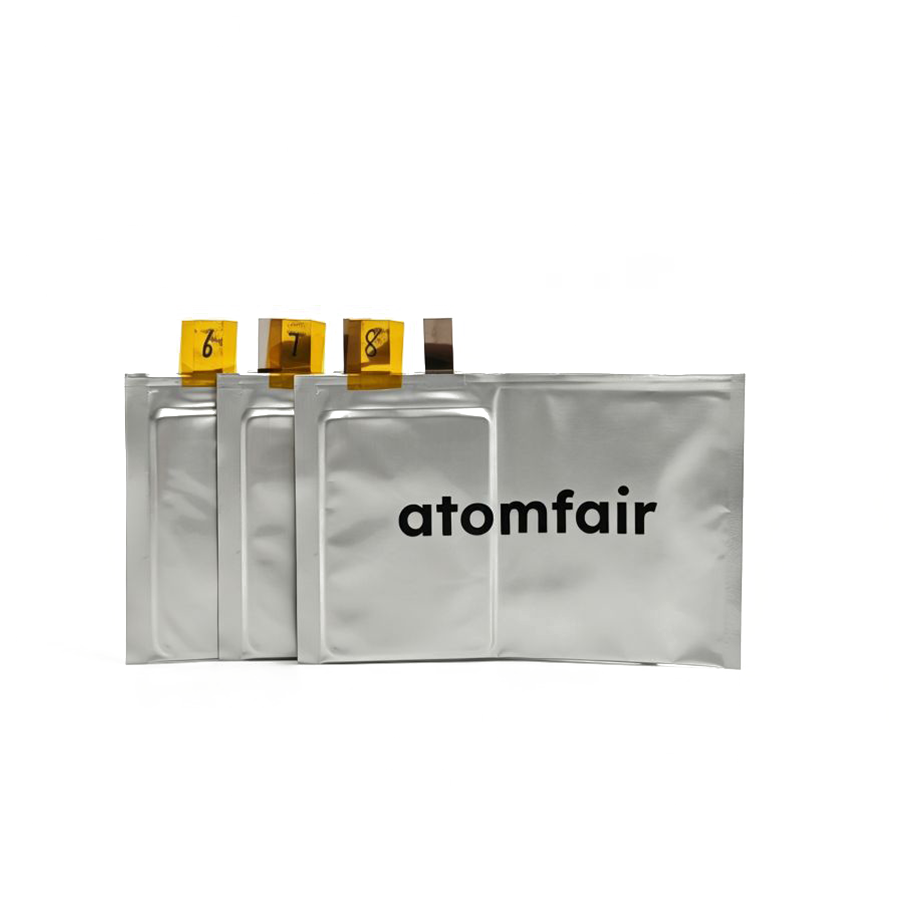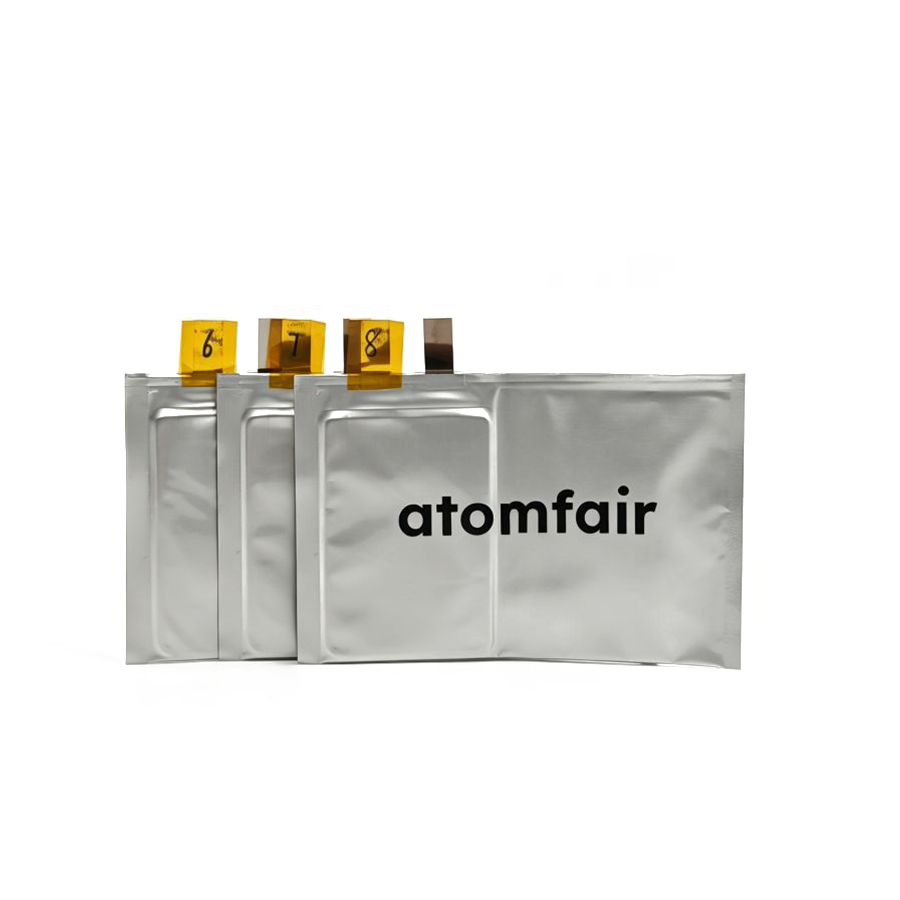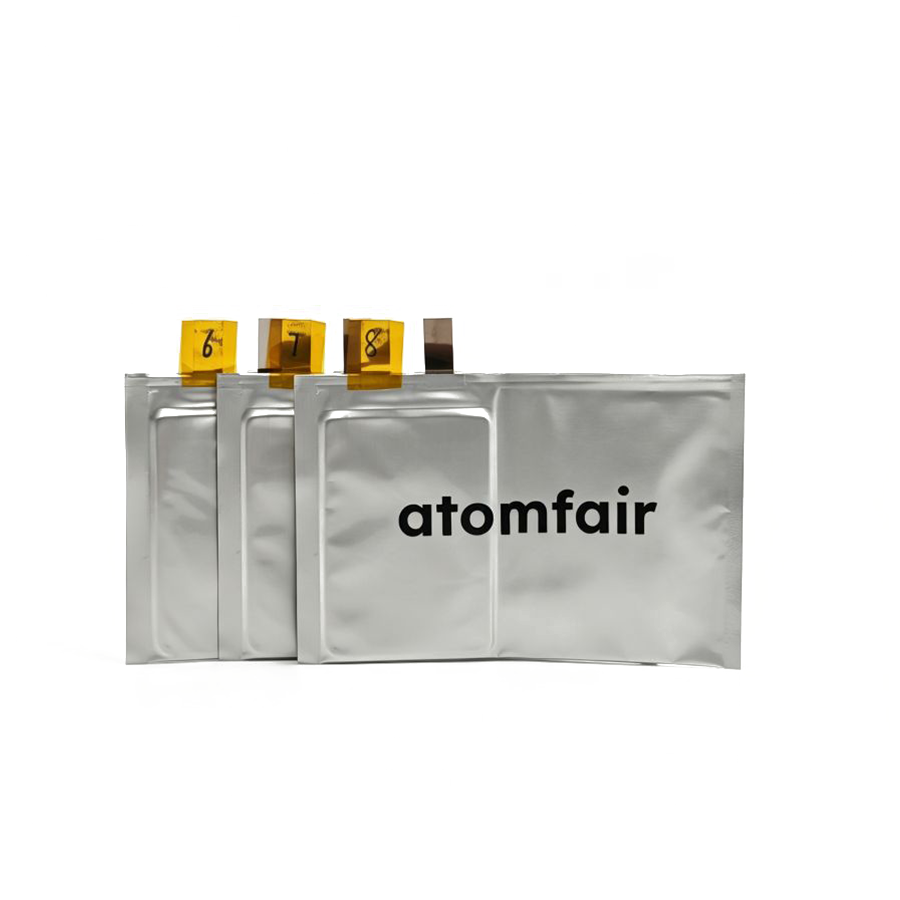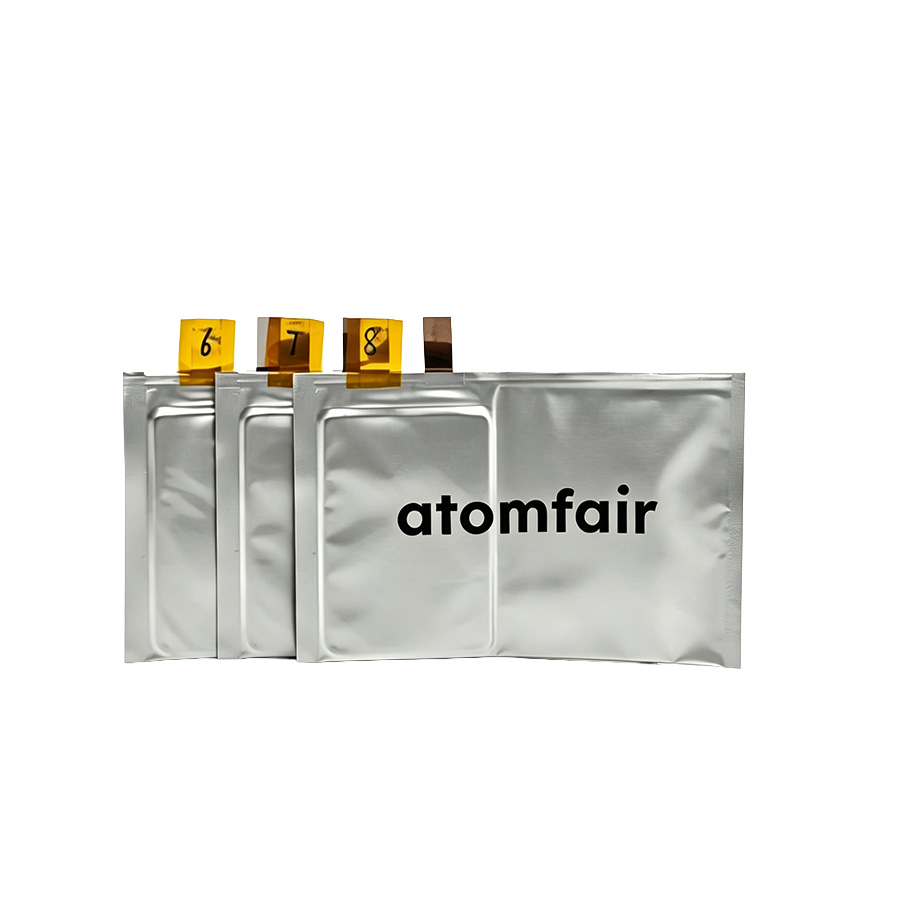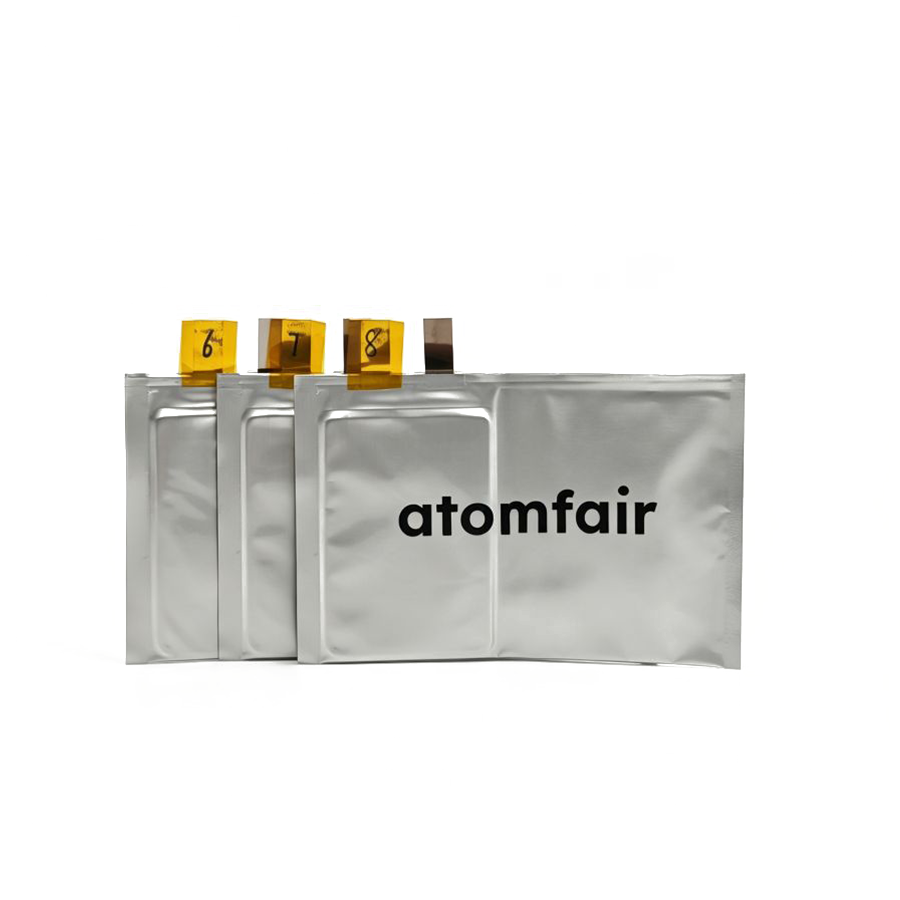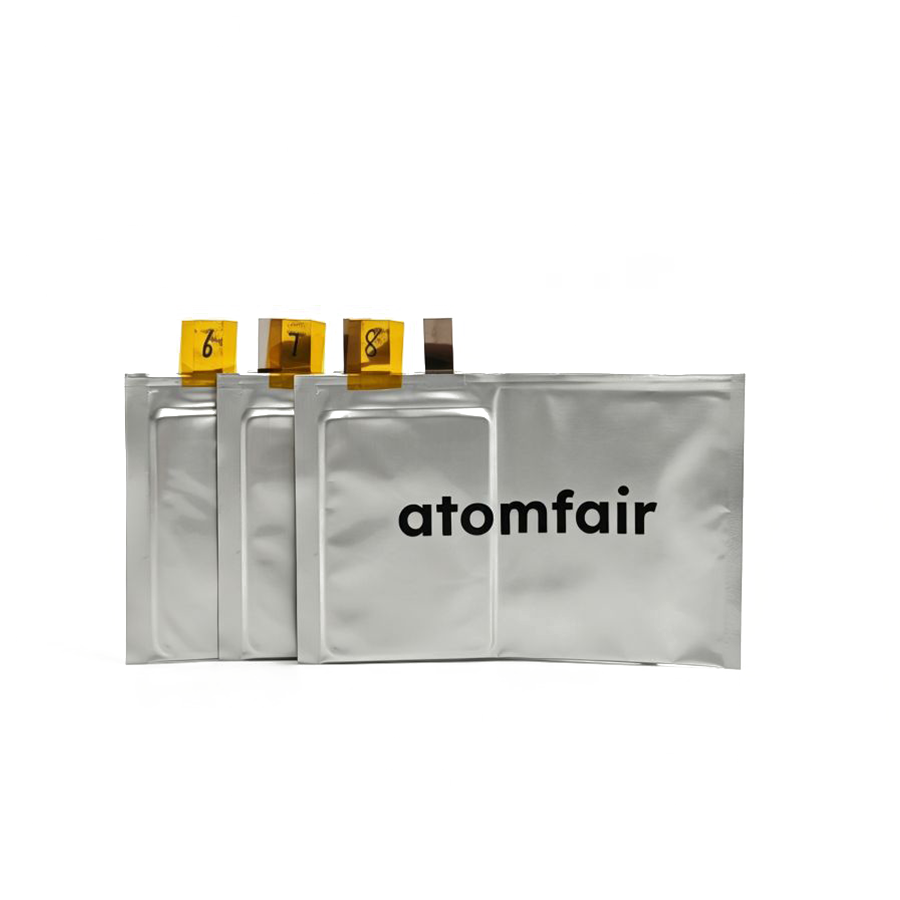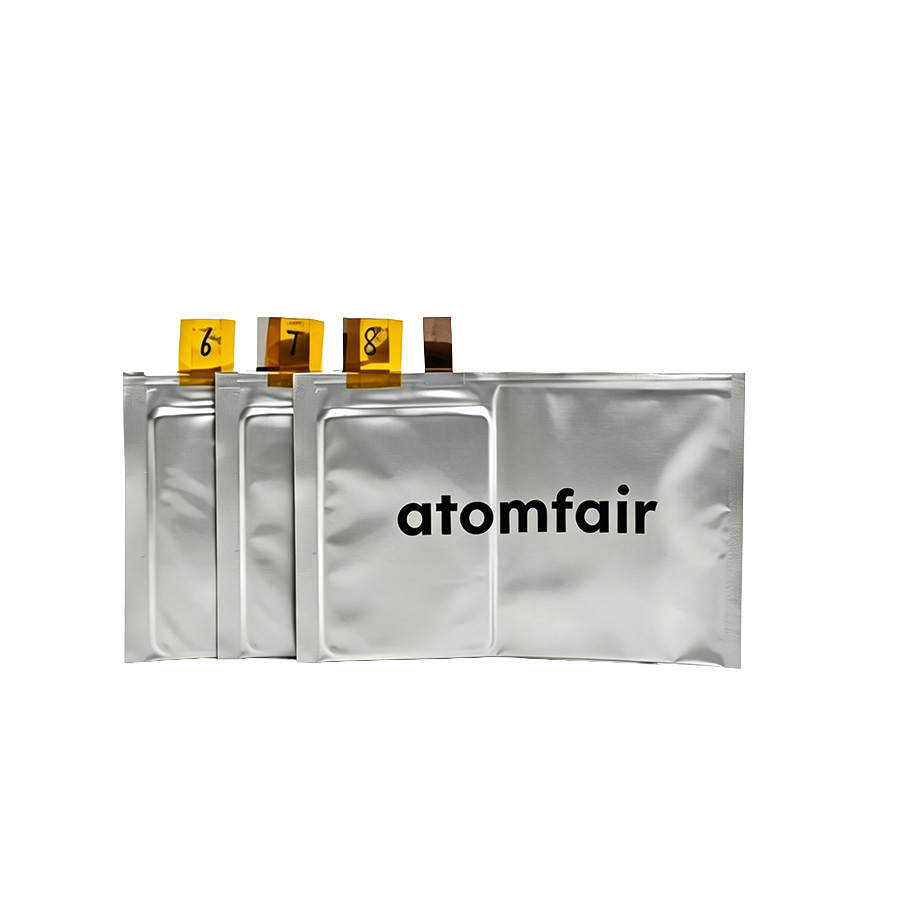
LMR Lithium-Ion Dry Pouch Cell (1.2 Ah, 5/6 Layers) – Li-Cu Composite AnodeProduct Type: Research-grade dry pouch cell
Research-grade laboratory product
|
||||||||||||||||||||||||||||||||||||||||||||||||||||||||||
|
||||||||||||||||||||||||||||||||||||||||||||||||||||||||||
What electrolyte compatibility is recommended for cycling the LMR dry pouch cell up to 4.8 V with its 12 µm PE + 2 µm ceramic separator?
The 2 V to 4.8 V voltage window and the ceramic-coated polyethylene separator (12 µm PE +2 µm ceramic) together require an electrolyte stable at high potentials, typically a fluorinated carbonate-based system. The LMR cathode, with a94.7% active material content and 300 mAh/g specific capacity, undergoes high-voltage redox reactions that can degrade conventional electrolytes above 4.5 V. As an unfilled dry cell, the electrolyte is selected by the researcher and must be matched to this voltage limit to prevent premature failure.
How does the Li-Cu composite anode architecture affect the NP ratio and prelithiation strategy in this dry pouch cell?
The Li-Cu composite anode (thickness parameter 20+6+20 µm) provides an internal lithium reservoir that offsets initial capacity loss from the LMR cathode, reducing the need for external prelithiation. The designed NP ratio of 1.1 ensures a slight anode excess, preventing lithium plating while leveraging the anode's prelithiated state. The cathode areal density of 14.5 mg/cm2 and 300 mAh/g capacity are balanced by the anode dimensions (46.5 x65 mm) to achieve the 1.2 Ah nominal capacity.
What storage and handling conditions are required for the unfilled dry pouch cell to preserve the Li-Cu anode and ceramic separator?
The dry pouch cell is delivered electrolyte-free and must be stored and handled in an inert, moisture-free environment—such as an argon-filled glovebox or dry room—to prevent the Li-Cu composite anode from oxidizing and the ceramic coating on the12 µm PE separator from absorbing moisture. The 5/6-layer stack and exposed edges are sensitive to air exposure; therefore all assembly, electolyte filling, and sealing steps should be performed under controlled atmosphere. The product description explicitly states the unfilled format is intended for laboratory assembly and electrolyte studies, reinforcing the need for a controlled environment.
This 1.2 Ah dry pouch cell combines an LMR cathode (300 mAh/g, 94.7% active, 14.5 mg/cm2) with a Li-Cu composite anode in a 5/6-layer electrolyte-free stack, requiring the end-user to control electrolyte fill and cell finishing. Its 2-4.8 V window and 1.1 NP ratio make it a defined platform for electrolyte/activation studies and dry-core electrochemical evaluation.
Positive
- Electrolyte-free dry core for controlled activation: Supplied as an unfilled dry pouch, the cell lets researchers control electrolyte addition, wetting, and formation conditions for activation or electrolyte-comparison studies.
- Defined LMR cathode loading reference: The cathode specification records 300 mAh/g LMR at 94.7% active material and 14.5 mg/cm2 areal density, giving a measurable reference point for electrode comparison and dry-core electrochemical evaluation.
Trade-offs
- Requires electrolyte fill and formation: The cell ships electrolyte-free and unfilled, so the laboratory must perform electrolyte fill, wetting, and formation before electrochemical testing; this shifts the cell-finishing burden to the end user.
- Customization changes require re-confirmation: The stated 1.2 Ah capacity, 2-4.8 V window, and layer count are tied to the listed electrode format; any customization of dimensions, materials, separator coating, or dry electrode configuration requires re-confirmation before quotation.
Every advanced material, component, equipment, and instrument in our catalog is backed by rigorous testing. We maintain strict internal quality management frameworks and align with CE conformity metrics to deliver transparent, reproducible performance data via our public open-science repository.
To request raw batch performance data, submit formal vendor registration paperwork, or execute a fast-turnaround R&D manufacturing loop, contact us at inquiry@atomfair.com.
Item is dispatched under the Atomfair Shipping & Delivery Framework (Free worldwide shipping on orders over $59 USD excl. heavy equipment). Return is governed by the Atomfair Return & Refund Policy (7-day technical return window).