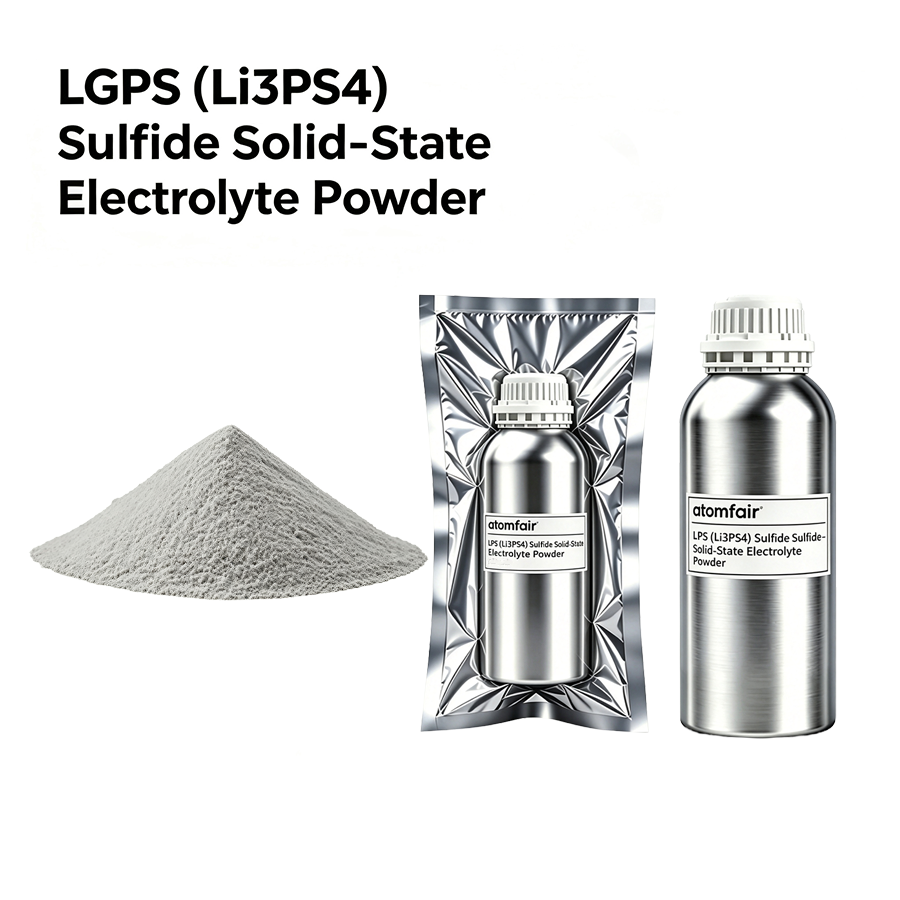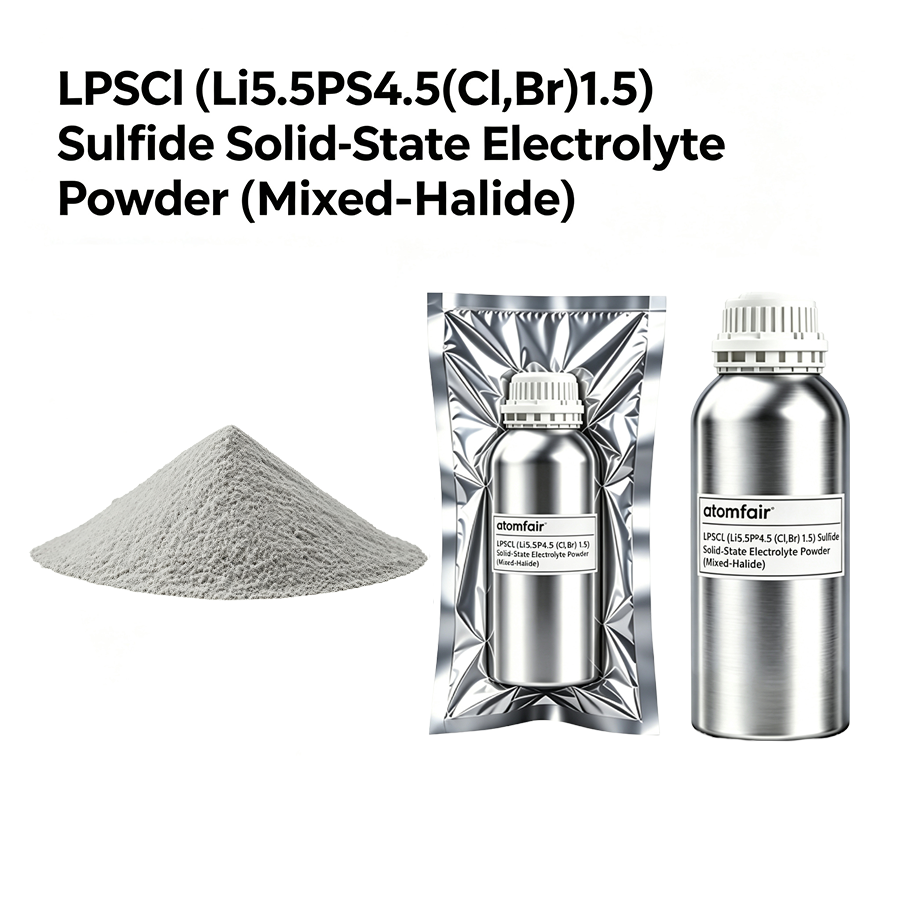
LPSCl (Li5.5PS4.5(Cl,Br)1.5) Sulfide Solid‑State Electrolyte Powder (Mixed‑Halide)Sulfide Solid-State Electrolytes
|
||||||||||||||||||||
|
||||||||||||||||||||
|
This material is a moisture-sensitive sulfide electrolyte that hydrolyzes upon contact with water to release toxic hydrogen sulfide gas. Storage and handling must be performed exclusively in an inert atmosphere glovebox with a dew point below -40°C to prevent degradation and safety hazards.
- Storage Atmosphere: Store the sealed moisture-barrier bag inside an argon- or nitrogen-filled glovebox to maintain an inert atmosphere.
- Moisture Sensitivity: Moisture exposure causes hydrolysis, generating H₂S gas and degrading ionic conductivity.
- Handling Environment: All handling must occur in a controlled dry environment with dew point below -40°C.
- Resealing Requirement: Reseal the bag promptly after each use to minimize atmospheric exposure.
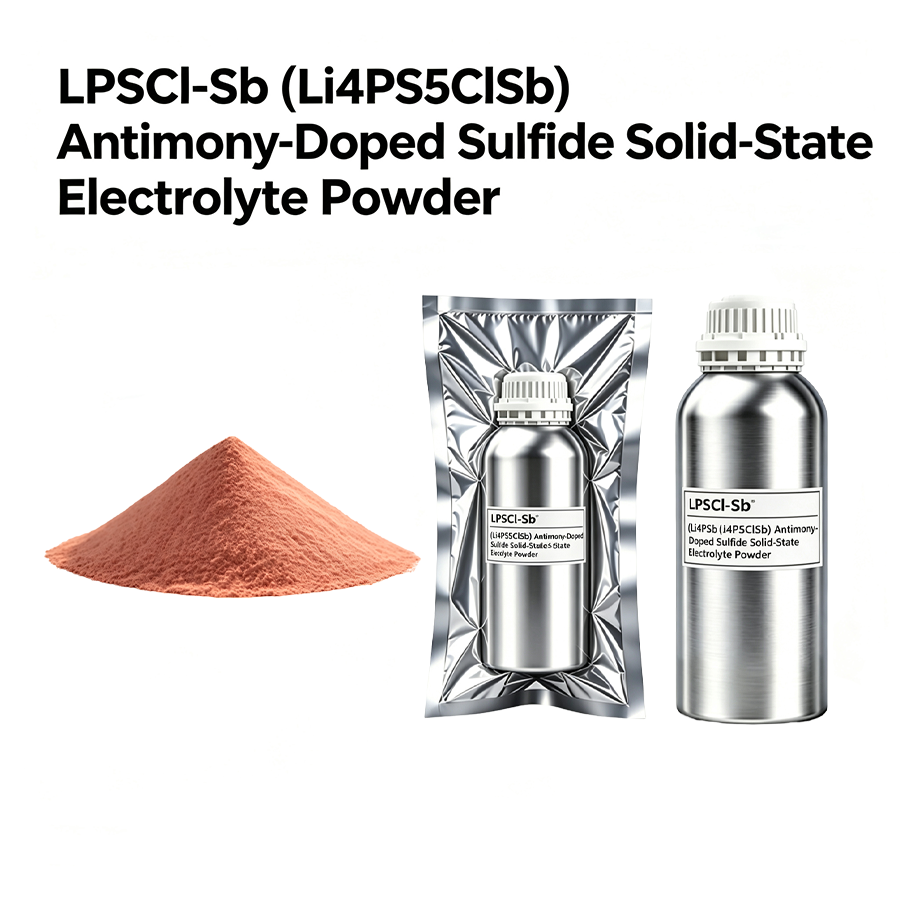
- Initial Packaging Integrity: The product is supplied vacuum-sealed under inert atmosphere to maintain anhydrous conditions until first use.
This procedure ensures safe handling of moisture-sensitive LPSCl powder to prevent exposure to air and moisture. Follow these steps inside an argon-filled glovebox with dew point below -40°C.
Required Equipment: Argon-filled glovebox with dew point below -40°C
- Transfer to Glovebox
Transfer the sealed moisture-barrier bag into the glovebox antechamber and initiate a purge cycle to remove any residual air. - Open Packaging Inside Chamber
Open the outer packaging only after the bag has been fully transferred into the glovebox main chamber. - Dispense Powder
Dispense the required amount of powder using a clean, dry spatula, minimizing exposure time and keeping the container closed as much as possible. - Reseal and Store
Reseal the bag immediately after dispensing and store it inside the glovebox in a sealed container.
How does particle size affect the ionic conductivity of LPSCl (Li5.5PS4.5(Cl,Br)1.5) sulfide solid-state electrolyte powder?
Ionic conductivity decreases with smaller particle size: the 3.0 ± 0.5 µm grade delivers >7.0 mS/cm at 27°C, the <1.0 µm grade delivers >5.0 mS/cm, and the <0.5 µm grade delivers >4.0 mS/cm. This particle size–conductivity trade-off allows researchers to optimize either bulk separator conductivity or composite electrode interface design depending on the application.
Can this LPSCl mixed-halide electrolyte be used as both a catholyte and a separator in all-solid-state batteries?
Yes, this material serves as a primary electrolyte for all-solid-state lithium batteries in multiple roles: as a catholyte for high-loading composite cathodes, as an anode-side separator when paired with halide electrolytes such as LZC, LZCO, LNOC, or LIC, and as a bulk separator in pellet and pouch cell architectures. It also supports Li-S battery research and pilot-scale ASSB manufacturing.
What are the storage and handling requirements for LPSCl sulfide electrolyte powder to prevent degradation?
The material ships vacuum-sealed under inert atmosphere in moisture-barrier aluminum-laminated bags and must be stored sealed in an Ar or N₂ glovebox, protected from moisture. Because LPSCl sulfides hydrolyze on contact with water to release H₂S, handle exclusively in a controlled dry environment with a dew point below –40 °C, and reseal promptly after opening.
This mixed-halide LPSCl variant (Li5.5PS4.5(Cl,Br)1.5) delivers ionic conductivity exceeding 7 mS/cm at 27°C for the 3.0 µm grade, making it a leading candidate for high-performance all-solid-state battery electrolytes, but requires strict moisture-free handling due to rapid hydrolysis and H2S evolution.
Positive
- High Room-Temperature Ionic Conductivity: The Li5.5PS4.5(Cl,Br)1.5 composition achieves >7.0 mS/cm at 27°C for the 3.0 µm particle size, among the highest reported for sulfide solid electrolytes, enabling low internal resistance in ASSB cells.
- Multiple Particle Size Grades: Available in 3.0 µm, <1.0 µm, and <0.5 µm grades, allowing optimization between bulk electrolyte conductivity and interfacial contact in composite cathodes.
Trade-offs
- Extreme Moisture Sensitivity: LPSCl hydrolyzes rapidly upon exposure to water, releasing toxic H2S gas; requires exclusive handling in dry environments with dew point below –40°C and storage in inert atmosphere gloveboxes.
- Specialized Storage and Handling Required: Material ships vacuum-sealed in moisture-barrier bags and must be stored in Ar or N2 gloveboxes; any exposure to ambient air degrades performance and poses safety risks.
Every advanced material, component, equipment, and instrument in our catalog is backed by rigorous testing. We maintain strict internal quality management frameworks and align with CE conformity metrics to deliver transparent, reproducible performance data via our public open-science repository.
To request raw batch performance data, submit formal vendor registration paperwork, or execute a fast-turnaround R&D manufacturing loop, contact us at inquiry@atomfair.com.
Item is dispatched under the Atomfair Shipping & Delivery Framework (Free worldwide shipping on orders over $59 USD excl. heavy equipment). Return is governed by the Atomfair Return & Refund Policy (7-day technical return window).