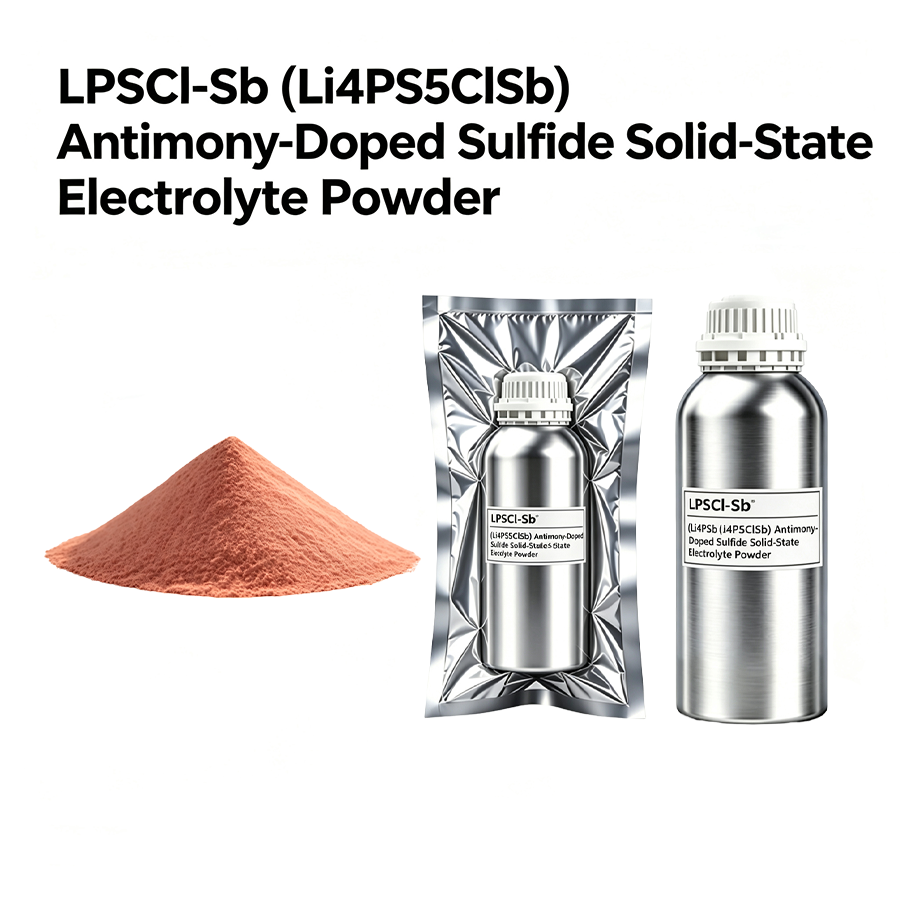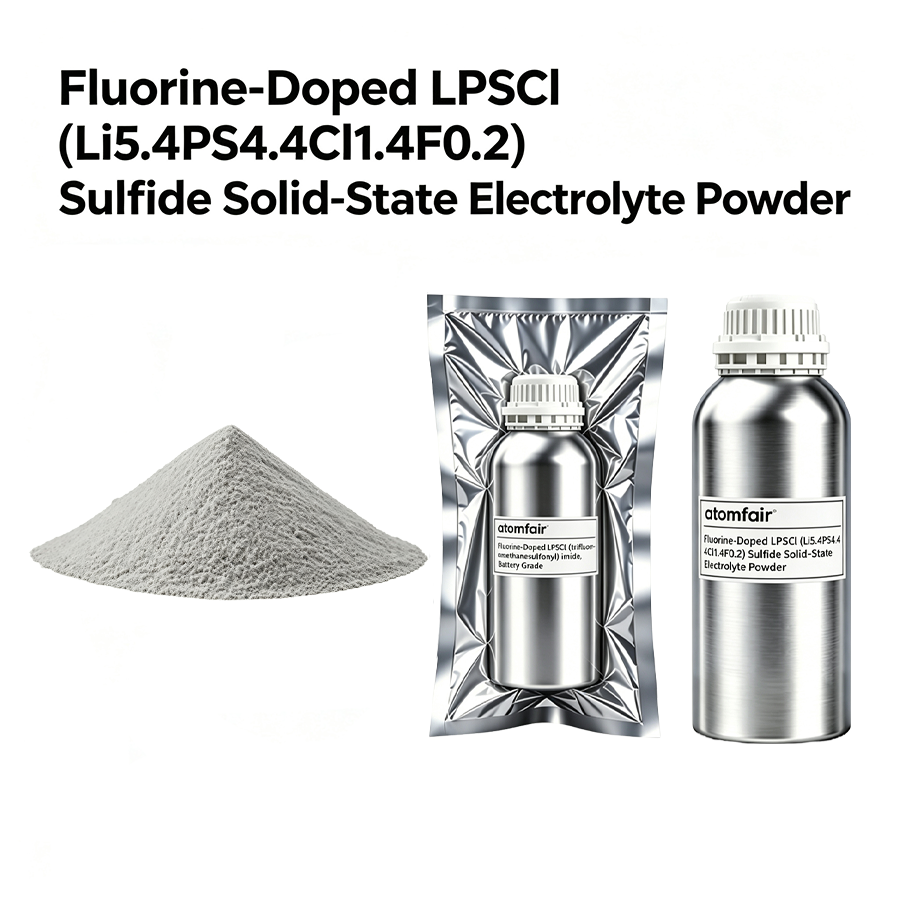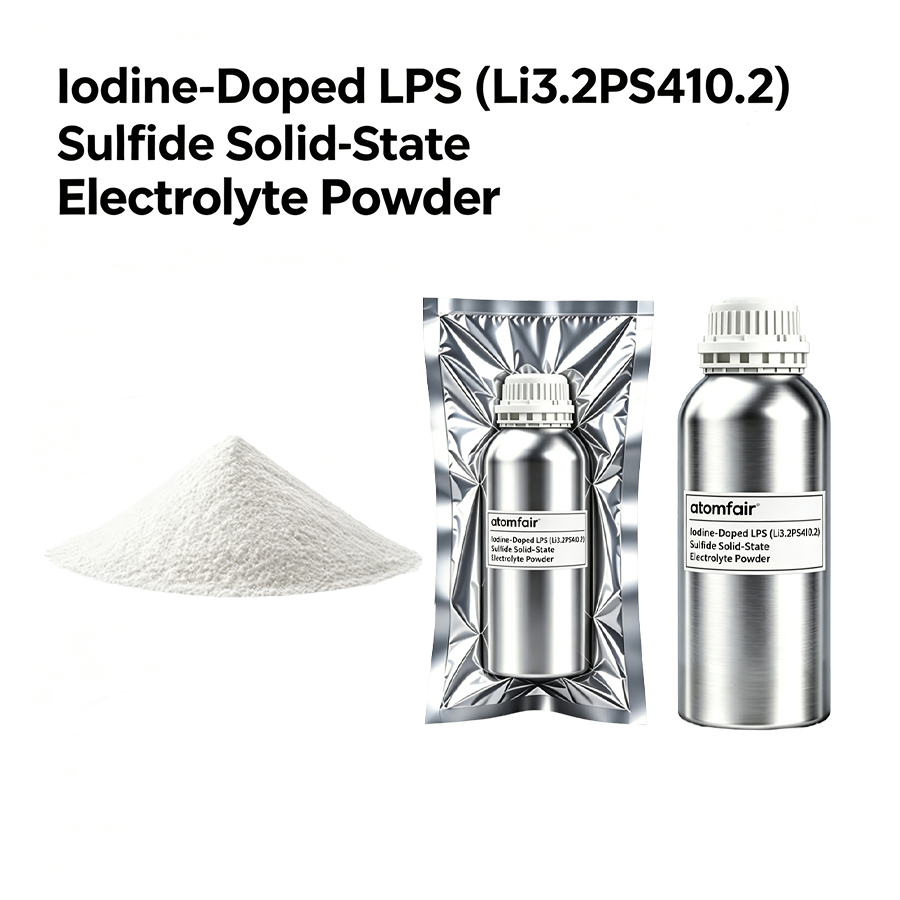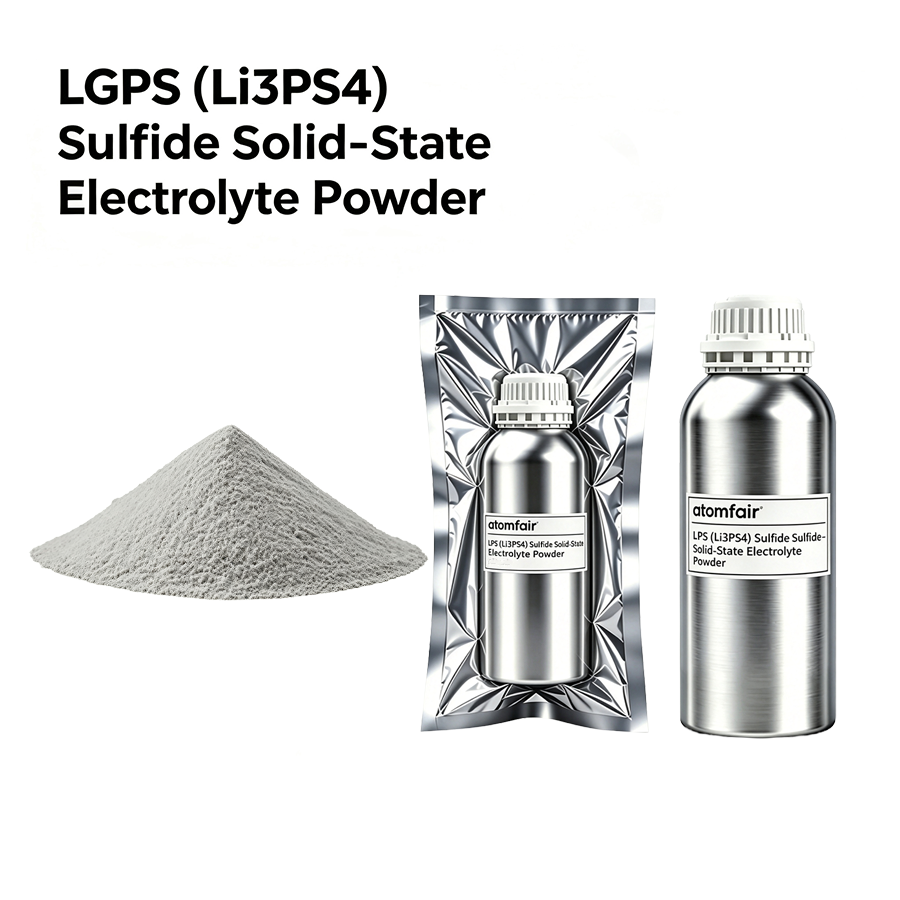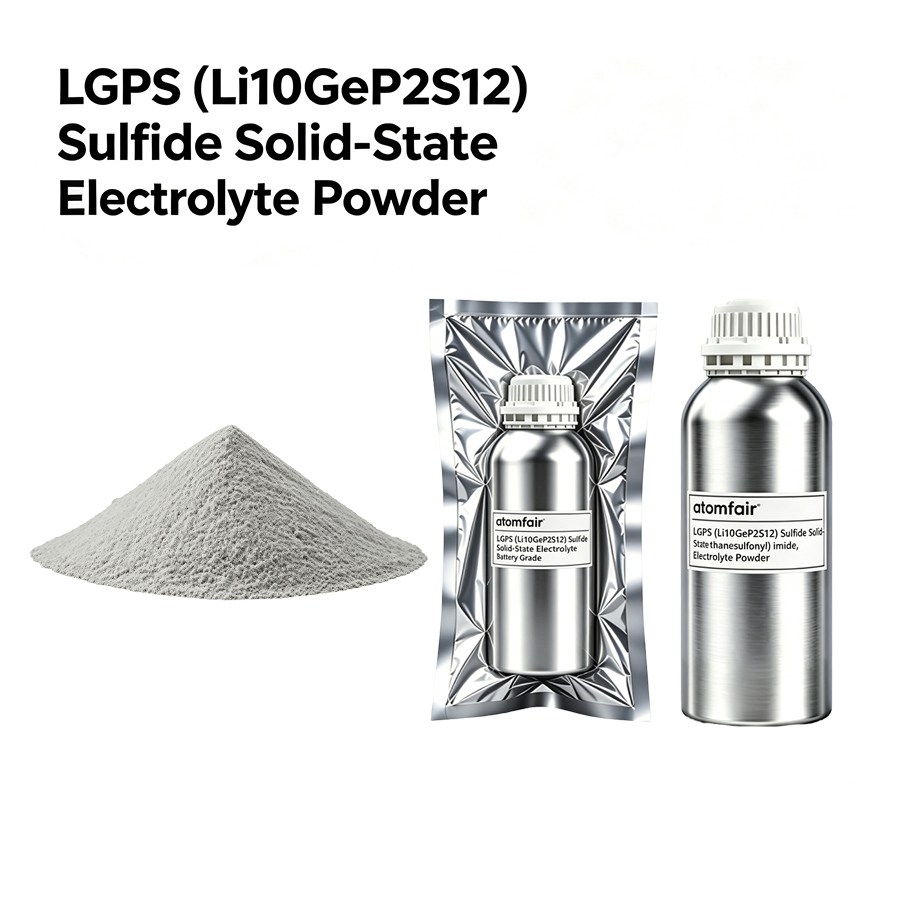
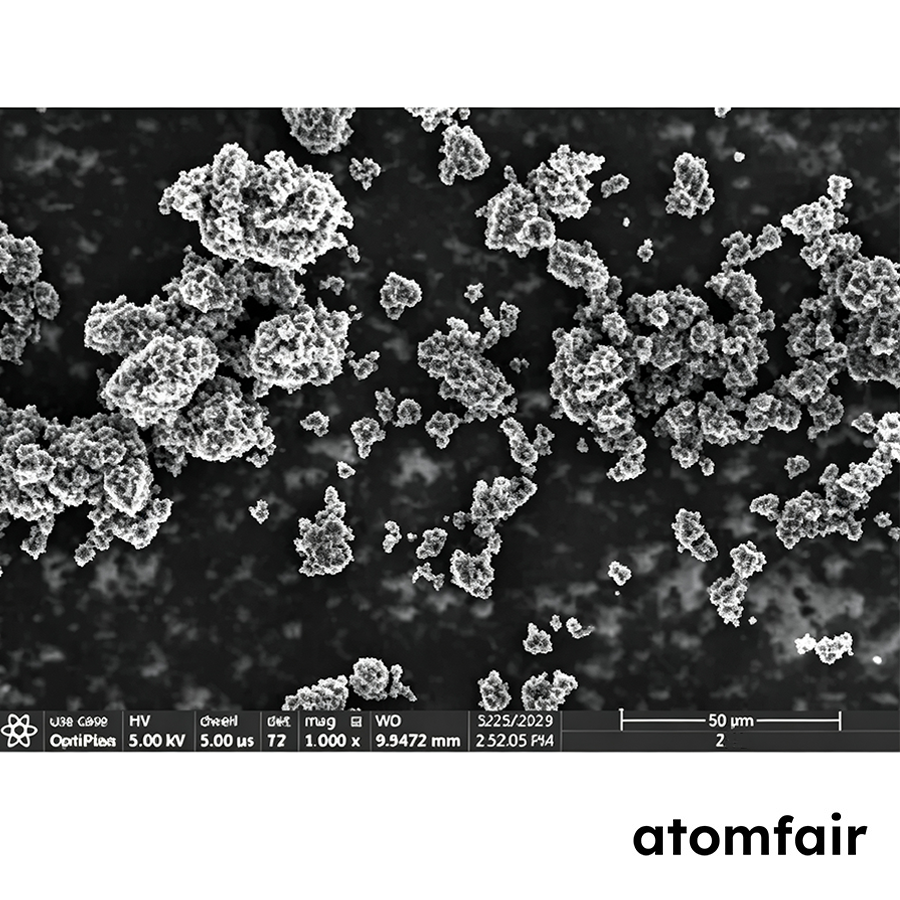
LGPS (Li10GeP2S12) Sulfide Solid-State Electrolyte PowderSulfide Solid-State Electrolytes
|
|||||||||||||||||||||||||||
|
|||||||||||||||||||||||||||
|
LGPS powder is highly moisture-sensitive and releases toxic hydrogen sulfide gas upon hydrolysis. Storage requires an argon-filled vacuum-sealed package in a cool-dry environment, with all handling performed exclusively inside an argon glovebox.
- Moisture Sensitivity: Exposure to moisture causes rapid hydrolysis, generating toxic H₂S gas and degrading the material.
- Storage Requirements: Store sealed in argon-filled packaging under cool-dry conditions to maintain stability.
- Handling Requirements: Open and sample only in an argon-filled glovebox to prevent atmospheric contamination.
- Incompatibility with Lithium Metal: LGPS is electrochemically unstable against lithium metal and is typically used as a catholyte.
- Post-Processing Sensitivity: Cold-pressed pellets may be annealed at 550°C to enhance ionic conductivity, but annealing must be performed under inert atmosphere.
This procedure outlines the safe transfer, sampling, and processing of LGPS sulfide electrolyte powder under inert atmosphere. It includes cold-pressing into pellets and optional annealing to maximize ionic conductivity.
Required Equipment: Argon-filled glovebox, Pellet press, Annealing furnace
- Transfer to glovebox
Transfer the sealed argon-filled package into an argon-filled glovebox without exposing to air. - Open package
Open the package only inside the glovebox to prevent moisture ingress. - Cold-press into pellet
Cold-press the LGPS powder under high pressure to form a solid electrolyte pellet. - Optional anneal pellet
Optionally anneal the pellet at 550°C under inert atmosphere to enhance ionic conductivity.
How does annealing at 550°C affect the ionic conductivity of LGPS pellets?
Annealing LGPS pellets at 550°C can enhance the ionic conductivity by improving grain boundary contact. The as-pressed powder exhibits an ionic conductivity of 8.9 mS/cm at 25°C under 180 MPa, while the material is known for an extremely high ionic conductivity of 12 mS/cm, which may be more fully realized after annealing.
Can LGPS be used as an electrolyte in direct contact with lithium metal?
No, LGPS is unstable against lithium metal and is therefore not suitable for direct contact with lithium anodes. It is typically employed as a catholyte in all-solid-state battery designs, where the anolyte layer is composed of a different electrolyte material stable against lithium.
What are the critical handling and storage requirements for LGPS sulfide electrolyte powder?
LGPS is highly moisture-sensitive and releases toxic hydrogen sulfide (H₂S) upon hydrolysis. It must be stored in an argon-filled vacuum-sealed package in a cool, dry environment. All handling and sampling should be performed exclusively in a glovebox under inert atmosphere, and the powder should be used promptly after opening to avoid air exposure.
LGPS (Li10GeP2S12) sulfide solid-state electrolyte powder offers an extremely high ionic conductivity of 12 mS/cm, exceeding that of liquid electrolytes, making it suitable for all-solid-state lithium battery catholyte layers. However, it requires cold-pressing and optional high-temperature annealing at 550°C, is highly moisture-sensitive with toxic H₂S release upon hydrolysis, and is unstable against Li metal, limiting its use to catholyte applications.
Positive
- Extremely high ionic conductivity: LGPS exhibits an ionic conductivity of 12 mS/cm at room temperature, surpassing that of conventional organic liquid electrolytes used in lithium-ion batteries, enabling high-performance solid-state battery designs.
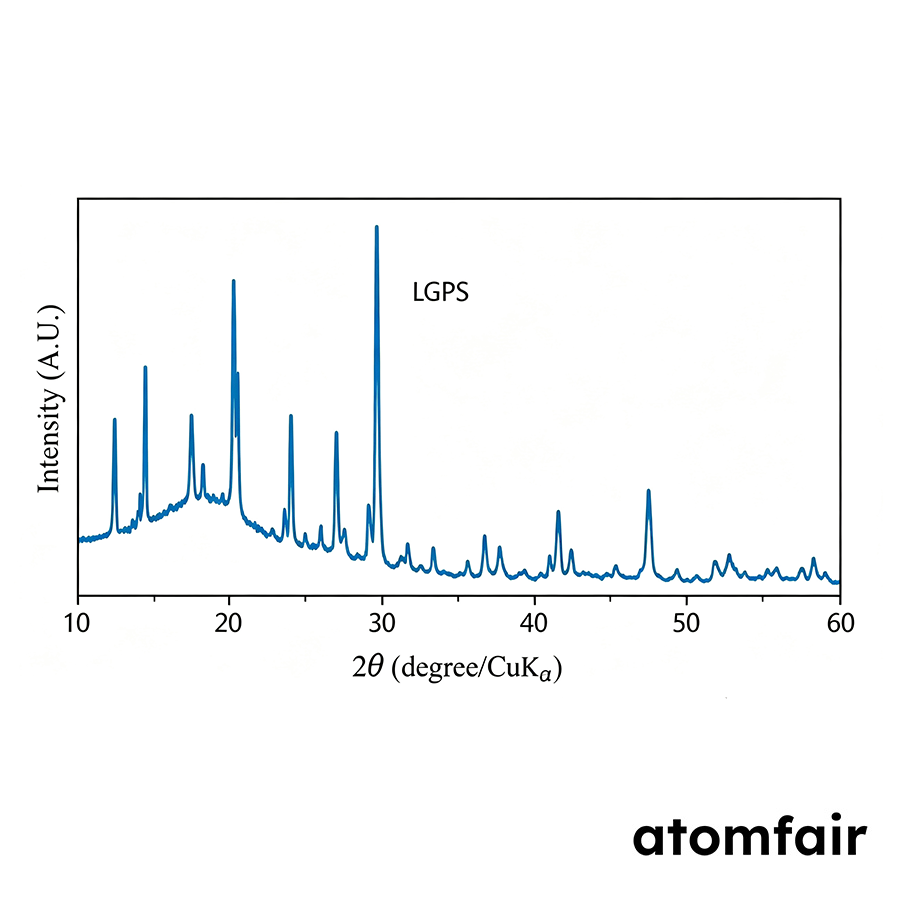
- Crystalline sulfide electrolyte structure: As a crystalline sulfide electrolyte, LGPS provides a well-defined ionic conduction pathway, supporting its use as a catholyte in composite electrodes for all-solid-state lithium batteries.
Trade-offs
- High moisture sensitivity and H₂S hazard: LGPS is highly moisture-sensitive and releases toxic hydrogen sulfide (H₂S) upon hydrolysis; handling requires an argon-filled glovebox and sealed storage to prevent degradation and safety risks.
- Instability against lithium metal anode: LGPS is chemically unstable when in contact with lithium metal, restricting its application to the catholyte layer rather than as a full electrolyte in contact with the anode.
Every advanced material, component, equipment, and instrument in our catalog is backed by rigorous testing. We maintain strict internal quality management frameworks and align with CE conformity metrics to deliver transparent, reproducible performance data via our public open-science repository.
To request raw batch performance data, submit formal vendor registration paperwork, or execute a fast-turnaround R&D manufacturing loop, contact us at inquiry@atomfair.com.
Item is dispatched under the Atomfair Shipping & Delivery Framework (Free worldwide shipping on orders over $59 USD excl. heavy equipment). Return is governed by the Atomfair Return & Refund Policy (7-day technical return window).