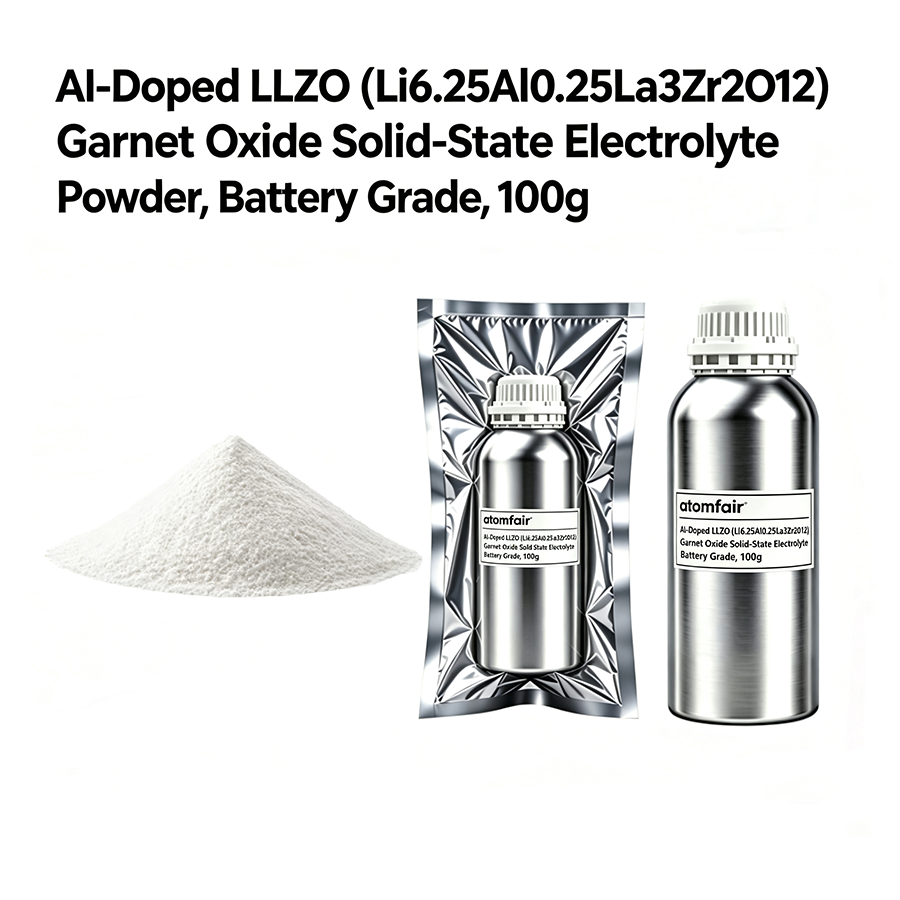
Ta-Doped LLZO (Li6.4La3Zr1.4Ta0.6O12) Garnet Oxide Solid-State Electrolyte PowderOxide Solid-State Electrolytes
|
|||||||||||||||||||||||||||||
|
|||||||||||||||||||||||||||||
|
This material requires storage in a sealed, dry environment to prevent moisture degradation. Follow the provided Safety Data Sheet and Certificate of Analysis for all handling procedures.
- Moisture Sensitivity: Protect from moisture during storage and handling to maintain ionic conductivity and chemical stability.
What is the room-temperature ionic conductivity of Ta-doped LLZO (Li6.4La3Zr1.4Ta0.6O12) garnet oxide powder?
The room-temperature ionic conductivity of Ta-doped LLZO (Li6.4La3Zr1.4Ta0.6O12) is specified as 5–10 × 10⁻⁴ S/cm. This high lithium-ion conductivity is a key attribute for its use as a solid electrolyte in all-solid-state and lithium-metal battery research.
Is Ta-doped LLZO chemically stable against lithium metal anodes, and how does it compare to LLTO?
Yes, Ta-doped LLZO exhibits chemical stability with respect to lithium metal and stability at elevated temperatures. According to the product description, LLZO is preferred over LLTO as a solid electrolyte material due to its better electrochemical stability, making it suitable for lithium-metal and ceramic electrolyte studies.
What storage and handling conditions are required for Ta-doped LLZO powder to preserve its performance?
Ta-doped LLZO powder must be stored sealed in a dry environment and protected from moisture. Following the provided SDS and COA handling guidelines is recommended to maintain its performance and integrity for battery research applications.
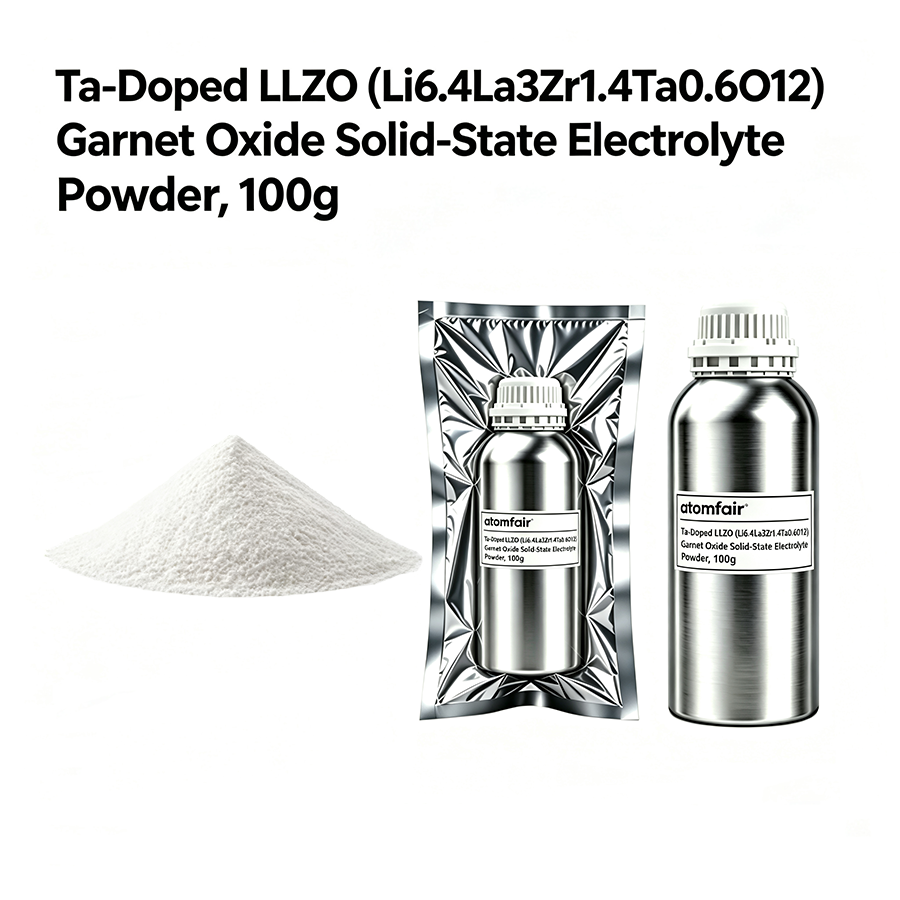
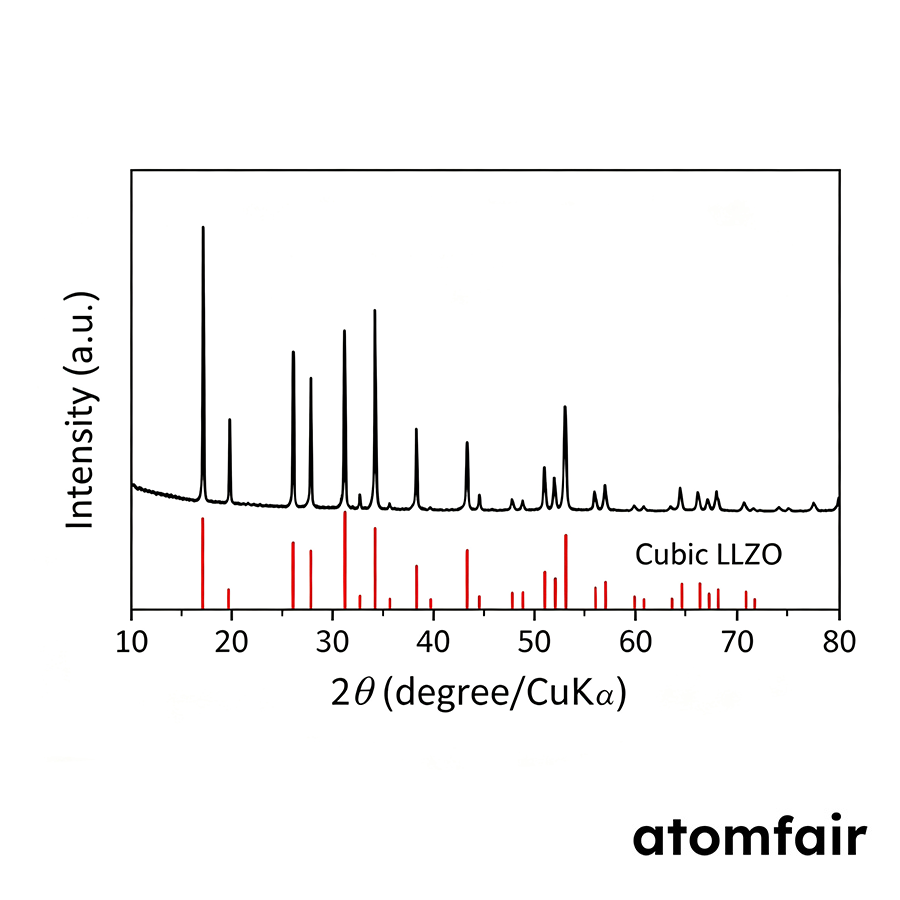
Ta-doped LLZO (Li6.4La3Zr1.4Ta0.6O12) garnet oxide solid electrolyte powder with 400-600 nm D50 particle size offers ionic conductivity of 5-10×10⁻⁴ S/cm at room temperature and ≥99.0% purity, making it suitable for all-solid-state lithium battery research, though it requires dry storage to prevent moisture degradation.
Positive
- High ionic conductivity at room temperature: The material exhibits ionic conductivity of 5-10 × 10⁻⁴ S/cm at room temperature, a critical parameter for solid electrolyte performance in all-solid-state lithium batteries.
- Chemical stability with lithium metal: Ta-doped LLZO offers better electrochemical stability than LLTO and is chemically stable with lithium as well as at elevated temperatures, enabling use in lithium-metal and ceramic electrolyte studies.
Trade-offs
- Moisture-sensitive storage requirement: The powder must be stored sealed in a dry environment and protected from moisture, as per packaging instructions, requiring careful handling and dedicated dry storage infrastructure.
- Submicron particle size handling constraints: With a D50 of 400-600 nm, the fine powder may require specialized processing techniques (e.g., dry room, inert atmosphere) to avoid agglomeration and ensure uniform dispersion in composite electrolytes or pellet pressing.
Every advanced material, component, equipment, and instrument in our catalog is backed by rigorous testing. We maintain strict internal quality management frameworks and align with CE conformity metrics to deliver transparent, reproducible performance data via our public open-science repository.
To request raw batch performance data, submit formal vendor registration paperwork, or execute a fast-turnaround R&D manufacturing loop, contact us at inquiry@atomfair.com.
Item is dispatched under the Atomfair Shipping & Delivery Framework (Free worldwide shipping on orders over $59 USD excl. heavy equipment). Return is governed by the Atomfair Return & Refund Policy (7-day technical return window).