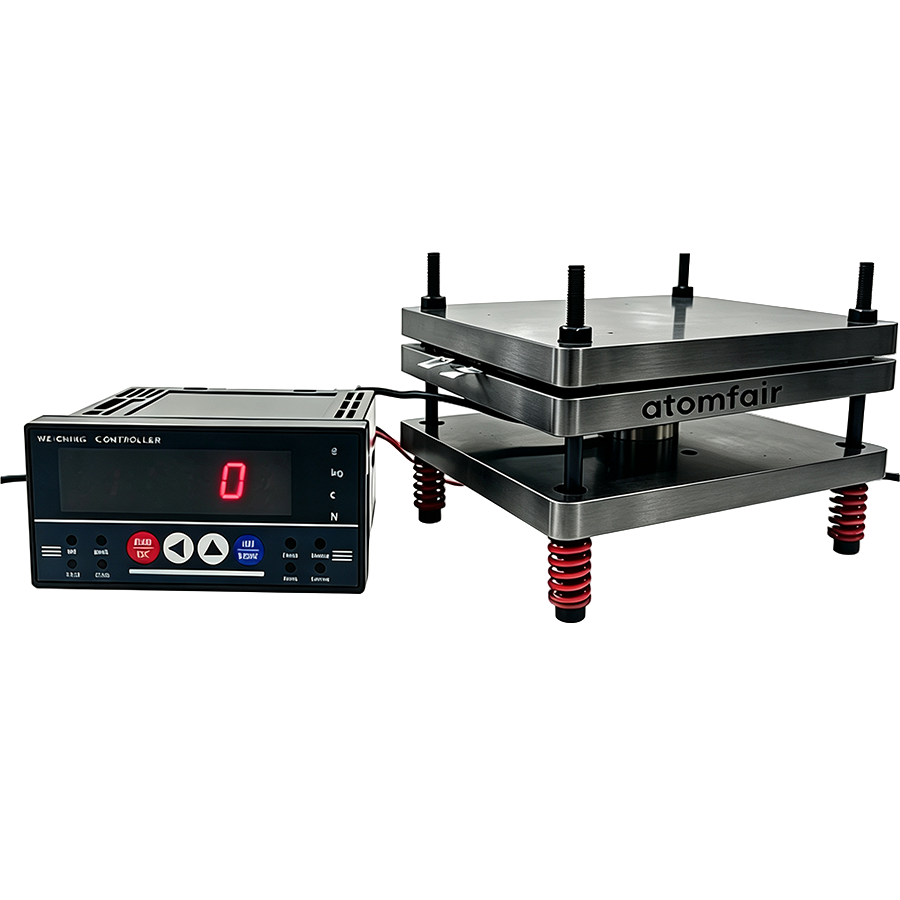
Carbon Steel 3-Layer Pouch Cell Fixture 650kg ATOMFAIR®

Price range: $354.00 through $510.00

Institutional Procurement & Supply Compliance: As a verified US supplier, Atomfair accepts formal institutional Purchase Orders (POs), contract billing schedules, and custom procurement loops for university and national laboratories, and corporate R&D departments globally.

Research grade carbon steel three-layer pouch cell fixture with pressure sensing, 450kg standard/650kg custom load and 0.1–2 cm cells. Order now.

CARBON STEEL THREE-LAYER FIXTURE WITH PRESSURE SENSOR VERSION

RESEARCH GRADE EQUIPMENT

Product Overview

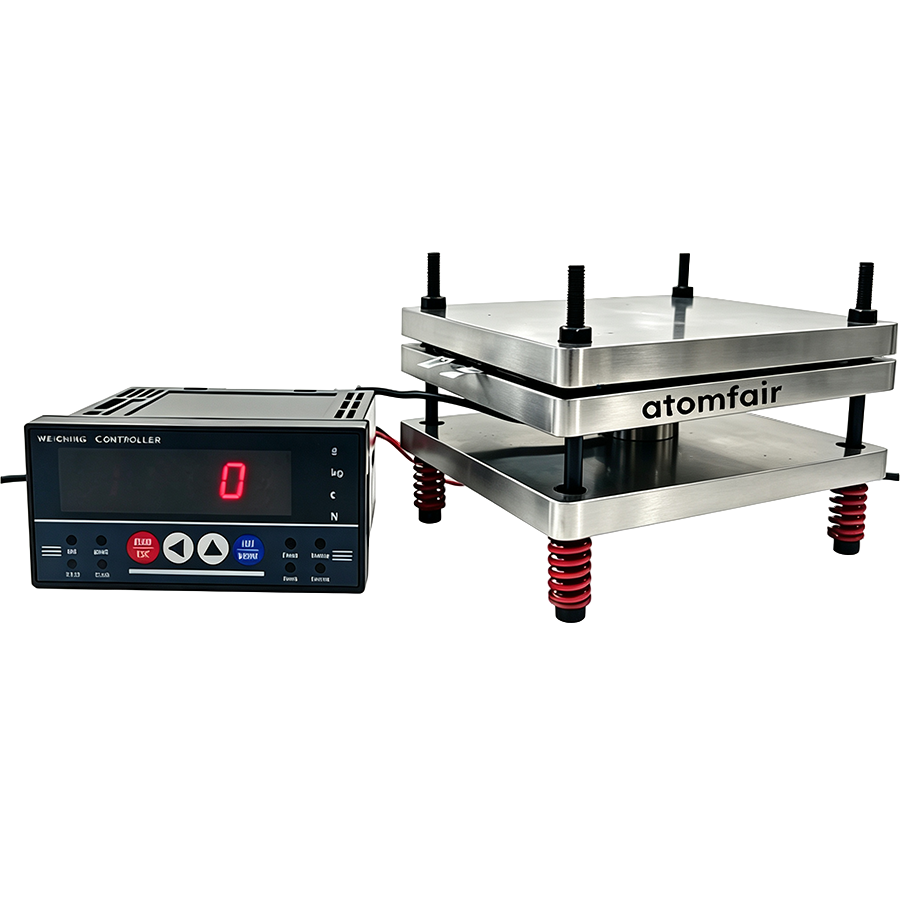
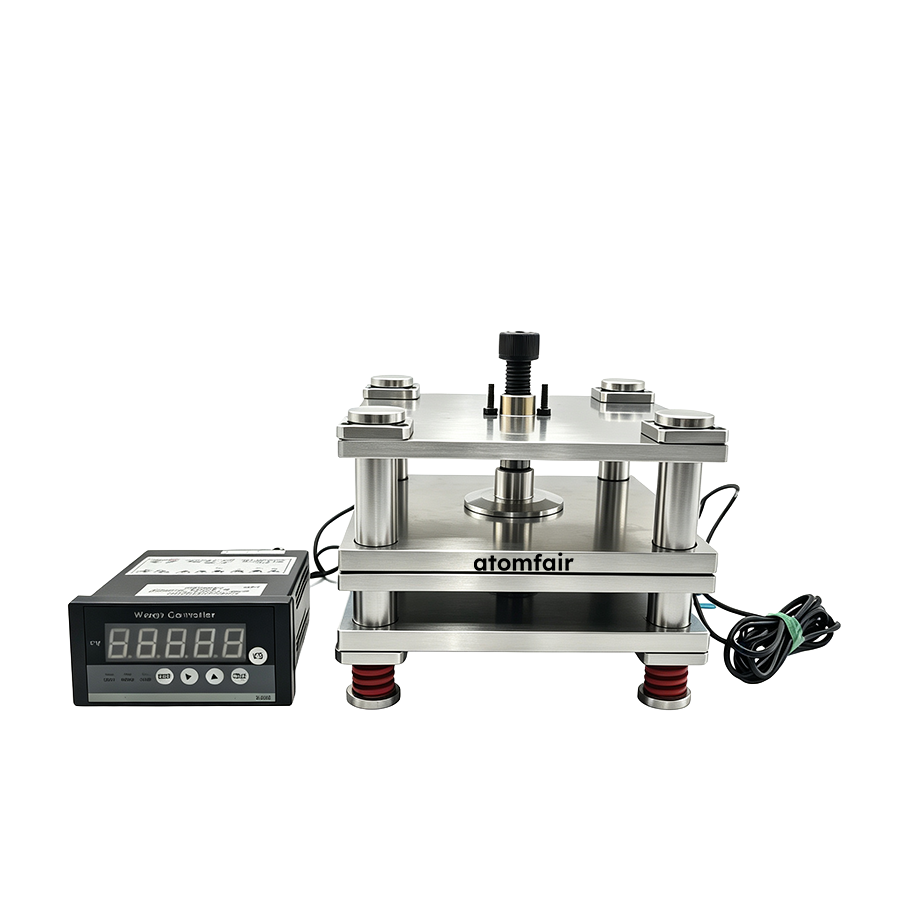
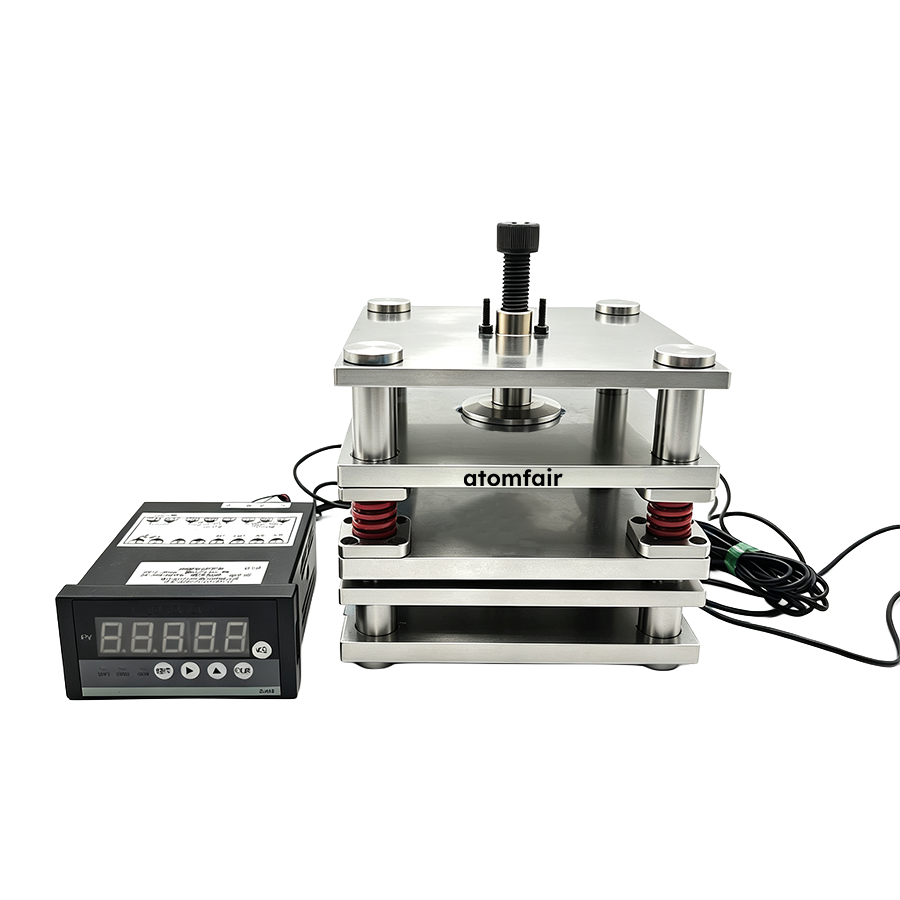
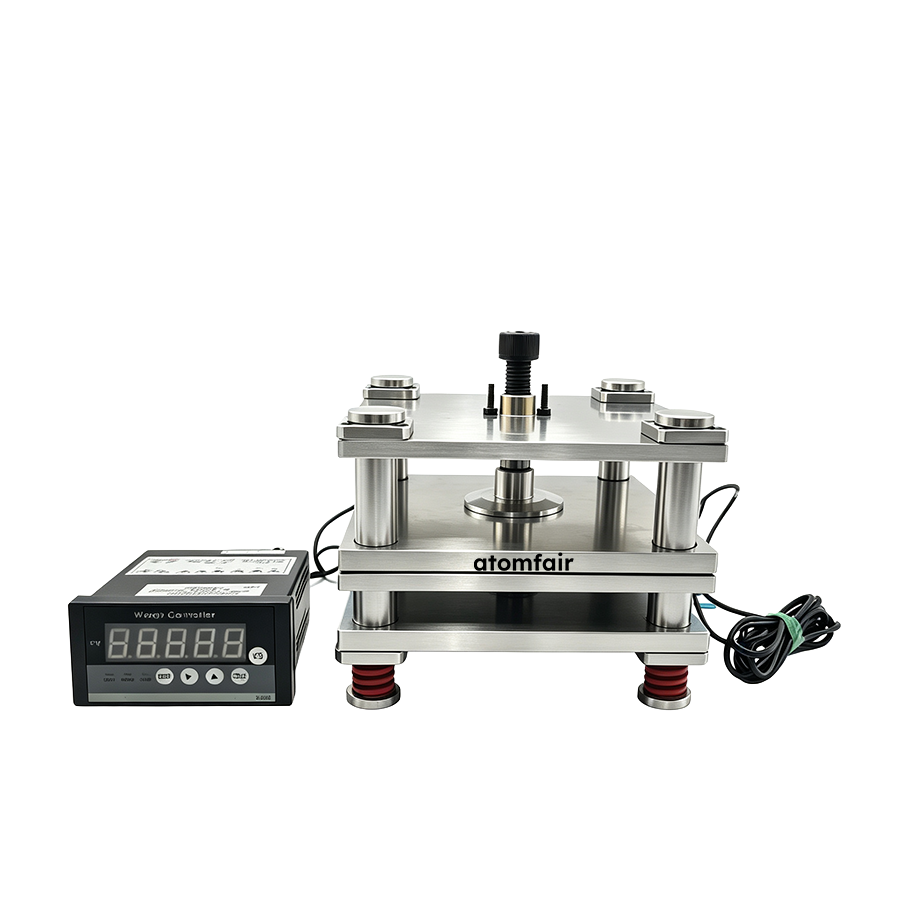
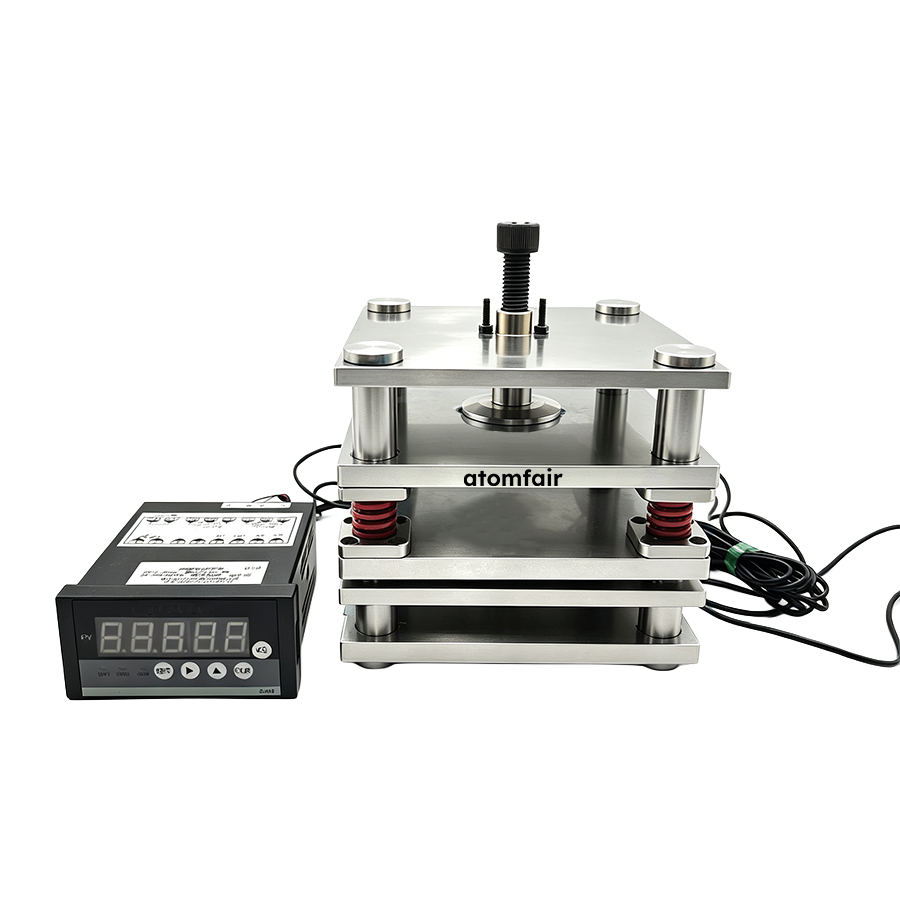
The ATM-PCBT-CS-3L is a professional pouch cell cycle testing equipment platform constructed from high-strength carbon steel, providing maximum structural rigidity for heavy-duty cell testing. Upgraded with an essential pressure sensing layer for real-time monitoring via external acquisition data cables, this fixture addresses the critical informational pain-point of how to prevent pressure sensor data interference. Featuring a three-layer synchronous clamping method with 4-corner screw locking and die spring buffers, it delivers an elevated standard working pressure of 450kg (customizable up to 650kg) to achieve extremely rigid and uniform load distribution, offering maximum load capacity with highly cost-effective three-layer battery fixture price efficiency.

Technical Specifications

PARAMETER DETAILS
1. Basic Product Parameters
Product Name Pouch Cell Battery Cycle Test Fixture (Carbon Steel Three-Layer with Pressure Sensor Version)
Model ATM-PCBT-CS-3L
Main Material Carbon Steel (Full material customization available)
Structure Design Three-layer structure, upgraded from the two-layer fixture with an additional pressure sensing layer (pressure sensor is an essential structural component), stable structure, uniform pressure distribution, and real-time pressure monitoring available
Standard Working Pressure 450kg (customizable up to 650kg, adapted to the heavy-duty load-bearing capacity of the carbon steel structure)
Compatible Battery Thickness 0.1–2 cm
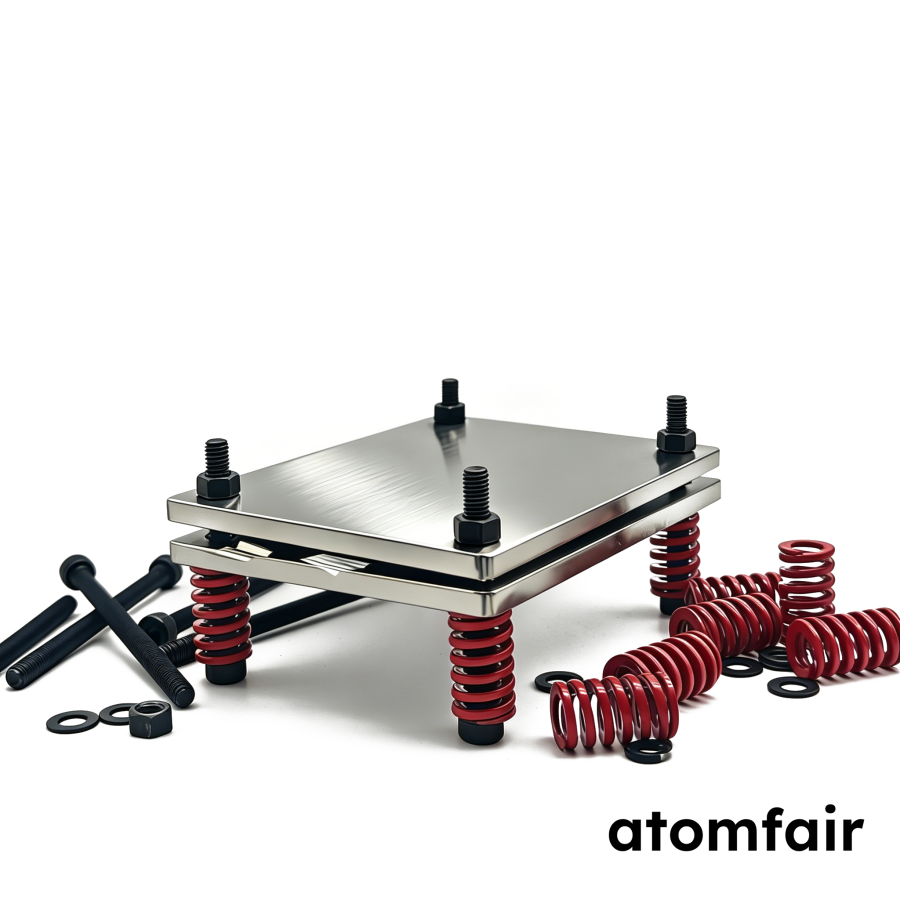
Clamping Method 4-corner screw locking + die spring buffer + three-layer synchronous clamping, uniform pressure
Customization Service Fixture size, three-layer spacing, and pressure level can be customized according to battery dimensions and test requirements
2. Fixture Size & Maximum Theoretical Load
Size Rule Max. cell length & width = Fixture length & width − 30 mm; Three-layer spacing can be adjusted according to cell thickness
10*78*105 mm (Load: 450kg) Max cell: ≤12*48*75 mm. Suitable for mini small cells, carbon steel three-layer structure, maximum structural rigidity, stable pressure
10*90*107 mm (Load: 450kg) Max cell: ≤12*60*77 mm. Compact size, high rigidity, three-layer synchronous clamping, suitable for cycle testing, high stability
10*100*130 mm (Load: 450kg) Max cell: ≤12*70*100 mm. Suitable for standard medium-sized cells, universally used in laboratories, high load-bearing capacity
10*120*160 mm (Load: 650kg) Max cell: ≤28*90*130 mm. Standard high-pressure type (max 650kg), carbon steel three-layer reinforced structure
12*120*160 mm (Load: 650kg) Max cell: ≤26*90*130 mm. Reinforced high-pressure type, max load 650kg, wear-resistant, extremely stable three-layer structure
10*150*180 mm (Load: 650kg) Max cell: ≤28*120*150 mm. Suitable for large-capacity cells, carbon steel three-layer structure, excellent load-bearing capacity, long-term stability
12*150*180 mm (Load: 650kg) Max cell: ≤26*120*150 mm. Top-level high-load version (max 650kg for carbon steel three-layer), ultra-rigid uniform pressure distribution

3. Optional Materials & Core Advantages Matrix
Carbon Steel (Default) Lowest cost; strong load-bearing capacity; three-layer structure improves rigidity, suitable for cost-sensitive three-layer high-pressure testing
304 Stainless Steel Cost-effective; resistant to regular electrolyte contact; non-magnetic; strong load-bearing capacity; scratch-proof; three-layer structure ensures uniform pressure, suitable for cycle testing of multiple cells or thick cells
316 Stainless Steel Optimal electrolyte corrosion resistance; suitable for leakage/immersion testing; non-magnetic; compatible with high pressure (0-600kg); three-layer structure improves stability, suitable for long-cycle and high-pressure testing scenarios
7075-T6 Aluminum Alloy Lightweight; highest strength among aluminum alloys; good rigidity and precise positioning; insulated after anodizing; scratch-proof, compatible with three-layer structure
6061-T6 Aluminum Alloy Lightweight; easy to operate; good overall performance; easy to process and weld; insulated after anodizing; general electrolyte resistance
5052 Aluminum Alloy Lightweight; exceptional corrosion resistance against electrolyte and salt spray; excellent formability and impact fatigue resistance; insulated after anodizing; moderate strength, cost-effective choice for flexible structural testing
PP (Polypropylene) Ultra-lightweight; cost-effective; fully electrolyte-resistant (no swelling); high toughness; scratch-proof to protect battery film, optional for three-layer low-pressure testing
PEEK (Polyetheretherketone) Ultra-lightweight; optimal electrolyte resistance (no swelling); insulating and non-magnetic; wide temperature resistance range; extremely high precision, suitable for three-layer precision testing
Acrylic (PMMA) Lightweight; high transparency for visual observation; insulating and non-magnetic; easy to process, optional for three-layer observation-type testing
4. Quality Control & Alternative Options
Manufacturing Rules Processed under strict ISO 9001 Quality Management System standards
Alternative Options Explore our related catalog or custom dimensions. For urgent technical custom requests or bulk inquiries, please contact our support team.

Important Notes

  • Size Rule: Cell length & width = Fixture length & width − 30 mm; Three-layer spacing can be adjusted according to cell thickness, providing safe clamping space and uniform pressure to ensure stable battery cycle test data.
  • Structural Feature: The carbon steel three-layer fixture is upgraded from the two-layer fixture. The core upgrade is the addition of a pressure sensing layer, where the pressure sensor is an essential structural component. The sensor data cable can be connected to external acquisition equipment to realize real-time monitoring of test pressure to solve technical long-tail informational pain-points regarding how to prevent pressure sensor data interference. Compared with the basic version, it provides maximum mechanical rigidity, heavy-duty load-bearing performance, and excellent structural stability. The three-layer synchronous clamping ensures uniform pressure distribution under high loads.
  • Customization & Suggestion: Fixture size, three-layer spacing, material and pressure level can be customized according to different battery cycle test requirements; carbon steel is highly recommended for budget-restricted, high-pressure laboratory or production testing where direct electrolyte contact can be strictly managed.

APPLICATION SCOPE: Budget-restricted heavy-duty pouch cell cycle testing, heavy structural stress validation, production-line electrochemical evaluation, and high-pressure structural verification grids.
TAILORED SOLUTIONS FOR RESEARCH
Contact our engineering team for technical support or official institutional quotations.
EMAIL: inquiry@atomfair.com
Manufacturer: Atomfair LLC
Brand: ATOMFAIR®

This fixture requires cell dimensions to be exactly 30 mm smaller than fixture length and width in both axes to ensure safe clamping clearance and uniform pressure distribution. Material selection must account for electrolyte exposure risk; carbon steel is suitable only when direct electrolyte contact is strictly avoided.

  • Size Constraint: Cell length and width must each be 30 mm less than the corresponding fixture dimension.
  • Pressure Constraint: Standard working pressure is set at 450 kg and can be customized up to 650 kg for carbon steel structures.
  • Material Compatibility: Stainless steel grades 304 and 316 offer electrolyte corrosion resistance while polymers like PP and PEEK provide full chemical inertness without swelling.
  • Clamping Uniformity: Four-corner screw locking with die spring buffers ensures uniform pressure distribution across the three-layer structure.
  • Sensor Integration: The integrated pressure sensor must be connected to external data acquisition equipment via its cable for real-time monitoring.

How does the three-layer synchronous clamping with die spring buffers affect pressure uniformity compared to a two-layer fixture at 450 kg working load?

The three-layer structure with 4-corner screw locking and die spring buffers provides more uniform pressure distribution than a two-layer fixture, especially under the standard 450 kg working pressure (customizable up to 650 kg). The additional pressure sensing layer is an essential structural component that enables real-time pressure monitoring via external acquisition data cables, addressing the critical pain-point of preventing pressure sensor data interference during heavy-duty pouch cell cycle testing.

Can the ATM-PCBT-CS-3L fixture accommodate pouch cells with thicknesses outside the 0.1–2 cm range, and what are the size constraints for the 10*78*105 mm variation?

The fixture is designed for compatible battery thicknesses of 0.1–2 cm, and three-layer spacing can be adjusted according to cell thickness. For the 10*78*105 mm variation, the maximum cell dimensions are ≤12*48*75 mm, following the rule that cell length and width equal fixture length and width minus 30 mm. Customization of fixture size, three-layer spacing, and pressure level is available for cells outside standard dimensions.

What handling precautions are required when using the carbon steel version with electrolyte-prone pouch cells, and how does the pressure sensor data cable affect setup?

Carbon steel is recommended for budget-restricted high-pressure testing where direct electrolyte contact can be strictly managed, as it lacks the corrosion resistance of stainless steel options like 304 or 316. The pressure sensor data cable must be connected to external acquisition equipment for real-time monitoring, and care should be taken to route the cable away from interference sources to prevent data corruption during high-load testing up to 650 kg.

The ATM-PCBT-CS-3L carbon steel three-layer fixture with integrated pressure sensor provides a rigid, high-load-capacity platform for pouch cell cycle testing, with real-time pressure monitoring via external data cables. Its 450kg standard working pressure (upgradable to 650kg) and three-layer synchronous clamping ensure uniform load distribution, but the carbon steel construction requires strict management of electrolyte contact to avoid corrosion, and the pressure sensor integration adds complexity to data acquisition setup.

Positive

  • High structural rigidity and load capacity: Carbon steel three-layer construction with 4-corner screw locking and die spring buffers delivers a standard working pressure of 450kg, customizable up to 650kg, providing extremely rigid and uniform load distribution for heavy-duty pouch cell testing.
  • Integrated real-time pressure monitoring: The pressure sensor is an essential structural component of the three-layer design, with data cable connectivity to external acquisition equipment for real-time pressure monitoring, addressing the informational pain-point of preventing sensor data interference.

Trade-offs

  • Carbon steel requires electrolyte management: Carbon steel is not inherently corrosion-resistant; direct electrolyte contact must be strictly managed to prevent degradation, making this material choice suitable only for controlled environments where electrolyte leakage is minimized.
  • Pressure sensor integration adds setup complexity: The pressure sensor is an essential structural component requiring external data cable connection to acquisition equipment, adding wiring and calibration steps that increase initial configuration time compared to basic fixtures without monitoring.

Every advanced material, component, equipment, and instrument in our catalog is backed by rigorous testing. We maintain strict internal quality management frameworks and align with CE conformity metrics to deliver transparent, reproducible performance data via our public open-science repository.

To request raw batch performance data, submit formal vendor registration paperwork, or execute a fast-turnaround R&D manufacturing loop, contact us at inquiry@atomfair.com.

Item is dispatched under the Atomfair Shipping & Delivery Framework (Free worldwide shipping on orders over $59 USD excl. heavy equipment). Return is governed by the Atomfair Return & Refund Policy (7-day technical return window).
Size

10*78*105 mm, 10*90*107 mm, 10*100*130 mm, 10*120*160 mm, 12*120*160 mm, 10*150*180 mm, 12*150*180 mm