Powerful High-Energy-Density Battery Series | ATOMFAIRCOMMERCIAL GRADE · PRODUCTION
|
||||||||||||||||||||||||||||||||||||||||
|
||||||||||||||||||||||||||||||||||||||||
|
TAILORED SOLUTIONS FOR RESEARCH
Contact our engineering team for technical support or official institutional quotations.
EMAIL: inquiry@atomfair.com
|
||||||||||||||||||||||||||||||||||||||||
|
Manufacturer: Atomfair LLC
Brand: ATOMFAIR®
|
These cells require storage in moisture-barrier vacuum-sealed packaging to prevent internal degradation. Operation demands a compatible battery management system (BMS) with over-discharge, over-current, and cell balancing protection.
- Storage Packaging: Store cells in moisture-barrier vacuum-sealed aluminum foil bags within anti-static cartons to maintain electrolyte stability.
- Temperature Limits: Avoid exposing cells to temperatures above 60°C for extended periods; charge only within 0°C to 50°C and discharge within -20°C to 60°C depending on the model.
- BMS Requirement: Always use a compatible BMS with over-discharge, over-current, and cell balancing protection to prevent electrical hazards.
- Pre-conditioning: Pre-condition new cells at 25°C before first use to ensure proper initial performance.
- Cycle Life Conditions: Achieve up to 1500 cycles at 80% SOH when operating at 0.5C charge/3C discharge within specified voltage and temperature ranges.
These steps guide the safe preconditioning, connection, and cycling of the semi-solid electrolyte pouch cells. Always follow the manufacturer's voltage and temperature limits to prevent damage or hazard.
- Inspect cell
Inspect the cell for physical damage, swelling, or deformation before handling. - Pre-condition cell
Pre-condition the new cell by charging it to its nominal voltage at 25°C ambient temperature before first use. - Connect BMS
Connect the cell to a compatible BMS with over-discharge, over-current, and cell balancing protection. - Charge cell
Charge the cell at 1C rate to the maximum voltage (4.25V or 4.35V) within the specified charge temperature range. - Discharge cell
Discharge the cell at up to 3C rate, monitoring voltage to remain above the minimum (2.7V or 2.75V).
What are the critical temperature limits for charging and discharging the AFPED series cells?
The AFPED10374172 (25.5Ah) cell can be charged between 0°C and 45°C and discharged between -20°C and 55°C. The AFPED10161231 (58Ah) cell supports a wider charge range of 0°C to 50°C and a discharge range of -20°C to 60°C. The manufacturer also warns against prolonged exposure to temperatures above 60°C.
What BMS specifications are required for safe operation of the ATOMFAIR high-energy-density batteries?
The product documentation mandates the use of a compatible BMS with over-discharge protection, over-current protection, and cell balancing functionality. These features are essential to prevent damage and ensure safe operation within the recommended voltage and current limits.
How does the cycle life differ between the 25.5Ah and 58Ah models in the AFPED series?
The AFPED10374172 (25.5Ah) model achieves at least 800 cycles at 80% state of health (SOH) under 0.5C charge/3C discharge conditions. The AFPED10161231 (58Ah) model achieves at least 1500 cycles at 80% SOH. The exact test conditions for the 58Ah model are not specified in the source, but both models offer long cycle life suitable for robotic fleets.
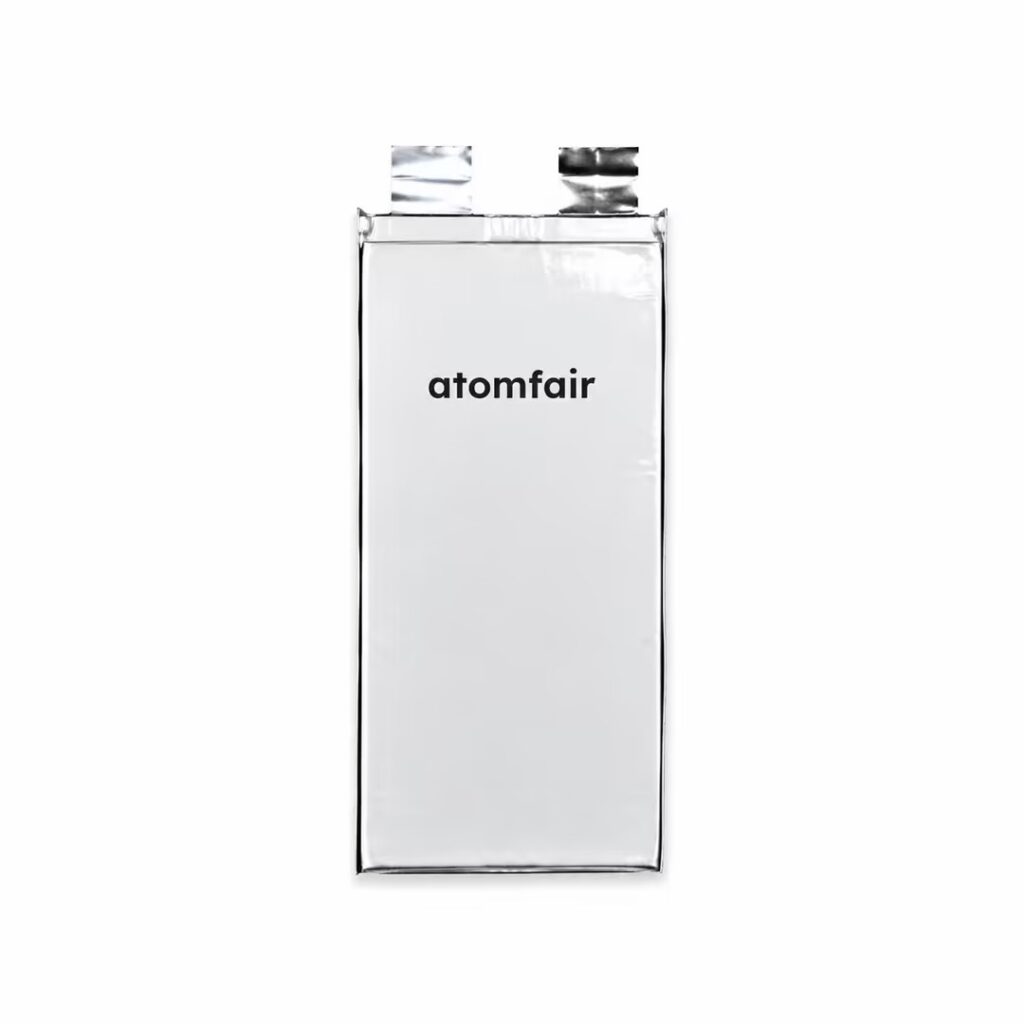
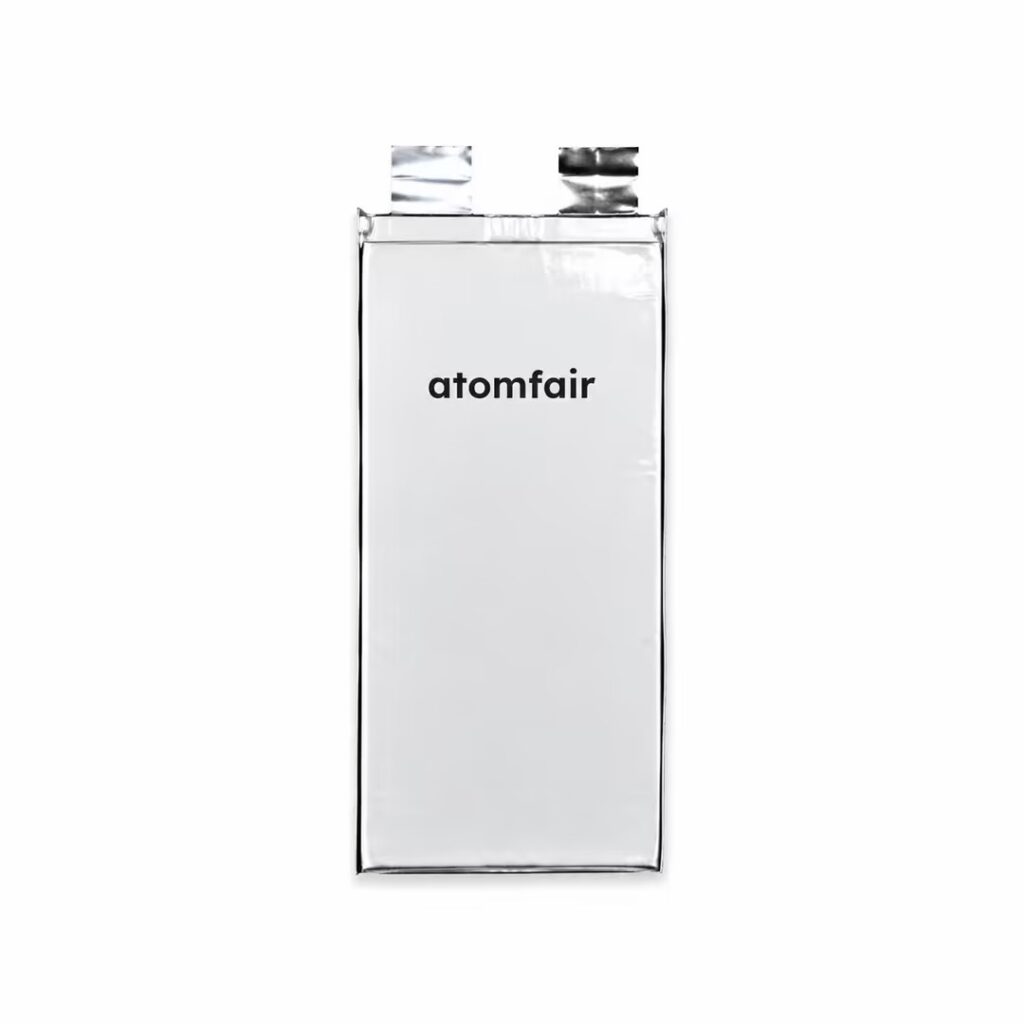
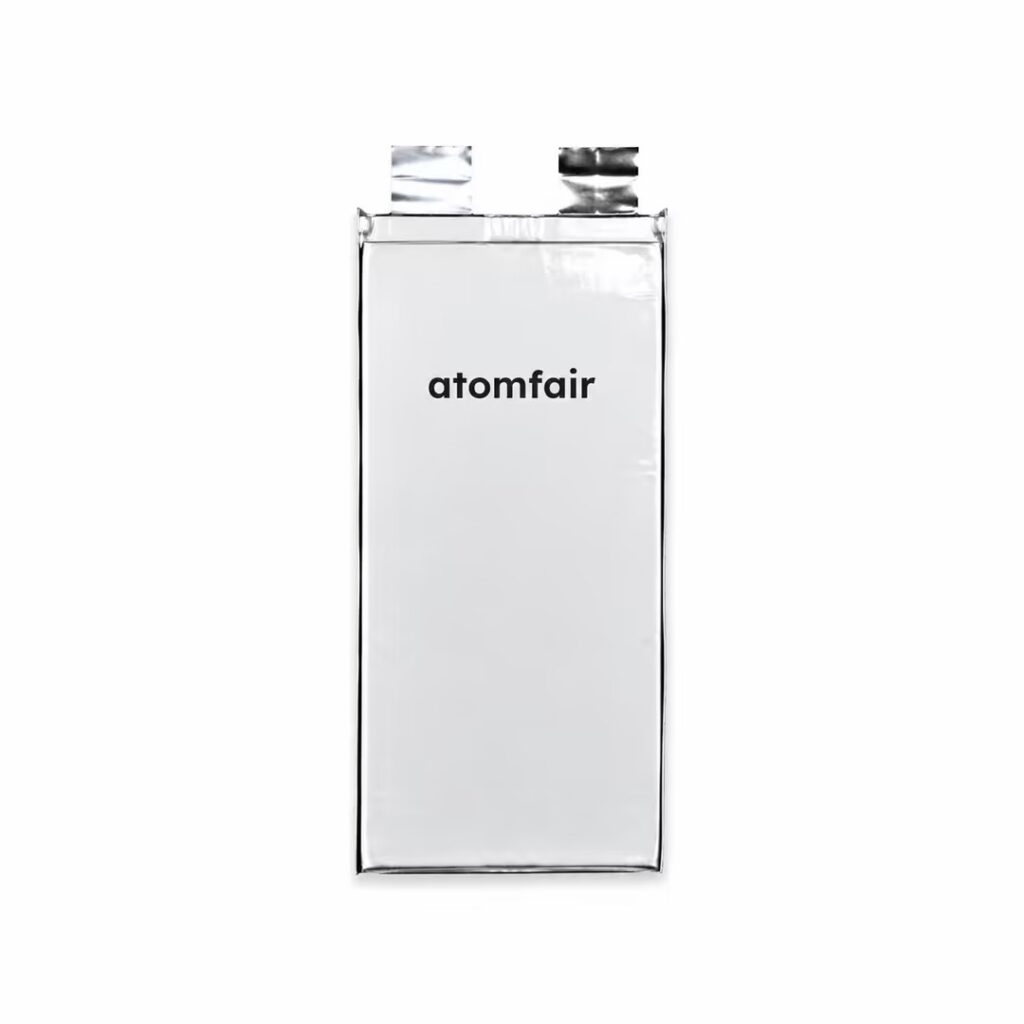
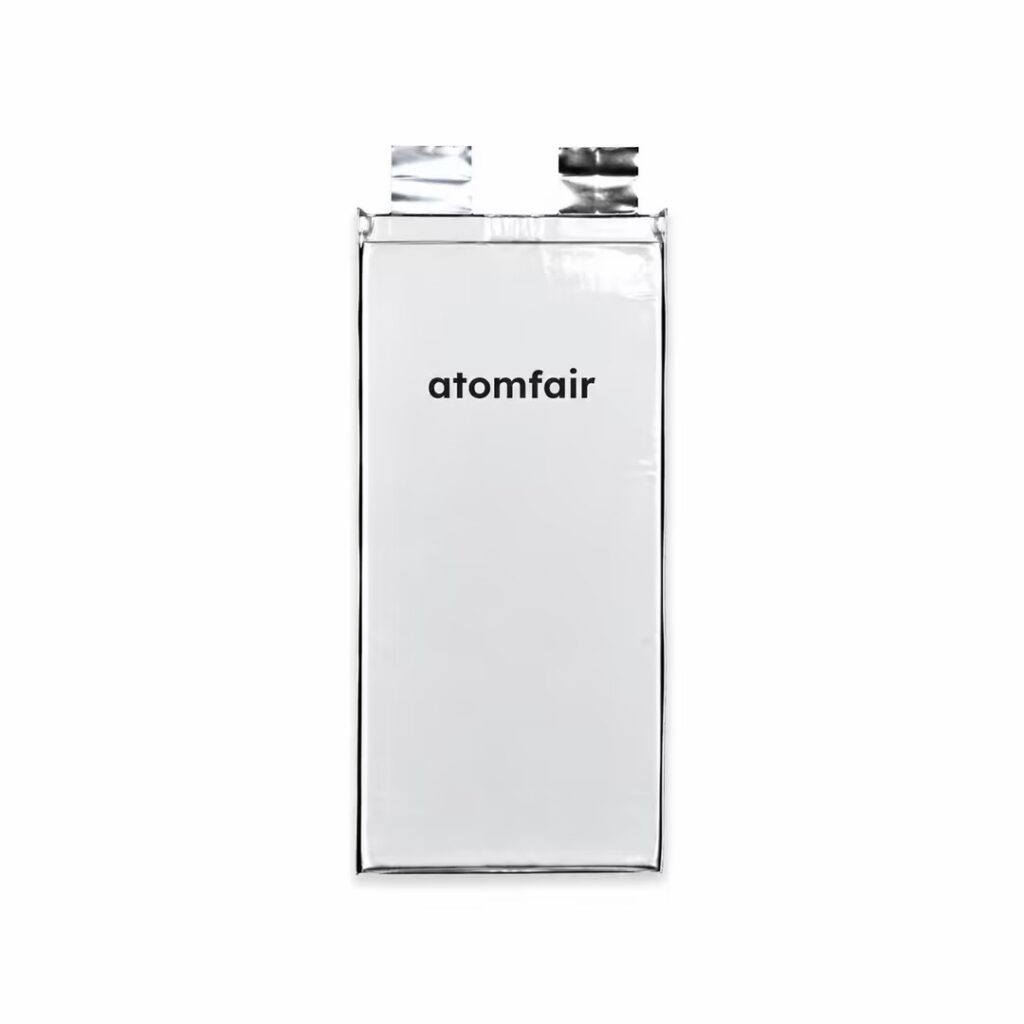
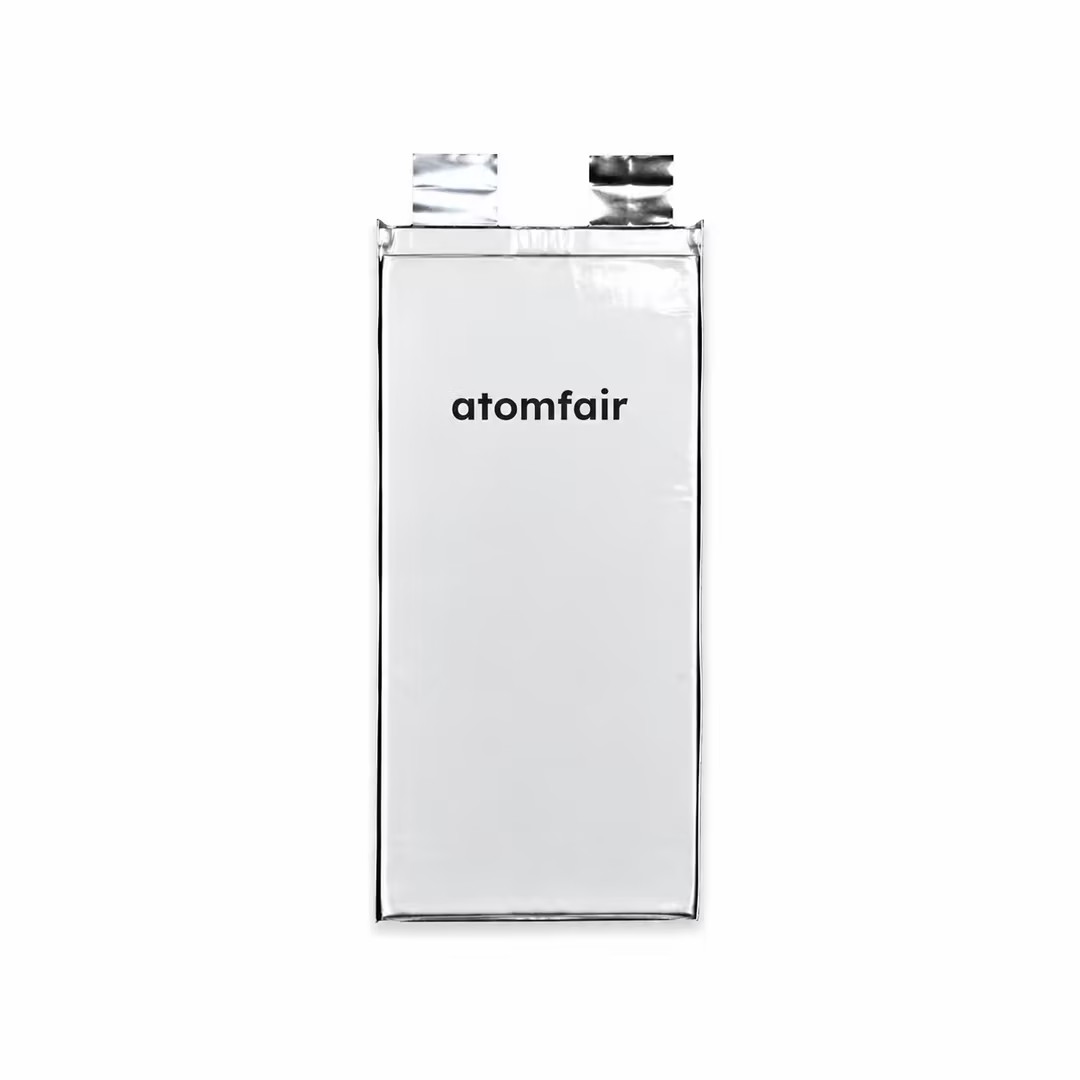
The ATOMFAIR Powerful High-Energy-Density Battery Series provides compact pouch cells in 25.5Ah and 58Ah capacities, utilizing semi-solid electrolyte for safety and stable 1C/3C charge/discharge rates. It operates from -20°C to 60°C discharge and achieves up to 1500 cycles at 80% SOH, but requires a dedicated BMS and exhibits cycle-life variation between models.
Positive
- High Energy Density in Compact Pouch: Up to 58Ah capacity in a slim pouch format (10.0 mm thick) enables space-constrained integration in robotics and portable systems.
- Wide Temperature Operation Range: Discharge from -20°C to +60°C allows use in diverse indoor/outdoor robotic applications without active thermal management.
Trade-offs
- BMS Required for Safe Operation: A compatible battery management system with over-discharge, over-current, and cell balancing is mandatory to prevent damage and ensure cycle life.
- Cycle Life Variation Across Capacity: The 25.5Ah variant achieves 800 cycles at 80% SOH, while the 58Ah variant reaches 1500 cycles, affecting replacement scheduling and total cost of ownership.
Every advanced material, component, equipment, and instrument in our catalog is backed by rigorous testing. We maintain strict internal quality management frameworks and align with CE conformity metrics to deliver transparent, reproducible performance data via our public open-science repository.
To request raw batch performance data, submit formal vendor registration paperwork, or execute a fast-turnaround R&D manufacturing loop, contact us at inquiry@atomfair.com.
Item is dispatched under the Atomfair Shipping & Delivery Framework (Free worldwide shipping on orders over $59 USD excl. heavy equipment). Return is governed by the Atomfair Return & Refund Policy (7-day technical return window).