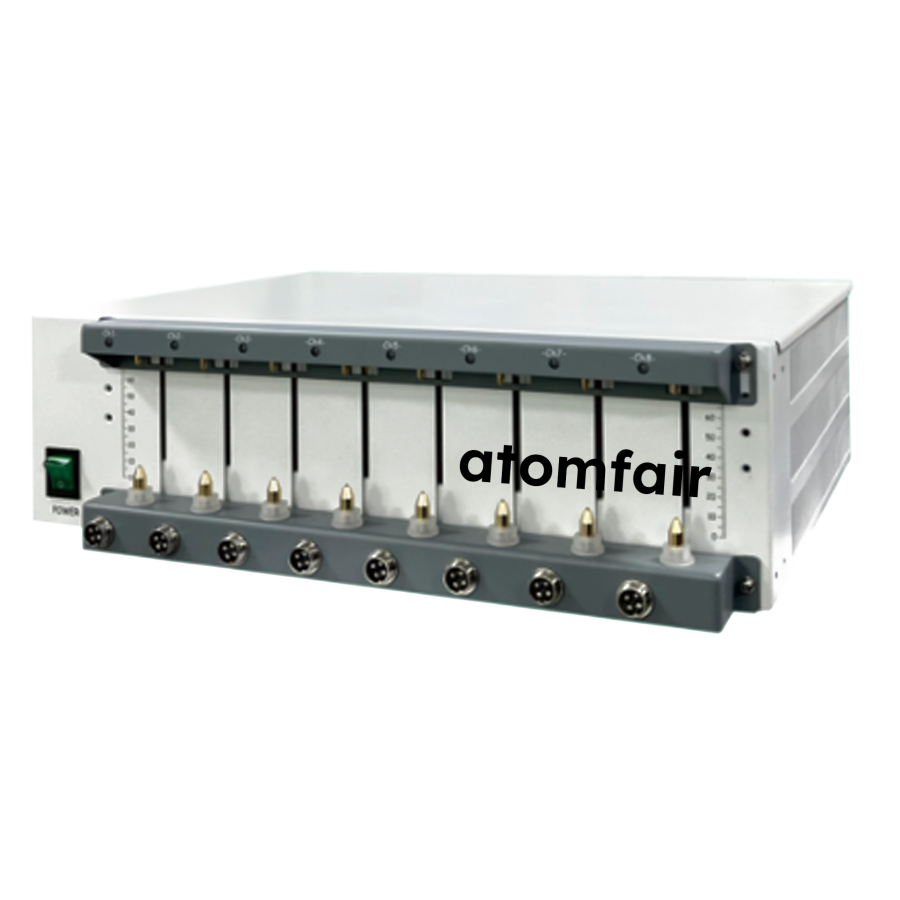
ATOMFAIR® ATOMFAIR-BT8008 8-CHANNEL BATTERY TESTERRESEARCH GRADE MATERIAL
|
|||||||||||||||||||||||||||||||||||||||||||||
|
|||||||||||||||||||||||||||||||||||||||||||||
|
TAILORED SOLUTIONS FOR RESEARCH
Contact our engineering team for technical support or official quotations.
EMAIL: inquiry@atomfair.com
|
|||||||||||||||||||||||||||||||||||||||||||||
|
Manufacturer: Atomfair LLC
Brand: ATOMFAIR®
|
Operate this battery tester only with the specified AC input power and ensure proper grounding to prevent electrical hazards. Store in a dry, dust-free environment when not in use to avoid degradation of electronic components.
- Electrical Safety: Connect the device to a grounded AC outlet with the specified voltage and frequency to prevent electric shock.
- Ventilation Requirement: Ensure adequate ventilation around the unit to dissipate heat generated during sustained operation.
- Input Power Specification: Use only the rated input power (AC 220V ±10% / 50Hz) to avoid damage to internal components.
- Moisture Protection: Avoid exposure to condensation or liquid spills to maintain insulation integrity and prevent short circuits.
- Overload Prevention: Do not exceed the maximum output power per channel (30W) to mitigate thermal stress and component failure.
This process describes the initial setup and safe operation of the Atomfair-BT8008 battery tester for standard charge/discharge tests. Follow these steps to ensure proper connection and programming for accurate measurements.
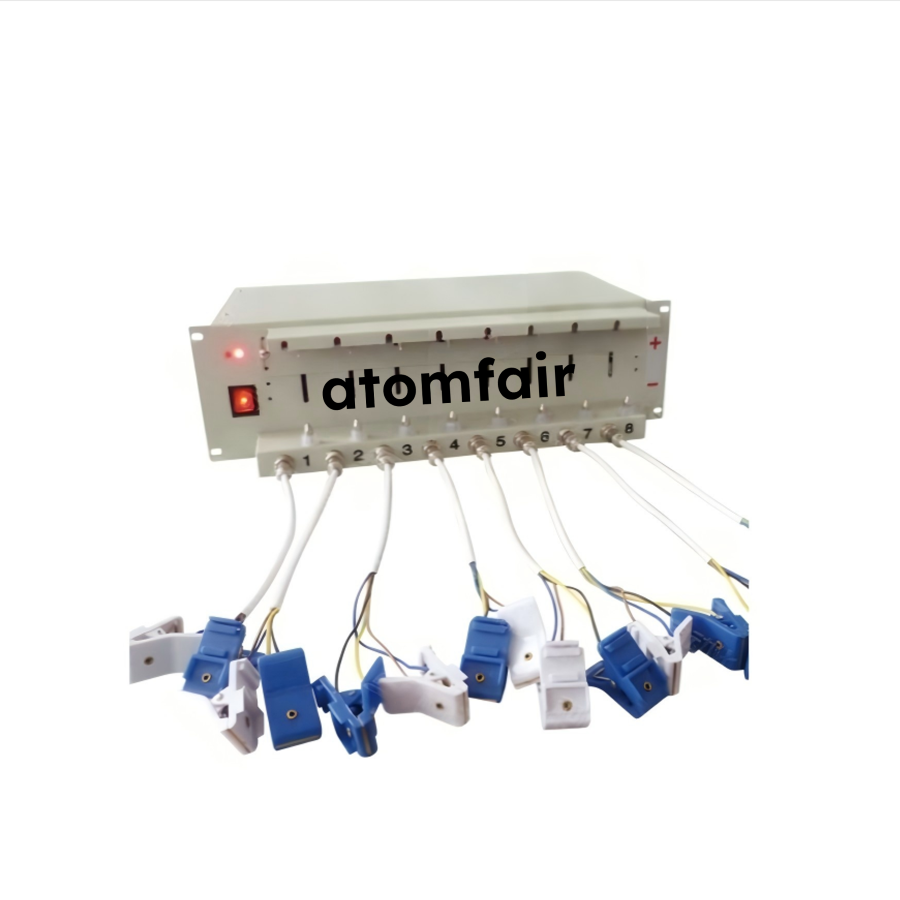
Required Equipment: Atomfair-BT8008 8-Channel Battery Tester, Windows PC with Installed Control Software, Test Leads or Battery Holders, Batteries Under Test
- Inspect Equipment
Inspect the tester, power cord, and test leads for any visible damage before connecting to power. - Connect Power and Ground
Connect the tester to a grounded AC outlet using the supplied power cord, ensuring proper voltage and frequency. - Attach Batteries
Attach the batteries to the test channels using appropriate fixtures, confirming correct polarity for each cell. - Configure Software
Launch the control software and set working modes, parameters, and cut-off conditions for each independent channel. - Initiate Test
Start the test sequence and monitor the channels in real time for any abnormal readings or error messages. - Collect Data
Retrieve logged data after the test completes, using the software’s export function for further analysis. - Power Down Safely
Disconnect the batteries from the channels, then power off the tester and unplug it from the mains.
What is the trade-off between using the low-current range (0.5mA–0.1A) versus the high-current range (0.1A–6A) for measuring small-format coin cells on the Atomfair-BT8008?
The low-current range offers finer resolution with a constant voltage cut-off current of 0.2mA and minimum sampling current of 0.2mA, ideal for low-capacity cells, but is limited to 0.1A maximum. The high-current range supports up to 6A but has a higher cut-off current of 12mA, making it unsuitable for very low-current cut-off conditions. Both ranges maintain ±0.05% FS accuracy, so the choice depends on the cell's operating current and required cut-off precision.
Can the Atomfair-BT8008 perform pulse testing on high-voltage cathode materials that require voltages above 5V or precise constant voltage control near the minimum?
The constant voltage control range is 25mV to 5V, so cells with nominal voltage up to 5V (e.g., many Li-ion chemistries) are within range, but materials requiring >5V cannot be directly tested. The minimum discharge voltage is 1.0V between fixtures (or 1.5V with 2m cables), limiting deep discharge below that threshold. For accurate tests near the voltage bounds, use direct fixture connections and ensure the cell's operating range fits within 1.0V to 5V.
How do the 8 independent channels prevent electrical interference when testing multiple battery chemistries simultaneously on the Atomfair-BT8008?
Each channel has complete isolation with a built-in power supply and independent control circuit, ensuring no interference between channels. The channels can be set to different working modes (e.g., CC charge on one, CR discharge on another) simultaneously without crosstalk. This design allows reliable multi-sample testing under varying conditions, which is essential for research comparing different cell types or aging states.
The Atomfair-BT8008 offers 8 independent programmable channels with high-precision 16-bit AD/DA resolution for parallel battery testing, but requires careful handling of discharge voltage limits due to cable losses and a 220V/50Hz power supply.
Positive
- Independent 8-channel programmability: Each of the 8 channels operates independently with isolated control circuitry, enabling simultaneous testing of different battery types and protocols without cross-channel interference.
- 16-bit resolution and high accuracy: AD and DA conversion at 16 bit, coupled with ±0.05% of FS voltage and current accuracy, ensures reliable data for precise characterization of battery performance.
Trade-offs
- Discharge voltage cable dependency: Minimum discharge voltage is 1.0V between fixtures but rises to 1.5V with a 2m cable, limiting low-voltage testing and requiring short, low-resistance connections for accurate low-voltage measurements.
- 220V/50Hz mains requirement: The instrument is designed for AC 220V ±10% / 50Hz input power, which may require a step-up transformer or frequency converter for labs operating on 110V/60Hz mains infrastructure.
Every advanced material, component, equipment, and instrument in our catalog is backed by rigorous testing. We maintain strict internal quality management frameworks and align with CE conformity metrics to deliver transparent, reproducible performance data via our public open-science repository.
To request raw batch performance data, submit formal vendor registration paperwork, or execute a fast-turnaround R&D manufacturing loop, contact us at inquiry@atomfair.com.
Item is dispatched under the Atomfair Shipping & Delivery Framework (Free worldwide shipping on orders over $59 USD excl. heavy equipment). Return is governed by the Atomfair Return & Refund Policy (7-day technical return window).