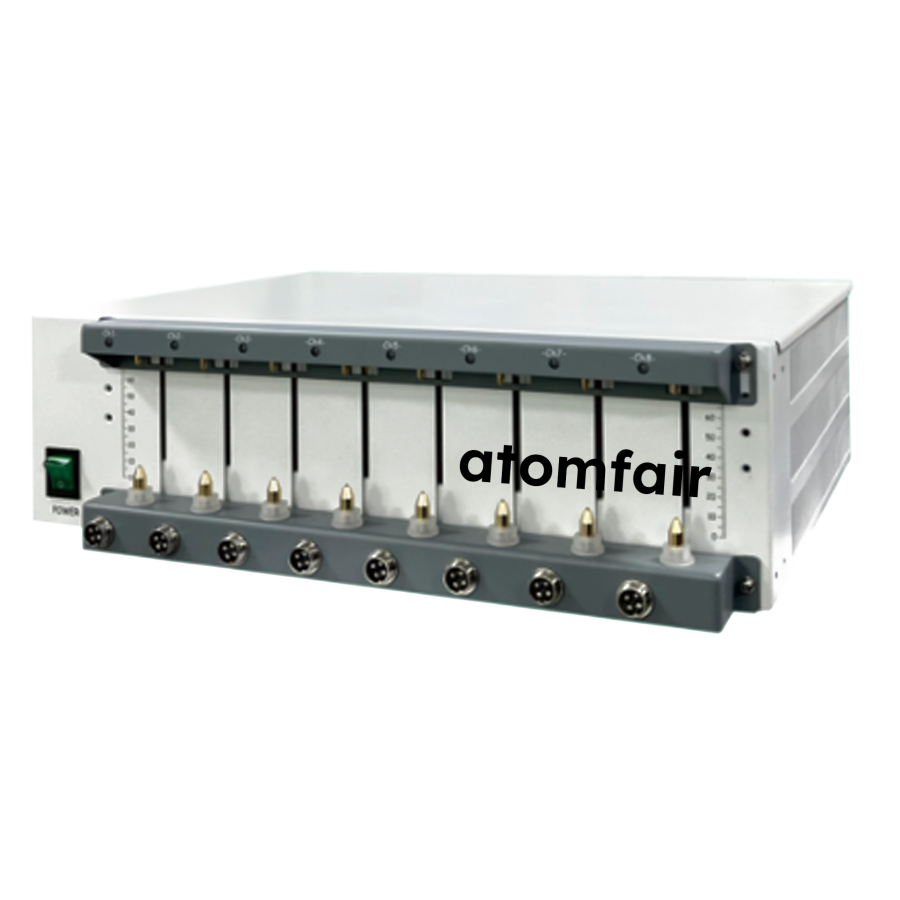
5V6A 8-Channel Battery Tester for Coin Cells ATOMFAIR®

Price range: $1,199.00 through $2,299.00

Institutional Procurement & Supply Compliance: As a verified US supplier, Atomfair accepts formal institutional Purchase Orders (POs), contract billing schedules, and custom procurement loops for university and national laboratories, and corporate R&D departments globally.

Commercial grade 8-channel battery tester for coin cells. Voltage 25mV-5V, accuracy ±0.05% FS. Current up to 6A/12A per channel. Order now.

Brands:

Description

Multi-Channel Battery Testing System (8-Channel High-Amperage 5V)

COMMERCIAL GRADE · PRODUCTION

Product Overview

High-throughput energy storage analysis and large-format materials indexing require strict hardware execution, and this premium multi channel battery testing system delivers exceptional electrical current and potential stability across extensive cycling windows. Functioning as an advanced high amperage battery tester analyzer, the hardware environment monitors 8 entirely decoupled testing nodes to generate highly synchronized charge, discharge, and pulse profiling arrays at higher current capacities. Engineered explicitly to automate rigorous cylindrical cell cycle life evaluation routines, the circuit tracks potential fluctuations down to a 25 mV floor up to a 5 V peak with an elite ±0.05% Full Scale (FS) calibrated metric. The system relies on a central command firmware block for independent channel data logging, seamlessly isolating localized cell impedance transitions without disturbing adjoining active testing streams. It serves as an essential primary analytical benchmark for advanced corporate energy platforms, university cleanroom environments, and automated quality control sorting bays.

Technical Specifications

ANALYTICAL HARDWARE PARAMETER TECHNICAL SPECIFICATION RATINGS
Decoupled Testing Nodes 8 Independent Channels (Simultaneous Asynchronous Operations)
Input Grid Utility Requirements AC 220V / 110V ±10% Swappable Switch Setup | 50 Hz Configuration
Maximum Frame Power Consumption 425 W Under Peak Continuous Operational Load Metrics
Potential Measuring Window 25 mV – 5 V Calibrated Operating Range
Voltage Sampling Accuracy & Stability ± 0.05% FS (Full Scale Geometric Tracking Consistency)
Current Configuration Settings Available in Dual Selectable Operational Variants: 5V6A and 5V12A Ranges
Current Measurement Precision ± 0.05% FS Under Temperature-Stabilized Operational Frames
Maximum Programmed Cycle Sequences 65,535 Interconnected Automation Steps Per Profile Instruction
Physical Equipment Dimensions 483 mm × 404 mm × 130 mm (Standard Rack Assembly Profile)
Alternative Catalog Items Explore our complete laboratory metrology database for split-test cells, high-temperature pouch cell vacuum sealers, automated hydraulic pellet presses, or multi-point impedance analysis fixtures.

Key Features & Advantages

  • High-Precision Metrology Deck: Delivers sub-millivolt potential resolving power with ±0.05% FS accuracy, capturing exact chemical transformation plateaus seamlessly.
  • Decoupled 8-Channel Matrix Architecture: Permits simultaneous, asynchronous execution of distinct experimental routines across multiple channels to maximize laboratory space output.
  • Dual-Tier Scaled Current Options: Configured for high-power characterization paths with standard select model steps supporting both 5V6A and 5V12A continuous draw configurations.
  • Automated Cycle Sequence Logic: Drives up to 65,535 iterative loops to compile long-term capacity retention aging profiles without user intervention.

TECHNICAL COMPATIBILITY & CROSS-REFERENCE: This premium multi-channel evaluation instrument is processed to meet strict laboratory-grade electronic metrics, exhibiting identical response accuracy and data step mapping to pre-existing standard research testing grids. It functions as a highly reliable institutional alternative for research groups presently utilizing enterprise-grade multi-point analysis modules, matching physical component performance standards seamlessly.
EXPERIMENTAL APPLICATION & SETUP GUIDE: Our testing chassis is optimized for high-precision validation loops and battery health diagnostics. Due to its standard mechanical housing tolerances, it integrates smoothly into mainstream server rack layouts. For instance, when validating cell active materials or monitoring long-term secondary battery degradation vectors, this unit interfaces directly with typical cylindrical cell holder blocks or heavy-duty lead clips without demanding custom intermediate calibration hardware adjustments.
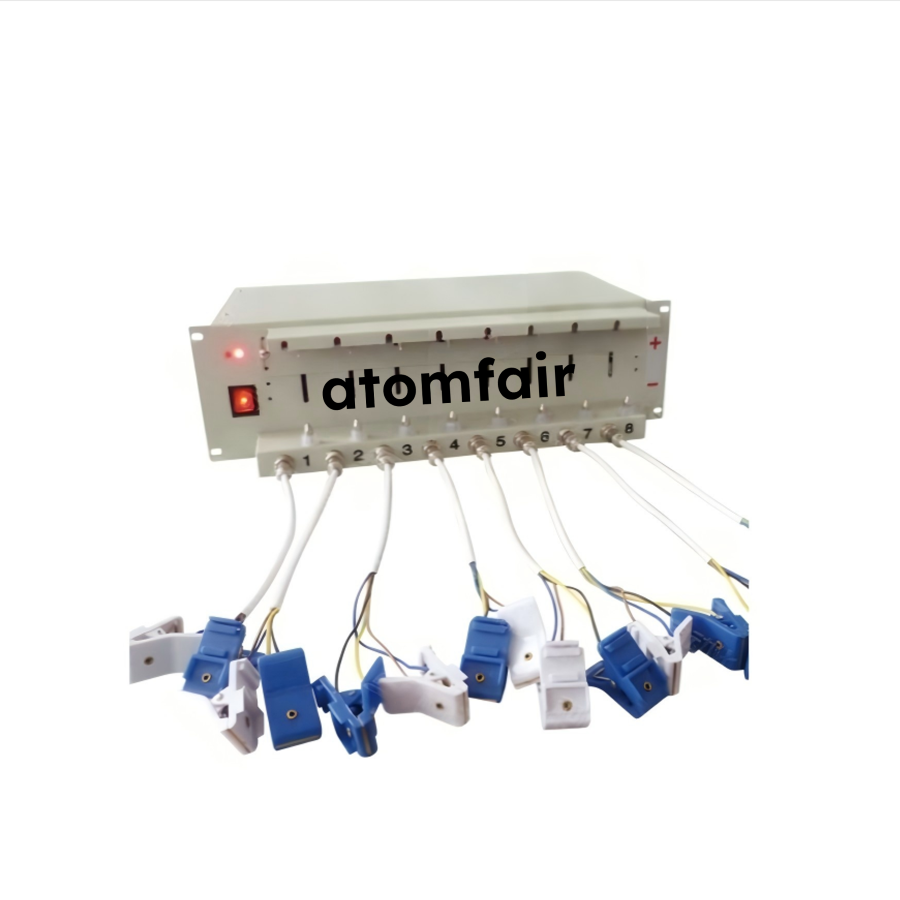
OPERATIONAL COMPLIANCE NOTICE: Standard equipment includes soft pouch battery clip assemblies; please communicate specific alternative heavy cable requests prior to dispatch logistics processing. Ground the device housing properly and secure input ventilation clearance lines to safeguard the internal power transformer matrix from thermal accumulation errors. Our manufacturing chains conform fully with environmental verification tracing structures, and modules are processed through verified instrumentation freight channels.

Frequently Asked Technical Questions

Can this high-amperage testing system replace alternative automated cycling units in existing materials verification lines?

Yes. This analysis assembly features exact technical metrics (including ±0.05% FS accuracy parameters, dynamic multi-tier current sensing, and robust digital step triggers) that align perfectly with the performance standards of industry-leading analytical testing systems. Many academic and corporate energy storage laboratories utilize this hardware frame as an independent hardware alternative to optimize research budgeting while tracking identical electrochemical reproducibility bounds.

How does the structural design protect the system from overheating during continuous high-rate 5V12A discharge loops?

The instrumentation frame features an array of variable-speed smart thermal fans synced with localized multi-point thermistors. When execution loads rise across active channels under full 5V6A or 5V12A continuous profiles, forced convection cooling profiles stabilize internal temperatures, maintaining precision shunt calibration parameters and protecting critical data loops.

What specific step parameters and protection constraints are programmable inside the software interface?

The automated software configuration allows researchers to program explicit constant current (CC), constant voltage (CV), and rest periods up to 65,535 consecutive loops. Safety upper and lower bounds can be defined for potential limits, continuous current limits, and step capacity ceilings, which immediately trip independent channel relay locks if unexpected material failure anomalies occur.
TAILORED SOLUTIONS FOR RESEARCH
Contact our engineering team for technical support or official institutional quotations.
EMAIL: INQUIRY@ATOMFAIR.COM
Manufacturer: PRODUCTION DIVISION · ADVANCED ENERGY STORAGE DIVISION
Brand: INDUSTRIAL TESTING HARDWARE
Specifications are representative and subject to change without notice. For the latest version and compliance certificates, contact official sales channel.

This system requires connection to a grounded AC power source within 110V or 220V ±10% at 50 Hz to maintain operational safety. The unit must be placed in a dry, ventilated area to prevent electrical shorts and overheating under 425W peak load.

  • Power Supply Configuration: Set the input voltage selector to match the local mains (110V or 220V) before connecting to an AC outlet to prevent immediate circuit failure.
  • Grounding Requirement: Connect the system exclusively to a grounded outlet to minimize the risk of electrical shock during operation.
  • Maximum Power Load: Do not exceed 425W total continuous power draw across all channels to avoid internal thermal damage.

This procedure outlines the critical steps to safely initialize and begin testing coin cell batteries using the 8-channel system. Following these steps ensures stable power delivery and accurate data acquisition without risk of electrical hazard.

Required Equipment: 8-Channel Battery Tester

  1. Inspect System Integrity
    Inspect the system for any visible damage to the chassis, cables, and connectors before applying power.
  2. Configure Input Voltage
    Confirm the voltage selector switch matches the local AC mains voltage (110V or 220V) and set to the correct position.
  3. Connect to Power
    Connect the power cord to a grounded outlet and switch on the main power to initialize the firmware.
  4. Set Test Parameters
    Configure each channel's voltage and current limits within the rated range using the software interface before attaching batteries.
  5. Attach Coin Cell Batteries
    Attach coin cell batteries to the test fixtures, ensuring correct polarity and secure contact to prevent short circuits.
  6. Start Data Logging
    Initiate the charge/discharge protocol and verify data logging on all active channels before leaving the system unattended.

How does the ±0.05% FS voltage accuracy affect low-voltage testing of coin cells near 25 mV?

The ±0.05% FS accuracy corresponds to ±2.5 mV at the 5 V full scale, which represents a 10% error at the 25 mV lower limit. This trade-off means that while the system provides excellent accuracy for typical 3–5 V coin cells, measurements near the minimum voltage require careful calibration and interpretation for precise low-voltage characterization.

Can this tester accommodate standard 3.7 V lithium-ion coin cells with its 5 V range and 5 µA–1 mA current range?

Yes, the 5 V maximum voltage covers the 3.7 V nominal of lithium-ion coin cells, and the 5 µA to 1 mA current range is suitable for low-rate characterization and open-circuit voltage measurements. However, the single current range may not support high-rate charge/discharge testing or larger-format lithium-ion cells that require currents above 1 mA.

What electrical infrastructure is required to operate the Atomfair 5V6A/12A battery tester in a lab?

The system requires an AC power supply of 220 V or 110 V (±10%) at 50 Hz and consumes a maximum of 425 W. A dedicated circuit with proper grounding is recommended to ensure voltage stability and protect the precision electronics during long-duration cycling tests.

This battery tester offers high precision (±0.05% FS) across 8 channels for low-current coin cell testing up to 1mA, but its limited current range and specific power requirements make it best suited for R&D labs focusing on small-format batteries.

Positive

  • High Precision Voltage and Current Measurement: Voltage accuracy and stability of ±0.05% FS across a 25mV to 5V range, and current accuracy of ±0.05% FS on the 5μA-1mA range, providing highly reliable measurement data for coin cell characterization.
  • Eight Independent Test Channels: Enables simultaneous testing of up to eight coin cells, improving lab throughput and allowing for parallel testing in quality control and R&D.

Trade-offs

  • Limited Current Range to 1mA: The specified current range extends only to 1mA, restricting the system to low-capacity coin cells and excluding higher-current battery testing applications.
  • Specific Power Supply Requirements: Requires AC 220V or 110V at 50Hz with 425W consumption, demanding appropriate lab power infrastructure and potentially a voltage transformer for international use.

Every advanced material, component, equipment, and instrument in our catalog is backed by rigorous testing. We maintain strict internal quality management frameworks and align with CE conformity metrics to deliver transparent, reproducible performance data via our public open-science repository.

To request raw batch performance data, submit formal vendor registration paperwork, or execute a fast-turnaround R&D manufacturing loop, contact us at inquiry@atomfair.com.

Item is dispatched under the Atomfair Shipping & Delivery Framework (Free worldwide shipping on orders over $59 USD). Return is governed by the Atomfair Return & Refund Policy (7-day technical return window).
Additional information

Weight 5 kg
Dimensions 60 × 40 × 10 cm
Current range

5V6A, 5V12A