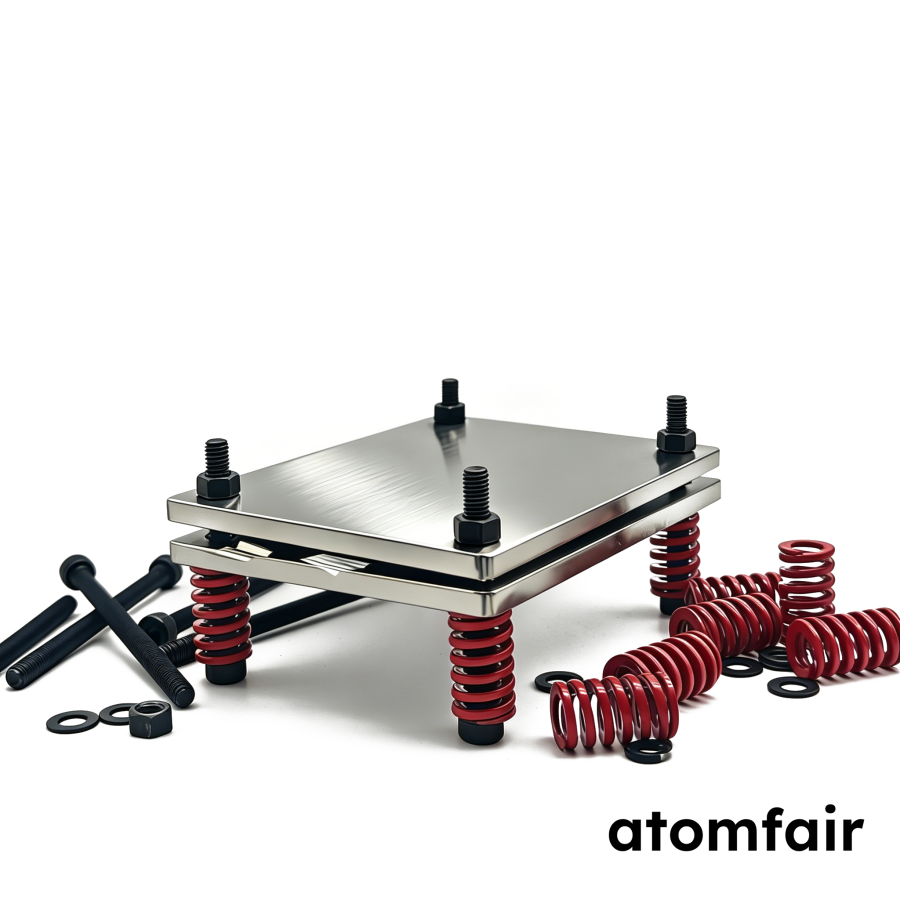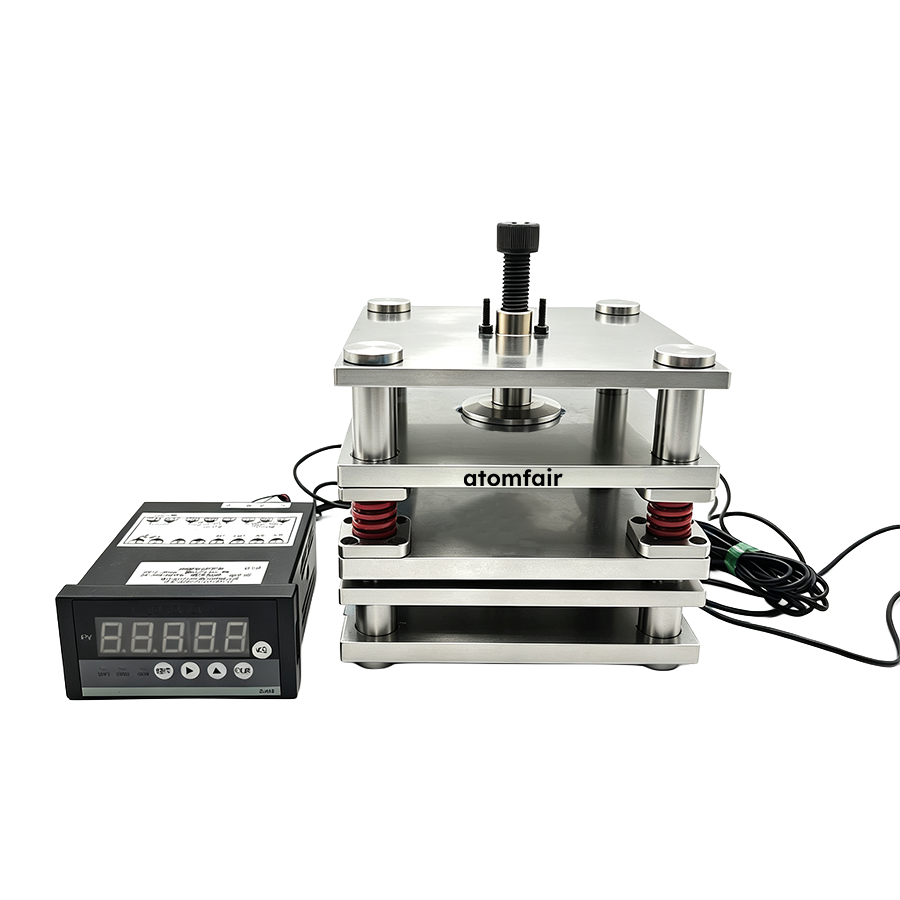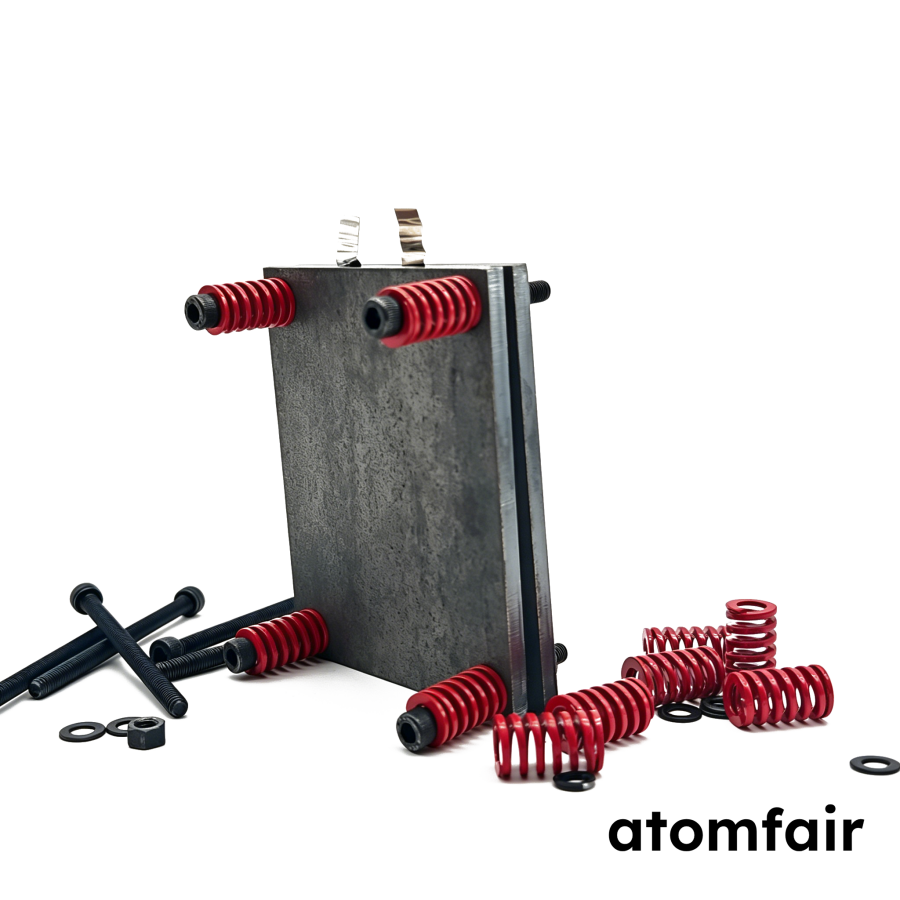
ATM-PCBT-CS POUCH CELL BATTERY TEST FIXTURE (CARBON STEEL VERSION)RESEARCH GRADE EQUIPMENT
|
||
|
|
|
||||||||||||||||||||||||||||||||||||||||
|
TAILORED SOLUTIONS FOR RESEARCH
Contact our engineering team for technical support or official institutional quotations.
EMAIL: inquiry@atomfair.com
|
||||||||||||||||||||||||||||||||||||||||
|
Manufacturer: Atomfair LLC
Brand: ATOMFAIR®
|
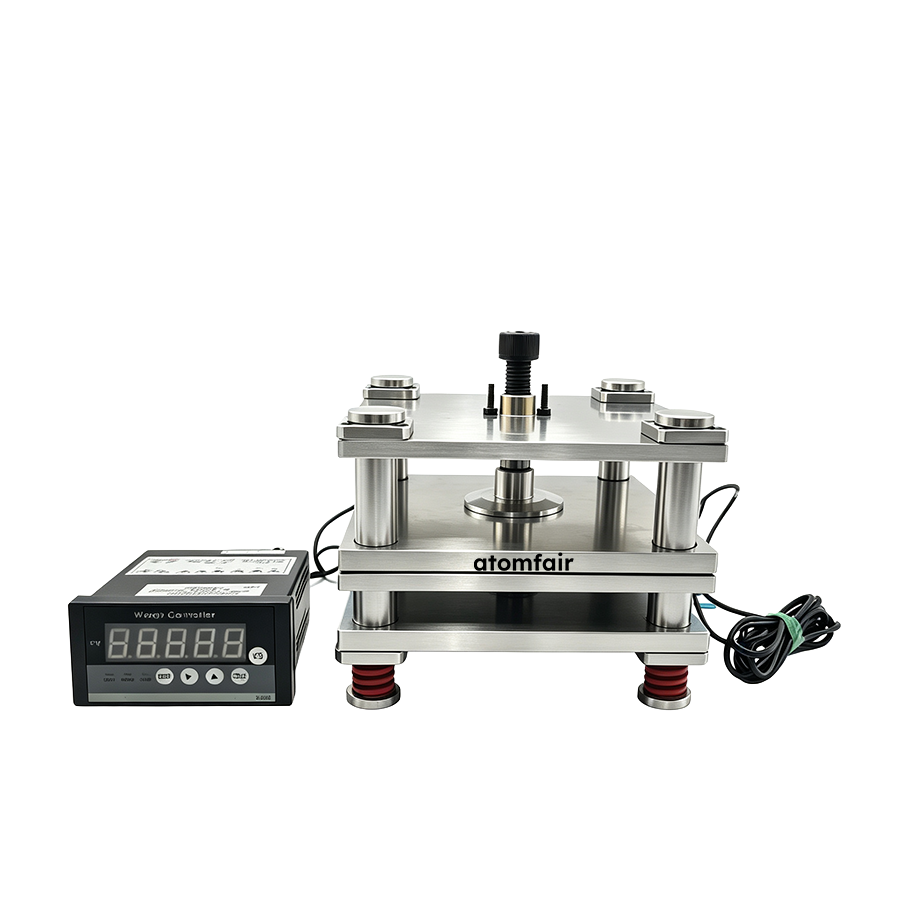
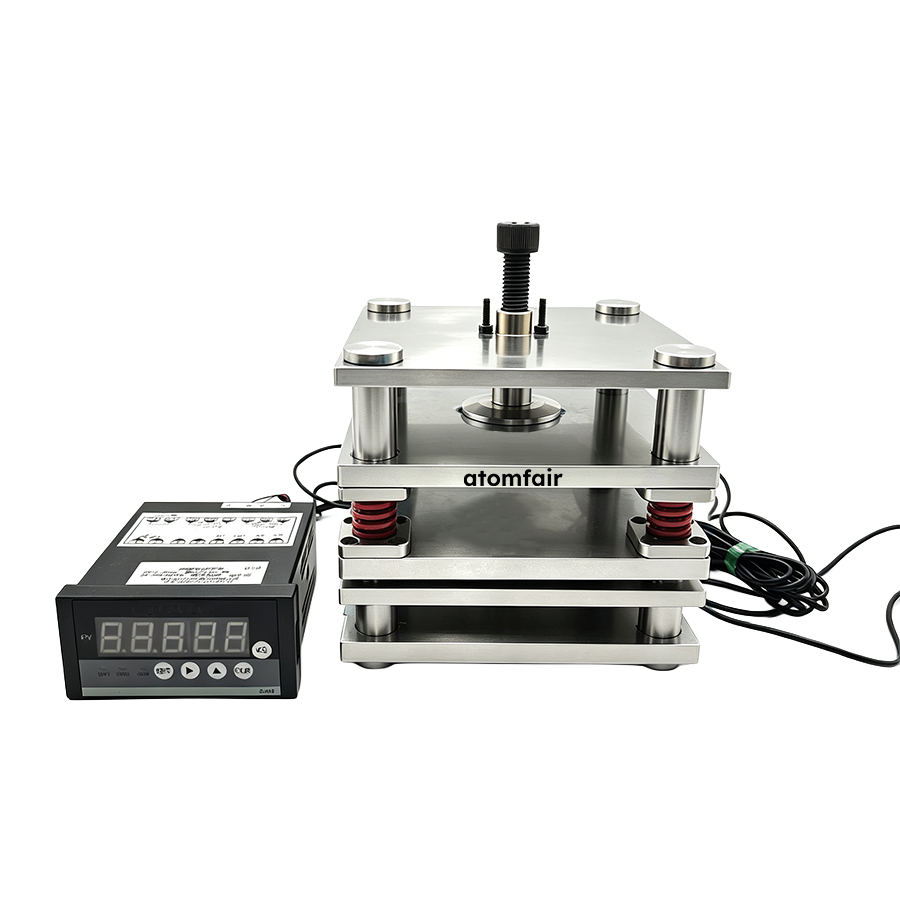
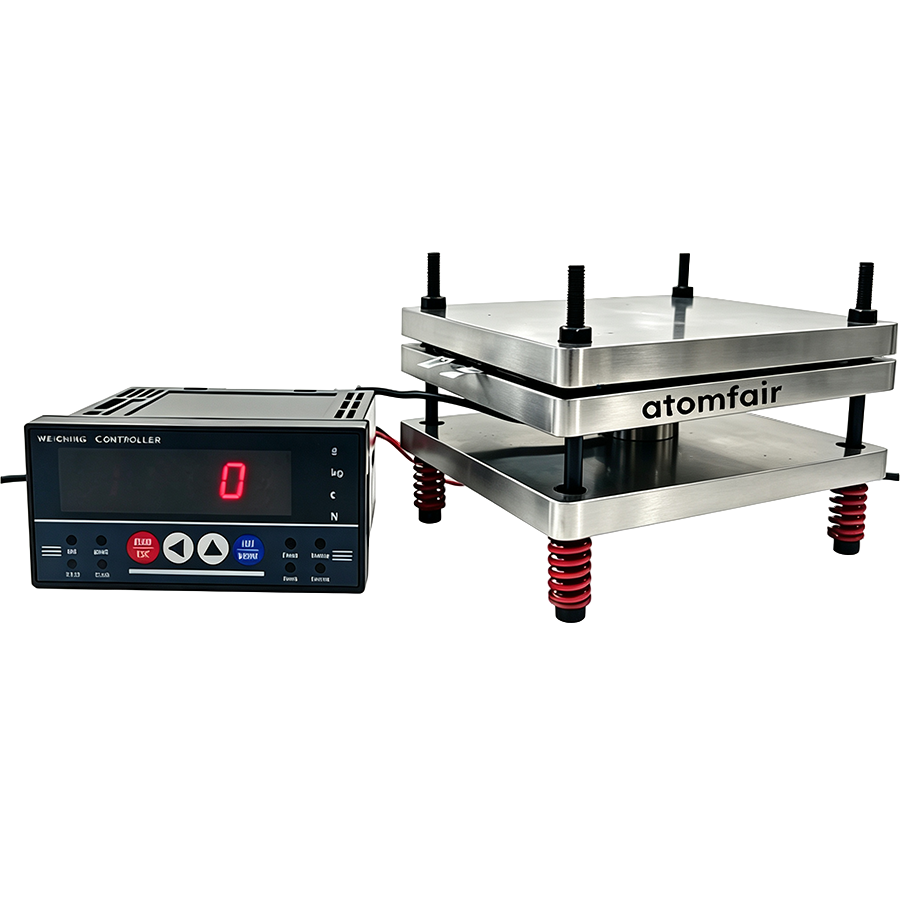
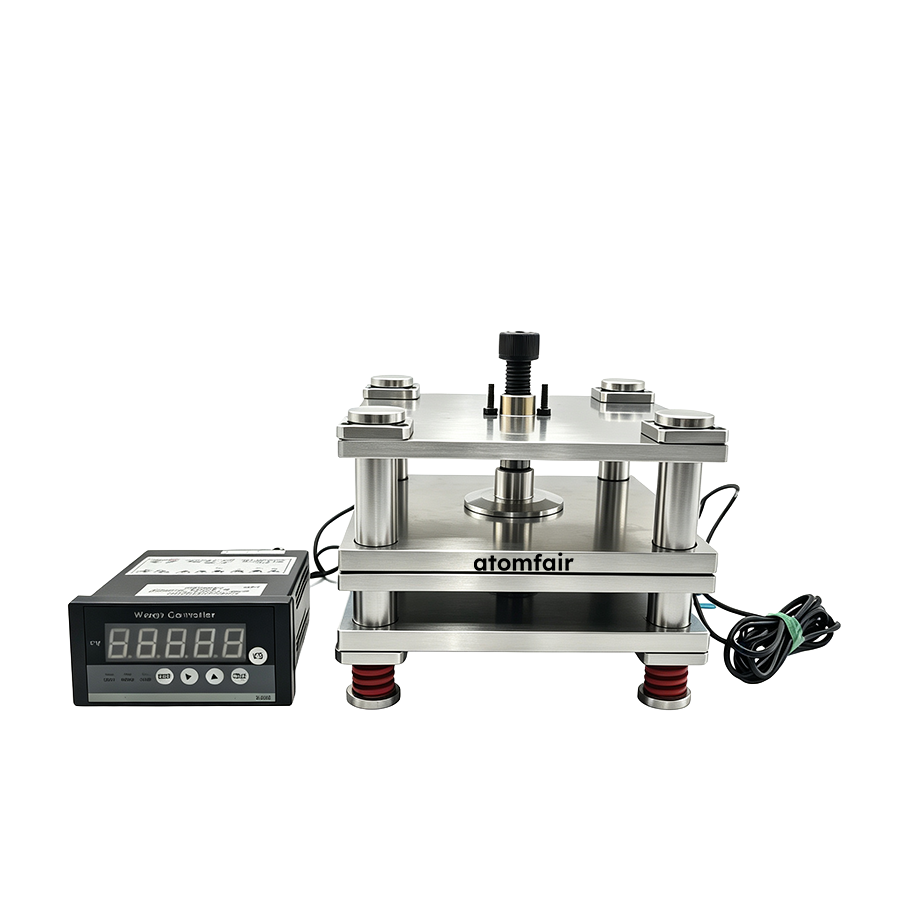
This fixture provides mechanical loading for pouch cell cycle testing under high pressure. Carbon steel construction offers high rigidity but requires protection from electrolyte exposure to prevent corrosion.
- Cell size compatibility: Pouch cell length and width must be at least 30 mm smaller than the fixture's internal dimensions to ensure safe clamping clearance.
- Pressure limits: The fixture supports a standard working pressure of 300 kg, customizable up to 450 kg, beyond which structural integrity may be compromised.
- Material corrosion sensitivity: Carbon steel is susceptible to electrolyte corrosion; cells must be sealed to prevent leakage or a corrosion-resistant material upgrade should be selected.
- Cell thickness range: The fixture accommodates cell thicknesses from 0.1 to 2.5 cm, and the clamping system must be adjusted accordingly to avoid over-compression.
Clamp the pouch cell securely to apply a controlled mechanical load during cycle testing. Proper alignment and even pressure distribution are critical to avoid cell damage and ensure reproducible data.
Required Equipment: Pouch Cell Battery Test Fixture (Carbon Steel Version)
- Measure the pouch cell
Measure the pouch cell length, width, and thickness to determine the appropriate fixture size and ensure the 30 mm clearance rule is satisfied. - Select fixture size
Select a fixture size where the internal dimensions exceed the cell length and width by at least 30 mm each. - Insert the cell
Place the pouch cell centrally on the fixture base plate and ensure it is fully within the clamp area. - Apply clamping pressure
Tighten the four corner screws evenly to compress the die spring buffer until the desired working pressure (up to 450 kg) is achieved.
What is the maximum working pressure of the ATM-PCBT-CS carbon steel pouch cell fixture, and how does fixture size affect the achievable load capacity?
The standard working pressure is 300 kg, customizable up to 450 kg. However, the maximum theoretical load also depends on fixture size; for example, the 8×78×105 mm fixture supports only 300 kg, while the 8×120×160 mm fixture supports 450 kg. Smaller fixtures may not achieve the full 450 kg custom pressure.
Can the ATM-PCBT-CS carbon steel fixture be used directly with electrolyte-containing pouch cells, or does it require a corrosion-resistant barrier?
The carbon steel version is not designed for electrolyte contact; it is a cost-effective option for high-pressure testing where electrolyte leakage is not a concern. For electrolyte resistance, alternative materials such as 304 stainless steel, 316 stainless steel, or engineering plastics like PEEK and PPS are available as custom options.
What clamping mechanism does the ATM-PCBT-CS use, and what are the requirements for achieving uniform pressure distribution on the cell?
The fixture uses a 4-corner screw locking system paired with a die spring buffer to provide high-rigidity, stable clamping. The die spring buffer helps maintain consistent force across the cell area. Users must center the cell and tighten screws evenly to avoid uneven pressure, which could affect testing data.
The ATM-PCBT-CS carbon steel pouch cell test fixture provides high-pressure capability (300-450 kg) and robust mechanical stability at a competitive price point, but its carbon steel construction lacks inherent electrolyte corrosion resistance, necessitating careful sealing and spill management during cycling tests.
Positive
- High working pressure capacity: Standard working pressure of 300 kg, customizable up to 450 kg, enabling rigorous high-pressure battery cycle testing for research-grade evaluation of pouch cell performance.
- Cost-effective carbon steel construction: High-rigidity structural carbon steel provides extreme mechanical loading stability and wear resistance at the industry's most competitive price point for bulk cycle testing.
Trade-offs
- Vulnerable to electrolyte corrosion: Carbon steel is not inherently corrosion-resistant; electrolyte leakage or immersion can cause rapid degradation, requiring careful sealing and optional upgrade to stainless steel or engineering plastics for electrolyte-prone testing.
- Sizing constraint reduces usable cell area: Cell length and width must be 30 mm smaller than fixture dimensions to provide safe clamping space, limiting the maximum cell size that can be accommodated within a given fixture footprint.
Every advanced material, component, equipment, and instrument in our catalog is backed by rigorous testing. We maintain strict internal quality management frameworks and align with CE conformity metrics to deliver transparent, reproducible performance data via our public open-science repository.
To request raw batch performance data, submit formal vendor registration paperwork, or execute a fast-turnaround R&D manufacturing loop, contact us at inquiry@atomfair.com.
Item is dispatched under the Atomfair Shipping & Delivery Framework (Free worldwide shipping on orders over $59 USD excl. heavy equipment). Return is governed by the Atomfair Return & Refund Policy (7-day technical return window).