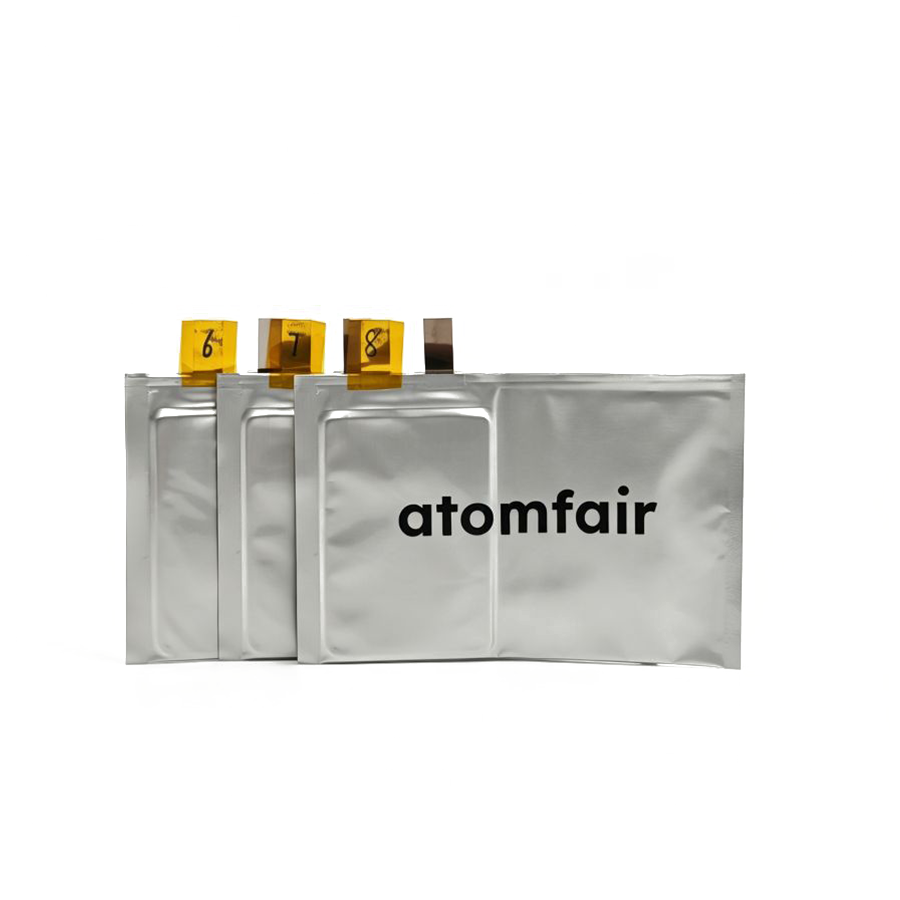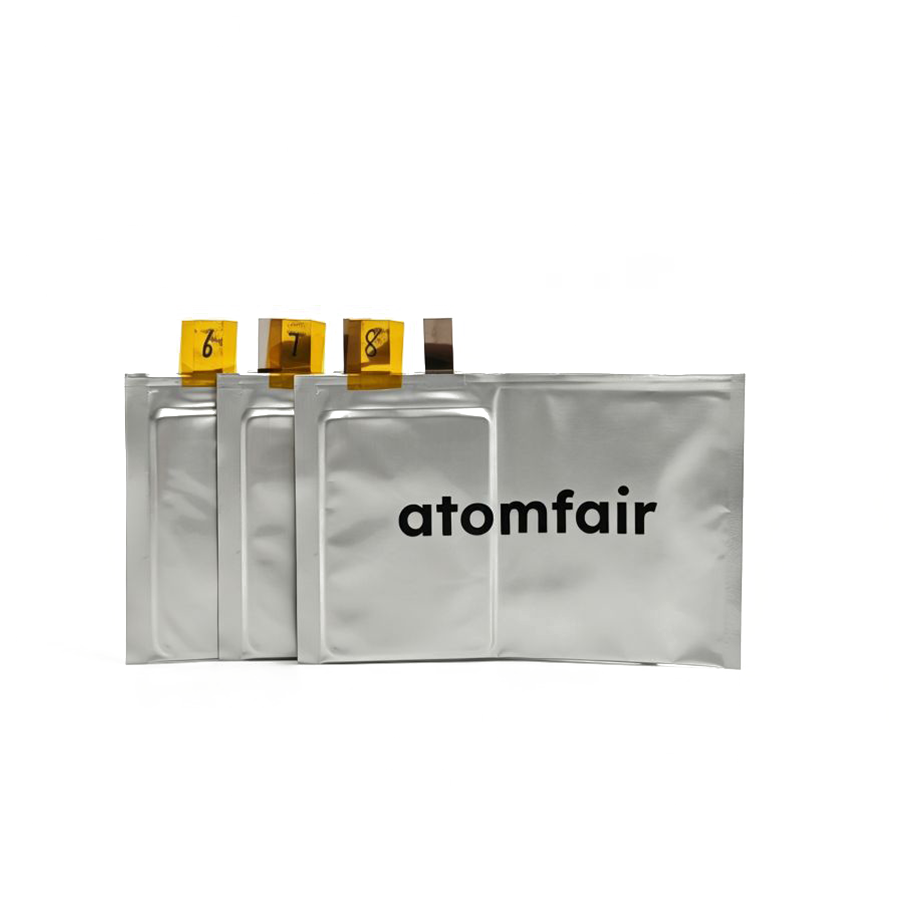
High-Voltage LCO Dry Pouch Cell (1.3Ah) – Lithium Metal AnodeLITHIUM METAL TECHNOLOGY | 6/7 LAYERS
|
||||||||||||||||||||||||||||||||||||||||||||||||||
|
||||||||||||||||||||||||||||||||||||||||||||||||||
Related Products |
||||||||||||||||||||||||||||||||||||||||||||||||||
|
||||||||||||||||||||||||||||||||||||||||||||||||||
|
TAILORED SOLUTIONS FOR RESEARCH
Contact our engineering team for technical support or official institutional quotations.
EMAIL: inquiry@atomfair.com
|
||||||||||||||||||||||||||||||||||||||||||||||||||
|
Manufacturer: Atomfair LLC
Brand: ATOMFAIR®
|
||||||||||||||||||||||||||||||||||||||||||||||||||
This dry pouch cell requires controlled storage to maintain integrity and prevent degradation of the lithium metal anode. Safe handling protocols must be observed to mitigate electrical short circuit and chemical reactivity risks.
- Moisture Sensitivity: Lithium metal reacts vigorously with moisture, requiring storage in a dry, inert atmosphere.
- Voltage Limits: Operation outside the specified voltage window may cause irreversible cell damage and safety hazards.
- Handling Precautions: Use insulated tools and avoid mechanical punctures or short circuits during handling.
This procedure outlines steps for safely initializing the dry pouch cell for research testing. Follow these steps to ensure proper setup and minimize safety hazards.
Required Equipment: Inert atmosphere glovebox, Insulated tweezers, Battery cycler
- Transfer to glovebox
Transfer the dry pouch cell into an inert atmosphere glovebox to avoid moisture exposure. - Inspect cell integrity
Inspect the cell for any physical damage or defects before proceeding. - Prepare electrolyte filling
Fill the cell with an appropriate lithium battery electrolyte under inert conditions. - Seal the pouch cell
Seal the pouch cell under vacuum or inert gas to prevent leakage and contamination. - Rest and stabilize
Allow the cell to rest for a sufficient period to achieve electrolyte equilibrium.
What specific capacity per gram of cathode material does this LCO lithium metal cell provide, and how does the compaction density affect electrode performance?
The LCO cathode delivers a specific capacity of 177 mAh/g with a compaction density of 3.7 g/cc. This compaction density is typical for high-energy LCO electrodes, balancing electronic conductivity and electrolyte wetting. The product description does not include rate capability or cycle life data, but these specifications indicate an energy-dense design optimized for research-level performance testing.
Can this dry pouch cell be directly integrated into standard laboratory battery cyclers and test fixtures without custom adaptation?
Yes, the cell features standard cathode dimensions of 45.5×64 mm and anode dimensions of 46.5×65 mm, described as standard for universal laboratory testing. The voltage range of 3.0 V to 4.45 V is compatible with most lithium metal and LCO test regimes. However, as a dry pouch cell, it requires electrolyte filling and formation cycling before electrical testing, which is a standard R&D procedure.
What specific handling and storage precautions are required for this LCO lithium metal dry pouch cell before use?
The 100 μm lithium metal anode is highly sensitive to air and moisture, necessitating handling and storage in an inert atmosphere such as an argon-filled glovebox. The cell includes a 12 μm PE separator with a 2 μm ceramic coating for enhanced thermal safety, and it is shipped in standard electrostatic protection packaging. Storage must be in a dry, controlled environment to prevent lithium oxidation and maintain cell integrity prior to electrolyte filling.
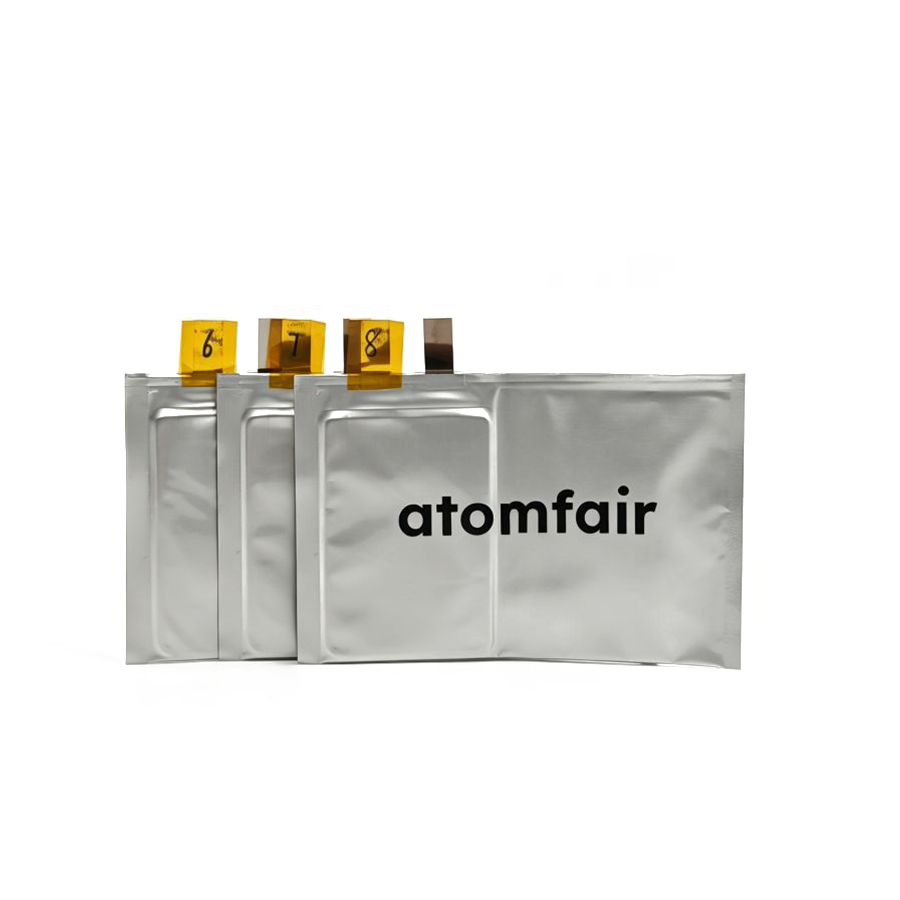
This 6/7-layer LCO||Li dry pouch cell with 1.3 Ah capacity and 4.45V cutoff is designed for lithium metal battery research, featuring a high-loading cathode (96.9% active, 3.7 g/cc compaction) and a ceramic-coated separator for enhanced safety, but requires careful electrolyte handling and lacks disclosed N/P ratio for precise balancing.
Positive
- High-activity LCO cathode: With 96.9% active material, 177 mAh/g specific capacity, and 3.7 g/cc compaction density, the cathode enables high specific energy and energy density for advanced research.
- Ceramic-coated safety separator: The 12 µm PE + 2 µm ceramic-coated separator improves thermal stability and safety during high-voltage operation up to 4.45V.
Trade-offs
- Dry cell requires electrolyte filling: As a dry pouch cell, no electrolyte is included; users must add electrolyte and perform formation cycling, introducing additional processing steps and potential variability.
- Undisclosed N/P ratio: The N/P ratio is not specified, making it difficult to predict anode utilization and cell balancing during high-voltage cycling or extended testing.
Every advanced material, component, equipment, and instrument in our catalog is backed by rigorous testing. We maintain strict internal quality management frameworks and align with CE conformity metrics to deliver transparent, reproducible performance data via our public open-science repository.
To request raw batch performance data, submit formal vendor registration paperwork, or execute a fast-turnaround R&D manufacturing loop, contact us at inquiry@atomfair.com.
Item is dispatched under the Atomfair Shipping & Delivery Framework (Free worldwide shipping on orders over $59 USD excl. heavy equipment). Return is governed by the Atomfair Return & Refund Policy (7-day technical return window).