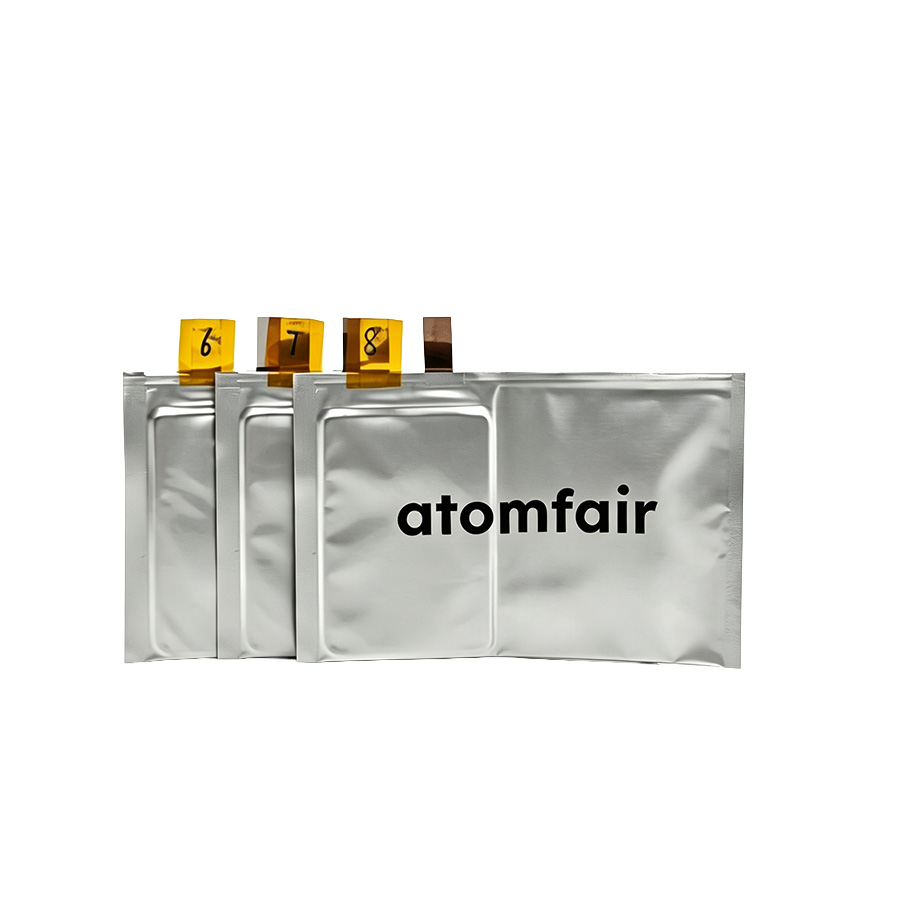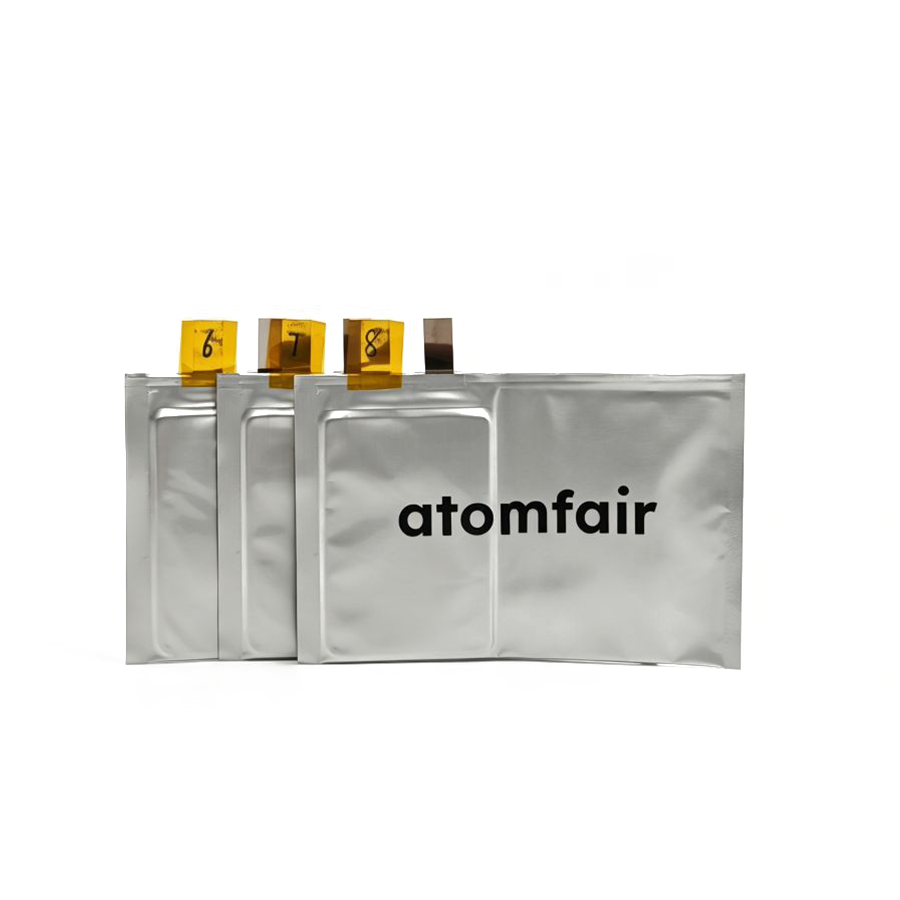
High Capacity Li-S Dry Pouch CellRESEARCH GRADE MATERIAL | LITHIUM-SULFUR TECHNOLOGY
|
||||||||||||||||||||||||||
|
||||||||||||||||||||||||||
Related Products |
||||||||||||||||||||||||||
|
||||||||||||||||||||||||||
|
TAILORED SOLUTIONS FOR RESEARCH
Contact our engineering team for custom requirements or official quotations.
EMAIL: inquiry@atomfair.com
|
||||||||||||||||||||||||||
|
Manufacturer: Atomfair LLC
Brand: ATOMFAIR®
|
||||||||||||||||||||||||||
This dry cell core contains reactive lithium and sulfur materials and must be stored in an inert, low-humidity environment to prevent degradation. Prior to electrolyte injection, the cell core must be handled only in a dry room or argon-filled glovebox to avoid moisture contamination.
- Moisture Sensitivity: Store the cell core in an airtight container with desiccant to maintain anhydrous conditions.
- Lithium Reactivity: Handle lithium components only in an inert atmosphere to prevent rapid oxidation.
- Electrical Short Prevention: Keep the cell tabs isolated from conductive surfaces to avoid short-circuiting.
- Physical Integrity: Inspect the pouch for pinholes or damage before electrolyte injection to prevent leakage.
This procedure describes the safe handling and electrolyte injection process for the dry Li-S pouch cell core. Following these steps ensures proper activation and performance of the cell for research evaluation.
Required Equipment: Argon-filled glovebox, Precision syringe, Vacuum heat sealer
- Inspect Dry Cell Core
Inspect the dry pouch cell core for physical damage or contamination on the surface and tabs. - Transfer to Glovebox
Transfer the cell core into an argon-filled glovebox with controlled atmosphere. - Inject Electrolyte
Inject the custom electrolyte into the pouch through the filling port using a syringe. - Seal Pouch
Seal the pouch opening with a vacuum heat sealer immediately after injection. - Condition Cell
Allow the filled cell to rest and then perform formation cycling to activate the electrodes.
How does the electrolyte-free design affect the achievable capacity compared to pre-filled Li-S pouch cells?
The electrolyte-free design allows the capacity to be fully customizable based on the application, rather than being fixed by a pre-filled electrolyte. Since the nominal voltage is chemistry-dependent and varies with design, researchers can tailor the capacity to match proprietary cathode and electrolyte formulations, achieving performance that directly reflects their specific materials without interference from pre-existing liquids.
What electrolyte systems are compatible with this dry Li-S pouch cell core?
This dry pouch cell core is designed to be compatible with any custom electrolyte formulation suitable for lithium-sulfur chemistry, as it contains no pre-filled liquid electrolyte. Researchers can evaluate proprietary sulfur cathode formulations and lithium anode interfaces using their own electrolyte systems, making it a versatile platform for high-fidelity experimentation in next-generation energy storage.
What are the storage and handling requirements for the electrolyte-free Li-S pouch cell core?
The dry state reduces the risk of leakage and thermal instability during experimental setup, and allows for extended shelf stability without electrochemical degradation prior to electrolyte injection. Handling requires appropriate PPE, and storage must be in a cool, dry environment away from moisture and direct sunlight to maintain integrity before use.
This dry pouch cell core provides a customizable Li-S platform for evaluating novel cathode and electrolyte systems, but requires careful handling and electrolyte injection before use.
Positive
- High theoretical capacity platform: Leverages sulfur's high theoretical specific capacity (1672 mAh/g) enabling research into next-generation high-energy-density lithium-sulfur battery systems.
- Dry configuration for electrolyte customization: Supplied without pre-filled electrolyte allows researchers to introduce proprietary formulations without interference from pre-existing liquid components.
Trade-offs
- Requires electrolyte injection step: End-user must perform electrolyte filling and wetting under controlled conditions, adding a processing step and requiring appropriate laboratory infrastructure.
- Moisture and environmental sensitivity: Dry pouch cell core must be stored in cool, dry environment away from moisture and direct sunlight to prevent degradation prior to electrolyte injection.
Every advanced material, component, equipment, and instrument in our catalog is backed by rigorous testing. We maintain strict internal quality management frameworks and align with CE conformity metrics to deliver transparent, reproducible performance data via our public open-science repository.
To request raw batch performance data, submit formal vendor registration paperwork, or execute a fast-turnaround R&D manufacturing loop, contact us at inquiry@atomfair.com.
Item is dispatched under the Atomfair Shipping & Delivery Framework (Free worldwide shipping on orders over $59 USD excl. heavy equipment). Return is governed by the Atomfair Return & Refund Policy (7-day technical return window).