ATOMFAIR® VSC517 VACUUM STANDING CHAMBERRESEARCH GRADE MATERIAL
|
|||||||||||||||||||||||||||||||||||||||
|
|||||||||||||||||||||||||||||||||||||||
|
TAILORED SOLUTIONS FOR RESEARCH
Contact our engineering team for technical support or official institutional quotations.
EMAIL: inquiry@atomfair.com
|
|||||||||||||||||||||||||||||||||||||||
|
Manufacturer: Atomfair LLC
Brand: ATOMFAIR®
|
|||||||||||||||||||||||||||||||||||||||
The chamber requires a dedicated 220V/50Hz electrical circuit and a compressed air supply regulated to 0.5–0.7 MPa. Operators must follow standard electrical safety protocols and ensure the chamber is not operated beyond its maximum vacuum rating of -95 KPa.
- Electrical Safety: Ground the chamber and control box to prevent electrical shock when connected to the power supply.
- Compressed Air Regulation: Use an air compressor with a regulator to maintain pressure within the specified 0.5–0.7 MPa range.
- Vacuum Overpressure Protection: Do not attempt to exceed -95 KPa vacuum to avoid damage to the chamber seals and structure.
- Corrosion Monitoring: Periodically inspect the aluminum alloy chamber for signs of chemical attack from electrolyte residues.
- Glovebox Compatibility: When used inside a glovebox, ensure the chamber's pneumatic and electrical connections are compatible with the inert atmosphere.
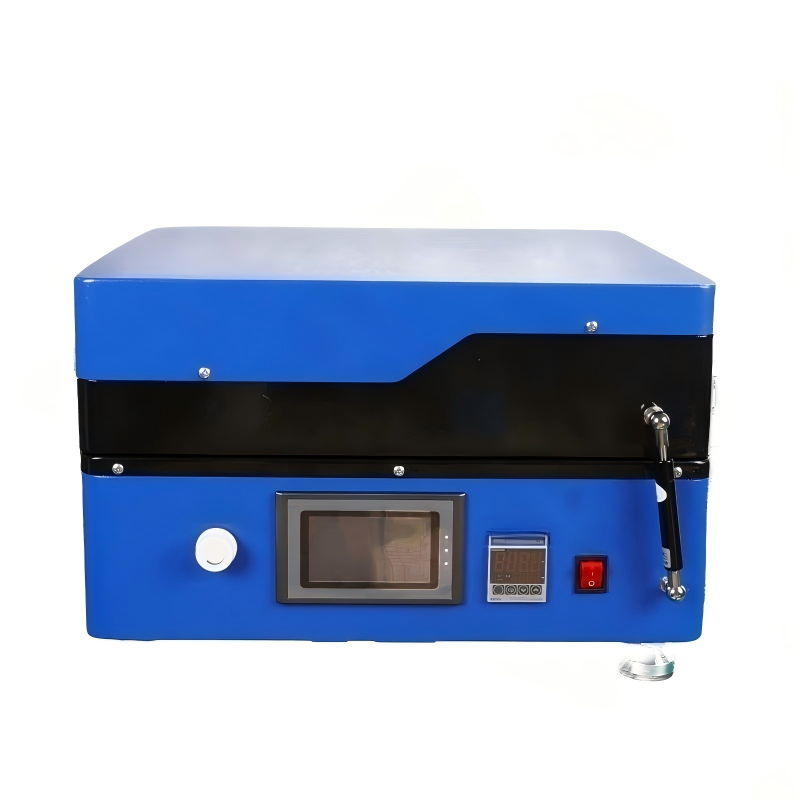
This procedure details the safe setup and operation of the vacuum standing chamber to absorb electrolyte into battery electrodes. Users must follow sequential steps to apply vacuum, control standing time, and release pressure while monitoring the process.
Required Equipment: Atomfair-VSC517 Vacuum Chamber Assembly, Air Compressor (0.5-0.7 MPa), Power Supply (220V/50Hz), Control Box Interface
- Connect Air Supply
Connect the air compressor line to the chamber inlet and verify that the pressure regulator reads between 0.5 and 0.7 MPa. - Set Standing Time
Set the standing time on the control box to the desired duration within the adjustable range of 0 to 99.99 seconds. - Load Battery
Place the battery pouch or cylindrical cell inside the chamber and close the pneumatic lid to create a sealed enclosure. - Apply Vacuum
Activate the vacuum cycle to evacuate the chamber to the target vacuum level up to -95 KPa. - Monitor Absorption
Monitor the electrolyte absorption process through the visible window and allow the chamber to stand for the set time. - Release Pressure and Unload
Release the vacuum by opening the vent valve on the control box and then carefully open the chamber lid to retrieve the battery.
How does the multi-stage cycle function improve electrolyte absorption compared to single-stage vacuum hold?
The multi-stage cycle function repeatedly applies and releases vacuum, promoting deeper electrolyte penetration into electrode pores by preventing surface saturation. The chamber maintains a stable vacuum up to -95 KPa with minimal pressure drop during each cycle, ensuring consistent conditions across repeated vacuum holds for pouch and cylindrical cells.
Can this vacuum chamber be integrated into an argon-filled glove box for moisture-sensitive electrolyte filling?
Yes, the separate main unit and control box design allows the control electronics to be placed outside the glove box while the chamber operates inside the inert atmosphere. The pneumatic top chamber with linear guides ensures smooth sealing without electrical components inside, and the aluminum alloy construction resists corrosion from electrolyte vapors.
What are the compressed air and electrical infrastructure requirements for operating this vacuum chamber?
The chamber requires a compressed air supply at 0.5–0.7 MPa for pneumatic top chamber actuation and a standard 220 V/50 Hz electrical outlet with 50 W power draw. No specialized cooling or exhaust is needed, but the 40 kg unit should be placed on a stable bench or integrated into a production line with adequate support.
The Atomfair Vacuum Standing Chamber VSC517 offers stable vacuum holding with minimal pressure drop and a multi-stage cycle function for enhanced electrolyte absorption in pouch and cylindrical cells, but requires a compressed air supply and has a chamber interior size of 330×200×150 mm that limits the maximum battery dimensions that can be processed.
Positive
- Stable vacuum with minimal pressure drop: The chamber maintains a stable vacuum environment with small pressure drop, ensuring consistent electrolyte absorption conditions over the adjustable standing time.
- Multi-cycle function for absorption: Multi-stage vacuum cycling improves electrolyte penetration into electrode plates, leading to more thorough integration compared to single-suction methods.
Trade-offs
- Compressed air infrastructure needed: The pneumatic top chamber and sealing mechanism require a compressed air supply at 0.5–0.7 MPa, which may not be available in all lab setups and adds a maintenance burden.
- Limited chamber dimensions: The internal chamber size of 330×200×150 mm restricts the maximum battery size that can be processed, requiring prior verification that cells do not exceed these dimensions.
Every advanced material, component, equipment, and instrument in our catalog is backed by rigorous testing. We maintain strict internal quality management frameworks and align with CE conformity metrics to deliver transparent, reproducible performance data via our public open-science repository.
To request raw batch performance data, submit formal vendor registration paperwork, or execute a fast-turnaround R&D manufacturing loop, contact us at inquiry@atomfair.com.
Item is dispatched under the Atomfair Shipping & Delivery Framework (Free worldwide shipping on orders over $59 USD excl. heavy equipment). Return is governed by the Atomfair Return & Refund Policy (7-day technical return window).