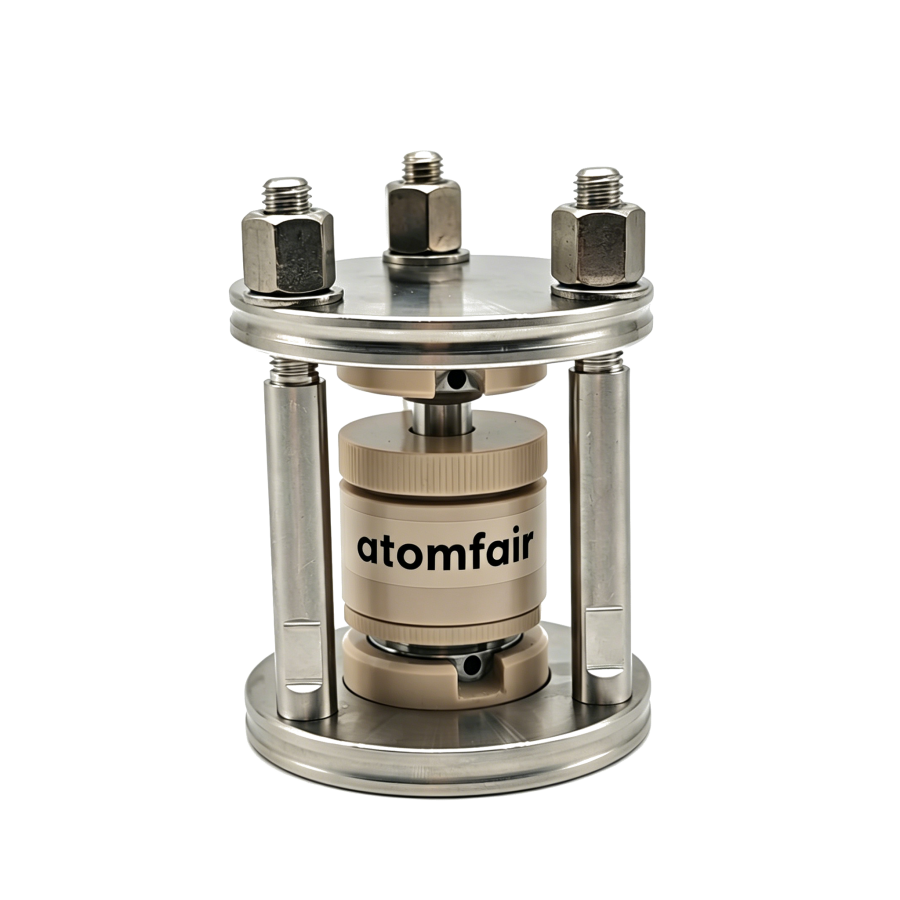
ATOMFAIR® SOLID STATE LITHIUM-ION BATTERY TEST MOULDRESEARCH GRADE MATERIAL
|
||
|
Technical Specifications |
||||||||||||||||||||||||||||||||
|
||||||||||||||||||||||||||||||||
|
|||
|
TAILORED SOLUTIONS FOR RESEARCH
Contact our engineering team for technical support or official institutional quotations.
EMAIL: inquiry@atomfair.com
|
|||
|
Manufacturer: Atomfair LLC
Brand: ATOMFAIR®
|
The mould requires storage in a moisture-free environment to prevent passivation of polished inner surfaces. Assembly and pressing operations must be performed in a glovebox with appropriate PPE to maintain sample integrity and operator safety.
- Environmental Storage Requirement: Store disassembled mould components exclusively within a controlled, moisture-free environment.
- Personal Protective Equipment: Technicians must wear appropriate personal protective equipment during assembly and hydraulic pressing stages.
- Residue Disposal Protocol: Adhere strictly to institutional hazardous disposal protocols when clearing spent electrolyte residues from active compression cavities.
- Contamination Prevention: Maintain clean and dry conditions during assembly to prevent interfacial contamination between solid electrolyte and electrode materials.
Follow these steps to safely assemble, press, and disassemble the mould for solid-state battery fabrication. Proper sequence ensures uniform compression and prevents contamination or damage.
Required Equipment: Hydraulic press, Glovebox, Personal protective equipment (PPE)
- Assemble the Mould
Assemble the modular split-component mould inside a glovebox, ensuring clean and dry conditions. - Load Materials
Load the solid electrolyte and electrode materials into the compression cavity in the correct layering sequence. - Apply Hydraulic Pressure
Apply hydraulic pressure uniformly across the electrode plane to compact the solid-state cell stack. - Disassemble and Extract
Disassemble the mould and extract the fabricated cell for electrochemical testing. - Clean and Store Components
Clear residual electrolyte residues from the compression cavities and store disassembled components in a moisture-free environment.
How does the modular split-component design of the ATOMFAIR test mould affect pressure distribution and sample extraction efficiency in solid-state battery fabrication?
The modular split-component design enables rapid assembly and non-destructive sample extraction inside glovebox workspaces, but does not compromise pressure homogeneity. Optimized micro-tolerances ensure uniform vector forces across the electrode plane, maximizing compressed density of solid-state electrolytes. This trade-off allows high throughput without sacrificing measurement reproducibility.
What solid electrolyte types are compatible with the ATOMFAIR solid-state battery test mould, and are there any material-specific handling constraints?
The mould is universally compatible with Sulfide, Oxide, Polymer, and Halide solid electrolytes. No material-specific incompatibilities are stated; however, the mould's high-strength heat-resistant matrix alloys prevent dimensional warping under compression and thermal cycling, making it safe for all listed electrolyte classes. Technicians should follow standard PPE and moisture-free storage protocols for electrolyte residues.
What are the critical handling, storage, and safety requirements for the ATOMFAIR solid-state battery test mould to prevent atmospheric passivation and mechanical damage?
After use, disassemble components and store exclusively in a controlled, moisture-free environment to shield polished inner faces from atmospheric passivation. Technicians must wear appropriate PPE during assembly and hydraulic pressing stages. Spent electrolyte residues must be cleared from active compression cavities and disposed of according to institutional hazardous protocols.
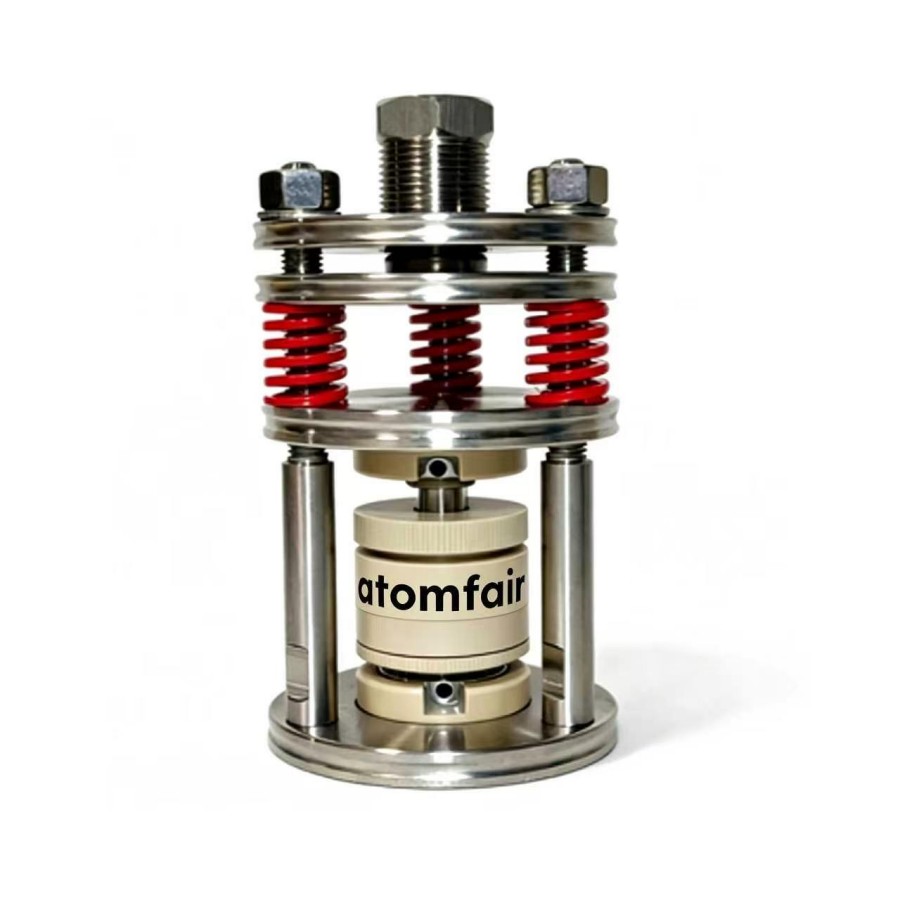
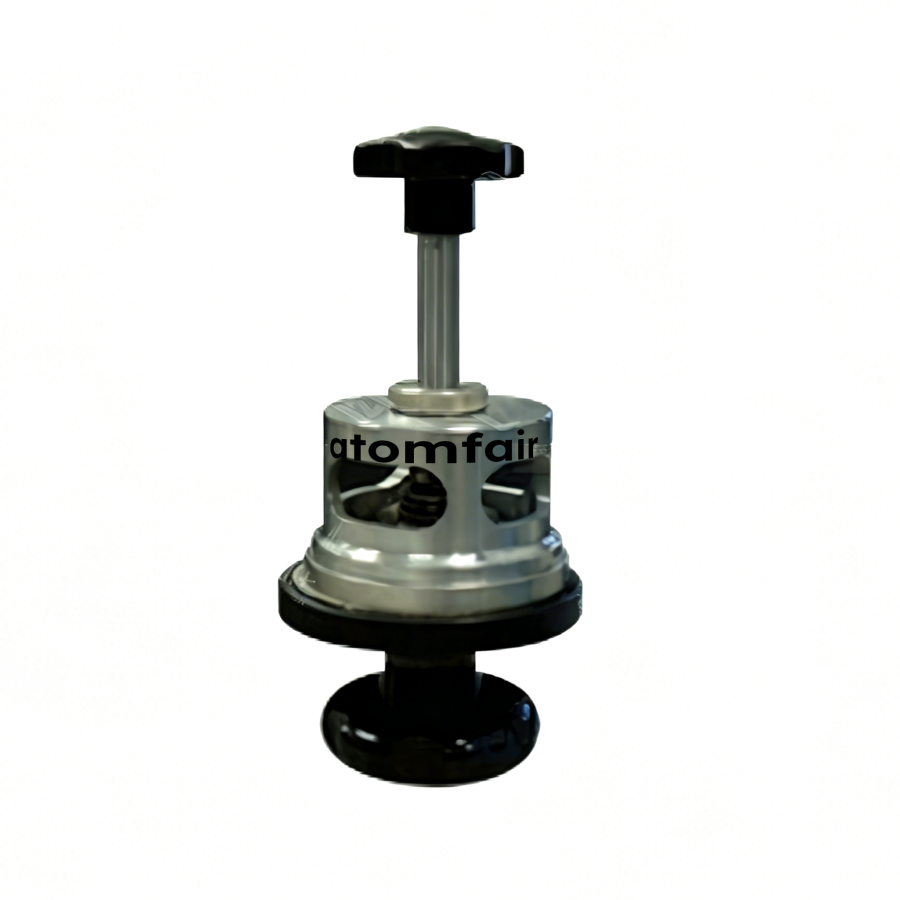
This solid-state lithium-ion battery test mould provides modular, glovebox-compatible assembly and optimized micro-tolerances for uniform pressure distribution, yet requires strict moisture-free storage to prevent passivation of polished inner faces and mandates PPE during hydraulic pressing stages.
Positive
- Glovebox-optimized modular design: Split-component configuration enables rapid assembly and non-destructive sample extraction inside inert-atmosphere workspaces, streamlining solid-state cell prototyping.
- Uniform pressure distribution: Engineered micro-tolerances deliver consistent vector forces across the electrode plane, maximizing compressed electrolyte density and reducing measurement scatter in charge-discharge tests.
Trade-offs
- Moisture-sensitive polished surfaces: Highly polished inner faces require controlled, moisture-free storage to prevent atmospheric passivation that could compromise compression uniformity and sample integrity.
- PPE and hazardous residue protocols: Operators must wear appropriate PPE during assembly and pressing, and adhere to institutional hazardous disposal protocols when clearing spent electrolyte residues from compression cavities.
Every advanced material, component, equipment, and instrument in our catalog is backed by rigorous testing. We maintain strict internal quality management frameworks and align with CE conformity metrics to deliver transparent, reproducible performance data via our public open-science repository.
To request raw batch performance data, submit formal vendor registration paperwork, or execute a fast-turnaround R&D manufacturing loop, contact us at inquiry@atomfair.com.
Item is dispatched under the Atomfair Shipping & Delivery Framework (Free worldwide shipping on orders over $59 USD excl. heavy equipment). Return is governed by the Atomfair Return & Refund Policy (7-day technical return window).