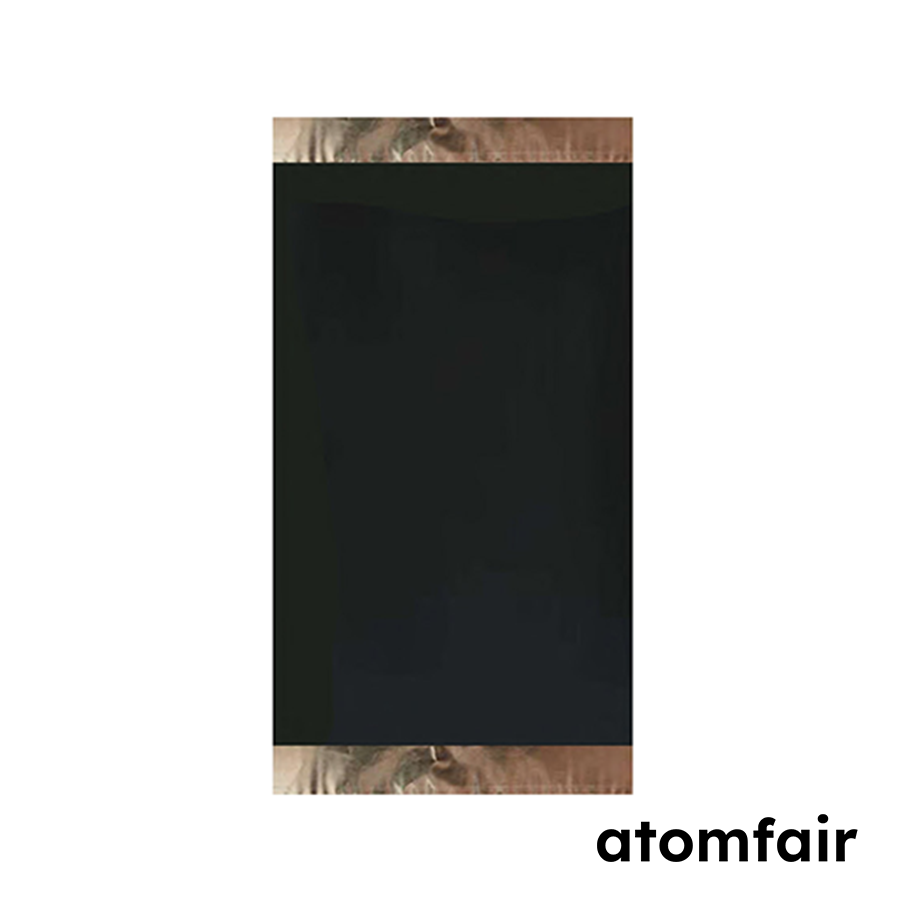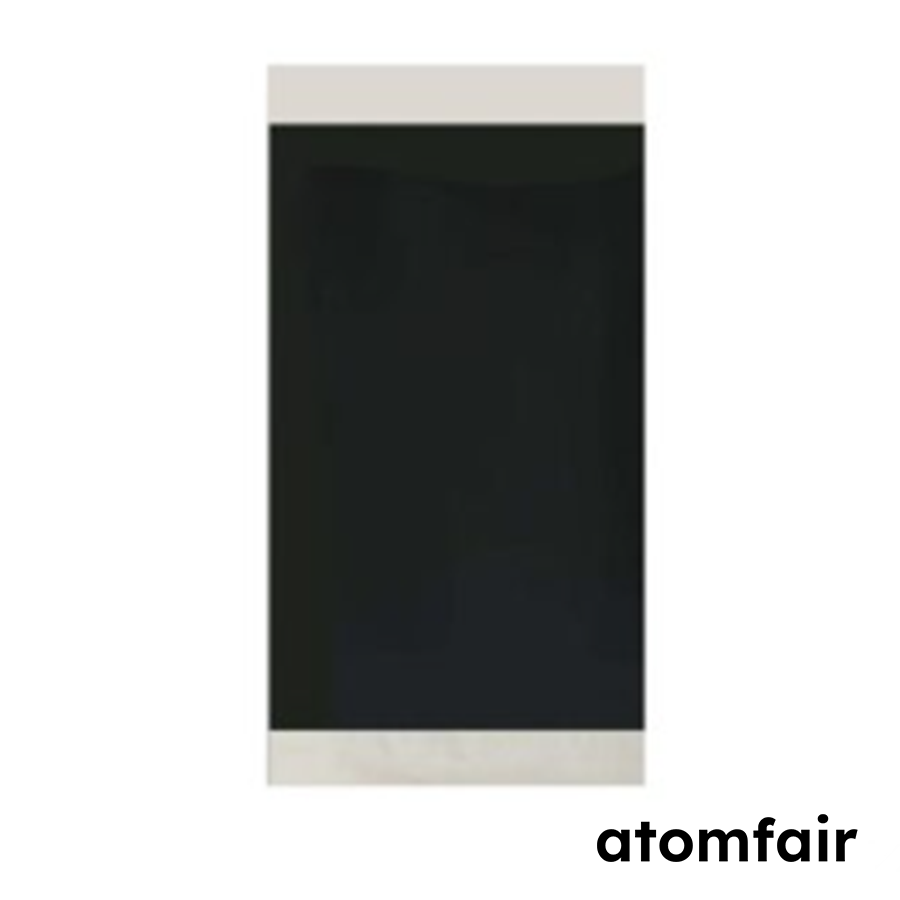
NFM Sodium Nickel Iron Manganese Oxide Single-Sided Cathode Sheet, 0.5 um
Sodium nickel iron manganese oxide, NFM, is a multi-metal oxide cathode material for sodium-ion batteries. This ready-to-use sheet is supplied for laboratory cell assembly and material evaluation in the listed Single-Sided, 5-Pack configuration.
Material Characteristics
- Nickel, iron, and manganese oxide composition
- Sodium-ion positive-electrode material
- Coated sheet for comparative cathode research
Typical Research Uses
Use for sodium-ion cathode screening, electrolyte studies, electrode balancing, and full-cell assembly.
How to Read This Configuration
Confirm the NFM composition identifier and listed loading or side before comparing it with another sodium-ion cathode.
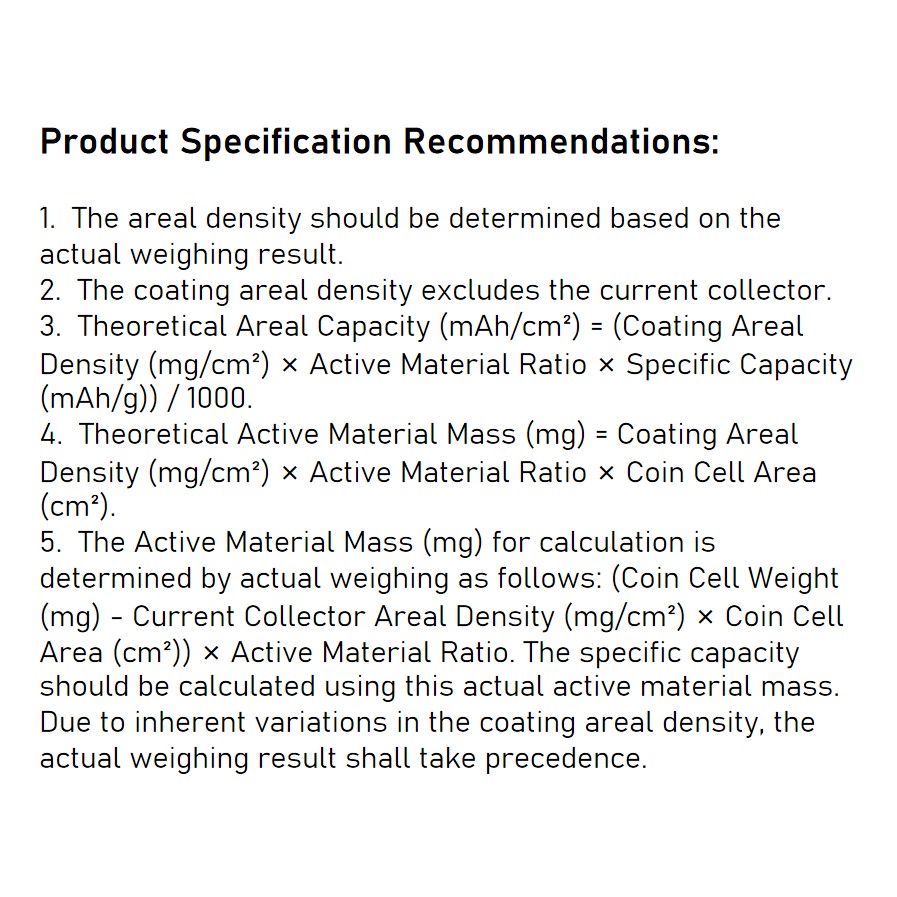
- Active material ratio: 95.30% is the listed active-material fraction of the coating formulation. The actual active mass still depends on the punched electrode mass.
- Compaction density: 2.85 g/cm3 is a physical electrode parameter. Interpret it with loading, thickness, porosity, and the source measurement method.
| Product Specification | Value / Description |
|---|---|
| Product Type | Single-Sided Cathode Sheet |
| Active Material System | Sodium Nickel Iron Manganese Oxide (NFM) |
| Battery System | Sodium-Ion |
| Electrode Role | Cathode |
| Coating Side | Single-Sided |
| Current Collector Structure | 12+0.5+0.5 um |
| Active Material Ratio | 95.30% |
| Compaction Density | 2.85 g/cm3 |
| Pack Size | 5-Pack |
| SKU | AF-BM-S-C111-AD59-5P00 |
Drying and Handling
Before cell assembly, dry the electrode sheet at 90-100 C for 12-24 hours. Use a clean, dry handling environment after drying.
Avoid bending, scratching, or contaminating the coated surface during cutting, punching, transfer, and stacking.
| Research Need | Related Atomfair Category | Best For |
|---|---|---|
| Full-cell electrode pairing | Sodium-Ion Anode Electrode Sheets | Selecting a complementary sodium-ion anode sheet for cell assembly |
| Custom configuration | Custom Battery Electrode Coating Service | Alternative loading, dimensions, current collector, or coating configuration |
This electrode sheet requires vacuum baking at 100°C for 12 hours to eliminate moisture and prevent phase degradation before use. Moisture contamination during handling or storage can compromise electrochemical performance and cell consistency.
- Baking Protocol: Electrode sheets must be baked under vacuum at 100°C for 12 hours to remove moisture and prevent phase degradation prior to thermal validation testing.
- Moisture Sensitivity: The electrode material is sensitive to moisture contamination, which can cause phase degradation and affect electrochemical performance.
How does the dry process coating at 59 mg/cm² loading density affect the electrochemical performance of the NFM111-S03 electrode sheet compared to wet-coated alternatives?
The dry process achieves a uniform high-density loading of 59 mg/cm² over the 90×120 mm area, eliminating local solvent variations that can occur in wet-coated electrodes. This ensures consistent capacity and kinetics, targeting the nominal 125 mAh/g, and reduces variability in cell prototyping.
What substrate and current collector design does the NFM111-S03 electrode sheet use, and how does it influence integration into sodium-ion half-cell or full-cell testing?
The electrode uses a carbon-coated aluminum foil current collector with a density of 4.2 mg/cm² and a substrate thickness of 12 + 0.5 + 0.5 μm. The carbon coating optimizes structural interface metrics and electrical attachment, making it suitable for baseline testing and electrolyte validation platforms without requiring additional modifications.
What is the recommended pre-treatment protocol for the NFM111-S03 electrode sheet to ensure reliable cell assembly and avoid moisture-induced degradation?
The sheet requires a strict baking protocol under vacuum at 100°C for 12 hours before use to prevent moisture contamination and phase degradation. This step is critical for maintaining the integrity of the sodium nickel iron manganese oxide active material and ensuring consistent results in thermal validation testing.
The NFM111-S03 electrode sheet delivers a high active material ratio of 95.30% and uniform dry-process coating at 59 mg/cm², enabling consistent sodium-ion cell prototyping; however, it mandates a 12-hour vacuum bake at 100°C to prevent moisture-induced degradation and is restricted to laboratory research use.
Positive
- High active material ratio: The 95.30% optimized active phase ratio delivers strong electrochemical kinetics across half-cell testing matrices.
- Uniform dry-process coating: Advanced dry coating establishes a uniform high-density loading profile of 59 mg/cm² over the 90×120 mm area, avoiding local solvent variations during cell prototyping.
Trade-offs
- Required vacuum baking protocol: The electrode sheets must be baked under vacuum at 100°C for 12 hours to prevent moisture contamination or phase degradation before thermal validation testing.
- Research use only: Sold exclusively for laboratory research; not intended for commercial production or medical use, limiting deployment to R&D environments.
Every advanced material, component, equipment, and instrument in our catalog is backed by rigorous testing. We maintain strict internal quality management frameworks and align with CE conformity metrics to deliver transparent, reproducible performance data via our public open-science repository.
To request raw batch performance data, submit formal vendor registration paperwork, or execute a fast-turnaround R&D manufacturing loop, contact us at inquiry@atomfair.com.
Item is dispatched under the Atomfair Shipping & Delivery Framework (Free worldwide shipping on orders over $59 USD excl. heavy equipment). Return is governed by the Atomfair Return & Refund Policy (7-day technical return window).