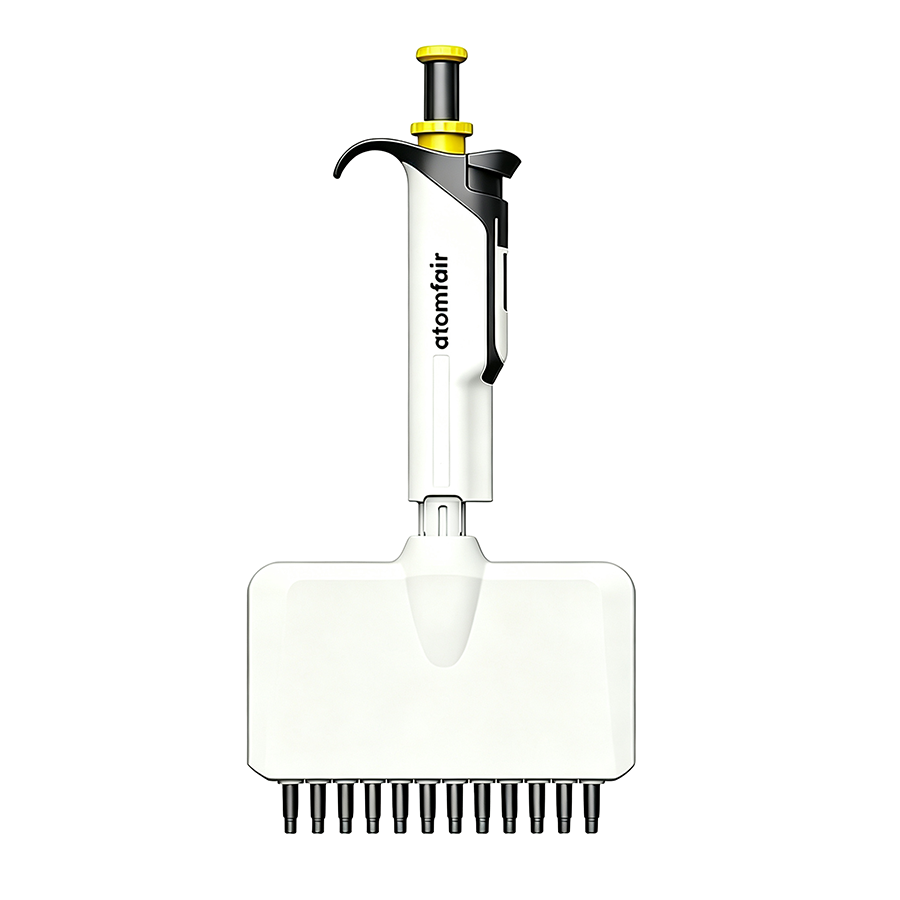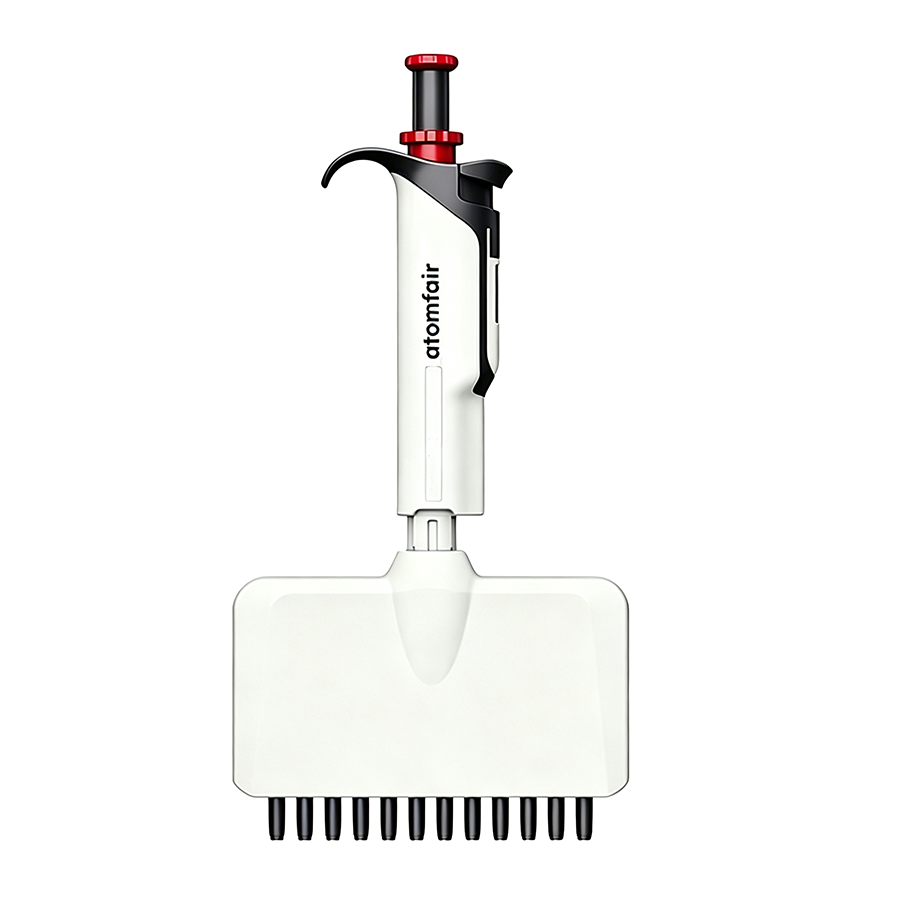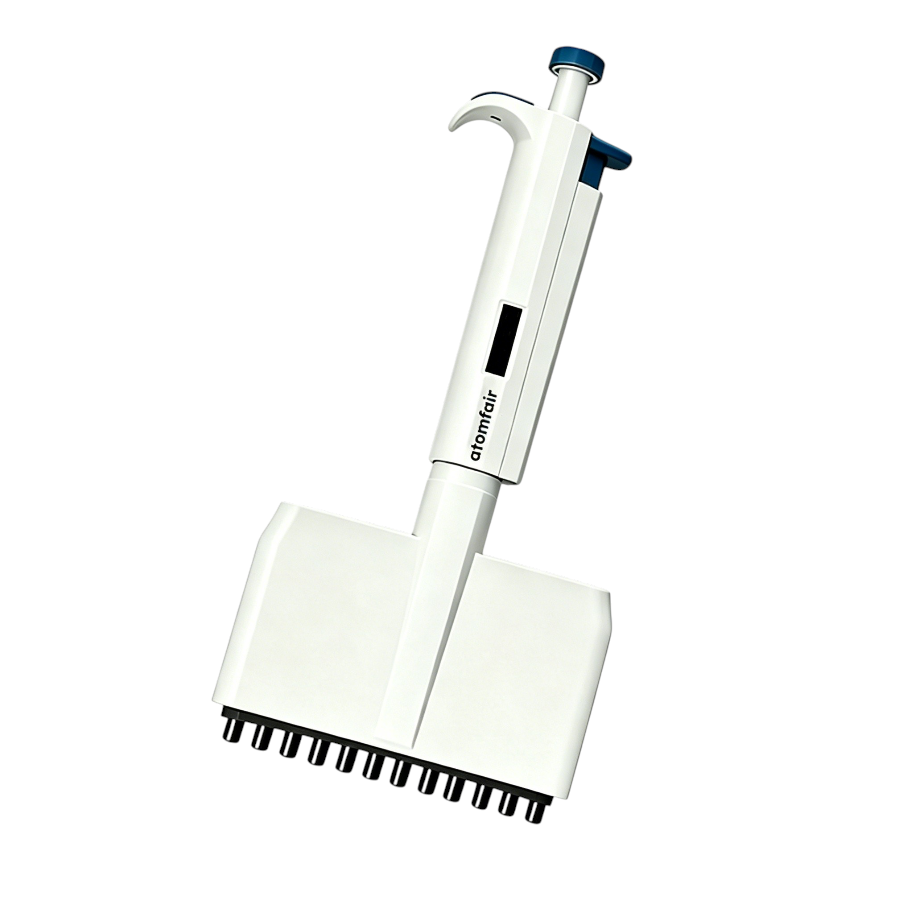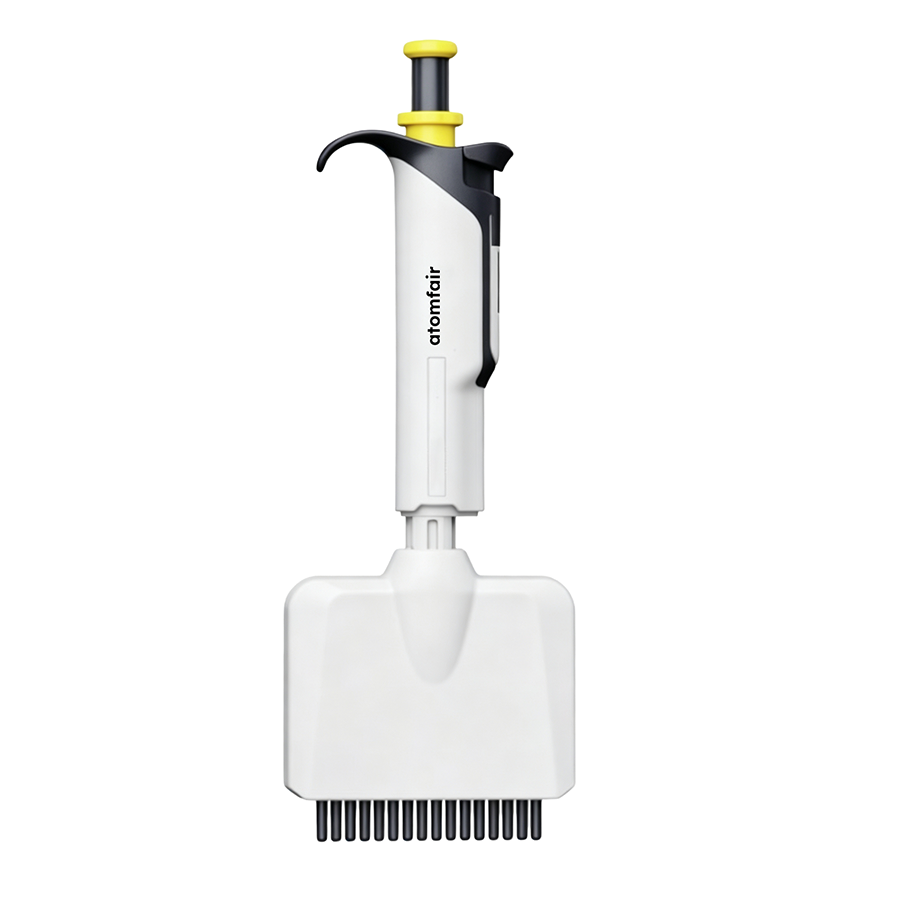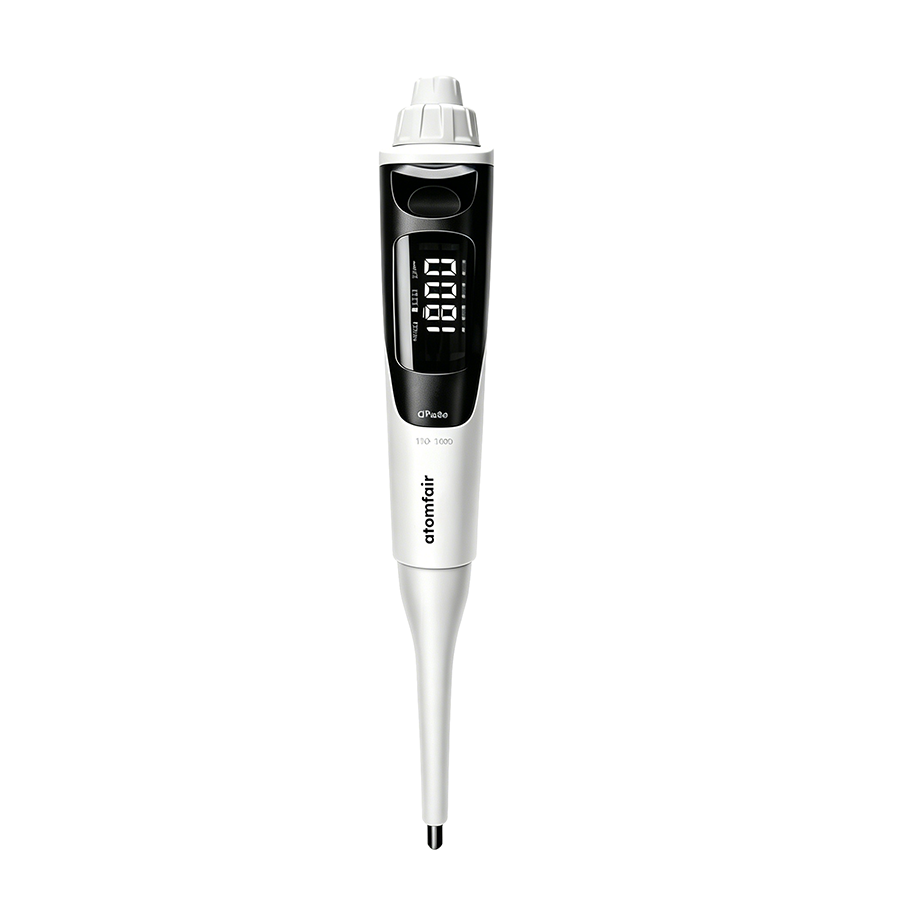
dPette Single-channel 100-1000 µL PipetteProduct Type: Electronic pipette
Research-grade liquid handling platform
|
|||||||||||||||||||||||||||||||
|
|||||||||||||||||||||||||||||||
|
TAILORED SOLUTIONS FOR RESEARCH
For bulk orders, OEM requirements, accessory matching, platform selection or configuration confirmation, contact our engineering sales team.
EMAIL: inquiry@atomfair.com
|
|||||||||||||||||||||||||||||||
|
Supplier: Atomfair
Brand: ATOMFAIR®
|
The lower half of this pipette is autoclavable for sterilization between uses. Systematic and random error tolerances are specified at three test volumes to ensure calibration traceability per ISO 8655-2.
- Sterilization constraint: Only the lower half of the pipette can be autoclaved; the upper assembly must not be subjected to moist heat.
- Calibration constraint: User calibration must be performed at the three test volumes (1000, 500, and 100 µL) to maintain the stated systematic and random error limits.
This procedure covers user calibration at three test volumes and autoclave sterilization of the lower half. Follow these steps to maintain accuracy and hygiene for routine liquid handling.
Required Equipment: Calibration kit with reference balance and test liquid, Autoclave capable of 121°C moist heat cycle
- Set the pipette to the first test volume
Set the volume adjustment to 1000 µL and confirm the display matches the target value. - Perform gravimetric calibration at 1000 µL
Aspirate and dispense distilled water onto the reference balance, record the mass, and calculate the systematic error against the nominal volume. - Repeat calibration at 500 µL and 100 µL
Adjust the volume to 500 µL and then to 100 µL, performing gravimetric measurement and error calculation at each setting. - Disassemble the lower half for sterilization
Detach the lower half of the pipette body according to the manufacturer's instructions, ensuring the upper electronic assembly remains dry. - Autoclave the lower half
Place the lower half in an autoclave and run a standard 121°C cycle for at least 15 minutes. - Reassemble and verify function
After cooling, reattach the sterilized lower half to the upper assembly and confirm smooth volume adjustment and tip ejection.
How does the systematic error of the dPette 100-1000 µL pipette vary across its volume range, and what is the impact on low-volume accuracy?
At 1000 µL the systematic error is ±0.60%, at 500 µL ±1.00%, and at 100 µL ±3.00%. This indicates that accuracy decreases significantly at lower volumes, with the error at 100 µL being five times larger in relative terms than at 1000 µL. Users should plan assay volumes accordingly to stay within acceptable error tolerances, particularly for critical low-volume transfers.
What calibration standard does the dPette pipette follow, and can it be calibrated by the user in the lab?
The pipette is calibrated according to ISO 8655-2, and the technical table includes a user calibration reference. This indicates that the user can perform in-house calibration checks using the provided reference data, though the process should follow standard operating procedures. Confirmation of specific calibration tools or additional guidance may be needed from the supplier.
What are the sterilization limitations of the dPette 100-1000 µL pipette, and which parts can be autoclaved?
The specifications state that only the lower half of the pipette is autoclavable. The upper half, including the plunger mechanism and digital display, should not be autoclaved. Users must disassemble the pipette, sterilize only the lower half, and follow the manufacturer's instructions for reassembly to avoid damage and maintain calibration.
The dPette Single-channel 100-1000 µL electronic pipette offers a robust volume range with ISO 8655-2 calibration traceability and partial autoclavability, but the 5 µL increment and limited sterilization coverage impose operational constraints for high-precision aseptic liquid handling workflows.
Positive
- Autoclavable lower half for sterility: The lower half of the pipette can be autoclaved, enabling decontamination between uses without compromising the upper assembly. This is critical for aseptic technique in PCR setup and microbial work.
- ISO 8655-2 traceable calibration: Systematic and random error values are provided at three test volumes (1000, 500, 100 µL) with ISO 8655-2 calibration reference, allowing direct performance verification and method validation in regulated laboratories.
Trade-offs
- 5 µL increment limits fine adjustment: The 5 µL increment restricts volume selection to steps of 5 µL, which may be insufficient for assays requiring finer volume resolution between 100 and 1000 µL.
- Upper assembly not autoclavable: Only the lower half is autoclavable; the upper handle and electronic components must be cleaned by alternative methods (e.g., wiping with disinfectant), adding procedural complexity for complete sterilization.
Every advanced material, component, equipment, and instrument in our catalog is backed by rigorous testing. We maintain strict internal quality management frameworks and align with CE conformity metrics to deliver transparent, reproducible performance data via our public open-science repository.
To request raw batch performance data, submit formal vendor registration paperwork, or execute a fast-turnaround R&D manufacturing loop, contact us at inquiry@atomfair.com.
Item is dispatched under the Atomfair Shipping & Delivery Framework (Free worldwide shipping on orders over $59 USD excl. heavy equipment). Return is governed by the Atomfair Return & Refund Policy (7-day technical return window).