|
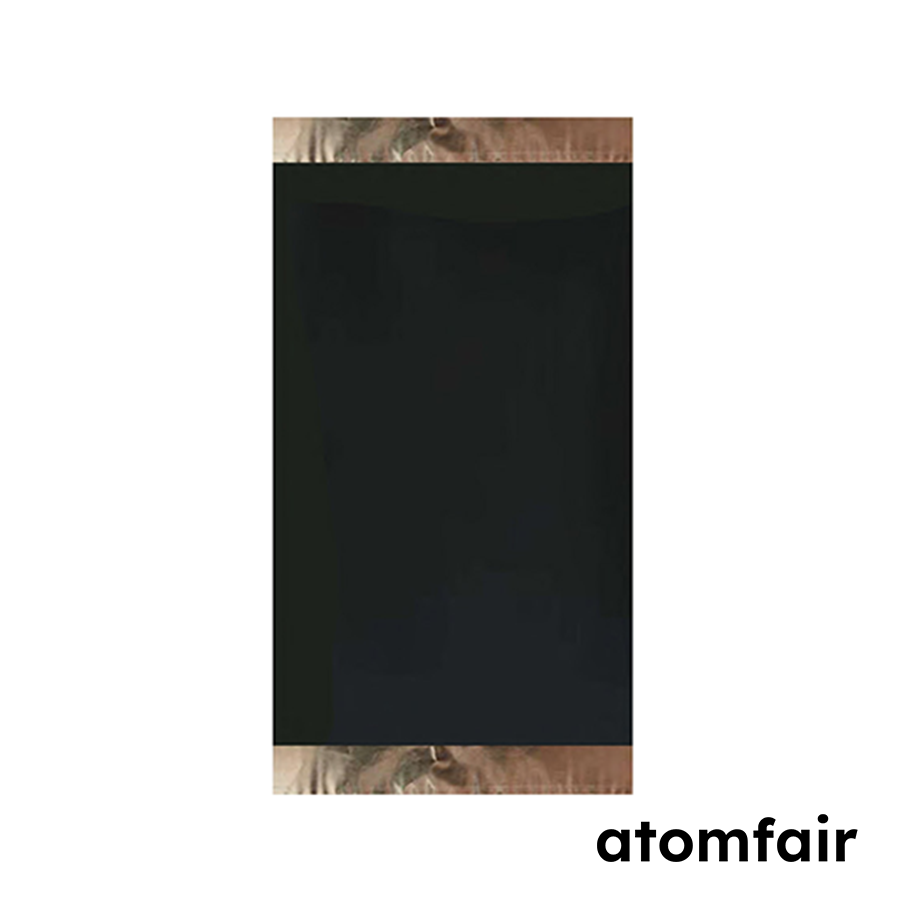
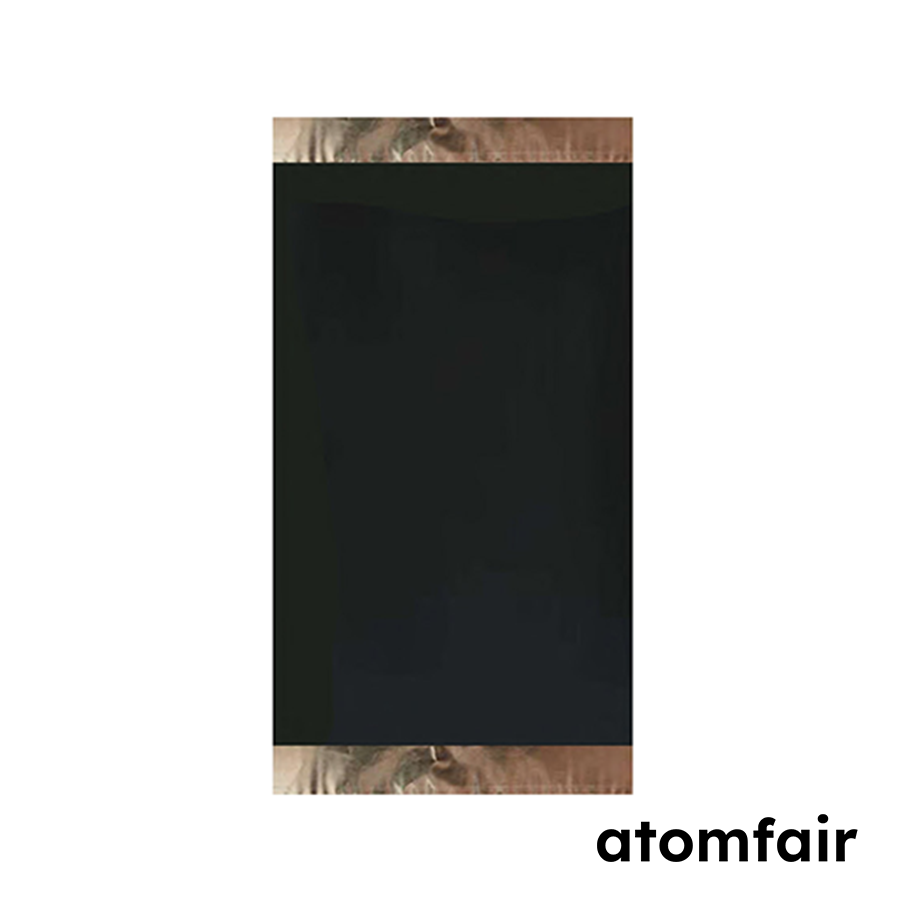
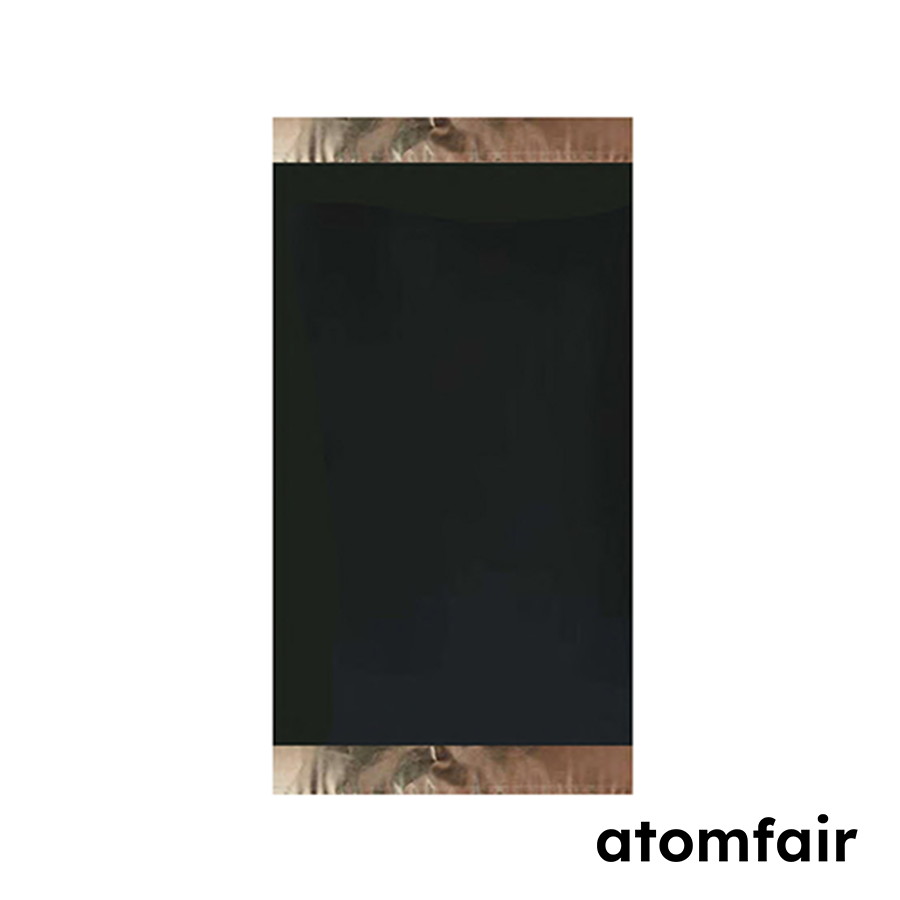
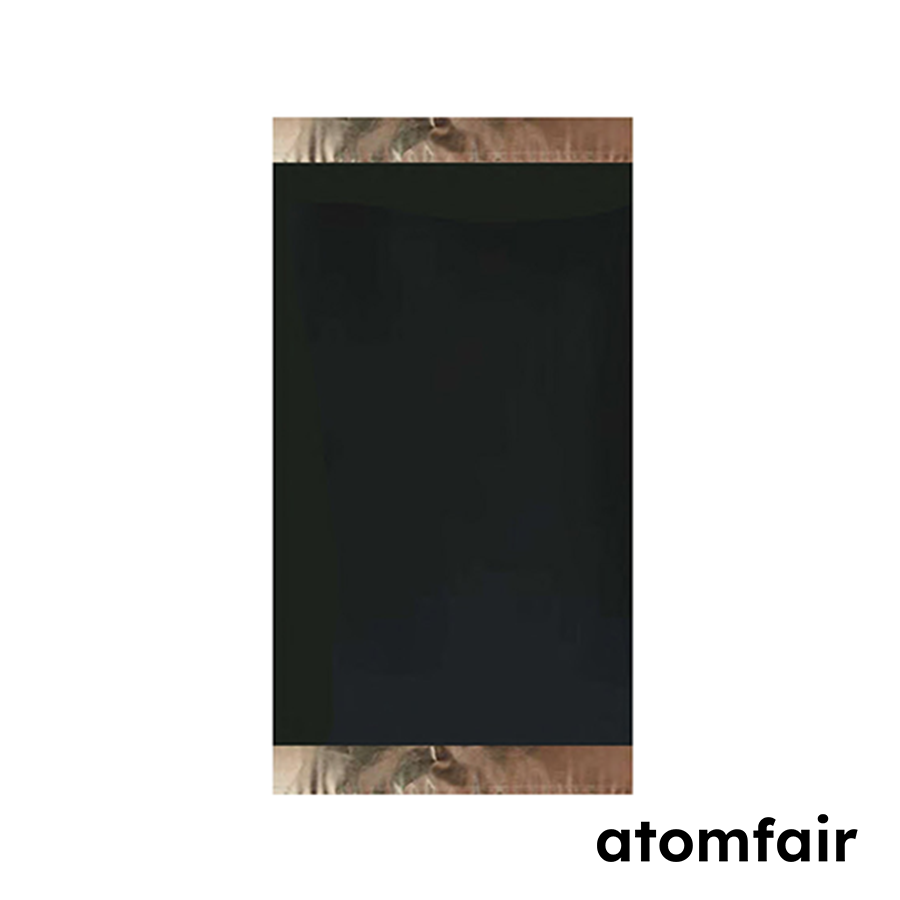
Si-C Silicon-Carbon Single-Sided Anode, 5.5 mg/cm² per side
Single-Sided Anode Sheet
|
||||||||||||||||||||||||||||||||||||||||||||
|
The anode sheet requires a dry handling environment and inert atmosphere storage to prevent moisture-induced degradation. The carbon-coated copper current collector interface is sensitive to contamination and mechanical stress, which can affect early-cycle performance.
- Moisture Sensitivity: Store opened sheets in a dry environment or inert atmosphere to reduce moisture exposure before use.
- Surface Integrity: Avoid touching, bending, scratching, or contaminating the coated surface during punching, transfer, and stacking.
- Interface Stability: The carbon-coated copper current collector improves interfacial contact but requires careful handling to maintain electrode integrity.
- Capacity Loss Consideration: Silicon-related irreversible capacity loss must be accounted for in cell balancing and formation procedures.
- Electrolyte Compatibility: Electrolyte systems should be evaluated for SEI formation behavior and first-cycle efficiency under silicon-containing anode conditions.
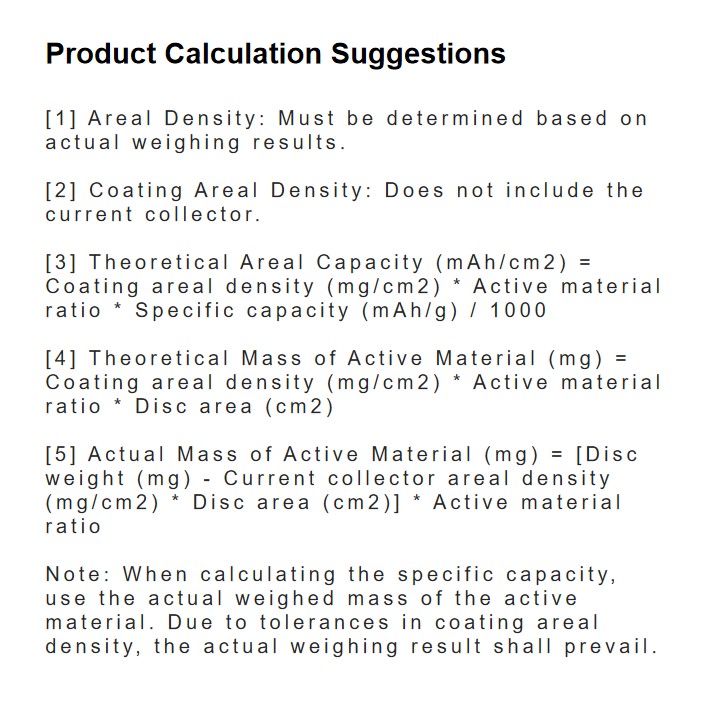
Use a dry environment and inert atmosphere for handling and storage to minimize moisture contamination. Determine active material mass from coating loading, active material ratio, and punched electrode area for accurate cell balancing.
Required Equipment: Dry handling environment (glovebox or dry room), Inert atmosphere (argon or nitrogen)
- Transfer to dry environment
Transfer the anode sheet to a dry glovebox or dry room environment before opening the packaging. - Store in inert atmosphere
Store opened sheets in an inert atmosphere or dry environment to minimize moisture exposure until use. - Inspect coated surface
Inspect the coated surface for any visible defects or contamination before punching. - Punch electrode discs
Punch electrode discs from the sheet, taking care not to touch, bend, or scratch the coated surface. - Calculate active material mass
Calculate the active material mass using the coating loading, active material ratio, and punched electrode area. - Assemble cell promptly
Assemble the cell immediately after punching to minimize air exposure.
How does the composite specific capacity of 1350 mAh/g relate to the actual areal capacity for cell balancing?
The theoretical areal capacity is approximately 6.7 mAh/cm² based on the coating loading of 5.5 mg/cm², 90.30% active material ratio, and composite specific capacity of 1350 mAh/g. Actual measured capacity will depend on punched electrode area, coating uniformity, drying protocol, electrolyte system, formation procedure, pressure, voltage window, and silicon-related irreversible capacity loss.
What cathode loading and N/P ratio should be used when matching this anode for full-cell lithium-ion experiments?
The source does not prescribe a specific N/P ratio, but the product is designed for early-stage full-cell matching. Users should calculate active material mass from the coating loading (5.5 mg/cm²), active material ratio (90.30%), and punched electrode area, then balance with a cathode of known areal capacity. The theoretical areal capacity of ~6.7 mAh/cm² serves as a starting point for N/P balancing, and actual capacity must be determined experimentally.
What storage and handling conditions are required for this Si-C/graphite anode sheet to maintain performance?
Use a dry handling environment before cell assembly to reduce moisture exposure on the coated electrode surface. Store opened sheets in a dry environment or inert atmosphere to minimize moisture uptake. Avoid touching, bending, scratching, or contaminating the coated surface during punching, transfer, and stacking. The carbon-coated copper current collector (1 µm carbon coating on each side of 6 µm copper foil) improves interfacial contact but does not eliminate moisture sensitivity.
This single-sided Si-C/graphite anode sheet delivers a 1350 mAh/g composite active-material capacity at 5.5 mg/cm2 loading on a carbon-coated copper current collector, yielding a theoretical areal capacity of ~6.7 mAh/cm2. The carbon-coated collector enhances interfacial contact for silicon-containing anodes, but performance is sensitive to electrode handling, formation conditions, and silicon-related irreversible capacity loss.
Positive
- High composite capacity for advanced anode studies: The 1350 mAh/g active-material capacity (with 90.30% active ratio at 5.5 mg/cm2 loading) yields a theoretical areal capacity of ~6.7 mAh/cm2, enabling evaluation of high-capacity Si-C/graphite anodes beyond standard graphite in coin or pouch cells.
- Carbon-coated copper collector improves interface stability: The double-side carbon-coated copper foil (1 µm carbon/6 µm Cu/1 µm carbon) enhances interfacial contact between the coating and current collector, a critical factor for silicon-containing anodes where interface integrity affects early-cycle data.
Trade-offs
- Requires dry handling and inert storage: The coated electrode surface is moisture-sensitive; dry handling before assembly and storage in a dry or inert atmosphere are explicitly required to reduce moisture exposure that could degrade electrode performance.
- Performance varies with test conditions and irreversible loss: Measured capacity depends on punched electrode area, coating uniformity, drying protocol, electrolyte system, formation procedure, pressure, voltage window, and silicon-related irreversible capacity loss, so actual areal capacity may deviate from the theoretical 6.7 mAh/cm2.
Every advanced material, component, equipment, and instrument in our catalog is backed by rigorous testing. We maintain strict internal quality management frameworks and align with CE conformity metrics to deliver transparent, reproducible performance data via our public open-science repository.
To request raw batch performance data, submit formal vendor registration paperwork, or execute a fast-turnaround R&D manufacturing loop, contact us at inquiry@atomfair.com.
Item is dispatched under the Atomfair Shipping & Delivery Framework (Free worldwide shipping on orders over $59 USD excl. heavy equipment). Return is governed by the Atomfair Return & Refund Policy (7-day technical return window).