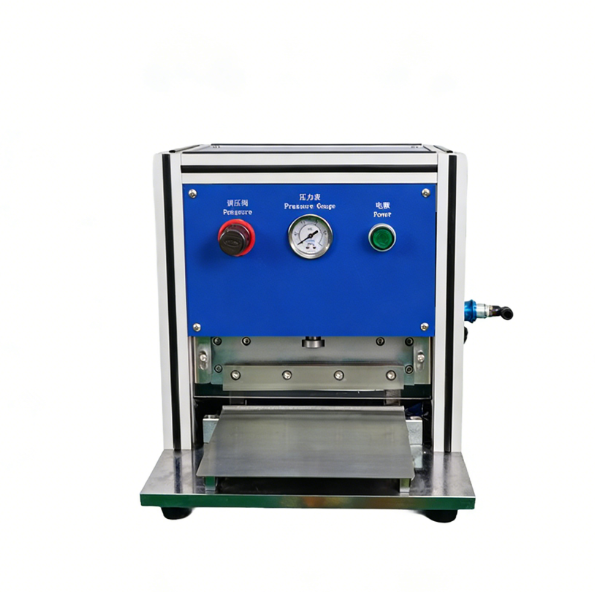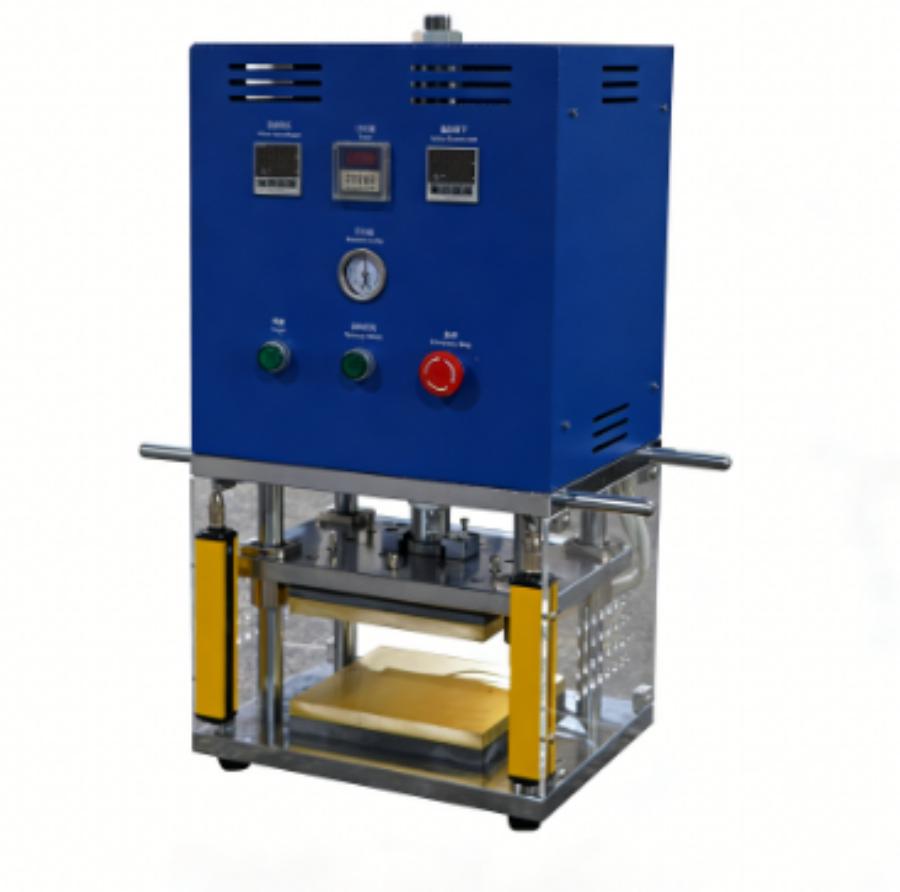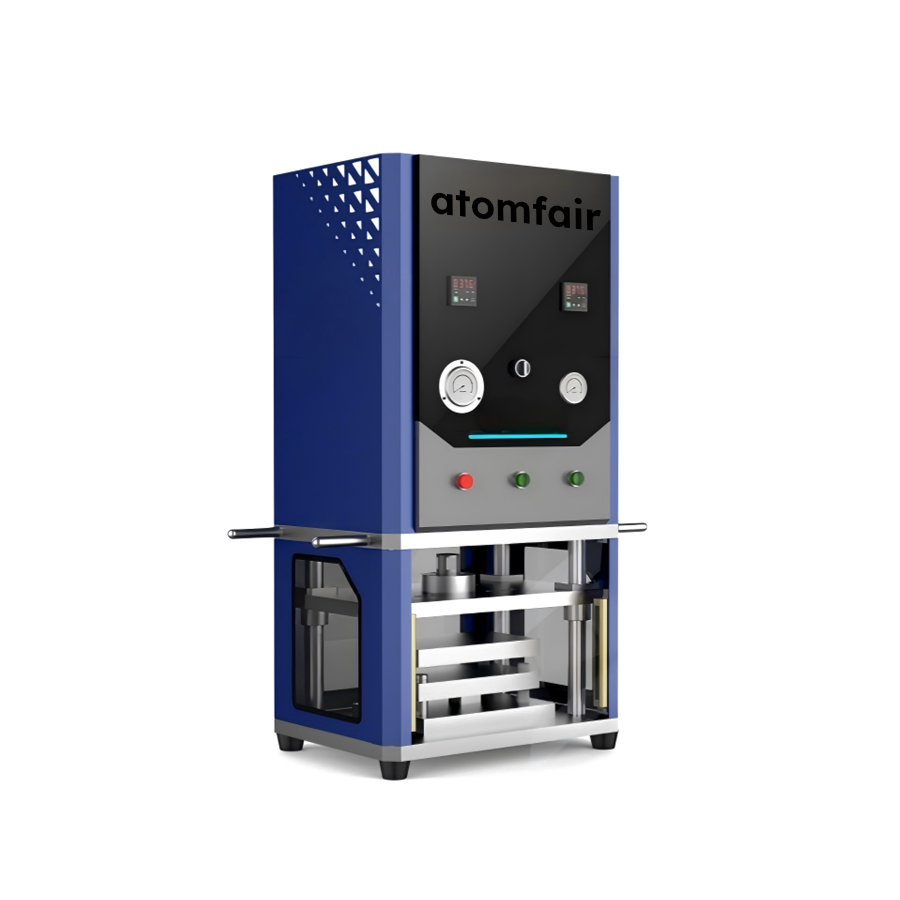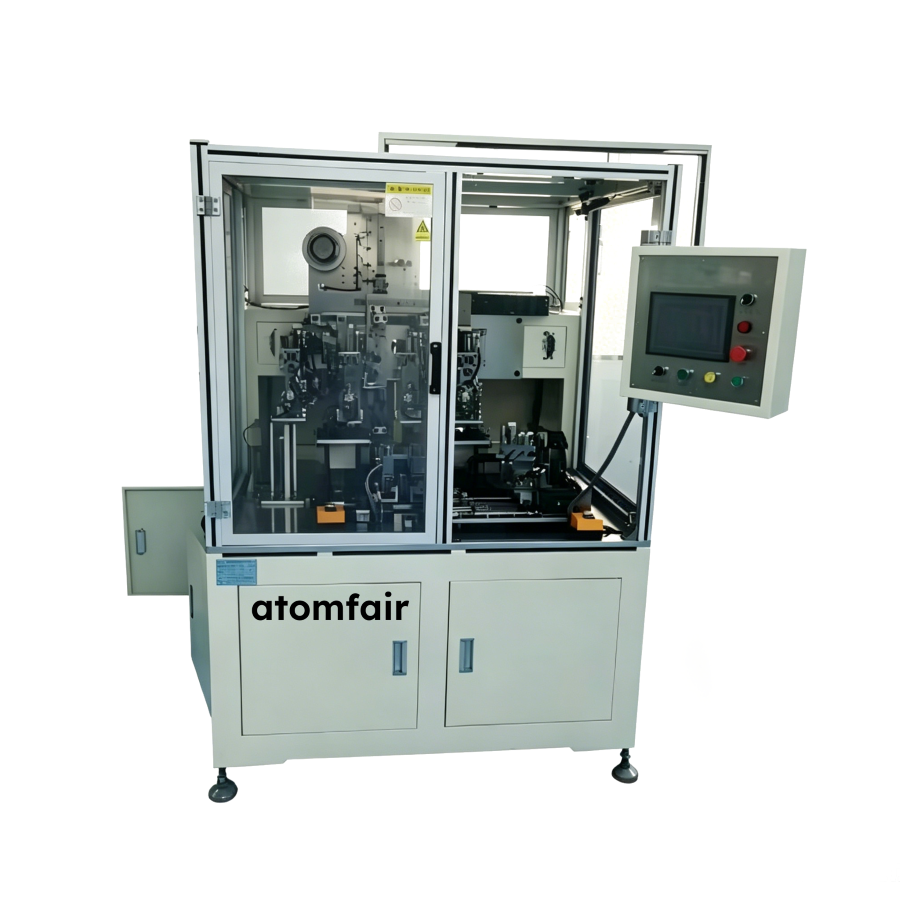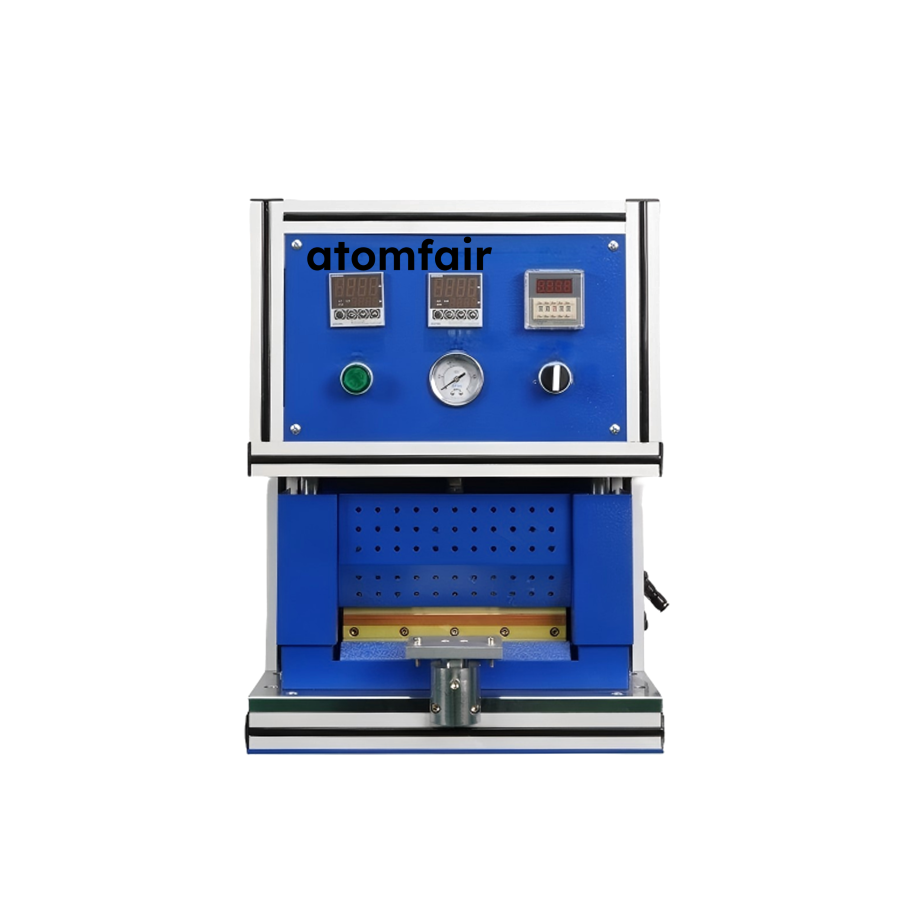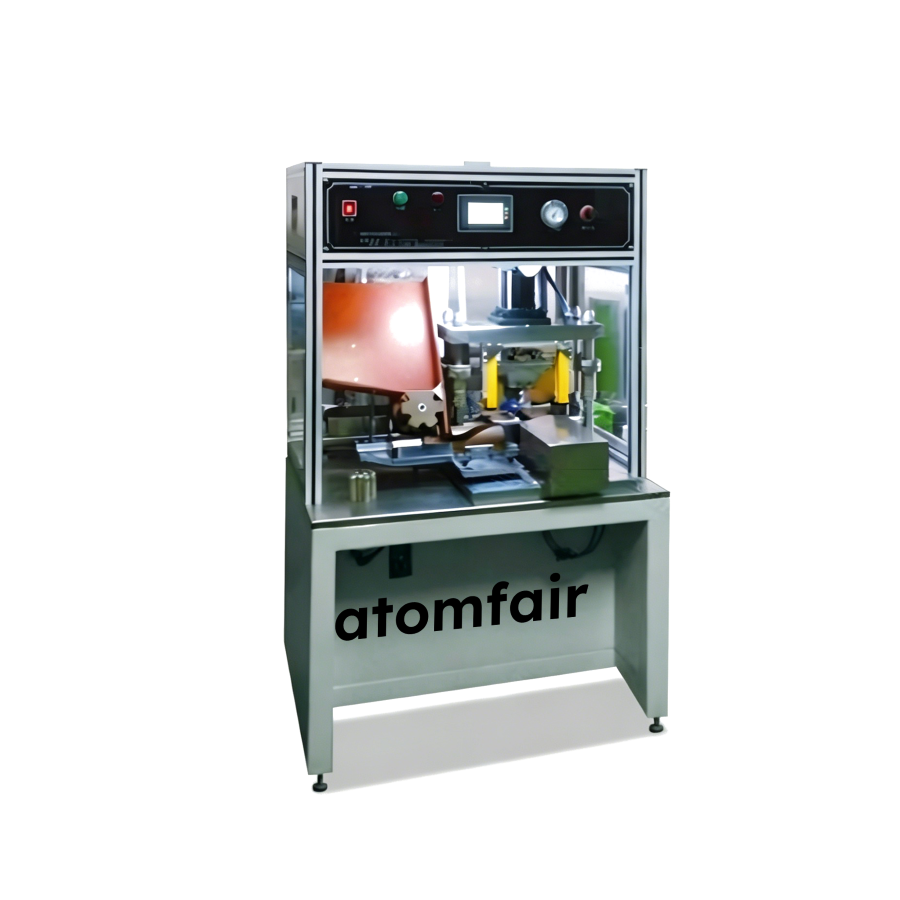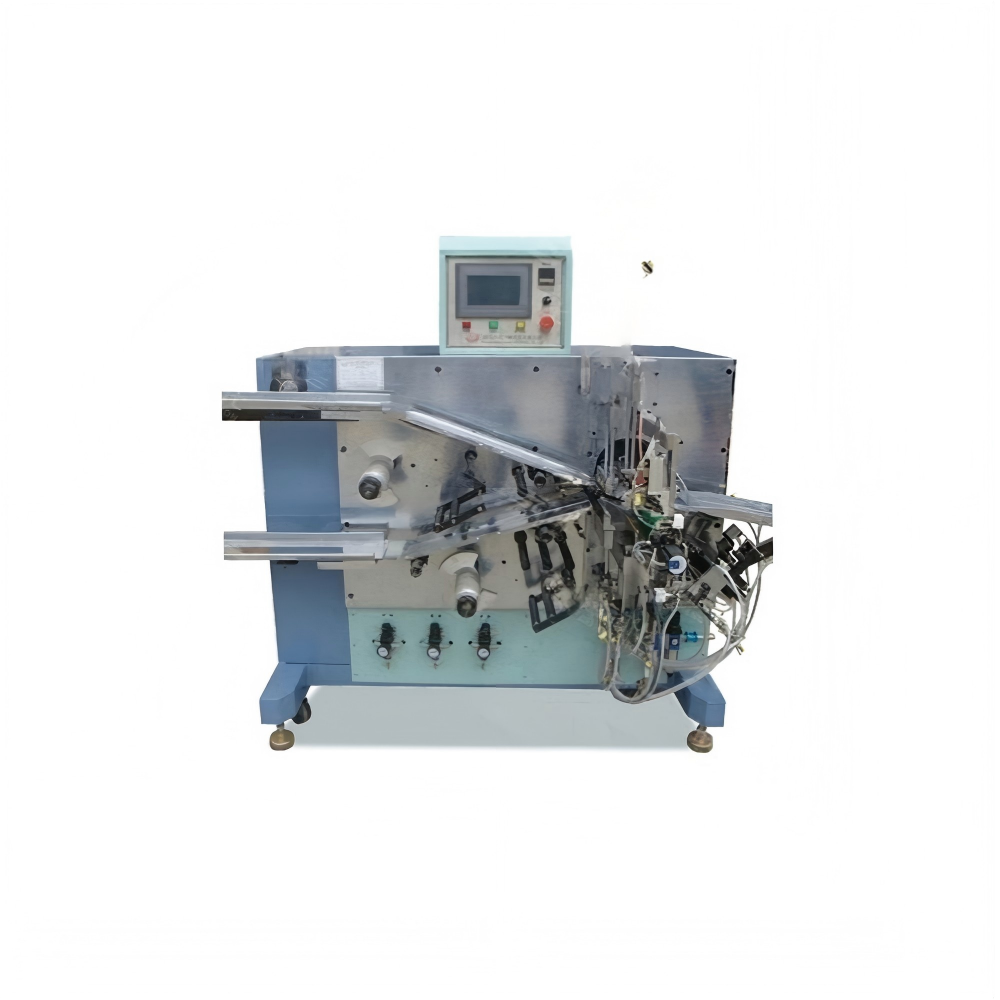
Atomfair Semi-Automatic Pouch Cell Winding Machine
Product Information
Model: Atomfair-SAPW-724
Release Date: January 27, 2024
Version: V2.0
Dimensions: L1100mm × W700mm × H900mm
Weight: 450KG
Application
This machine is designed for the winding process of prismatic / pouch lithium-ion batteries.
Product Description
The machine adopts roll-type separator feeding and sheet-type electrode loading. Manual electrode placement, automatic film pulling, pin insertion and winding. It features trapezoidal interlocking winding needles, compact structure, easy operation, high winding uniformity and wide size compatibility.
Key Features
- Single vertical plate structure, roll separator feeding, passive tension control with adjustable tension.
- Higher efficiency and better winding uniformity than manual winders, suitable for R&D labs.
- Sheet electrode feeding with guide plate, manual feeding, vacuum-assisted electrode holding during winding.
- Wide cell size compatibility: length adjustable within 30–100mm, width adjustable within 10mm.
- PLC control with touch screen, full parameter setting, automatic step cycle and step-back function.
- Trapezoidal interlocking winding needles, automatic retraction, adjustable winding speed.
- Optional automatic tape applicator for auxiliary tape pasting.
Technical Parameters
- Winding type: Roll separator & sheet electrode
- Cell size: Width 30–80mm, Length 30–100mm, Thickness max. 10mm
- Winding precision: ≤ 0.5mm
- Guide slot length: 1200mm
- Separator cutting: Automatic cutting
- Winding needle: Trapezoidal interlocking type, standard width 60mm
- Winding speed: Max 300 r/min (adjustable via touch screen)
- Max separator roll diameter: 250mm
- Power supply: Single-phase AC220V±10%, 1KW
- Air pressure: 0.5–0.8 MPa
If you’re interested, have any questions, or have specific customization requirements, please feel free to contact us at inquiry@atomfair.com.
This machine requires a stable single-phase AC220V±10% power supply and a compressed air source of 0.5–0.8 MPa. The winding process demands precise electrode alignment and vacuum-assisted holding to maintain winding precision within ±0.5 mm.
- Electrode Alignment: Manual electrode feeding requires precise alignment with the guide plate to prevent misalignment during winding.
- Vacuum Holding: Vacuum-assisted electrode holding is essential during winding to prevent electrode slippage and maintain uniformity.
- Tension Control: Passive tension control with adjustable tension must be set appropriately to avoid separator stretching or wrinkling.
- Needle Retraction: Trapezoidal interlocking winding needles must retract automatically after winding to avoid damaging the wound cell.
This procedure outlines the steps to set up and operate the semi-automatic winding machine for pouch cell production. It covers power and air connection, parameter setting, and the winding cycle.
Required Equipment: Touch screen PLC control, Vacuum pump, Compressed air supply
- Connect utilities
Connect the machine to a single-phase AC220V±10% power supply and a compressed air source of 0.5–0.8 MPa. - Set winding parameters
Set the winding speed, cell dimensions, and other parameters on the touch screen PLC interface. - Load separator and electrodes
Load the separator roll onto the feeding shaft and manually place the sheet electrodes onto the guide plate with vacuum holding engaged. - Initiate winding cycle
Start the automatic winding cycle; the machine will pull the separator, insert the winding needle, and wind the cell. - Monitor the winding process
Monitor the winding process to ensure electrode alignment and tension are maintained; adjust if necessary. - Remove the wound cell
After winding, the needle retracts automatically; remove the wound cell from the winding area.
What is the maximum winding speed and precision of the Atomfair-SAPW-724 pouch cell winding machine?
The maximum winding speed is 300 r/min, adjustable via the touch screen, and the winding precision is ≤0.5mm. This combination supports consistent, high-uniformity winding for R&D applications.
What cell size range and thickness limits does the Atomfair-SAPW-724 support?
The machine accommodates cell widths of 30–80mm, lengths of 30–100mm, and a maximum thickness of 10mm. The guide slot length is 1200mm, and the standard winding needle width is 60mm, providing wide size compatibility for prismatic/pouch cells.
What are the utility and air pressure requirements for installing the Atomfair-SAPW-724?
The machine requires a single-phase AC220V±10% power supply with 1KW power consumption, and compressed air at 0.5–0.8 MPa. These infrastructure requirements must be met for proper operation and to ensure consistent winding performance.
The Atomfair-SAPW-724 semi-automatic pouch cell winder provides a practical bridge between manual and fully automatic winding, delivering consistent winding precision (≤0.5 mm) and a wide cell size range (30–100 mm length, 30–80 mm width, up to 10 mm thickness) for R&D and pilot-scale production. Its roll-type separator feeding with passive tension control and vacuum-assisted electrode holding supports uniform winding, while the PLC touchscreen enables precise parameter setting and step-back functionality. However, the machine requires a compressed air supply (0.5–0.8 MPa) and manual electrode placement, which limits throughput and introduces operator dependency, and the standard 60 mm winding needle width may not suit all electrode widths without customization.
Positive
- High winding precision and uniformity: Winding precision is ≤0.5 mm, and the combination of passive tension control, vacuum-assisted electrode holding, and trapezoidal interlocking needles ensures consistent, uniform winding—critical for electrode alignment and cell performance in R&D.
- Wide cell size compatibility: Cell width adjusts from 30–80 mm and length from 30–100 mm (max thickness 10 mm), enabling flexible processing of various prismatic/pouch cell formats without dedicated tooling changes.
Trade-offs
- Requires compressed air supply: The machine needs a clean, dry compressed air source at 0.5–0.8 MPa, adding infrastructure and maintenance requirements in the lab or production environment.
- Manual electrode placement limits throughput: Electrodes are loaded manually, which reduces cycle speed and introduces operator-dependent variability, making the machine less suitable for high-volume production despite its semi-automated winding.
Every advanced material, component, equipment, and instrument in our catalog is backed by rigorous testing. We maintain strict internal quality management frameworks and align with CE conformity metrics to deliver transparent, reproducible performance data via our public open-science repository.
To request raw batch performance data, submit formal vendor registration paperwork, or execute a fast-turnaround R&D manufacturing loop, contact us at inquiry@atomfair.com.
Item is dispatched under the Atomfair Shipping & Delivery Framework (Free worldwide shipping on orders over $59 USD excl. heavy equipment). Return is governed by the Atomfair Return & Refund Policy (7-day technical return window).