Semi-Automatic Laminator Product Data Sheet
Product Code: SAS-386 (Semi-Automatic Stacker)
This data sheet provides accurate and detailed information about the product, which is for global buyers’ reference. For any discrepancies between the data and the actual product, please contact our customer service for confirmation.
1. Product Overview
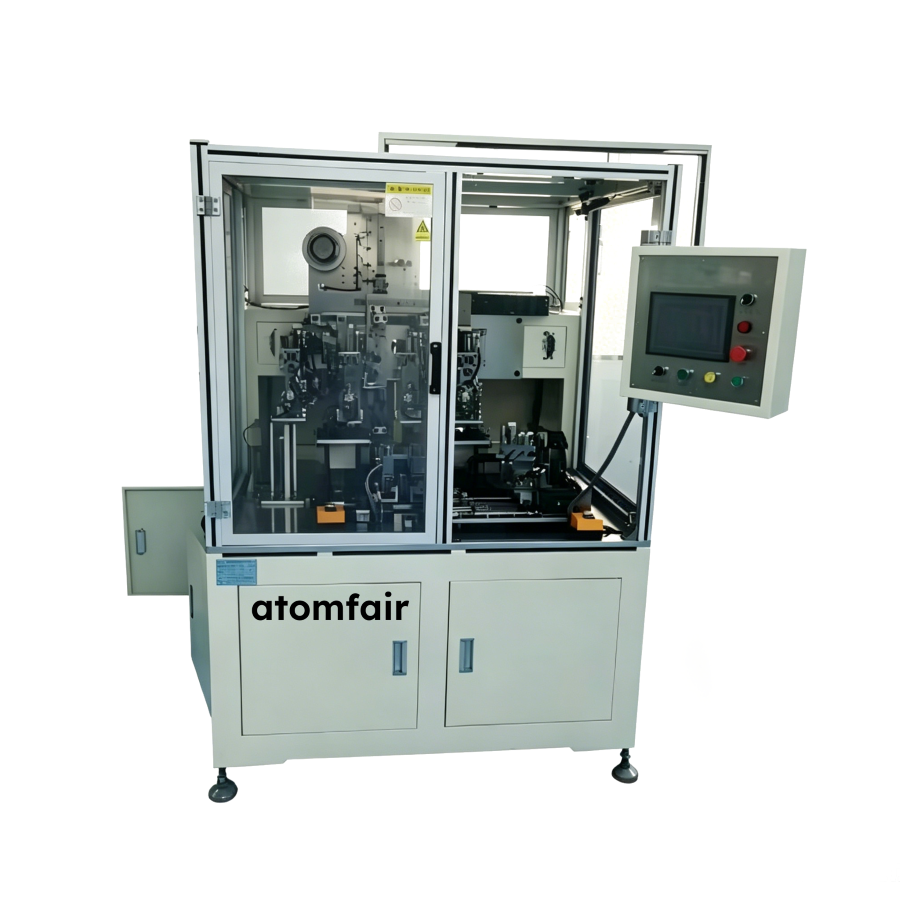
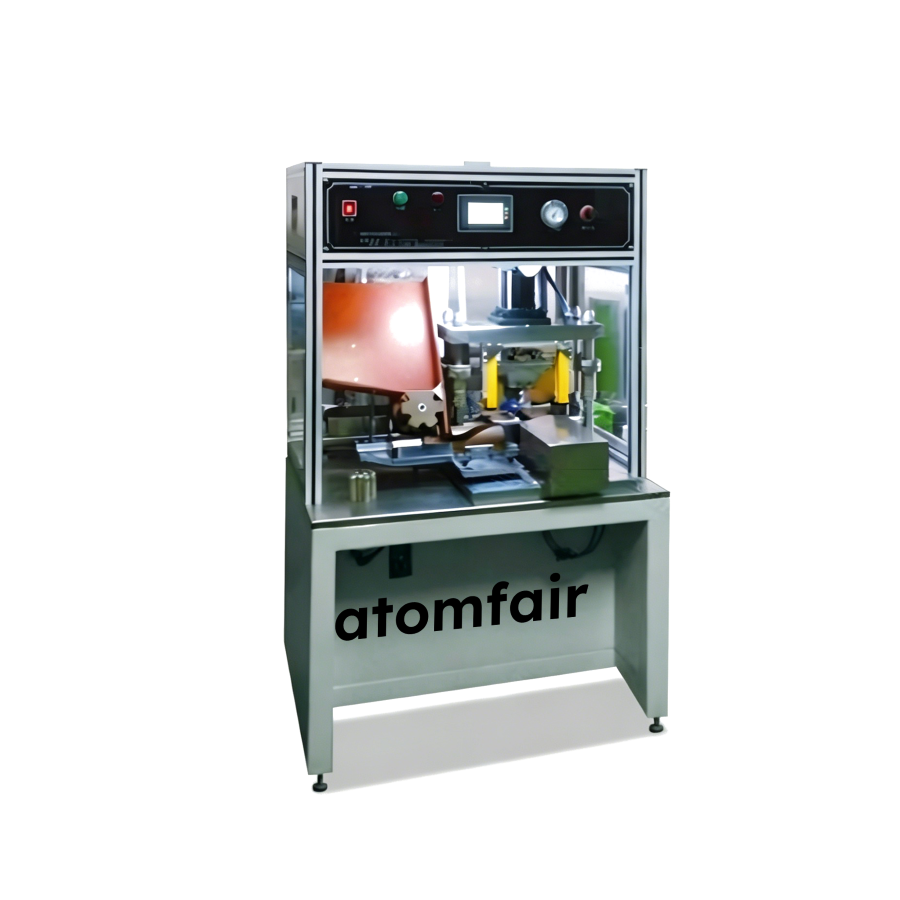
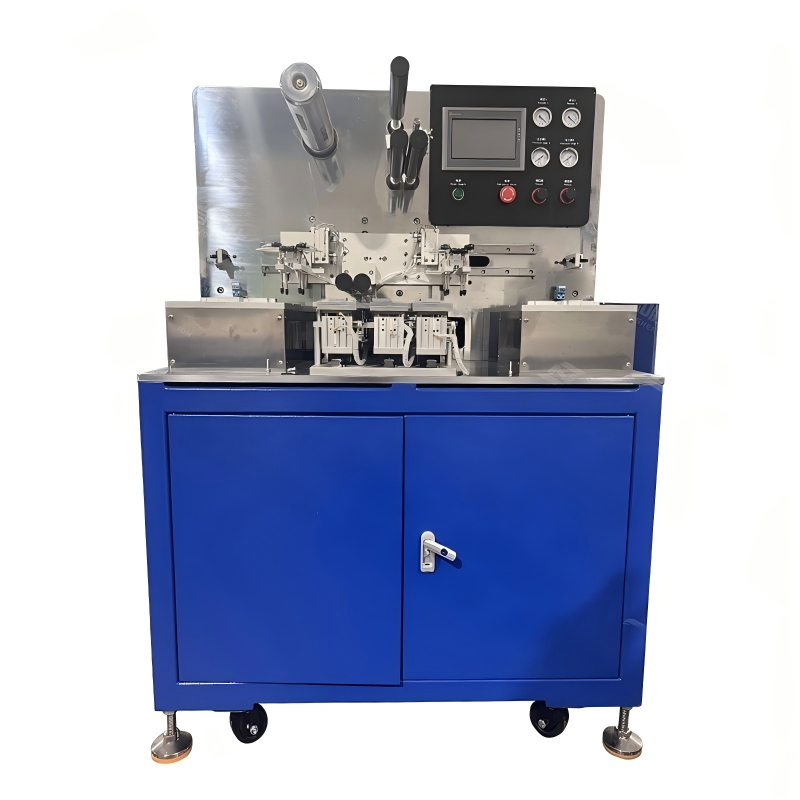
The SAS-386 semi-automatic laminator is mainly used for Z-shaped lamination assembly of positive electrodes, negative electrodes and separators of lithium-ion battery cells. It adopts a semi-automatic operation mode: manual sheet loading, and automatic completion of subsequent electrode position correction and lamination process. It is especially suitable for R&D and sample production of laminated lithium-ion batteries, with high lamination efficiency and precision.
Structural Design: Cantilever structure; Automatic constant tension control for roll separator; Motor-driven separator moves left and right to realize Z-shaped lamination.
2. Core Specifications
| Item | Specification | Unit |
|---|---|---|
| Lamination Precision | Uniformity better than ±0.5 | mm |
| Lamination Range (Cell Size) | Min: 62×46; Max: 200×150 | mm |
| Max Lamination Thickness | 30 | mm |
| Max Lamination Layers | 500 (Configurable) | Layer |
| Separator Roll Diameter (Max) | 250 | mm |
| Separator Core | 3-inch core, mechanical clamping | – |
| Power Supply | AC220V, 1 | KW |
| Air Source | 0.5~0.8 | MPa |
| Equipment Dimensions (L×W×H) | 1200×800×900 | mm |
| Net Weight | Approx. 500 | KG |
| Control System | PLC Control + HMI Operation | – |
3. Key Features
- The number of lamination layers can be automatically controlled according to the preset parameters, ensuring stable production efficiency.
- Compatible design: The change of battery cell size can be realized by adjusting the positioning fixture, with a wide adjustment range, adapting to multi-specification production needs.
- PLC control system and HMI operation interface are adopted, which is easy to operate, maintain and debug, reducing the threshold of use.
- Manual electrode loading, automatic positioning, manipulator automatic sheet suction and automatic lamination, reducing manual errors and improving production accuracy.
- Forced alignment of separators and mechanical positioning of electrodes effectively ensure high lamination precision and product consistency.
4. Application Scope
Specialized in R&D, sample production and small-batch trial production of laminated lithium-ion battery cells, widely used in battery laboratories, new energy enterprises and related R&D institutions.
5. Important Notes
- All specifications and parameters in this data sheet are for reference only. Due to product optimization and upgrading, there may be slight differences between the actual product and the data. Please confirm with our customer service before purchase.
- The product does not include additional accessories unless otherwise specified. For customized needs, please contact our sales team.
- The equipment shall be installed and used in accordance with the operation manual to ensure safe and stable operation.
If you’re interested, have any questions, or have specific customization requirements, please feel free to contact us at inquiry@atomfair.com.
The SAS-386 laminator requires a compressed air supply of 0.5–0.8 MPa and a 220V AC power source for operation. The equipment must be installed and used strictly in accordance with the operation manual to ensure safe and stable operation.
- Air Supply Constraint: The laminator requires a compressed air supply of 0.5–0.8 MPa for pneumatic components.
- Power Supply Constraint: The equipment operates on AC220V, 1kW power supply and must be connected accordingly.
- Installation and Operation Constraint: The equipment must be installed and used in accordance with the operation manual to ensure safe and stable operation.
The SAS-386 is a semi-automatic laminator for Z-shaped lamination of lithium-ion battery electrodes and separators. It requires manual electrode loading, automatic positioning, and automatic lamination with PLC control.
Required Equipment: SAS-386 Semi-Automatic Laminator, PLC Control System with HMI
- Load Electrodes
Manually load the positive and negative electrodes onto the designated loading positions. - Set Parameters
Set the lamination parameters, including the number of layers and lamination range, via the HMI interface. - Initiate Lamination
Start the automatic lamination process through the PLC control system. - Monitor Process
Monitor the lamination process to ensure the separator alignment and electrode positioning are accurate. - Remove Finished Cell
Remove the finished laminated cell from the stacking area after the process completes.
What is the maximum lamination thickness and how many layers can the SAS-386 semi-automatic laminator handle?
The SAS-386 supports a maximum lamination thickness of 30 mm and can be configured for up to 500 layers, making it suitable for thick or high-layer-count cells. This is achieved through PLC-controlled automatic layer counting, ensuring consistent production efficiency.
What are the cell size and precision specifications for the SAS-386 laminator?
The SAS-386 accommodates cell sizes from a minimum of 62×46 mm to a maximum of 200×150 mm, with a lamination precision better than ±0.5 mm. This precision is maintained through forced alignment of separators and mechanical positioning of electrodes, ensuring high product consistency.
What are the utility and installation requirements for the SAS-386 semi-automatic laminator?
The SAS-386 requires an AC220V, 1 kW power supply and a compressed air source of 0.5–0.8 MPa. The equipment dimensions are 1200×800×900 mm with a net weight of approximately 500 kg, so adequate floor space and a stable air supply are necessary for installation.
The SAS-386 semi-automatic laminator is engineered for Z-shaped lamination of lithium-ion battery electrodes and separators, delivering ±0.5 mm lamination precision and support for up to 500 layers, making it well-suited for R&D and small-batch production where accuracy and flexibility are critical.
Positive
- High lamination precision: Achieves uniformity better than ±0.5 mm, ensuring consistent electrode alignment critical for battery performance and cycle life.
- Flexible cell size range: Supports cell sizes from 62×46 mm to 200×150 mm with adjustable positioning fixtures, accommodating multi-specification R&D and sample production needs.
Trade-offs
- Requires compressed air supply: Operates with an air source of 0.5–0.8 MPa, necessitating laboratory compressed air infrastructure for proper function.
- Semi-automatic manual loading: Electrode sheets must be loaded manually, which limits throughput and may introduce operator-dependent variability in high-volume production settings.
Every advanced material, component, equipment, and instrument in our catalog is backed by rigorous testing. We maintain strict internal quality management frameworks and align with CE conformity metrics to deliver transparent, reproducible performance data via our public open-science repository.
To request raw batch performance data, submit formal vendor registration paperwork, or execute a fast-turnaround R&D manufacturing loop, contact us at inquiry@atomfair.com.
Item is dispatched under the Atomfair Shipping & Delivery Framework (Free worldwide shipping on orders over $59 USD excl. heavy equipment). Return is governed by the Atomfair Return & Refund Policy (7-day technical return window).