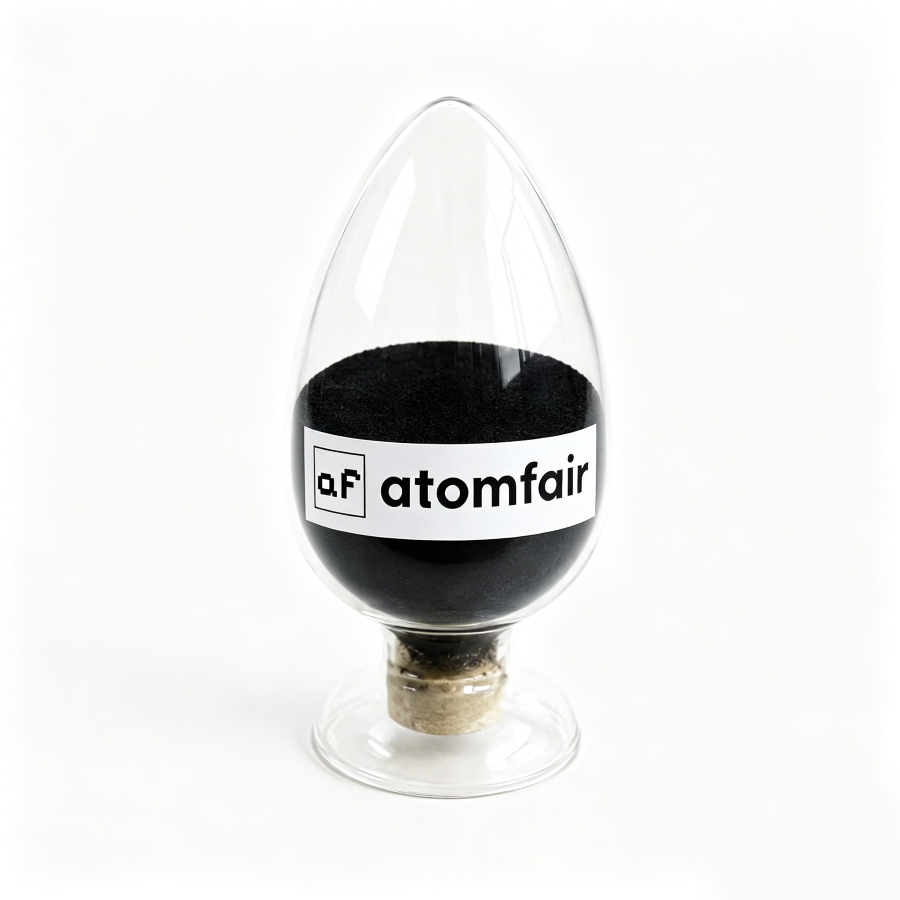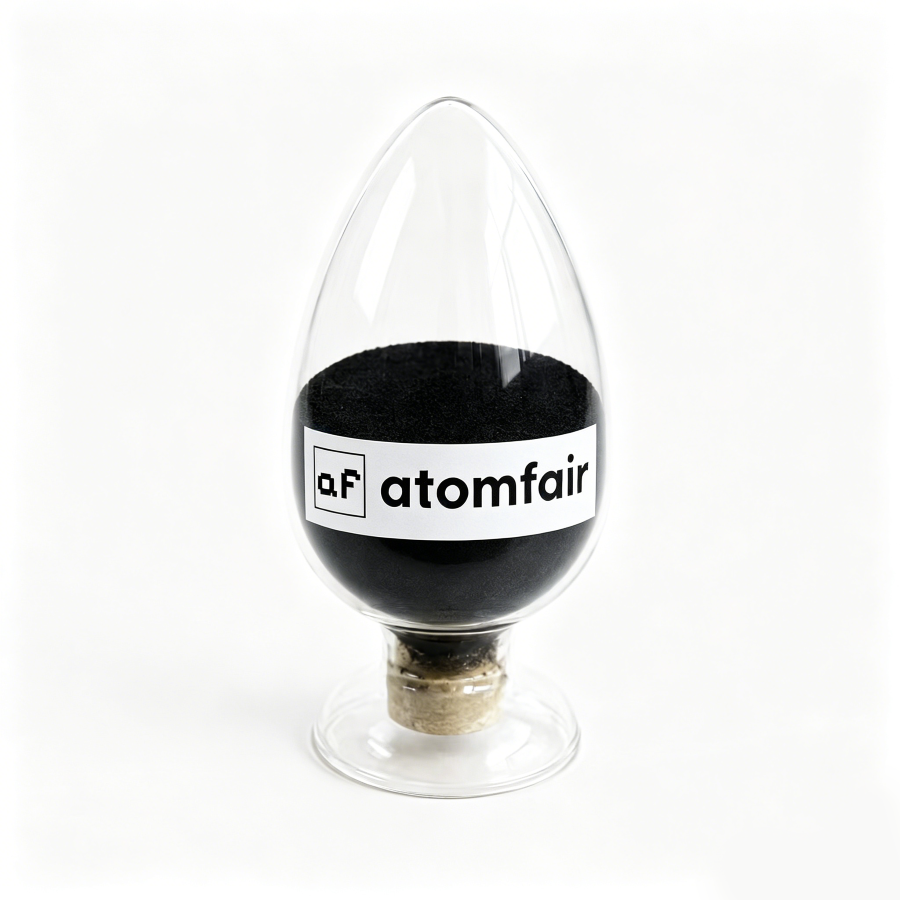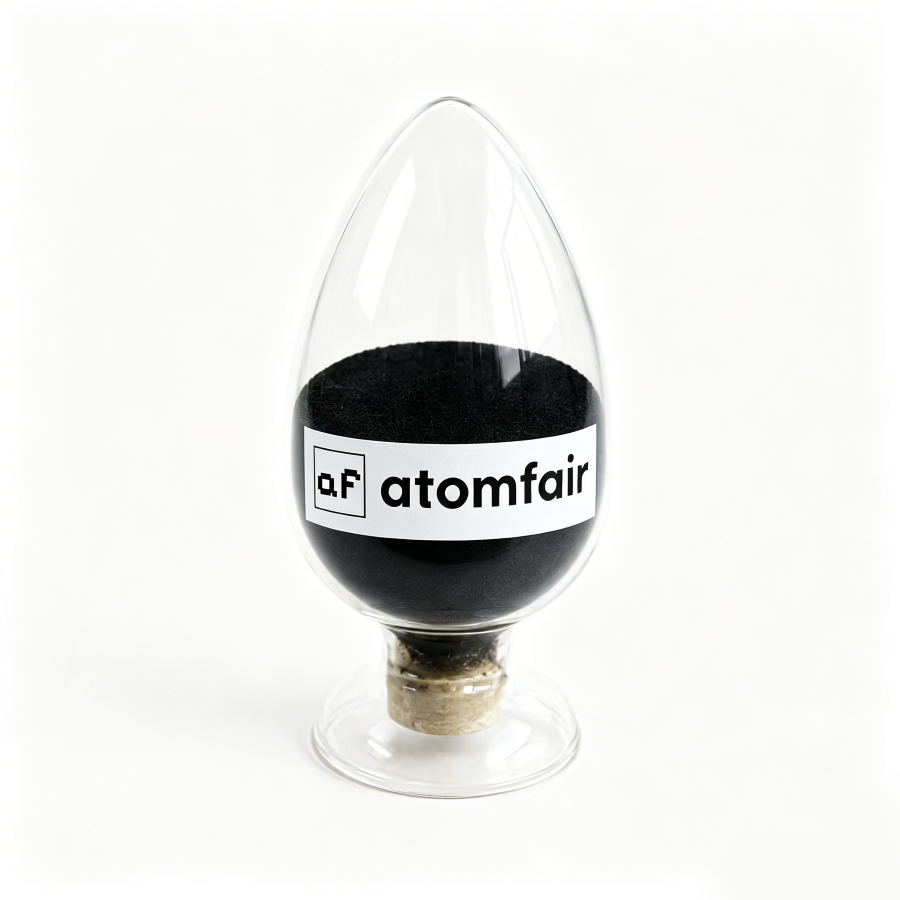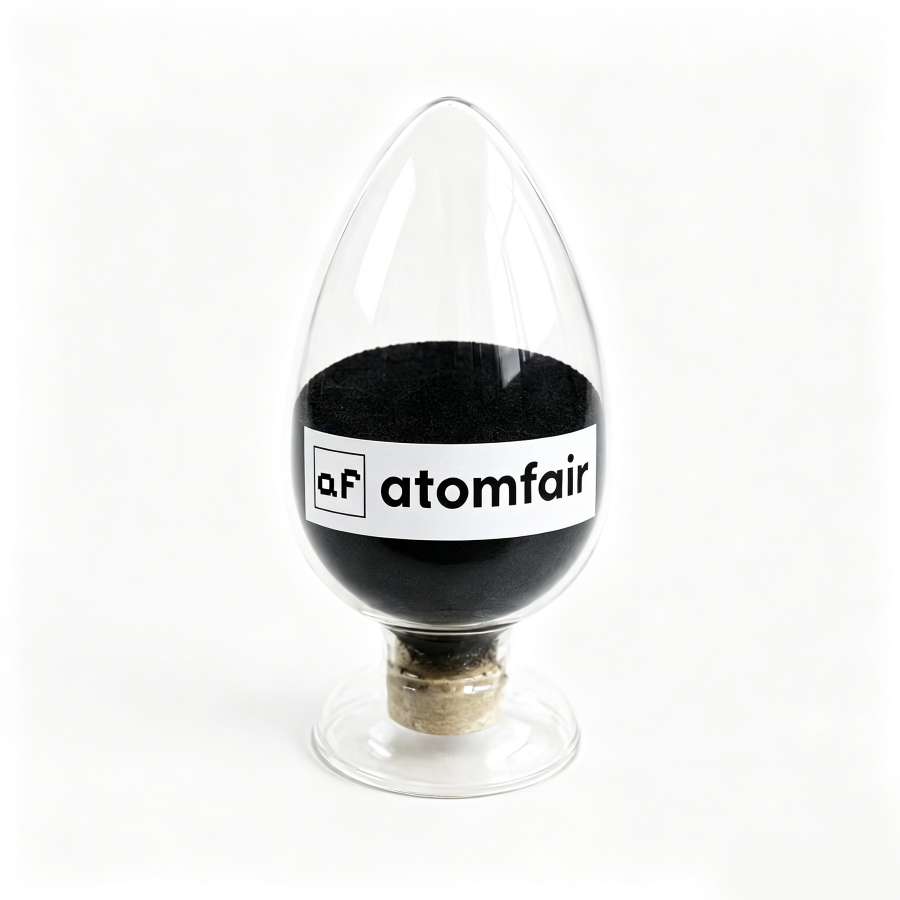
ATOMFAIR® RESIN-DERIVED HARD CARBON ANODE POWDERRESEARCH GRADE MATERIAL
|
|||||||||||||||||||||||||||
|
|||||||||||||||||||||||||||
|
TAILORED SOLUTIONS FOR YOUR RESEARCH
Contact our engineering team for technical support, batch-specific data, or official quotations.
EMAIL: inquiry@atomfair.com
|
|||||||||||||||||||||||||||
|
Manufacturer: Atomfair LLC
Brand: ATOMFAIR®
|
|||||||||||||||||||||||||||
This material is moisture-sensitive and must be stored in an inert atmosphere to prevent oxidation and performance degradation. Electrode fabrication requires dry room or glovebox conditions with controlled dew point below -40°C.
- Storage Atmosphere Requirement: Store under argon or nitrogen atmosphere with oxygen and moisture levels below 1 ppm to maintain electrochemical activity.
- Electrode Processing Constraint: Slurry preparation must use anhydrous solvents and binders compatible with non-graphitizable carbon to avoid particle agglomeration.
- Thermal Degradation Risk: Exposure to temperatures exceeding 300°C in oxidizing atmospheres will initiate irreversible carbon oxidation and capacity loss.
This procedure outlines the controlled preparation of an anode slurry using the hard carbon powder under inert conditions. Proper dispersion and binder selection are critical to achieving uniform coating and optimal electrochemical performance.
Required Equipment: Argon-filled glovebox (O2/H2O < 1 ppm), High-shear mixer or planetary ball mill, Vacuum oven
- Weigh Components
Weigh the hard carbon powder, conductive carbon black, and PVDF binder in an 85:5:10 weight ratio inside the glovebox. - Disperse Binder
Dissolve the PVDF binder in anhydrous NMP at 5 wt% concentration using magnetic stirring at 50°C for 2 hours. - Mix Dry Powders
Combine the hard carbon and carbon black in a zirconia jar and mill at 200 rpm for 30 minutes to achieve homogeneous dry mixing. - Combine Slurry Components
Transfer the dry powder mixture to the binder solution and mix under high-shear at 3000 rpm for 15 minutes, ensuring no agglomerates remain. - Degas Slurry
Place the sealed slurry container in a vacuum oven at room temperature for 10 minutes to remove entrapped air bubbles. - Cast Electrode Film
Apply the degassed slurry onto copper foil using a doctor blade set to a wet gap of 150 µm within the glovebox. - Dry Electrode
Transfer the coated foil to a vacuum oven and dry at 80°C for 12 hours under dynamic vacuum below 10 mbar.
How does the customizable particle size (D50) in this resin-derived hard carbon powder affect the trade-off between specific capacity and rate capability for sodium-ion battery anodes?
Smaller D50 improves rate capability by reducing sodium-ion diffusion distances, but may lower packing density and specific capacity due to increased surface area and SEI formation. The D50 is customizable based on application requirements, enabling targeted optimization for either high-power or high-energy density configurations in SIB and LIB cells.
Is this resin-derived hard carbon anode powder compatible with standard organic electrolyte systems used in lithium-ion batteries, or does it require specialized electrolyte formulations?
This powder is designed for direct compatibility with both standard lithium-ion and sodium-ion battery chemistries. Its non-graphitizable structure supports efficient ion transport and stable SEI formation with common organic electrolytes, though for sodium-ion systems electrolyte optimization may be needed to maximize the expanded interlayer spacing advantage.
What specific handling and storage precautions are required to prevent moisture contamination and safety hazards when working with this fine resin-derived hard carbon powder?
Store in a cool, dry place in airtight containers to prevent moisture adsorption, which can degrade electrochemical performance. Use PPE including gloves, mask, and goggles as the fine powder can become airborne and is a potential respiratory irritant and combustible dust; ground all equipment to avoid static discharge during transfer.
This resin-derived hard carbon anode powder delivers high capacity via expanded interlayer spacing and excellent cycle stability for sodium-ion and lithium-ion batteries, but requires moisture-controlled storage and customized particle size specification for electrode coating.
Positive
- High Capacity from Expanded Interlayer Spacing: The resin-derived structure provides expanded interlayer spacing, optimizing energy storage and electrochemical performance.
- Excellent Cycle Stability: Engineered to maintain consistent performance through extensive charge/discharge cycles, contributing to exceptional battery longevity.
Trade-offs
- Moisture Sensitivity During Storage: The powder must be stored in a cool, dry place away from moisture to prevent degradation, requiring strict environmental controls.
- Particle Size Customization Required: The D50 particle size is customizable based on application requirements, meaning standard off-the-shelf sizing is not fixed and may need specification for electrode coating.
Every advanced material, component, equipment, and instrument in our catalog is backed by rigorous testing. We maintain strict internal quality management frameworks and align with CE conformity metrics to deliver transparent, reproducible performance data via our public open-science repository.
To request raw batch performance data, submit formal vendor registration paperwork, or execute a fast-turnaround R&D manufacturing loop, contact us at inquiry@atomfair.com.
Item is dispatched under the Atomfair Shipping & Delivery Framework (Free worldwide shipping on orders over $59 USD excl. heavy equipment). Return is governed by the Atomfair Return & Refund Policy (7-day technical return window).