|
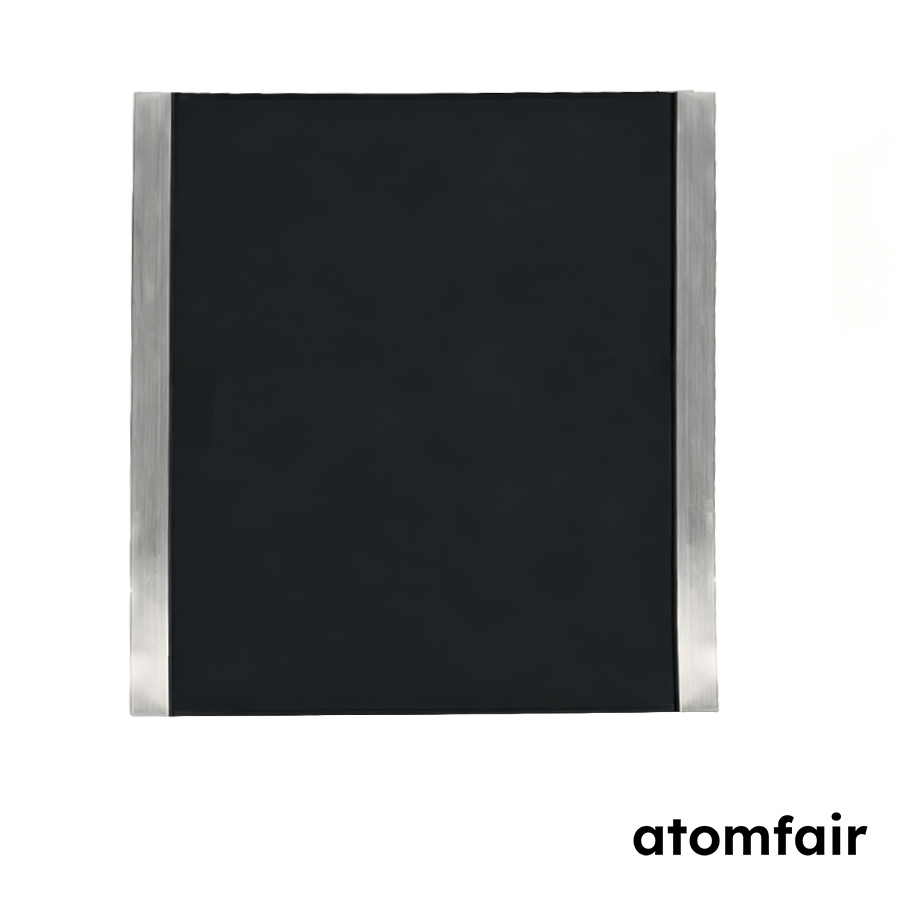
NCM811 Double-Sided Cathode, 60mg/cm² per side, Dry Process, 5-Pack
Battery Electrode Sheet
|
||||||||||||||||||||||||||||||||||||||||||||
|
This document defines the handling and preconditioning constraints for Atomfair NCM811-D04 electrode sheets prior to cell assembly. The dry-process coating requires moisture removal and careful handling to preserve electrode integrity.
- Moisture Removal Requirement: Condition the electrode sheets by vacuum baking at 100°C for 12 hours before formal cell assembly to remove environmental moisture.
- Handling Restriction: Exercise proper handle care when manipulating the dry-process coated sheets to avoid damaging the coating.
- Research Use Restriction: Use the electrode sheets exclusively for laboratory research applications.
Use this procedure to condition Atomfair NCM811-D04 electrode sheets before assembling lithium-ion test cells. The protocol removes environmental moisture by vacuum baking at 100°C for 12 hours.
Required Equipment: Vacuum oven
- Load electrode sheets
Transfer the electrode sheet pack into the vacuum oven chamber. - Set temperature
Set the oven temperature to 100°C. - Apply vacuum
Evacuate the oven chamber to apply the required vacuum. - Bake under vacuum
Maintain the vacuum bake at 100°C for 12 hours. - Complete conditioning
Remove the electrode sheets from the vacuum oven after completing the 12-hour bake.
How does the dry process coating of the Atomfair NCM811-D04 electrode sheet affect its electrochemical performance compared to wet-processed NCM811 electrodes?
The dry process eliminates residual fluid phases, providing superior structural integrity and precise thickness control for high-density applications. The electrode sheet achieves a compaction density of 3.0 g/cm³ and a capacity of 200 mAh/g with a 96.0% active material ratio, enabling accurate electrochemical evaluation and variable elimination in lithium-ion battery R&D.
What pre-conditioning steps are required before using the NCM811-D04 electrode sheet in cell assembly?
The sheet requires a standard drying protocol of 12 hours vacuum baking at 100°C to remove environmental moisture before formal cell assembly. The carbon-coated aluminum foil substrate (12 + 0.5 + 0.5 μm) minimizes interfacial contact resistance, but proper handling and conditioning are critical to maintain cycle performance and validation consistency.
What handling and storage precautions are necessary for the dry process NCM811-D04 electrode sheet to maintain its integrity?
The double-side coated sheet (60 mg/cm²) is sensitive to moisture and mechanical damage due to the dry process structure. It should be stored in a dry environment and handled with care to avoid deformation or contamination. The product is sold exclusively for laboratory research and requires strict adherence to the vacuum drying protocol to preserve its electrochemical properties.
The Atomfair NCM811-D04 electrode sheet combines a 96.0% active material ratio with a dry-process, double-sided coating on carbon-coated aluminum foil, delivering high areal capacity (60 mg/cm²) and low interfacial resistance for lithium-ion battery R&D. The primary operational constraint is the mandatory 12-hour vacuum bake at 100°C before cell assembly, and the dry-process coating requires careful handling to preserve structural integrity.
Positive
- High active material ratio: At 96.0% active NCM811 content, the electrode maximizes energy density and enables accurate electrochemical evaluation by minimizing binder and conductive additive interference.
- Carbon-coated aluminum foil substrate: The carbon-modified current collector reduces interfacial contact resistance, improving electron pathways and cycle stability in high-density electrode configurations.
Trade-offs
- Mandatory pre-drying protocol: The electrode must undergo vacuum baking at 100°C for 12 hours before cell assembly to remove environmental moisture, adding a required preparatory step that affects workflow scheduling.
- Delicate dry-process coating: The dry-process coating requires careful handling during cutting, stacking, and cell assembly to avoid edge chipping or delamination, as residual solvents are absent and the coating is structurally rigid.
Every advanced material, component, equipment, and instrument in our catalog is backed by rigorous testing. We maintain strict internal quality management frameworks and align with CE conformity metrics to deliver transparent, reproducible performance data via our public open-science repository.
To request raw batch performance data, submit formal vendor registration paperwork, or execute a fast-turnaround R&D manufacturing loop, contact us at inquiry@atomfair.com.
Item is dispatched under the Atomfair Shipping & Delivery Framework (Free worldwide shipping on orders over $59 USD excl. heavy equipment). Return is governed by the Atomfair Return & Refund Policy (7-day technical return window).