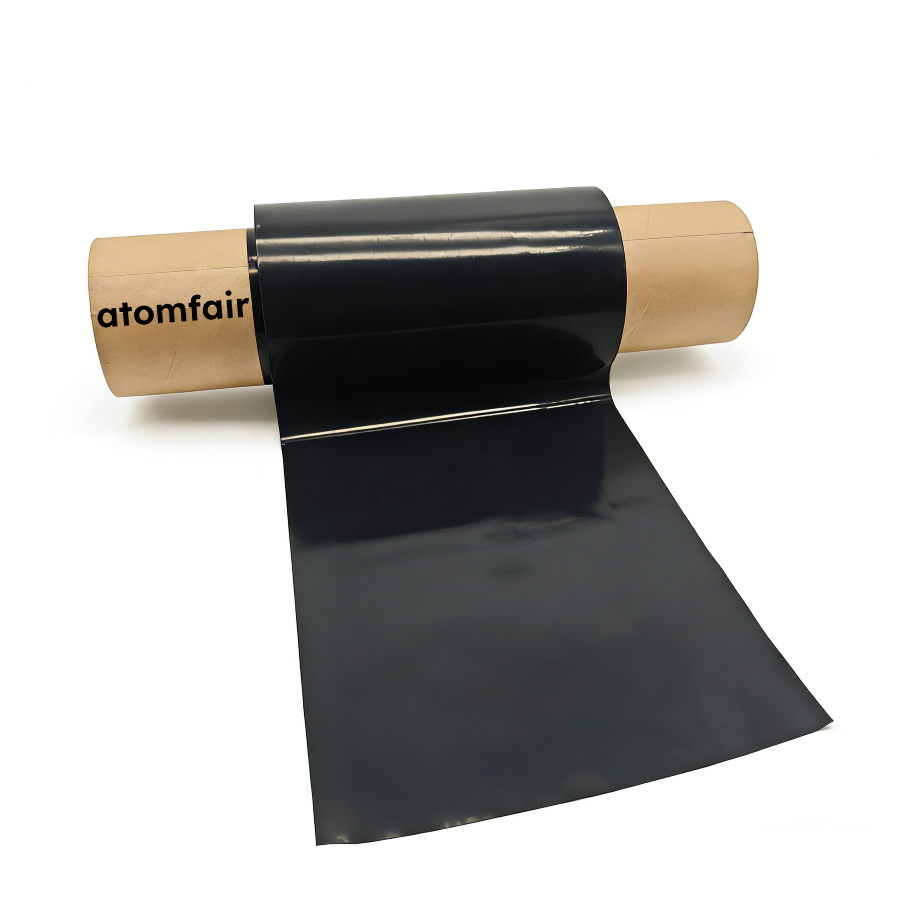
ATOMFAIR® LITHIUM ZIRCONIUM CHLORIDE (LI2ZRCL6) SOLID-STATE ELECTROLYTERESEARCH GRADE MATERIAL
|
||||||||||||||||||||||||
|
||||||||||||||||||||||||
|
|||
|
TAILORED SOLUTIONS FOR RESEARCH
Contact our engineering team for technical support or official institutional quotations.
EMAIL: support@atomfair.com
|
|||
|
Manufacturer: Atomfair LLC
Brand: ATOMFAIR®
|
This solid-state electrolyte requires precise processing conditions to achieve its specified ionic conductivity. Its chemical compatibility with lithium metal anodes and cathode materials must be verified for each application.
- Processing Conditions: Ionic conductivity varies based on processing conditions such as sintering temperature and pressure.
- Compatibility: This material is compatible with lithium metal anodes and a range of cathode materials, but each combination should be tested.
How does the ionic conductivity of Li2ZrCl6 compare to that of sulfide electrolytes like Li6PS5Cl, and which processing parameters most affect its performance?
Li2ZrCl6 exhibits ionic conductivity typically >10⁻² S/cm, a value that meets or exceeds the threshold for practical solid-state electrolytes, though conductivity varies with processing conditions. The description confirms that final performance is processing-dependent, meaning parameters such as sintering temperature, pressure, and atmosphere must be optimized to achieve maximum ionic transport.
Can Li2ZrCl6 be used directly with lithium metal anodes and high-voltage NMC cathodes without interfacial decomposition?
Yes, Li2ZrCl6 is specified as suitable for use with lithium metal anodes and a range of cathode materials, and its wide electrochemical window supports compatibility with high-voltage cathodes like NMC. The description emphasizes chemical stability against lithium and other battery components, indicating minimal interfacial side reactions during cycling.
What specific storage and handling conditions are required to prevent moisture degradation of Li2ZrCl6 during cell fabrication?
Li2ZrCl6 must be stored in a cool, dry place away from moisture and direct sunlight, and handling requires appropriate personal protective equipment. The strong moisture sensitivity implied by these guidelines typically mandates glovebox assembly with an inert argon atmosphere and <0.1 ppm H2O to preserve the material's crystalline structure and ionic conductivity.
Lithium Zirconium Chloride (Li2ZrCl6) is a high-conductivity solid-state electrolyte suitable for advanced battery research. Its ionic conductivity exceeds 10^-2 S/cm, and it offers chemical stability with lithium metal anodes, though performance depends on processing conditions and it requires moisture-controlled storage.
Positive
- High ionic conductivity: Delivers ionic conductivity typically >10^-2 S/cm, enabling efficient ion transport essential for solid-state battery performance.
- Stable with lithium metal: Demonstrates chemical stability against lithium metal anodes and a wide electrochemical window, supporting compatibility with various cathode materials.
Trade-offs
- Moisture-sensitive storage: Requires storage in a cool, dry environment away from moisture, indicating hygroscopic behavior that demands controlled handling conditions.
- Processing-dependent performance: Conductivity varies based on processing conditions, meaning final ionic transport properties are not fixed and require optimization during fabrication.
Every advanced material, component, equipment, and instrument in our catalog is backed by rigorous testing. We maintain strict internal quality management frameworks and align with CE conformity metrics to deliver transparent, reproducible performance data via our public open-science repository.
To request raw batch performance data, submit formal vendor registration paperwork, or execute a fast-turnaround R&D manufacturing loop, contact us at inquiry@atomfair.com.
Item is dispatched under the Atomfair Shipping & Delivery Framework (Free worldwide shipping on orders over $59 USD excl. heavy equipment). Return is governed by the Atomfair Return & Refund Policy (7-day technical return window).