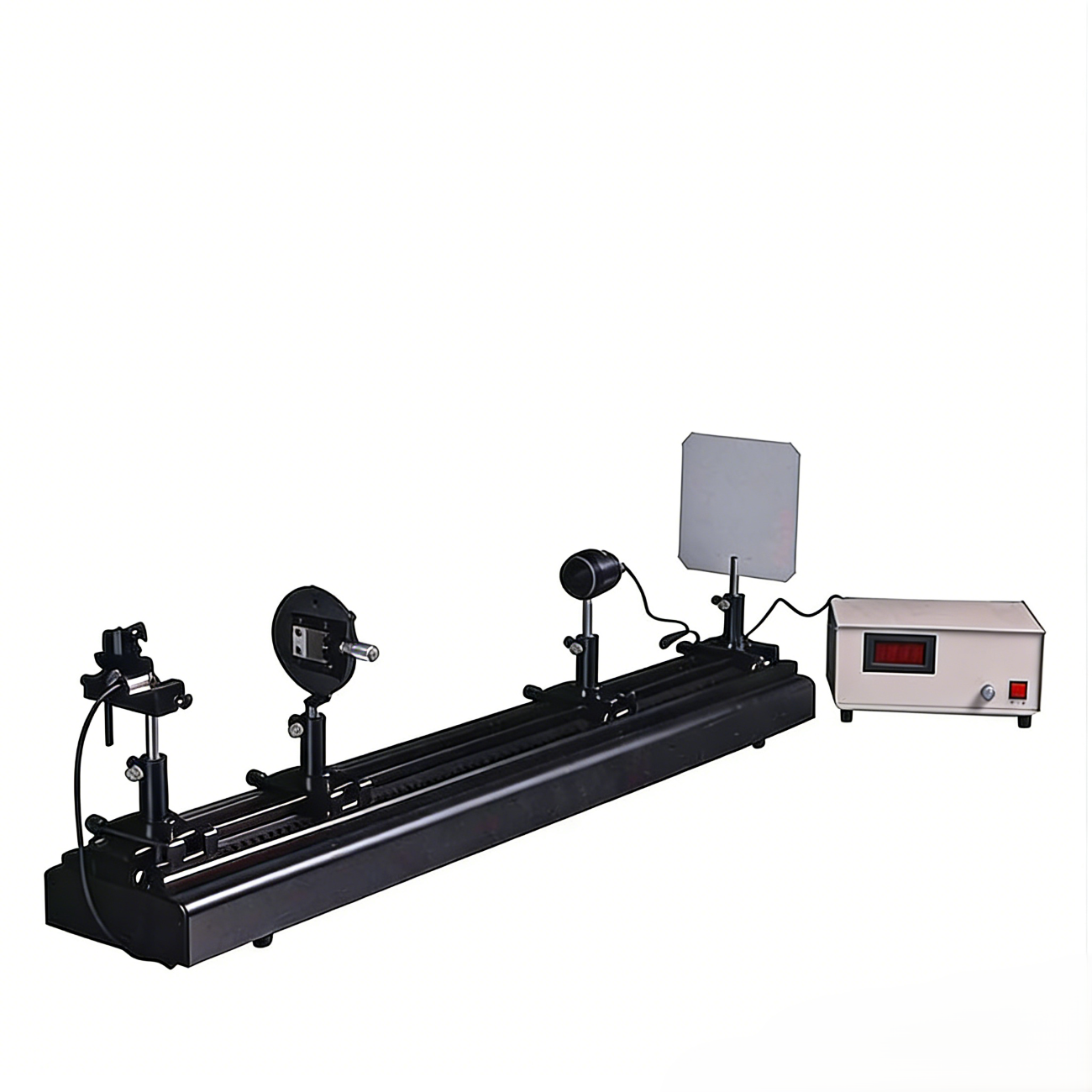
Atomfair-LID638 Interference and Diffraction Experiment Setup
Product Overview
Atomfair-LID638 Interference and Diffraction Experiment Setup is an integrated optical experimental device that combines light interference and diffraction functions. It is engineered to meet the demands of basic optical experiment teaching and research, enabling seamless integrated operation of multiple classic optical experiments with standardized components and reliable performance.
Key Experimental Capabilities
This setup supports two core categories of fundamental optical experiments, covering classic optical theories and practical operational scenarios:
- Young’s Double-Slit Interference Experiment & Fresnel Biprism Interference Experiment
- Fraunhofer Single-Slit Diffraction Experiment
Standard Configuration & International Standard Specifications
| Item No. | Component Name | International Standard Specifications |
|---|---|---|
| 1 | Guide Rail & Slide Seat | Material: Hard Aluminum; Length: 1.2m; Straightness: 2mm; Profile Width: 20mm; Includes Standard Type and Transverse Adjustment Type |
| 2 | Light Source | Mini Illuminating Lamp (DC 3V), Low-Pressure Sodium Lamp (Power: 20W) |
| 3 | Lenses | Focal Length: 50mm, 150mm, 300mm |
| 4 | Transmission Aperture | Diameter: 12mm |
| 5 | Single-Slit Plate | Slit Width: 0.2mm |
| 6 | Optical Components | Biprism, Reading Microscope, Double Slit |
| 7 | Adjustment Frames | Micrometer Eyepiece Frame, Biprism Adjustment Frame, Adjustable Slit, Lens Frame |
Product Basic Information
- Product Type: Optical experimental device for interference, diffraction, and polarization applications
- Release Date: July 21, 2017
Important Notes
- The above configurations and parameters are for reference only. Actual product specifications shall be subject to the packing list.
- Minor adjustments to product configurations may be implemented without prior notice.
Application Scenarios
- Educational Institutions: Perfect for physics laboratories in middle schools, colleges, and universities. It supports optical experiment teaching courses, helping students intuitively grasp the principles of light interference and diffraction through hands-on operations.
- Research Institutions: Suitable for basic optical research projects, providing stable and precise experimental conditions for researchers to conduct related experimental studies and data collection.
- Training Centers: Applicable to professional technical training institutions focusing on optical technology. It assists trainees in mastering practical operational skills of optical experiments, laying a solid foundation for professional development.
If you’re interested, have any questions, or have specific customization requirements, please feel free to contact us at inquiry@atomfair.com.
Which light source should I use for Young's double-slit interference—the mini lamp or the low-pressure sodium lamp?
Use the low-pressure sodium lamp (20W) for monochromatic interference to produce clear, stable fringes without chromatic dispersion. The mini illuminating lamp (DC 3V) is useful for initial alignment and white-light interference demonstration, but its broad spectrum will cause overlapping patterns. The product includes both sources to support versatile teaching.
What additional optical components are needed to perform Fresnel biprism interference with this setup?
The standard configuration includes a biprism, reading microscope, double slit, single slit, and lenses with focal lengths of 50 mm, 150 mm, and 300 mm. For the Fresnel biprism interference experiment, the included biprism and a suitable lens (e.g., 150 mm focal length) are sufficient; no additional components are required. The 1.2 m guide rail provides adequate length for the arrangement.
What is the straightness tolerance of the guide rail and why is it important?
The guide rail has a straightness of 2 mm over its 1.2 m length, as specified. This ensures that optical components mounted on slide seats maintain precise alignment, which is critical for producing reliable interference and diffraction patterns. While 2 mm is standard for educational setups, any deviation can introduce systematic errors in fringe measurements.
The Atomfair-LID638 integrates Young's double-slit, Fresnel biprism, and Fraunhofer single-slit experiments into a single rail-based optical system, with a 1.2 m hard aluminum guide rail and interchangeable components that support both teaching and basic research. Its standardized 20 mm profile and included micrometer eyepiece enable precise fringe measurement, though the 2 mm rail straightness and manual alignment of the biprism and slits impose practical limits on high-precision quantitative work.
Positive
- Integrated multi-experiment optical rail: The 1.2 m hard aluminum guide rail with 20 mm profile width supports Young's double-slit, Fresnel biprism, and Fraunhofer single-slit experiments on a single aligned platform, reducing setup time and improving experimental consistency.
- Precision measurement with micrometer eyepiece: The included micrometer eyepiece frame enables quantitative fringe spacing measurements, which is essential for determining wavelengths or slit separation in both interference and diffraction configurations.
Trade-offs
- Rail straightness limits high-precision work: The guide rail's 2 mm straightness tolerance over 1.2 m may introduce alignment errors that affect fringe position accuracy, making the system less suitable for experiments requiring sub-millimeter optical path alignment.
- Manual component alignment required: The biprism, slits, and lenses must be manually positioned and adjusted using the provided frames, which demands operator skill and can introduce variability in results, especially for novice users.
Every advanced material, component, equipment, and instrument in our catalog is backed by rigorous testing. We maintain strict internal quality management frameworks and align with CE conformity metrics to deliver transparent, reproducible performance data via our public open-science repository.
To request raw batch performance data, submit formal vendor registration paperwork, or execute a fast-turnaround R&D manufacturing loop, contact us at inquiry@atomfair.com.
Item is dispatched under the Atomfair Shipping & Delivery Framework (Free worldwide shipping on orders over $59 USD excl. heavy equipment). Return is governed by the Atomfair Return & Refund Policy (7-day technical return window).