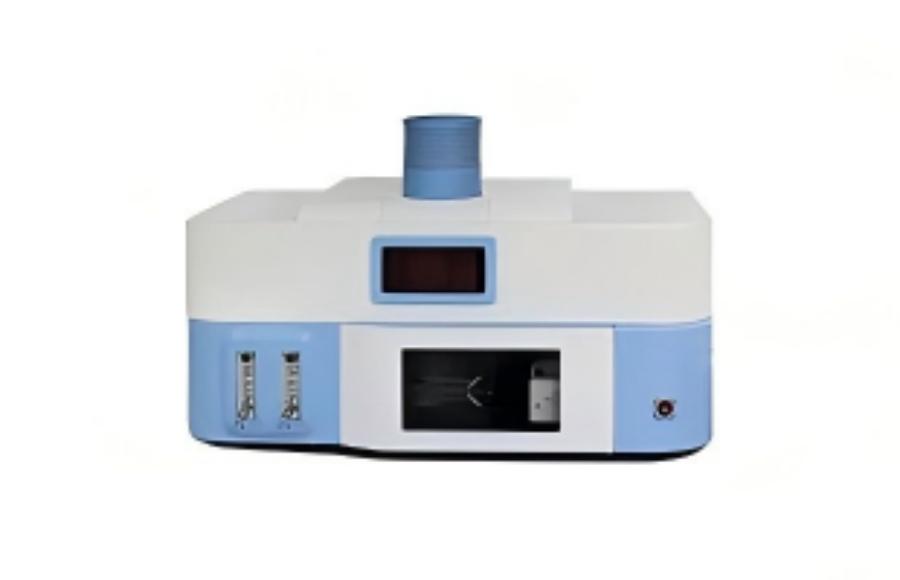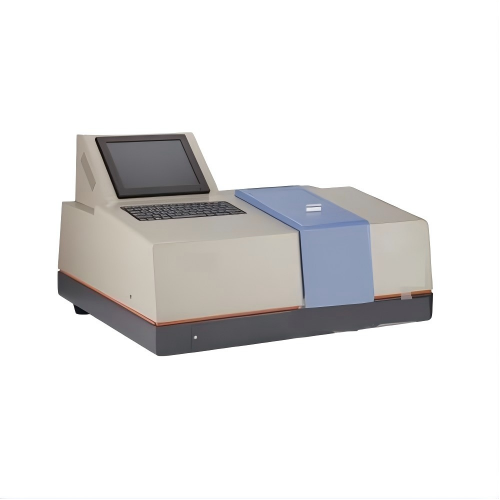
Atomfair TFD-4000 Free Silicon Dioxide Tester in Dust
1. Product Overview
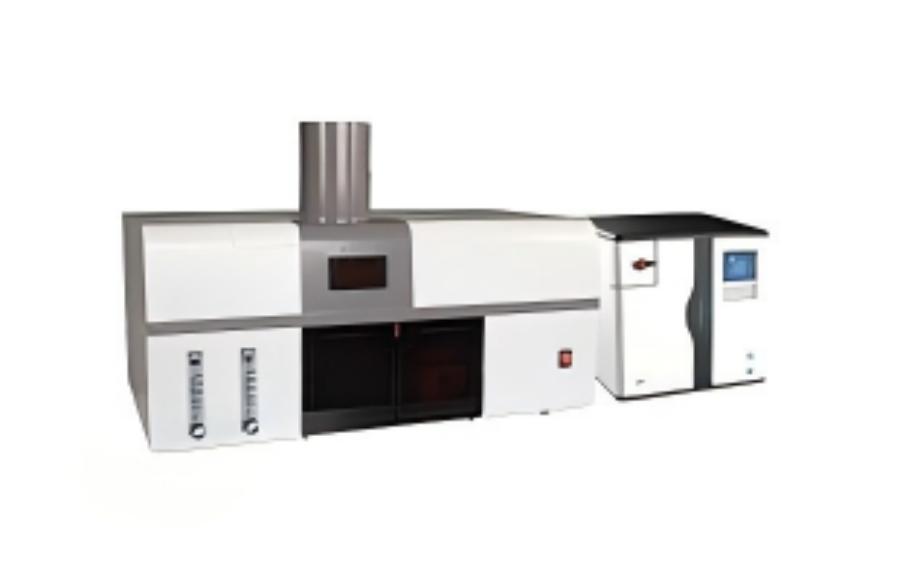
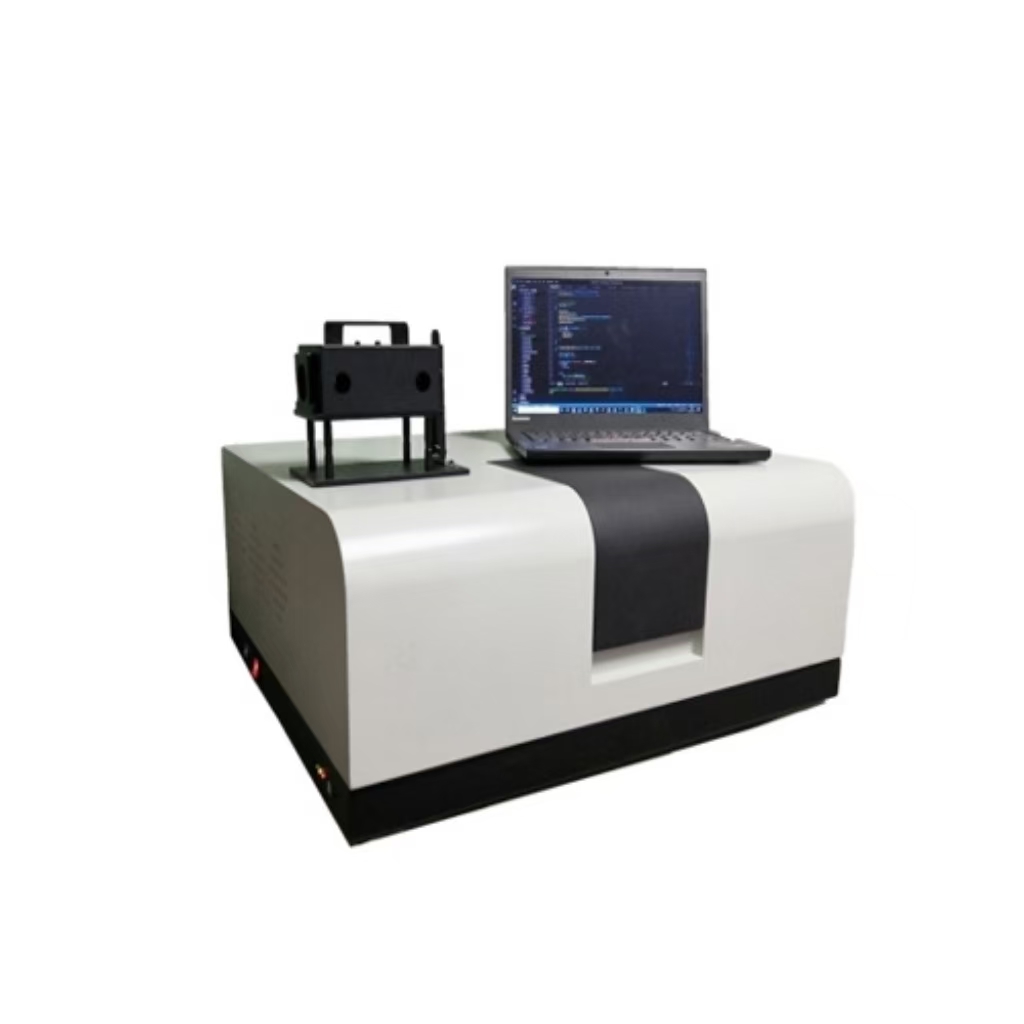
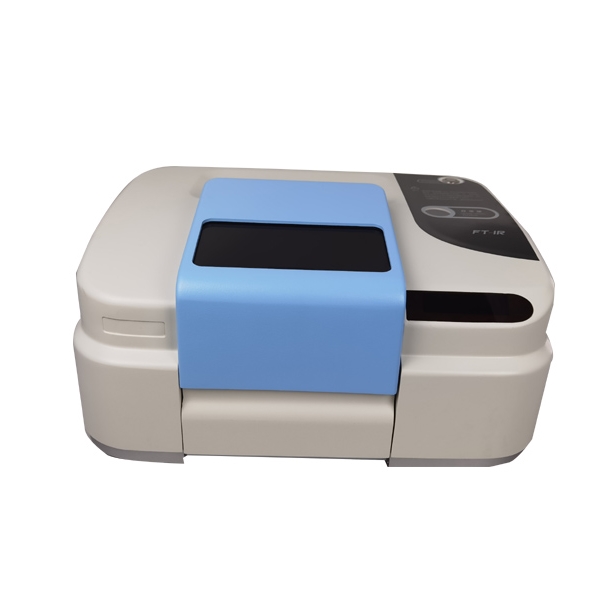
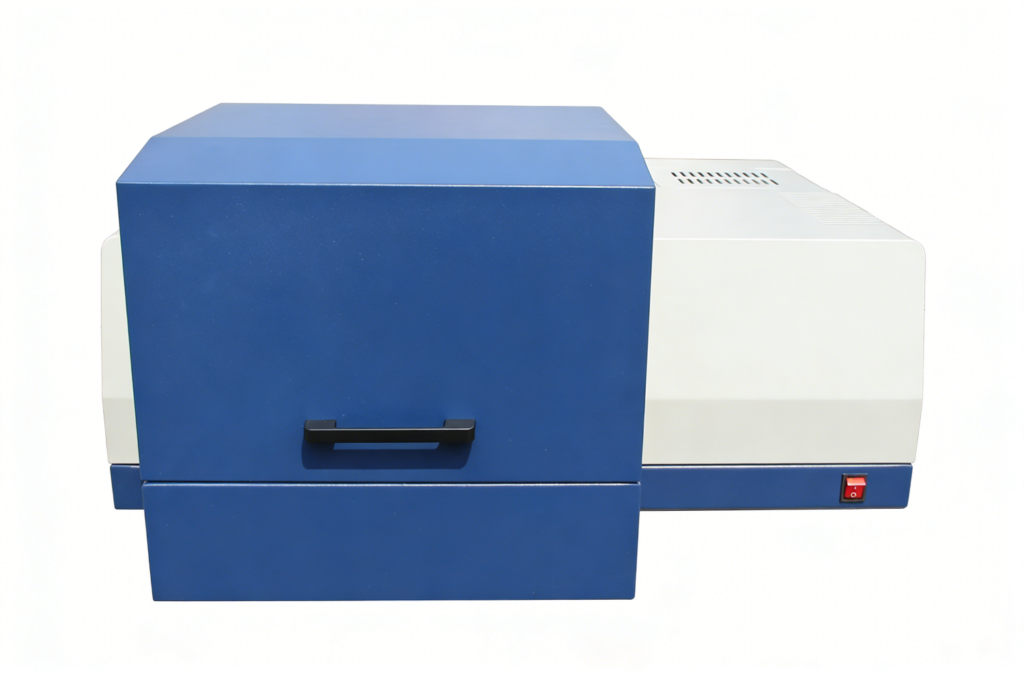
TFD-4000 Free Silicon Dioxide Tester in Dust is an industry-specific upgraded product based on the original infrared spectrophotometer, specially developed by Atomfair. Its core purpose is to analyze and test dust in the production environment of electric power, coal and other industries, which can accurately and quantitatively detect the content of free silicon dioxide in dust, meet the requirements of relevant international standards, and adapt to the batch detection demand in industrial scenarios.
2. Core Data Processing Functions
- Efficiently process analysis results, support peak marking, peak area integration, baseline calibration and other core operations;
- Quickly create and print experimental reports to simplify the data output process;
- Store experimental results in standard file format for easy data sharing and subsequent processing;
- Support storage and printing of spectral files and retain original test data;
- With spectral background baseline memory, baseline correction and spectral data accumulation operation functions;
- Achieve %T & ABS conversion to adapt to different data processing requirements.
3. Performance Indicators
| Item | Specification & Parameters |
|---|---|
| Wavelength range | 2.5-25μm (Wave number range: 4000-400cm⁻¹) |
| Wave number accuracy | 2000-400cm⁻¹: ≤±2 cm⁻¹; 4000-2000cm⁻¹: ≤±4 cm⁻¹ |
| Scan mode | Full wavelength scanning |
| Slit adjustment | 5 gears adjustable |
| Stray light | 4000-650cm⁻¹: ≤0.5%T; 650-400cm⁻¹: ≤1%T |
| Transmittance accuracy | ≤±0.2%T (excluding noise level) |
| Sample particle size requirement | Ground to less than 8μm |
| Built-in configuration | High configuration computer with built-in Windows XP operating system, Chinese operation platform and USB2.0 interface |
4. Core Characteristics of the Instrument
- Excellent detection performance: Fast detection speed and high sensitivity, can accurately identify three crystal forms of free silicon dioxide;
- Outstanding cost performance: Low equipment investment cost, simple and easy to understand operation, suitable for automatic analysis scenarios with a wide range of applications;
- Strong environmental adaptability: Adopt robust design and practical appearance size, can adapt to various analysis and test environments; moving parts are composed of electromagnetic drive device and precision mechanical guide rail, which reduce the requirements for the use environment;
- Advanced signal processing: Integrate detection components, signal amplifier and 24-bit analog-to-digital converter, directly output digital signals (avoid attenuation and interference problems in analog signal transmission), greatly reduce electronic noise; 24-bit analog-to-digital converter improves the weak signal detection capability of the system by an order of magnitude to ensure detection accuracy;
- Optimized operation experience: Equipped with high-performance computer for instrument control and data processing, with Windows full Chinese operation interface, easy to get started;
- Stable light source performance: High-intensity light source with spherical reflection device can produce uniform and stable infrared radiation to provide guarantee for accurate detection.
If you’re interested, have any questions, or have specific customization requirements, please feel free to contact us at inquiry@atomfair.com.
The instrument requires a controlled environment with stable temperature and humidity to maintain optical alignment and detection accuracy. Sample preparation must reduce particle size to below 8 μm to ensure reliable quantitative analysis.
- Sample Particle Size Constraint: Grind dust samples to a particle size of less than 8 μm before analysis to meet the instrument's specified measurement accuracy.
- Environmental Adaptability: The instrument's electromagnetic drive and precision guide rail design reduce sensitivity to environmental vibrations, but stable temperature and humidity are still required for optimal performance.
- Signal Processing Constraint: The built-in 24-bit analog-to-digital converter minimizes electronic noise, but proper grounding and shielding of the USB2.0 interface are necessary to preserve signal integrity.
This procedure outlines the steps to prepare and analyze dust samples for free silicon dioxide content using the TFD-4000. It covers sample preparation, instrument setup, and data processing.
Required Equipment: TFD-4000 Free Silicon Dioxide Tester in Dust, High-performance computer with Windows operating system, Mortar and pestle or grinder for sample preparation
- Prepare the sample
Grind the dust sample to a particle size of less than 8 μm using a mortar and pestle or a mechanical grinder. - Initialize the instrument
Turn on the TFD-4000 and the connected computer, then launch the control software to allow the system to warm up and perform baseline calibration. - Set the scan parameters
Configure the wavelength range (4000-400 cm⁻¹) and select the appropriate slit adjustment gear in the software according to the analysis requirements. - Measure the background spectrum
Place a blank reference in the sample holder and record the background spectrum to establish a baseline for the analysis. - Analyze the sample
Replace the blank with the prepared dust sample and start the full wavelength scan to acquire the sample spectrum. - Process the spectral data
Use the software's peak marking, baseline correction, and peak area integration functions to quantify the free silicon dioxide content. - Generate and store the report
Create the experimental report and save the spectral data in the standard file format for future reference and data sharing.
Can the TFD-4000 differentiate between the three crystal forms of free silicon dioxide?
Yes, the TFD-4000 can accurately identify three crystal forms of free silicon dioxide. It achieves this through full wavelength scanning across the 2.5–25 μm range (4000–400 cm⁻¹) with 5-gear slit adjustment and stray light levels ≤0.5%T in the 4000–650 cm⁻¹ region, enabling precise spectral discrimination of polymorphs.
What sample particle size is required for accurate analysis with the TFD-4000?
The sample must be ground to less than 8 μm. This particle size specification is explicitly stated in the instrument's performance indicators to minimize scattering effects and ensure reliable infrared transmission measurements during free silica quantification.
What operating system and data interface does the TFD-4000 use for data handling?
The TFD-4000 integrates a high-configuration computer running a Windows XP operating system with a Chinese operation platform and USB2.0 interface. This setup supports spectral file storage, baseline correction, %T/ABS conversion, and report generation, though the legacy OS may require isolation from modern networks.
The TFD-4000 Free Silicon Dioxide Tester in Dust is an infrared spectrophotometer-based system engineered for quantitative analysis of free silica in industrial dust samples, offering full-wavelength scanning from 4000 to 400 cm⁻¹ with a 24-bit ADC for enhanced weak-signal detection. Its integrated high-configuration computer with Windows XP and Chinese operation platform supports batch testing in electric power and coal production environments, though it requires sample grinding to <8 μm and operates within a mid-infrared spectral range.
Positive
- High-sensitivity 24-bit ADC: The 24-bit analog-to-digital converter improves weak signal detection capability by an order of magnitude, ensuring accurate quantification of free silicon dioxide even at low concentrations.
- Robust design for industrial environments: Electromagnetic drive and precision guide rails reduce environmental sensitivity, while the high-intensity spherical reflector light source provides stable infrared radiation, supporting reliable operation in dusty production settings.
Trade-offs
- Sample preparation required: Accurate analysis requires dust samples to be ground to less than 8 μm, adding a manual preparation step that may increase processing time and require additional milling equipment.
- Legacy operating system dependency: The built-in Windows XP operating system may pose compatibility and security challenges in modern laboratory networks, and the Chinese-only operation platform could limit usability for non-Chinese-speaking operators.
Every advanced material, component, equipment, and instrument in our catalog is backed by rigorous testing. We maintain strict internal quality management frameworks and align with CE conformity metrics to deliver transparent, reproducible performance data via our public open-science repository.
To request raw batch performance data, submit formal vendor registration paperwork, or execute a fast-turnaround R&D manufacturing loop, contact us at inquiry@atomfair.com.
Item is dispatched under the Atomfair Shipping & Delivery Framework (Free worldwide shipping on orders over $59 USD excl. heavy equipment). Return is governed by the Atomfair Return & Refund Policy (7-day technical return window).