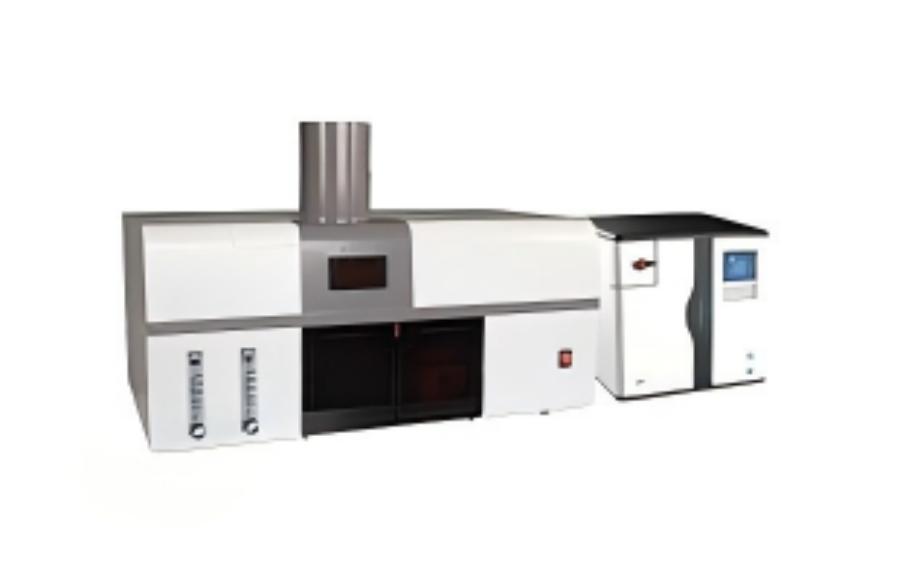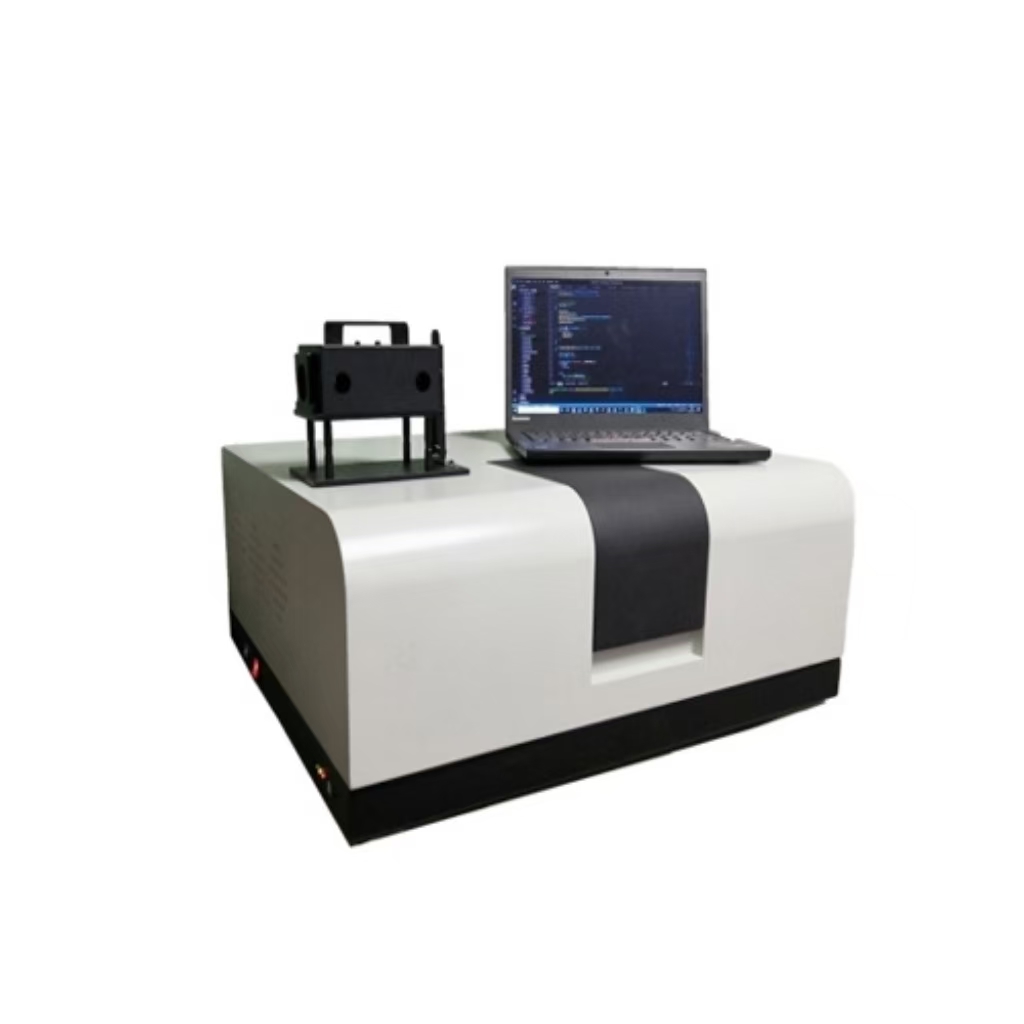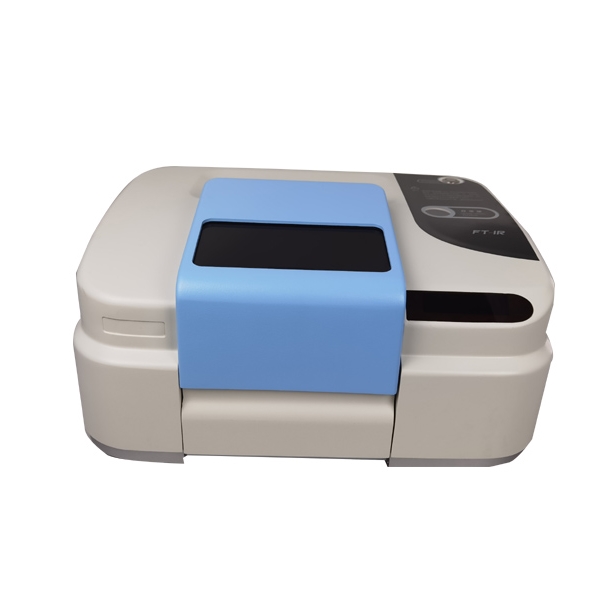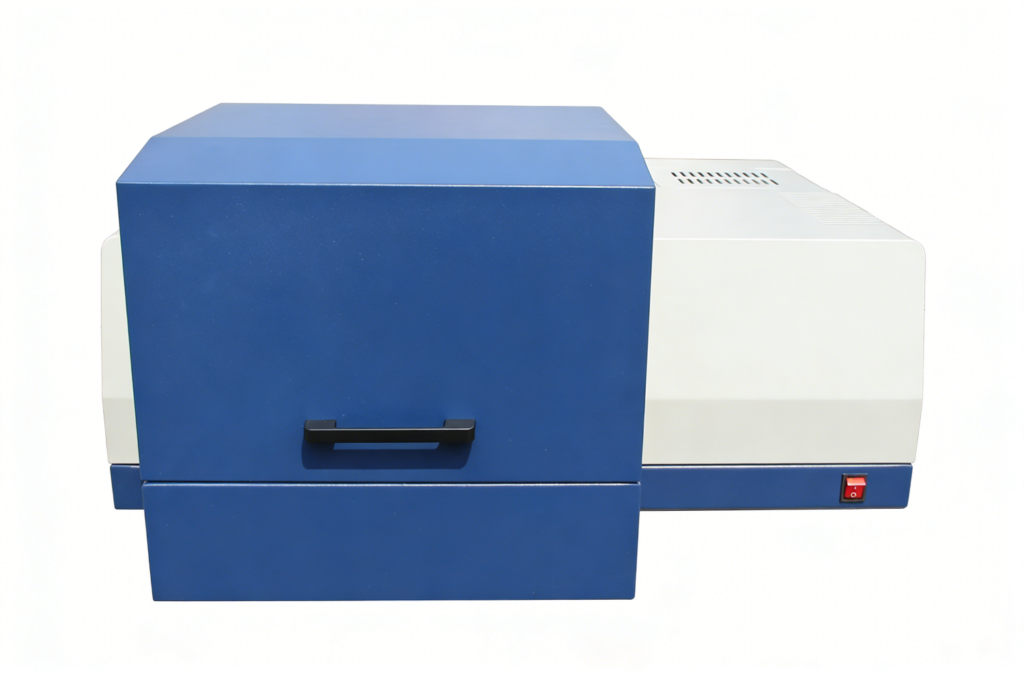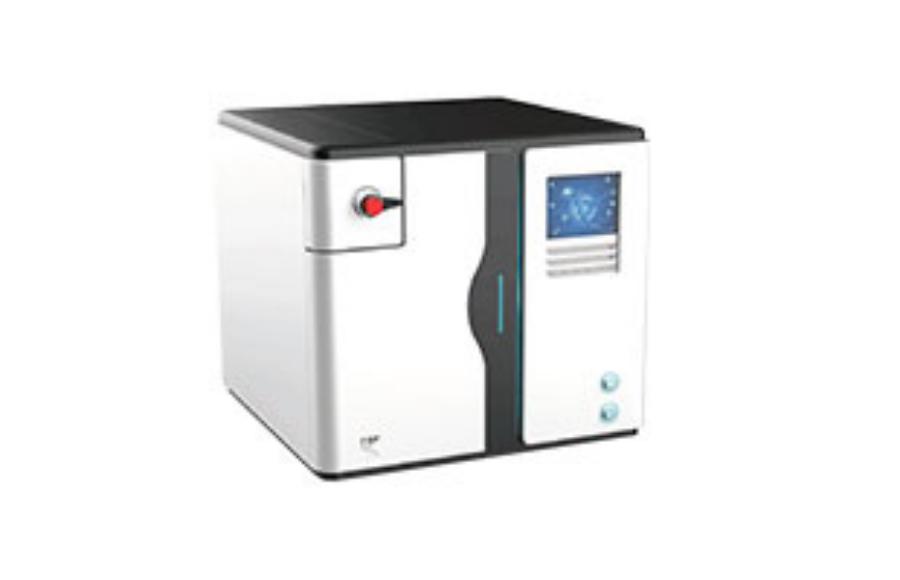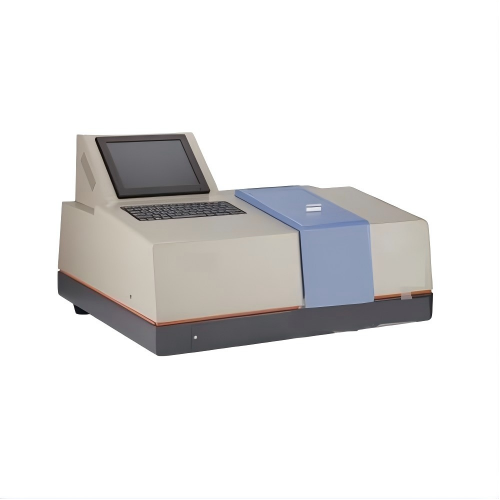
Atomfair Free Silica Tester for Disease Control & Coal Mine
Product Overview
Atomfair Free Silica Tester for Disease Control & Coal Mine is a professional testing equipment developed in accordance with international general standards, designed based on the principle of infrared spectrophotometry. Tailored for disease control centers, occupational health testing, mines, coal mines, power plants, boiler factories and other industries, it focuses on the analysis of free silica content in respirable dust in production environments. Equipped with a high-end built-in computer, no additional configuration is required, featuring fast detection speed, short cycle, high accuracy and easy operation, which can meet the needs of batch testing.
Core Functions
- Precise Quantitative Detection: Can quickly identify three crystal forms of free silica, realizing quantitative analysis by measuring the absorbance of specific absorption bands with reliable data.
- Batch Efficient Analysis: Supports batch sample testing, combined with full Chinese operation interface and intelligent data processing functions to greatly improve detection efficiency.
- Comprehensive Data Processing: Includes peak marking, baseline calibration, spectral data accumulation calculation, %T & ABS conversion and other functions, enabling quick creation and printing of experimental reports.
- Stable Data Transmission: Equipped with USB2.0 interface, spectral files can be stored and printed for convenient data sharing and filing.
Technical Parameters (International Standard)
| Item</ | Specification</ |
|---|---|
| Wavelength Range | 2.5-25μm (Wave Number Range: 4000-400cm⁻¹) |
| Wave Number Accuracy | ≤±2cm⁻¹ in 2000-400cm⁻¹ range; ≤±4cm⁻¹ in 4000-2000cm⁻¹ range |
| Scan & Slit | Full wavelength scanning, five adjustable gears of slit program |
| Stray Light | ≤0.5%T in 4000-650cm⁻¹ range; ≤1%T in 650-400cm⁻¹ range |
| Transmittance Accuracy | ≤±0.2%T (Excluding noise level) |
| Sample Requirement | Particle size less than 8μm after grinding |
| System Configuration | Built-in high-end computer, equipped with Windows XP operating system, Chinese operation platform |
| Data Interface | USB2.0 |
Product Features
- Excellent Detection Performance: High sensitivity and outstanding signal-to-noise ratio, 24-bit analog-to-digital converter outputs digital signals directly, reducing electronic noise and improving weak signal detection capability by an order of magnitude.
- Easy to Operate: No additional computer configuration required, full Chinese operation interface is intuitive and easy to understand, no complex professional training required to get started.
- Strong Environmental Adaptability: Rugged design with practical appearance size, moving parts consist of electromagnetic drive device and precision mechanical guide rail, reducing requirements for the use environment.
- Stable & Reliable Operation: High-intensity light source with spherical reflection device obtains uniform and stable infrared radiation, ensuring continuous and efficient detection process.
- Cost-Effective: Low equipment investment cost, suitable for automatic analysis scenarios, balancing practicality and cost-effectiveness.
Supporting Accessories
Powder tablet press, tablet mold, agate mortar, infrared oven (or electric drying oven), potassium bromide powder, explosion-proof dust sampler, one-hundred-thousandth electronic balance (0.01mg), high-temperature electric furnace, α-SiO₂ standard (purity above 99%)
International Universal Detection Principle (Infrared Spectrophotometry)
α-quartz exhibits strong specific absorption bands in the infrared spectrum at 12.5μm (800cm⁻¹), 12.8μm (780cm⁻¹) and 14.4μm (694cm⁻¹). Within a certain range, the absorbance value has a linear relationship with the mass of α-quartz, and quantitative determination can be achieved by measuring the absorbance.
Key Detection Notes
- Detection Capability: α-quartz detection limit as low as 0.01mg, relative standard deviation (RSD) of 0.64%~1.41%, average recovery rate of 96.0%~99.8%.
- Sample Preparation: Samples and standard quartz dust need to be fully ground to ensure that particles smaller than 5μm account for more than 95% to ensure detection accuracy.
- Environmental Control: The laboratory temperature is recommended to be controlled at 18℃~24℃ with relative humidity less than 50% to reduce random measurement errors.
- Interference Avoidance: The ashing temperature of coal dust samples should be less than 600℃ to avoid decomposition interference of kaolin components; if the dust contains clay, mica and other components, the 694cm⁻¹ standard curve can be used for quantitative analysis.
If you’re interested, have any questions, or have specific customization requirements, please feel free to contact us at inquiry@atomfair.com.
The laboratory temperature must be controlled at 18°C to 24°C with relative humidity below 50% to minimize random measurement errors. Ashing temperature for coal dust samples must remain below 600°C to prevent decomposition interference from kaolin components.
- Sample Preparation Constraint: Samples must be ground to ensure that over 95% of particles are smaller than 5 μm to achieve specified detection accuracy.
- Interference Avoidance Constraint: If dust contains clay or mica, use the 694 cm⁻¹ standard curve for quantitative analysis to avoid interference from these components.
- Detection Performance Constraint: The α-quartz detection limit is 0.01 mg, with a relative standard deviation of 0.64% to 1.41% and average recovery rate between 96.0% and 99.8%.
Grind the sample to ensure that over 95% of particles are below 5 μm for accurate detection. Maintain the laboratory at 18°C to 24°C and relative humidity below 50% to reduce measurement errors.
Required Equipment: Agate mortar, Powder tablet press, Infrared oven or electric drying oven, One-hundred-thousandth electronic balance (0.01 mg)
- Grind the sample
Grind the collected dust sample in an agate mortar until over 95% of particles are smaller than 5 μm. - Dry the sample
Dry the ground sample in an infrared oven or electric drying oven to remove any residual moisture. - Weigh the sample
Weigh an appropriate amount of dried sample using a one-hundred-thousandth electronic balance (0.01 mg precision). - Prepare KBr pellet
Mix the weighed sample with potassium bromide powder and press the mixture into a transparent pellet using the tablet press. - Load and scan sample
Place the prepared pellet into the sample holder and initiate the full wavelength scan on the built-in computer. - Analyze spectral data
Use the software to perform peak marking, baseline calibration, and absorbance-to-transmittance conversion for quantitative analysis.
What is the detection limit and precision of the Atomfair Free Silica Tester for α-quartz analysis?
The Atomfair Free Silica Tester achieves an α-quartz detection limit as low as 0.01 mg. Its relative standard deviation (RSD) ranges from 0.64% to 1.41%, with an average recovery rate between 96.0% and 99.8%, ensuring high accuracy and reliability for quantitative analysis.
What sample preparation and particle size constraints are required for accurate free silica measurement?
Samples must be ground to a particle size less than 8 μm, with more than 95% of particles smaller than 5 μm to ensure detection accuracy. Additionally, for coal dust samples, the ashing temperature must be kept below 600°C to avoid interference from kaolin decomposition.
What are the recommended environmental conditions for operating the Atomfair Free Silica Tester?
The laboratory should maintain a temperature between 18°C and 24°C with relative humidity below 50% to minimize random measurement errors. The instrument’s rugged design and electromagnetic drive reduce sensitivity to environmental variations, ensuring stable operation.
The Atomfair Free Silica Tester (SKU AFMSGNUT834) is a built-in computer infrared spectrophotometer designed for quantitative α-quartz analysis in respirable dust, with a detection limit of 0.01 mg and RSD of 0.64–1.41%, but requires strict sample grinding to <5 μm for 95% of particles and controlled lab conditions (18–24°C, <50% RH) to maintain accuracy.
Positive
- High-sensitivity 24-bit signal chain: The 24-bit analog-to-digital converter outputs digital signals directly, reducing electronic noise and improving weak-signal detection capability by an order of magnitude, which is critical for trace-level α-quartz quantification in respirable dust.
- Integrated computer with batch workflow: The built-in high-end computer with a Chinese-language interface supports batch sample testing, peak marking, baseline calibration, and automatic report generation, enabling efficient processing of multiple samples without additional PC configuration.
Trade-offs
- Strict sample preparation required: Accurate results require grinding samples and standard quartz dust so that particles smaller than 5 μm account for more than 95% of the distribution; failure to achieve this compromises the quantitative accuracy of the infrared method.
- Sensitive to environmental and matrix interferences: Laboratory temperature must be maintained at 18–24°C with relative humidity below 50% to minimize random errors, and coal dust ashing must stay below 600°C to avoid decomposition interference from kaolin; clay or mica components require using the 694 cm⁻¹ standard curve instead.
Every advanced material, component, equipment, and instrument in our catalog is backed by rigorous testing. We maintain strict internal quality management frameworks and align with CE conformity metrics to deliver transparent, reproducible performance data via our public open-science repository.
To request raw batch performance data, submit formal vendor registration paperwork, or execute a fast-turnaround R&D manufacturing loop, contact us at inquiry@atomfair.com.
Item is dispatched under the Atomfair Shipping & Delivery Framework (Free worldwide shipping on orders over $59 USD excl. heavy equipment). Return is governed by the Atomfair Return & Refund Policy (7-day technical return window).