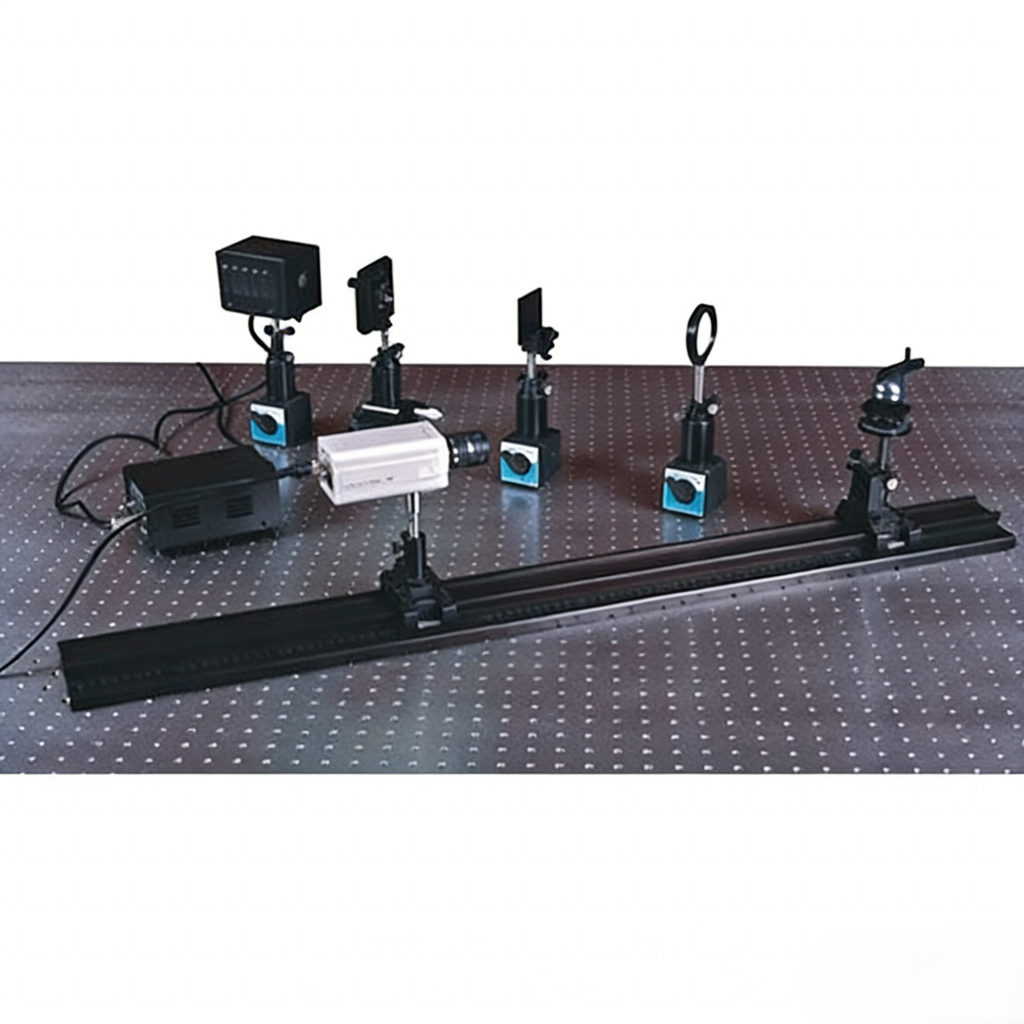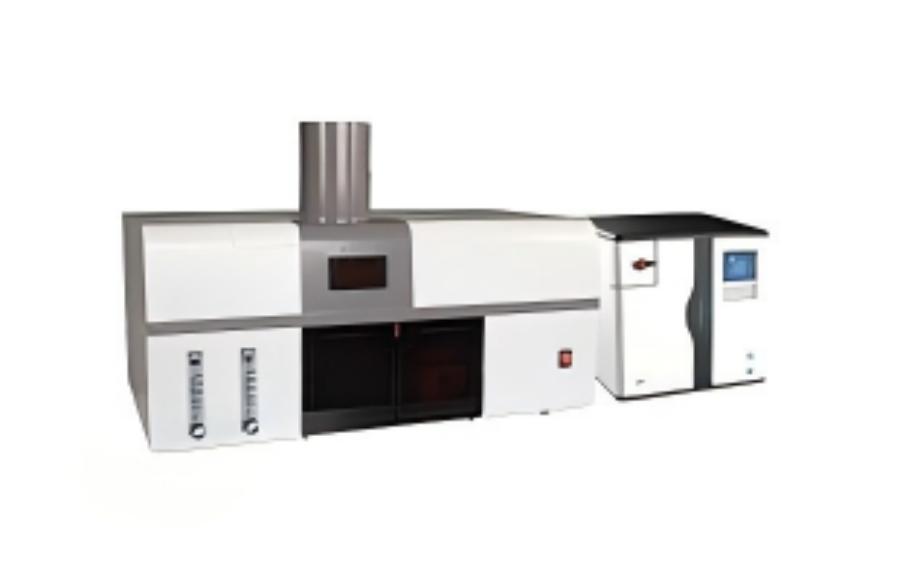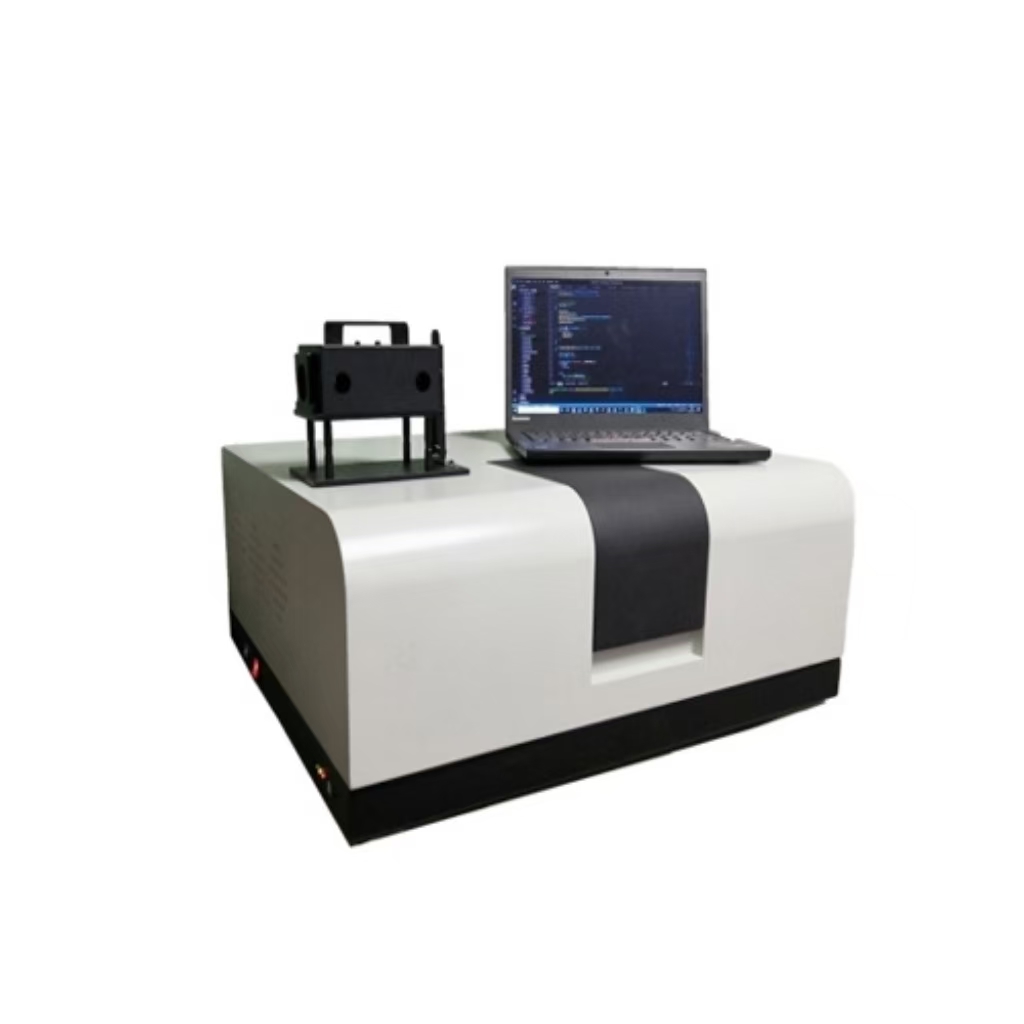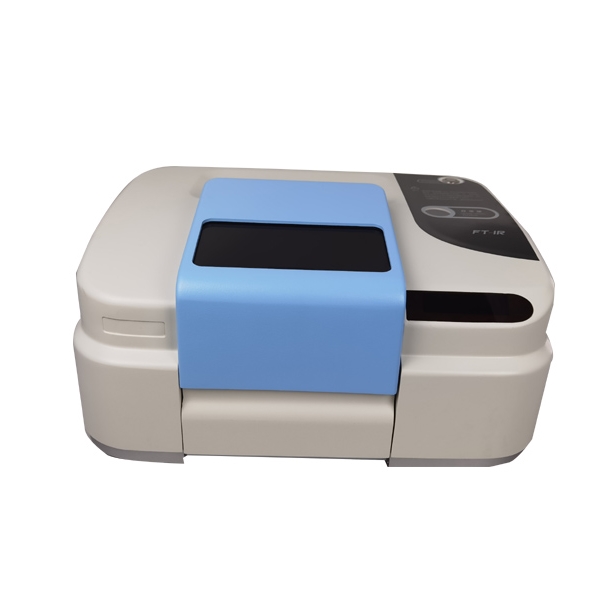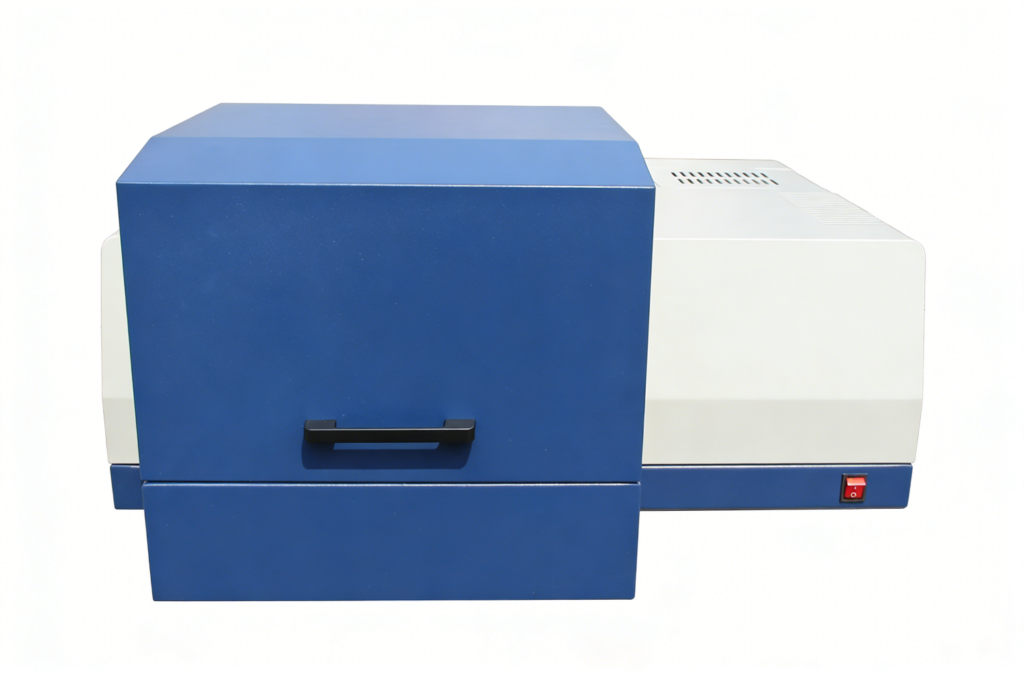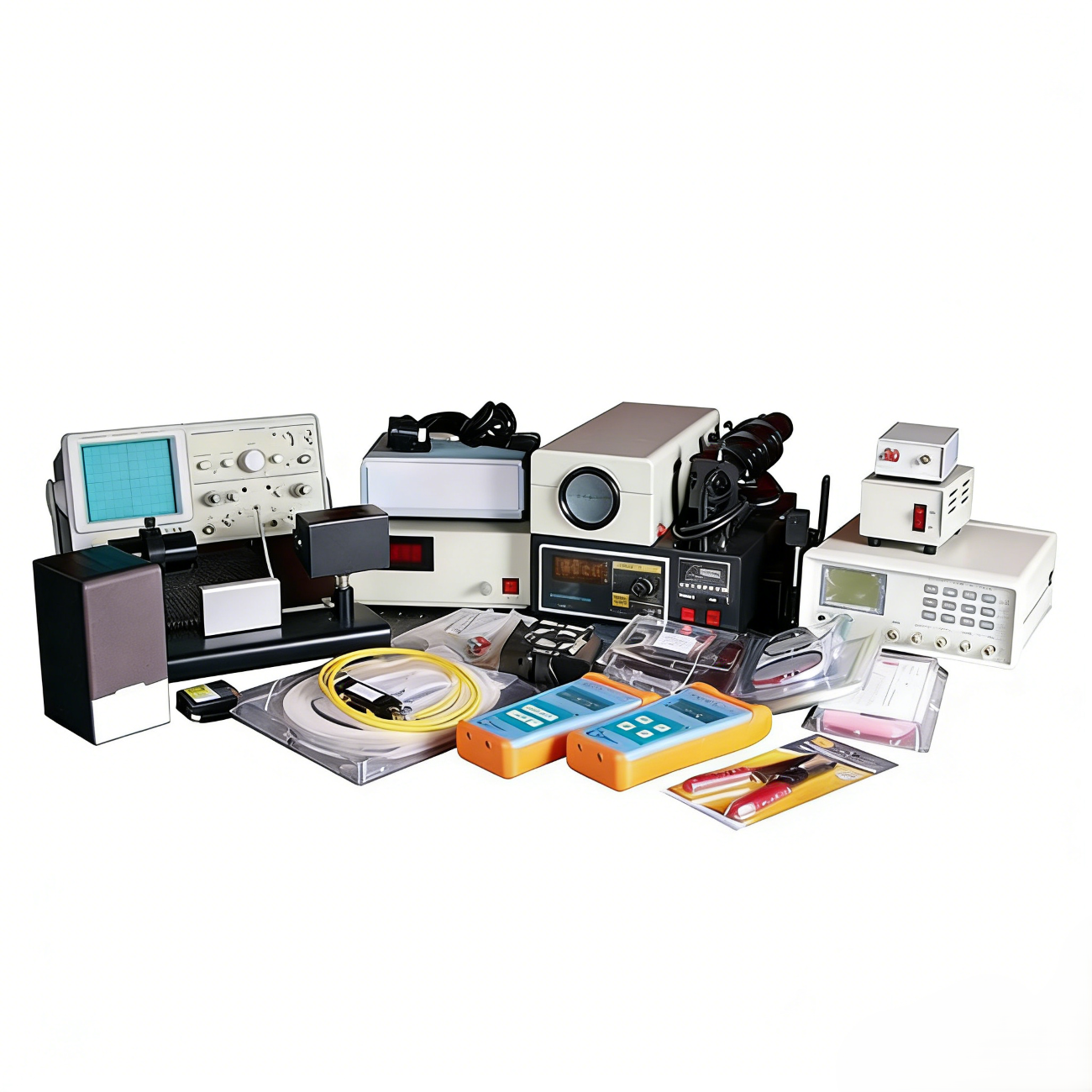
Atomfair-FOIC-ES-739 Fiber Optic Information and Communication Experimental System
Product Overview
Atomfair-FOIC-ES-739 is a professional experimental system designed for fiber optic sensing and communication applications. Developed based on the principles of fiber optics, fiber optic sensing, and optical communication, this system is specifically crafted for students to explore the cutting-edge role of fiber optics in modern technological advancement. It enables learners to grasp core theories and practical operational skills, laying a solid foundation for their academic and professional development. With its innovative content, compact structure, diverse functions, and close integration with teaching scenarios, it stands as an ideal educational tool for fiber optic-related courses.
Key Features
- Teaching-Oriented Design: The system is highly compatible with educational needs, featuring a user-friendly and practical design that bridges theoretical knowledge with hands-on experimentation.
- Comprehensive Experimental Coverage: Includes 15 core experiments covering multiple learning dimensions: 4 basic fiber optics experiments, 5 fiber optic component experiments, 3 fiber optic sensor experiments, and 3 optical communication principle experiments.
- Multi-Wavelength Support: Enables fiber optic sensing and communication experiments at four wavelengths (λ=632.8nm, 650nm, 1310nm, 1550nm), adapting to various experimental requirements and application scenarios.
Detailed Experimental Contents
- Fiber Optics Basic Knowledge Demonstration Experiment
- Fiber Optic and Light Source Coupling Method Experiment
- Multimode Fiber Numerical Aperture (NA) Measurement Experiment
- Fiber Optic Transmission Loss Characteristics and Measurement Experiment
- Fiber Optic Splitter Parameter Measurement Experiment
- Adjustable Optical Attenuator and Parameter Measurement Experiment
- Fiber Optic Isolator and Parameter Measurement Experiment
- Fiber Optic Switch Experiment
- Wavelength Division Multiplexing (WDM) Principle Experiment
- M-Z Fiber Optic Interferometer Experiment
- Fiber Optic Temperature Sensing Principle Experiment
- Fiber Optic Pressure Sensing Principle Experiment
- Optical Transmitter Extinction Ratio Measurement Experiment
- Erbium-Doped Fiber Amplifier (EDFA) Principle Experiment
- Open-Circuit Audio Analog Signal Transmission Experiment
Core Configuration & International Standard Specifications
| No. | Name | Specifications |
|---|---|---|
| 1 | Main Unit | 633nm single-mode splitter, temperature control system, pressure control system, fiber optic coupling frame |
| 2 | Handheld Light Source | Wavelength: 1310/1550nm; Power: >-8.0dBm; Modulation Modes: CW/270Hz/1kHz/2kHz |
| 3 | Handheld Optical Power Meter | Power Range: -70~+6dBm; Wavelength Range: 800~1700nm (850, 980, 1310, 1480, 1550nm) |
| 4 | He-Ne Laser | Wavelength: 632.8nm; Power: >1.5mW |
| 5 | Semiconductor Laser | Wavelength: 650nm; With internal modulation input port |
| 6 | High-Stability Light Source | Wavelength: 1310nm; Power: =1dBm; Power Stability (15min): ±0.005dB; Output Power Stability (8h): ±0.03dB |
| 7 | Optical Power Tester | Power Range: 2W, 20W, 200W, 2mW, 20mW, 200mW (6 adjustable ranges); 3-digit half-digit digital display |
| 8 | Bit Error Rate Tester (BERT) | External Clock Frequency: 2.4Kbps~20Mbps; Internal Clock Frequency: 2.4Kbps, 8Kbps, 16Kbps, 32Kbps, 64Kbps, 512Kbps, 2048Kbps, 8192Kbps; Equipped with 2048Kbps rate HDB3 encoder/decoder; Includes RS232 communication port, RS422 test port, RS232 test port, TTL test port |
| 9 | Single-Mode Fiber | Wavelength: 633nm; With FC/PC connector on one end |
| 10 | Multimode Fiber | Wavelength: 633nm; 1km ordinary communication fiber |
| 11 | Erbium-Doped Fiber Amplifier (EDFA) | UK-imported 980nm pump laser; Canada-imported high-gain flattened erbium-doped fiber |
| 12 | Beam Expander | Focal Length: f=6.2mm |
| 13 | Optical Isolator | Adapted Wavelength: 1550nm |
Notes
The above configurations and parameters are for reference only. The actual product shall be subject to the packing list. Minor adjustments may be made without prior notice.
If you’re interested, have any questions, or have specific customization requirements, please feel free to contact us at inquiry@atomfair.com.
What is the purpose of the dual laser sources (632.8nm He-Ne and 650nm semiconductor) included in the Atomfair-FOIC-ES-739 experimental system?
The 632.8nm He-Ne laser (power >1.5mW) provides a coherent visible beam ideal for fiber alignment, basic optics demonstrations, and M-Z interferometer experiments. The 650nm semiconductor laser includes an internal modulation input port, making it suitable for optical communication experiments such as open-circuit audio analog signal transmission. Together, they cover both fundamental fiber optics and communication applications within the same system.
Does the Atomfair-FOIC-ES-739 include an erbium-doped fiber amplifier (EDFA) and what are its key components?
Yes. The system includes an EDFA module featuring a UK-imported 980nm pump laser and Canada-imported high-gain flattened erbium-doped fiber. This enables the EDFA principle experiment (experiment 14) and supports advanced optical amplification studies in the 1550nm band.
What are the power stability specifications of the high-stability light source at 1310nm?
The high-stability light source provides an output power of =1dBm at 1310nm. Its power stability is ±0.005dB over 15 minutes and ±0.03dB over 8 hours, ensuring reliable long-term measurements for fiber loss and component characterization experiments.
The Atomfair-FOIC-ES-739 integrates 15 experiments across fiber optics, sensing, and communication, with multi-wavelength support (632.8nm, 650nm, 1310nm, 1550nm) and a BERT supporting up to 20Mbps, making it a comprehensive educational platform. Its EDFA, built with imported components, enables advanced amplifier principle demonstrations, though the system's reliance on multiple light sources and precise fiber handling introduces operational complexity.
Positive
- Multi-wavelength experimental coverage: Supports four wavelengths (632.8nm, 650nm, 1310nm, 1550nm) enabling diverse experiments in sensing and communication, including WDM and EDFA principles, across different spectral windows.
- Comprehensive 15-experiment curriculum: Covers basic fiber optics, component characterization, sensor principles, and communication systems, including BERT with HDB3 encoding and multiple data rates, providing a complete hands-on learning path.
Trade-offs
- Requires multiple precision light sources: The system depends on four separate sources (He-Ne, semiconductor, handheld, and high-stability) each with specific power and stability specs, increasing setup complexity and potential for misalignment during experiments.
- Sensitive to fiber handling and alignment: Experiments involve single-mode and multimode fibers with FC/PC connectors and a beam expander, requiring careful handling and precise coupling to avoid signal loss, especially at 633nm where the single-mode fiber is used.
Every advanced material, component, equipment, and instrument in our catalog is backed by rigorous testing. We maintain strict internal quality management frameworks and align with CE conformity metrics to deliver transparent, reproducible performance data via our public open-science repository.
To request raw batch performance data, submit formal vendor registration paperwork, or execute a fast-turnaround R&D manufacturing loop, contact us at inquiry@atomfair.com.
Item is dispatched under the Atomfair Shipping & Delivery Framework (Free worldwide shipping on orders over $59 USD excl. heavy equipment). Return is governed by the Atomfair Return & Refund Policy (7-day technical return window).