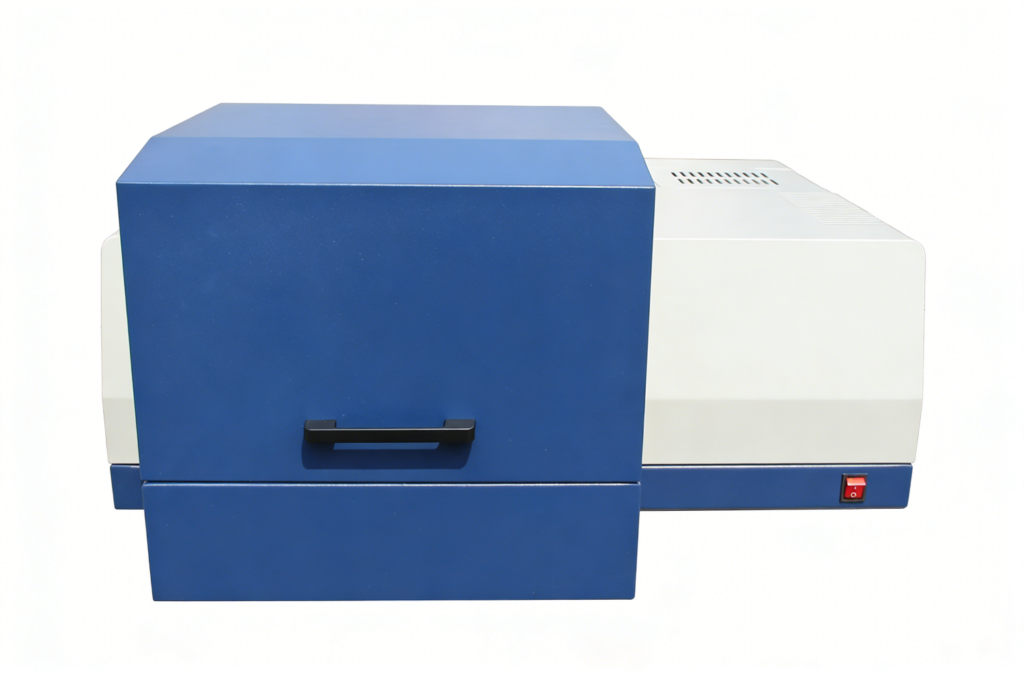
Atomfair Dust Dispersion Measurement System
Product Overview
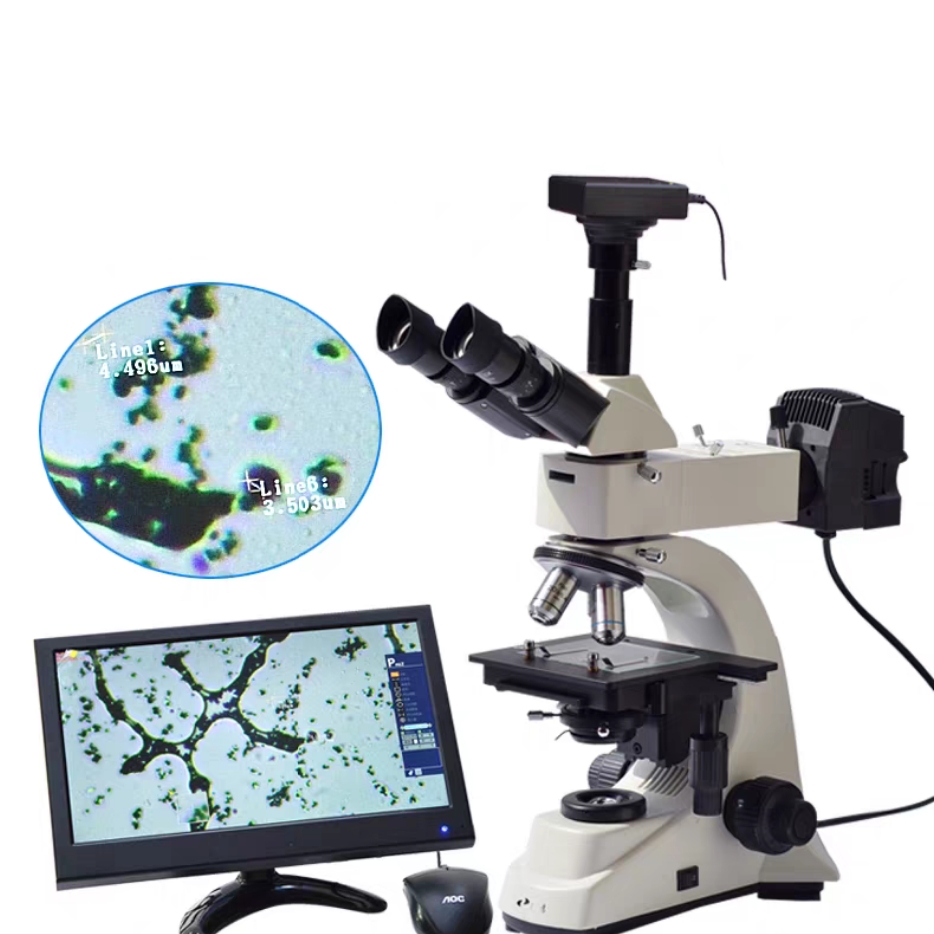
Atomfair Dust Dispersion Measurement System is a professional microscopic image analysis equipment developed in accordance with international general standards, specifically designed for workplace dust testing, focusing on the accurate analysis of key parameters such as dust particle size distribution and quantity ratio. Integrating a high-magnification microscope, high-definition camera and intelligent analysis software, the system supports two detection methods: membrane dissolution smear method and natural sedimentation method. It can automatically count the size, quantity and proportion of dust particles in different ranges, with easy operation and reliable data, providing professional technical support for dust hazard assessment and occupational health protection.
Core Functions
- Precise Particle Analysis: Automatically extract dust particle morphology, calculate parameters such as particle size, area, roundness and aspect ratio, and count the average diameter and proportion of each particle size range;
- Flexible Detection Methods: Compatible with membrane dissolution smear method and natural sedimentation method, adapting to dust sample collection and detection needs in different scenarios;
- Intelligent Data Management: Supports manual addition/deletion and correction of particles, automatically generates standardized test reports, and data can be stored, exported and shared for easy filing and traceability;
- High-Definition Image Acquisition: 12MP high-definition camera (optional 20MP) combined with professional optical system, clearly captures dust particle images to ensure analysis accuracy.
Technical Parameters (International Standard)
| Item | Specification |
|---|---|
| Eyepiece Configuration | Wide-field WF10X (Φ20mm), graticule eyepiece, dust eyepiece |
| Plan Achromatic Objective Lenses | PL 4X/0.10, PL 10X/0.25, PL 40X/0.65 (spring), PL 100X/1.25 (spring, oil); optional PL 20X/0.40 (compatible with five-hole turret) |
| Eyepiece Tube | Trinocular, 30° inclined |
| Turret | Four-hole (optional five-hole) |
| Light Source | 6V 20W halogen lamp, adjustable brightness |
| Condenser | Abbe condenser (N.A.1.25), vertically adjustable |
| Stage | Dual-layer mechanical mobile stage (size: 210mm×140mm, moving range: 75mm×50mm) |
| Focusing Mechanism | Coaxial coarse and fine focusing, fine focusing division value 2μm, with locking and limiting device |
| Filter | Blue filter, frosted glass filter |
| Objective Micrometer | C1 high-precision type, division value 0.01mm, total length 1mm |
| Camera System | VSE1200 high-definition digital camera (12MP, USB3.0 interface); optional VSE2000 (20MP) |
| Analysis Software | UV-G Dust Dispersion Measurement Image Analysis Software |
| Optional Configuration | Analysis system workstation (computer) |
Product Features
- Excellent Optical Performance: Plan achromatic objective lenses combined with high-brightness adjustable light source, clear and stable imaging, ensuring accurate identification of tiny dust particles;
- Comprehensive Analysis Functions: Covers multi-dimensional analysis of particle morphology, size, quantity and proportion, meeting international general dust dispersion testing requirements;
- Easy & Intelligent Operation: The software automatically completes particle extraction and statistics, supports manual correction, and the Chinese interface is intuitive and easy to understand, no complex professional training required;
- Strong Adaptability: Compatible with two mainstream detection methods, meeting workplace dust testing needs in power, coal, metallurgy, chemical and other industries;
- International Standard Adaptation: Fully follows international general testing logic and technical specifications, no national standard-related expressions, adapting to global multi-region usage scenarios.
Supporting Accessories
Membrane dissolution smear tools, natural sedimentator, glass slides, cover slips, sample preparation kit, lens cleaning tools, USB data cable, software installation package and operation manual
If you’re interested, have any questions, or have specific customization requirements, please feel free to contact us at inquiry@atomfair.com.
The system requires a stable, vibration-free surface and controlled ambient lighting for accurate particle imaging. The 100X oil immersion objective necessitates the use of immersion oil and proper cleaning to prevent damage.
- Environmental Stability: Place the system on a vibration-isolated, level table away from direct sunlight and strong air currents to ensure image clarity.
- Oil Immersion Objective Handling: Use only the specified immersion oil with the 100X objective and clean the lens immediately after use to prevent oil residue from hardening.
- Sample Preparation: Prepare dust samples using the membrane dissolution smear or natural sedimentation method, ensuring particles are well-dispersed and not overlapping for accurate analysis.
- Software Calibration: Calibrate the analysis software using the provided C1 high-precision objective micrometer (division value 0.01mm) before performing quantitative measurements.
This procedure covers the basic workflow for capturing and analyzing dust particle images using the system's software and microscope. It ensures consistent and reliable particle size distribution results.
Required Equipment: Dust Dispersion Measurement System (microscope with trinocular head and 12MP camera), UV-G Dust Dispersion Measurement Image Analysis Software, Glass slides and cover slips, Lens cleaning tools
- Prepare the sample
Prepare a dust sample on a glass slide using either the membrane dissolution smear or natural sedimentation method, ensuring particles are evenly distributed. - Place the slide on the stage
Place the prepared slide on the mechanical stage and secure it with the slide holder. - Focus the microscope
Using the 10X objective first, bring the sample into focus using the coarse and fine focusing knobs, then switch to higher magnification objectives as needed. - Capture the image
Capture a high-definition image of the dust particles using the VSE1200 camera and the software's capture function. - Analyze the image
Use the software to automatically detect and count particles, then review and manually correct any misidentified particles if necessary. - Generate the report
Generate a standardized test report from the analyzed data and export or share it for record-keeping.
What are the performance trade-offs between the membrane dissolution smear method and the natural sedimentation method for dust particle analysis with the Atomfair system?
The system is compatible with both detection methods. In the membrane dissolution smear method, the filter membrane is dissolved and particles are smeared onto a slide, providing a dispersed sample for imaging. In the natural sedimentation method, particles settle in a liquid medium within a sedimentator. The choice depends on the dust collection method (e.g., filter-based vs. liquid impingement). The system's software automatically analyzes particle size, area, and proportion from captured images, so both methods yield quantitative results. Users should consider sample preparation time and particle dispersion uniformity.
Can the Atomfair Dust Dispersion Measurement System be connected to an existing laboratory computer, or is the optional workstation mandatory?
The system includes a VSE1200 high-definition digital camera (12MP) with USB3.0 interface, designed to connect to a computer running the UV-G dust dispersion measurement image analysis software. The optional analysis system workstation is not mandatory; users may supply their own compatible PC. The software supports data storage, export, and sharing. Integration is straightforward via the USB3.0 interface.
What are the specific handling and maintenance requirements for the oil immersion objective (PL 100X/1.25) in the Atomfair system?
The PL 100X/1.25 objective is spring-loaded and requires immersion oil for proper imaging at maximum magnification. After each use, immersion oil must be removed from the lens using the supplied lens cleaning tools to prevent residue and maintain optical clarity. The coaxial focusing mechanism has a fine focusing division of 2μm, enabling precise adjustment. The spring-loaded design provides protection against accidental contact with the slide.
The Atomfair Dust Dispersion Measurement System integrates a trinocular microscope with plan achromatic objectives and a 12MP camera to enable automated particle morphology and size distribution analysis via membrane dissolution or natural sedimentation methods, supporting occupational dust hazard assessment per international testing logic.
Positive
- Dual-method detection flexibility: Compatible with both membrane dissolution smear and natural sedimentation methods, allowing adaptation to diverse dust sample collection scenarios without requiring additional hardware.
- High-resolution automated particle analysis: The 12MP camera (optional 20MP) combined with plan achromatic objectives enables automatic extraction of particle morphology, size, area, roundness, and aspect ratio, with manual correction capability for data accuracy.
Trade-offs
- Oil immersion and spring-objective constraints: The 100X objective requires oil immersion and spring protection, and the 40X objective is spring-loaded, necessitating careful handling to prevent damage during high-magnification use.
- Halogen illumination and manual focusing: The 6V 20W halogen lamp generates heat and requires brightness adjustment, while the coaxial focusing mechanism with 2μm divisions demands manual operation, potentially affecting throughput in high-volume testing.
Every advanced material, component, equipment, and instrument in our catalog is backed by rigorous testing. We maintain strict internal quality management frameworks and align with CE conformity metrics to deliver transparent, reproducible performance data via our public open-science repository.
To request raw batch performance data, submit formal vendor registration paperwork, or execute a fast-turnaround R&D manufacturing loop, contact us at inquiry@atomfair.com.
Item is dispatched under the Atomfair Shipping & Delivery Framework (Free worldwide shipping on orders over $59 USD excl. heavy equipment). Return is governed by the Atomfair Return & Refund Policy (7-day technical return window).