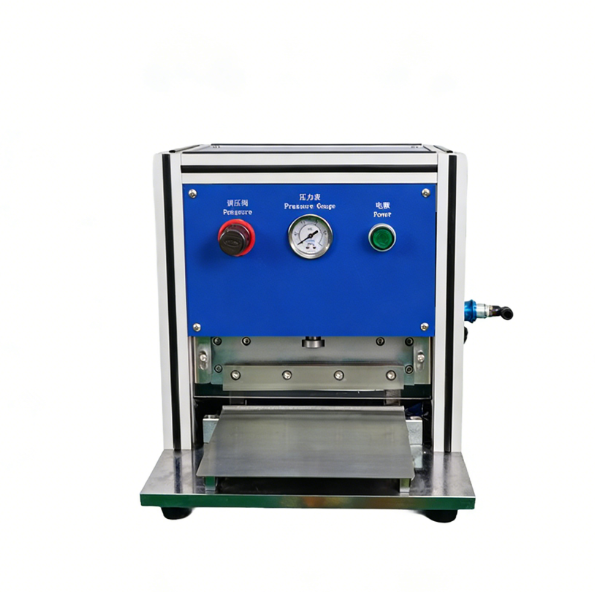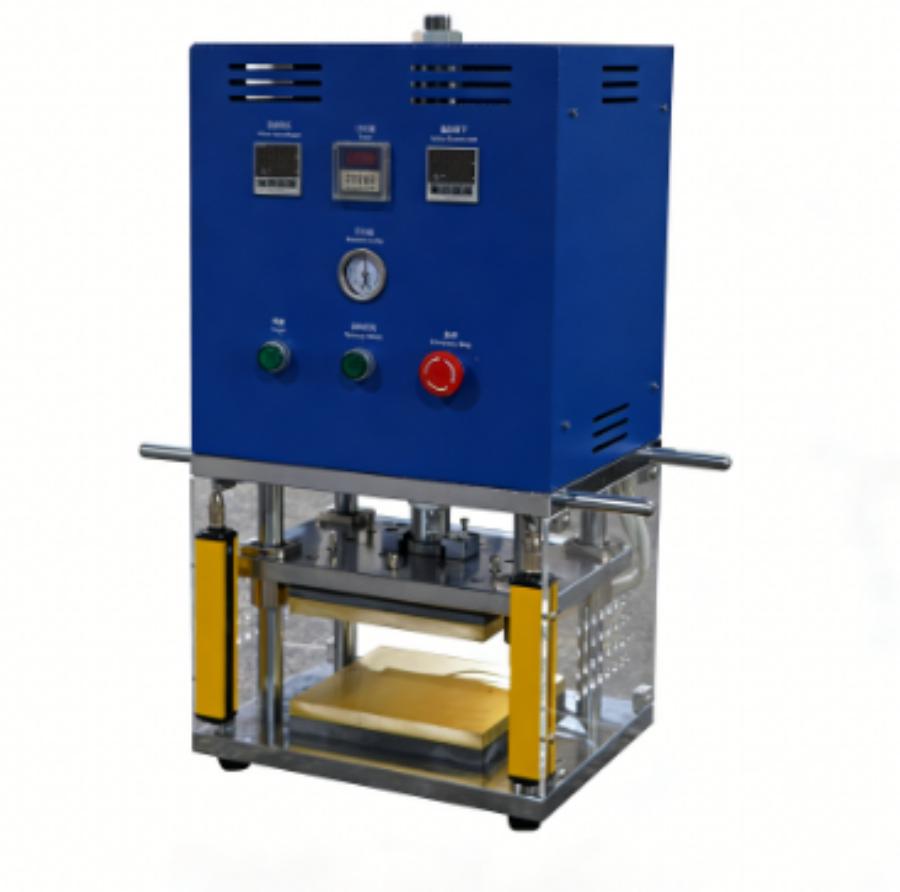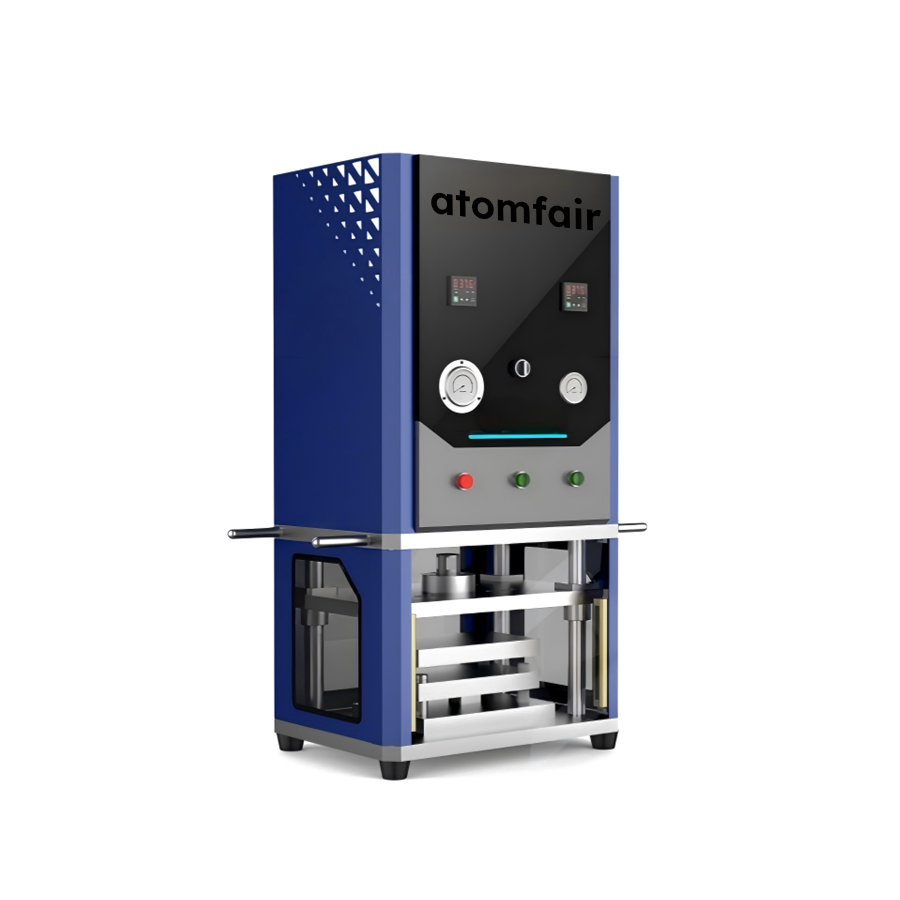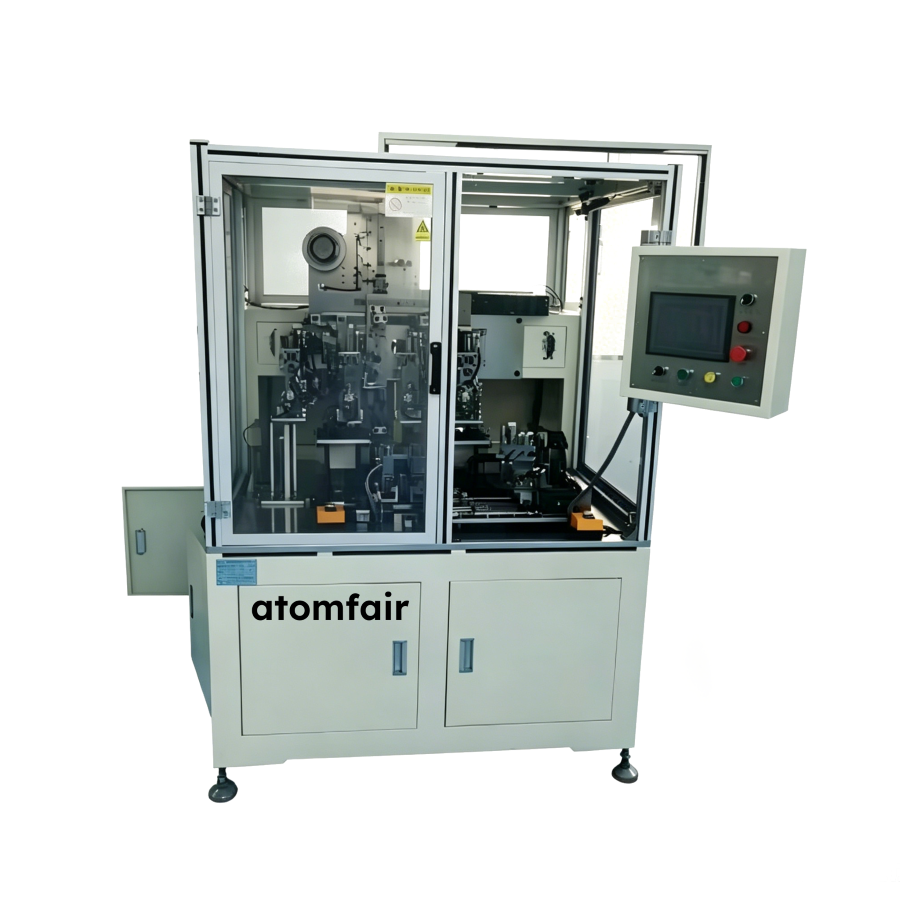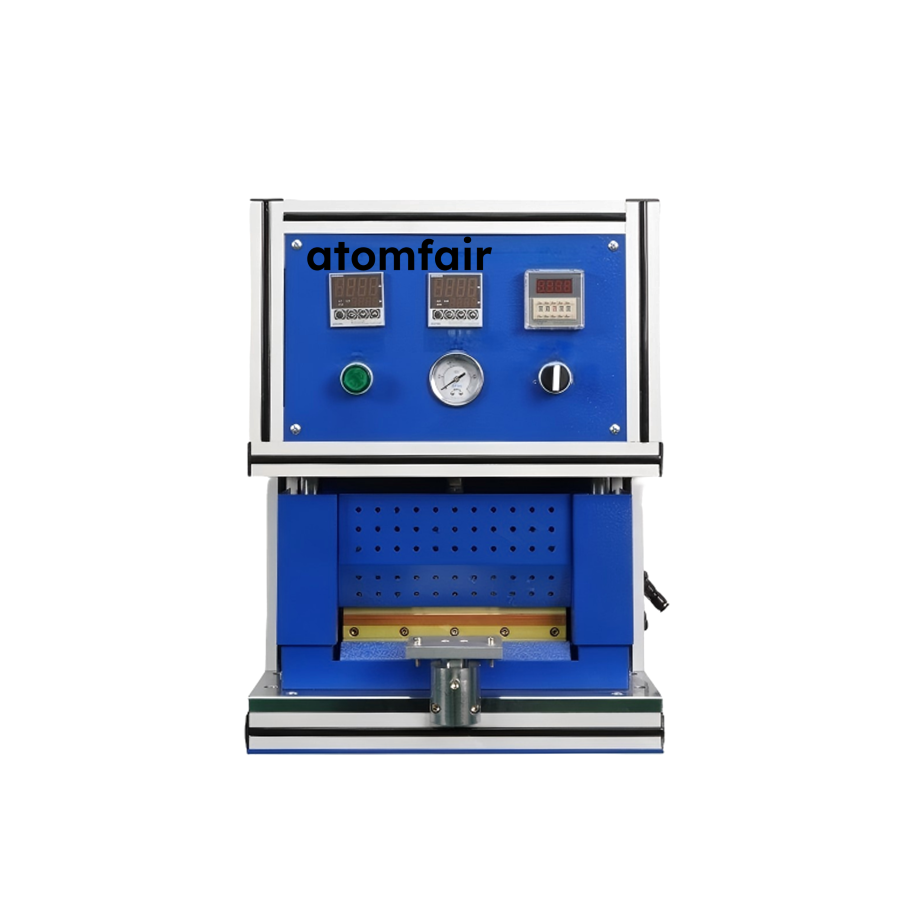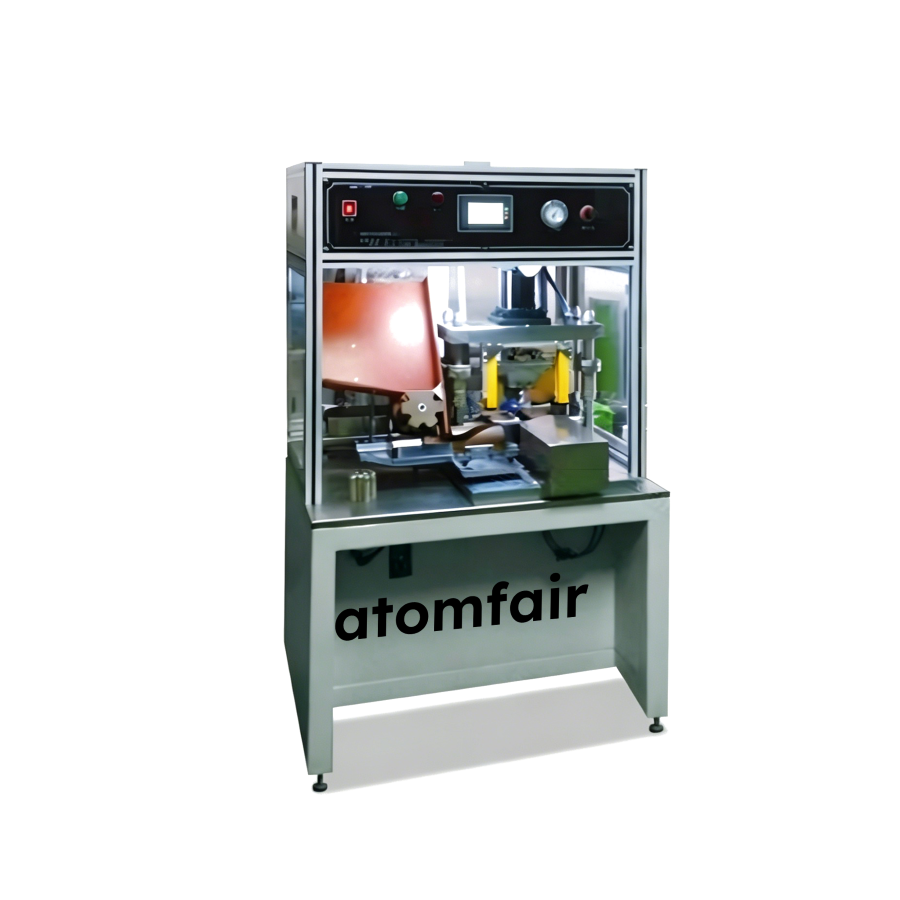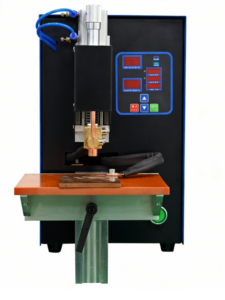
Atomfair-CSP8150 Cylindrical Anode Spot Welder
Product Overview
A widely used AC pulse spot welder controlled by a microcomputer single-chip microcomputer for more stable and reliable performance. Designed for the production of high-end Ni-Cd, Ni-MH and lithium batteries, it is dedicated to the single-needle welding of cylindrical battery anode shells and tabs.
Functional Features
- Fixed welding current, uniform and aesthetic weld spots, small sparks and no blackening
- Eliminates low voltage and water seepage of lithium batteries after spot welding, an ideal device for battery production and assembly
- Microcomputer single-chip microcomputer control supports single, double and multi-pulse welding
- Digital setting of all parameters for intuitive and accurate adjustment
- Independent and easy adjustment of the pressure of two welding needles for stable and reliable welding pressure
- Precise alignment welding, suitable for small-cap cell welding with high yield rate
- Exquisite, beautiful and compact appearance
- Unique photoelectric welding switch avoids the trouble of switch replacement common in similar machines
Technical Parameters
| Parameter Item | Specification |
|---|---|
| Maximum Output Power | 10KVA |
| Welding Current | 00~99 |
| Power Supply | AC220V±10% |
| Input Air Pressure | 0.3-0.7MPa |
| Application Range | Suitable for various welding sheets of 0.03mm-0.25mm |
| Equipment Weight | 45Kg |
| Overall Dimension | L500*W300*H470mm |
If you’re interested, have any questions, or have specific customization requirements, please feel free to contact us at inquiry@atomfair.com.
This document outlines the operational constraints for the Atomfair-CSP8150 spot welder. The equipment requires a regulated AC220V±10% power supply and a compressed air supply of 0.3-0.7MPa for proper operation.
- Power Supply Constraint: The welder must be connected to an AC220V±10% power source to ensure stable welding current and prevent damage to the internal microcomputer controller.
- Air Pressure Constraint: The input air pressure must be maintained within the specified 0.3-0.7MPa range to ensure consistent electrode force and weld quality.
- Material Thickness Constraint: The welder is designed for welding sheets with a thickness range of 0.03mm to 0.25mm; operating outside this range may result in poor weld integrity.
This procedure describes the safe and correct operation of the Atomfair-CSP8150 spot welder for cylindrical battery anode welding. It covers setup, parameter adjustment, and the welding process.
Required Equipment: Atomfair-CSP8150 Spot Welder, Compressed air supply (0.3-0.7MPa), AC220V±10% power source
- Connect utilities
Connect the welder to an AC220V±10% power source and a compressed air supply regulated to 0.3-0.7MPa. - Set welding parameters
Set the welding current and pulse mode (single, double, or multi-pulse) using the digital interface on the microcomputer controller. - Adjust electrode pressure
Independently adjust the pressure of the two welding needles to achieve the desired and stable welding pressure. - Position the workpiece
Place the cylindrical battery anode shell and tab between the welding needles, ensuring precise alignment for the weld. - Initiate the weld
Activate the photoelectric welding switch to deliver the welding pulse and complete the weld. - Inspect the weld
Inspect the weld spot for uniform appearance and integrity, ensuring no blackening or defects are present.
What is the maximum welding current and how does the Atomfair-CSP8150 ensure consistent weld quality for cylindrical battery anode tabs?
The Atomfair-CSP8150 provides a welding current adjustable from 00 to 99, with a maximum output power of 10KVA. Its microcomputer single-chip control supports single, double, and multi-pulse welding, and the fixed welding current setting ensures uniform, aesthetic weld spots with minimal spatter and no blackening, which is critical for high-yield production of Ni-Cd, Ni-MH, and lithium batteries.
What are the material thickness and air pressure requirements for the Atomfair-CSP8150 to weld cylindrical battery anode tabs?
The Atomfair-CSP8150 is designed for welding sheets with a thickness range of 0.03mm to 0.25mm, which covers typical anode tab materials used in cylindrical cells. It requires an input air pressure of 0.3-0.7MPa to operate the pneumatic system, and the pressure of the two welding needles can be independently adjusted to ensure stable and reliable contact during the welding process.
What are the power supply and installation requirements for the Atomfair-CSP8150 spot welder?
The Atomfair-CSP8150 operates on an AC220V±10% power supply, making it compatible with standard industrial electrical infrastructure. The equipment weighs 45Kg and has overall dimensions of L500*W300*H470mm, so it requires a stable workbench or mounting surface that can support its weight and accommodate its footprint in a battery production line.
The Atomfair-CSP8150 is a 10KVA AC pulse spot welder engineered for single-needle welding of cylindrical battery anode tabs, with microcomputer-controlled pulse sequencing and independent needle pressure adjustment to support consistent weld quality on 0.03-0.25mm sheets.
Positive
- Microcomputer-controlled pulse welding: Single-chip microcomputer control enables single, double, and multi-pulse welding with digital parameter setting, providing precise control over weld energy and timing for consistent, reproducible spot welds.
- Independent needle pressure adjustment: Each welding needle's pressure is independently adjustable, allowing fine-tuning of electrode force to accommodate varying tab thicknesses and materials, which is critical for achieving uniform weld penetration and minimizing defects.
Trade-offs
- Requires compressed air supply: The welder requires an input air pressure of 0.3-0.7MPa, meaning a compatible compressed air source must be available in the lab or production environment, adding an infrastructure dependency.
- Limited to thin sheet materials: The application range is restricted to welding sheets of 0.03mm-0.25mm thickness, so it is not suitable for thicker tabs or structural components, limiting its use to specific battery cell assembly tasks.
Every advanced material, component, equipment, and instrument in our catalog is backed by rigorous testing. We maintain strict internal quality management frameworks and align with CE conformity metrics to deliver transparent, reproducible performance data via our public open-science repository.
To request raw batch performance data, submit formal vendor registration paperwork, or execute a fast-turnaround R&D manufacturing loop, contact us at inquiry@atomfair.com.
Item is dispatched under the Atomfair Shipping & Delivery Framework (Free worldwide shipping on orders over $59 USD excl. heavy equipment). Return is governed by the Atomfair Return & Refund Policy (7-day technical return window).