Li2TaOCl5 (LTOC) Tantalum‑Based Halide Solid‑State ElectrolyteHalide Solid-State Electrolytes
|
|||||||||||||||||||||||||
|
|||||||||||||||||||||||||
|
Li2TaOCl5 is a moisture-sensitive halide solid-state electrolyte that must be stored and handled under inert atmosphere with a dew point below -40°C. The material requires vacuum-sealed packaging and immediate resealing after each use to prevent moisture degradation.
- Moisture Sensitivity: The material is moisture-sensitive and must be handled exclusively in a dry environment with a dew point below -40°C.
- Storage Conditions: Store the material sealed in an argon or nitrogen-filled glovebox to protect it from atmospheric moisture.
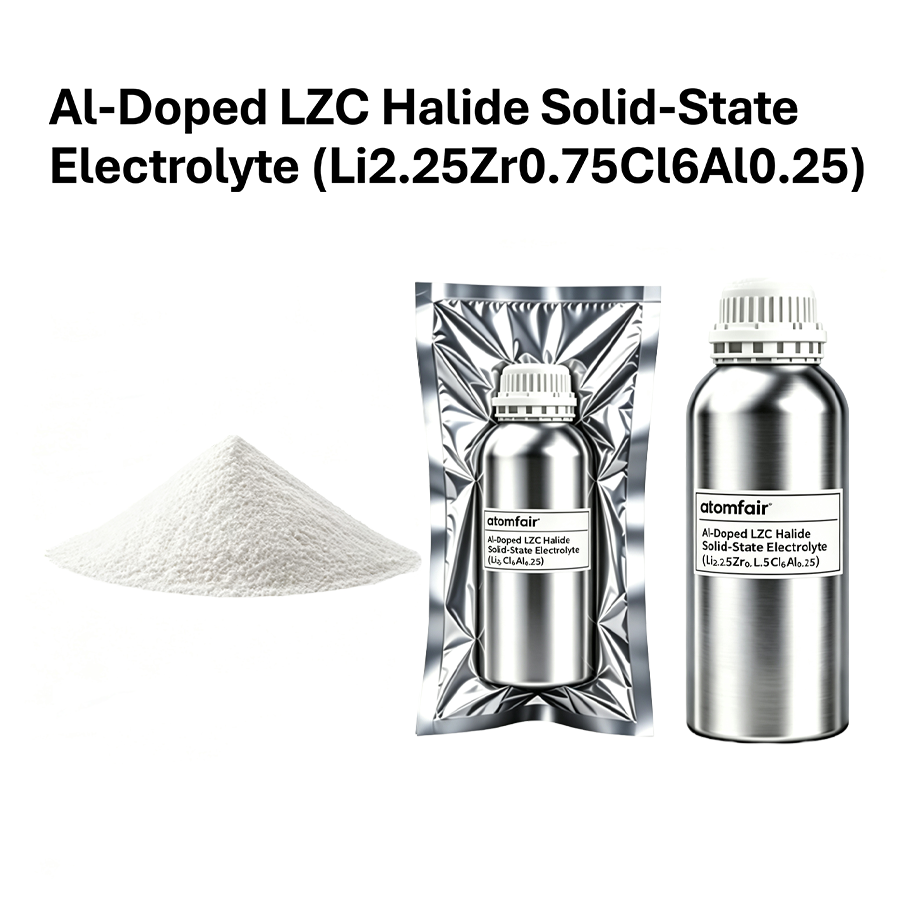
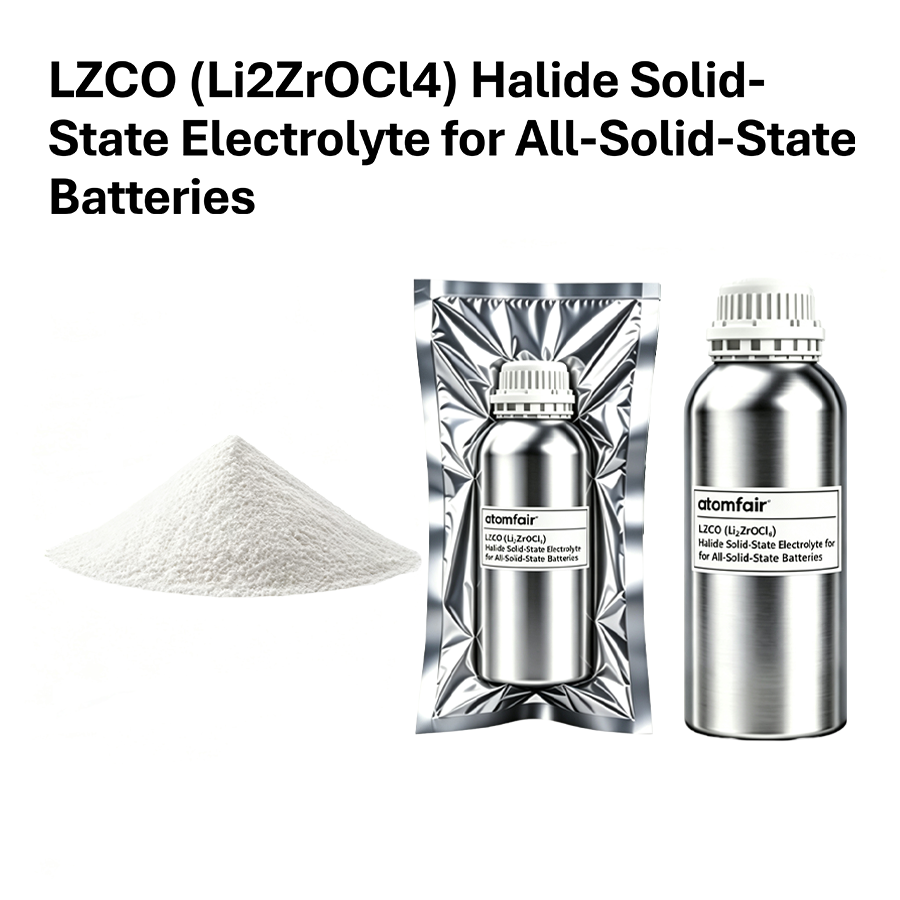
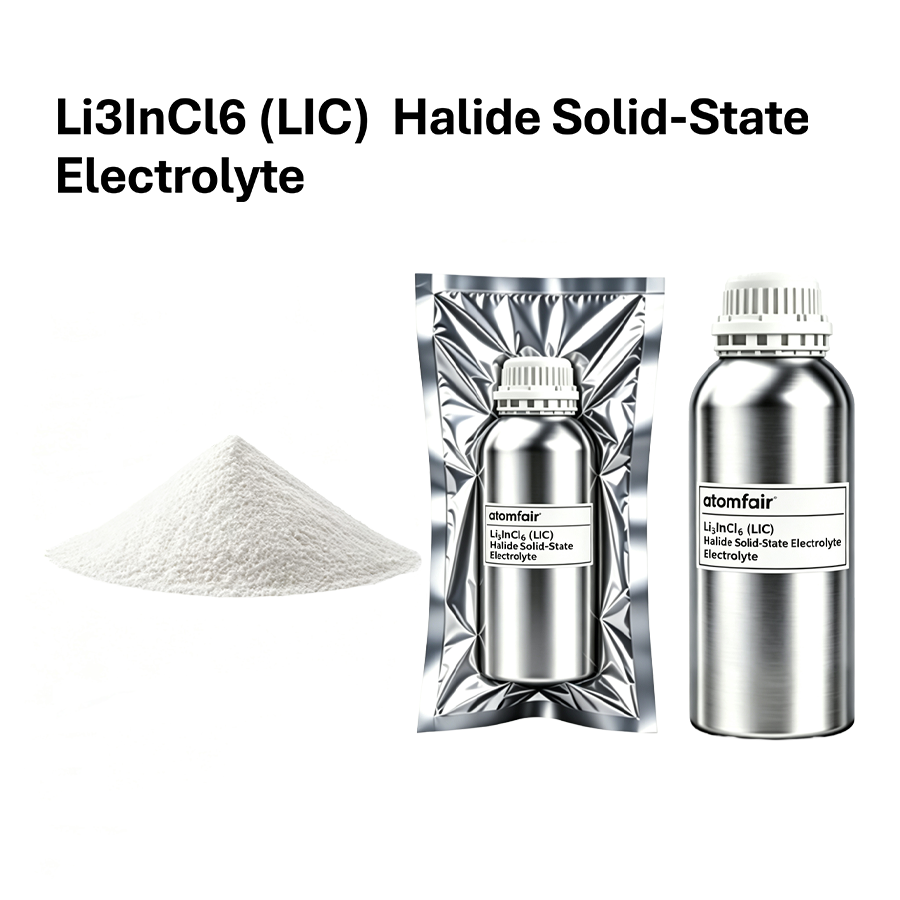
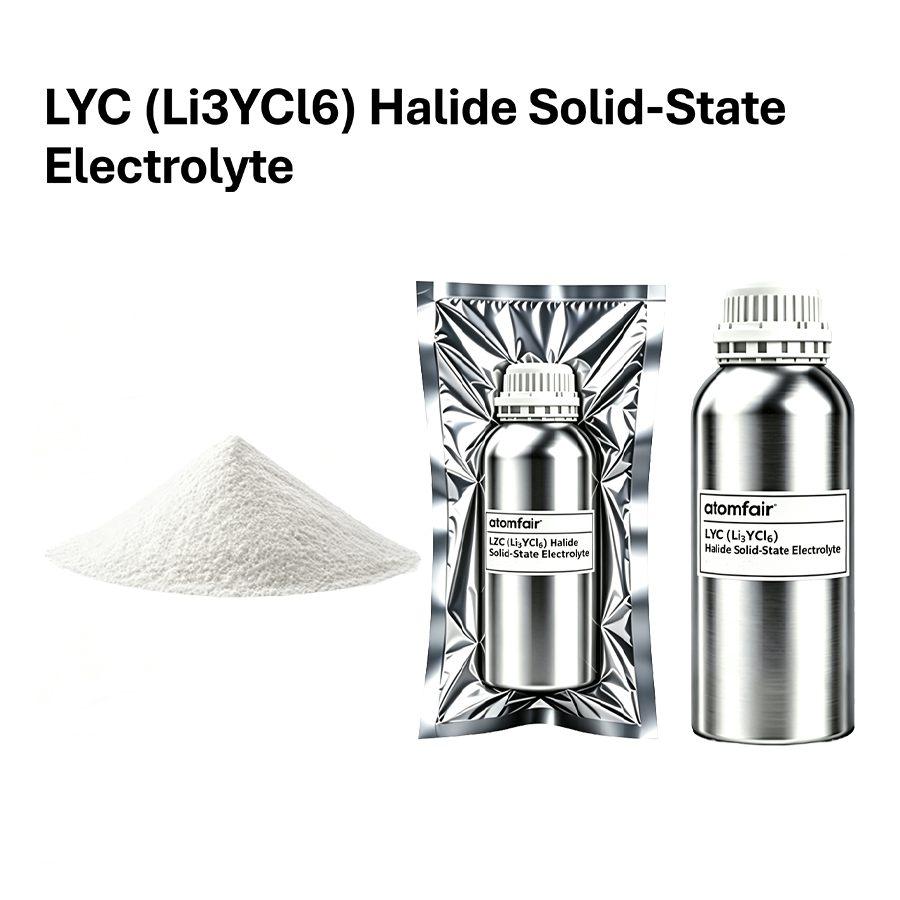
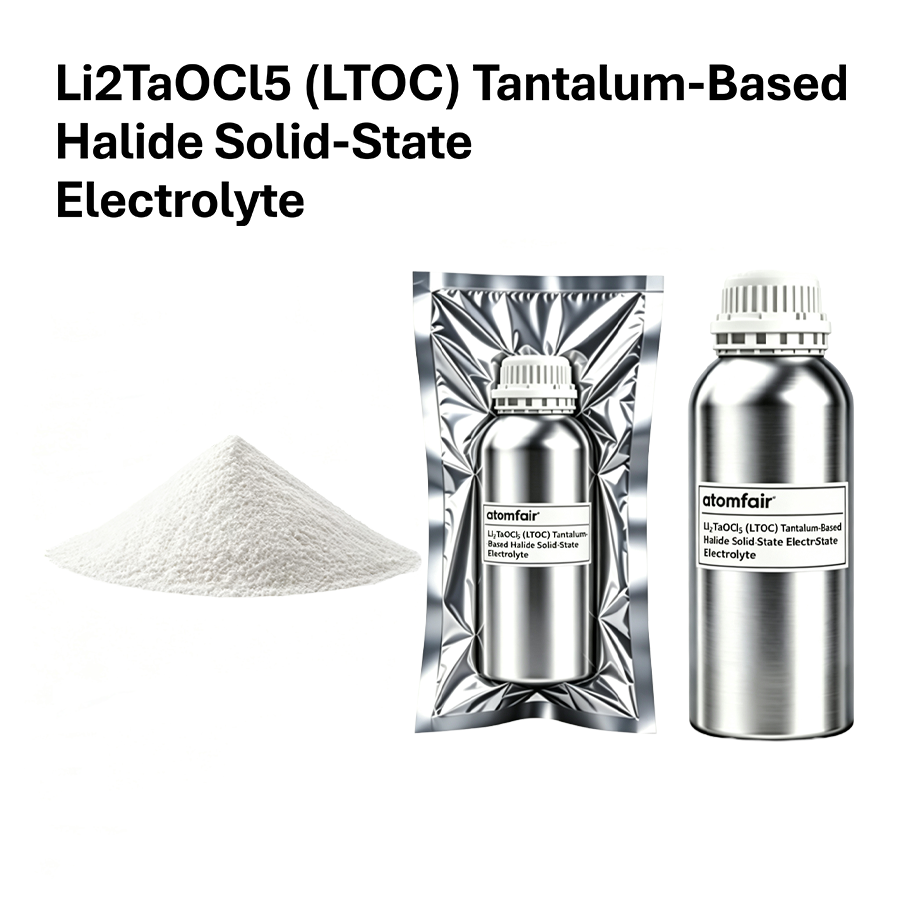
- Packaging: The material ships vacuum-sealed in moisture-barrier aluminum-laminated bags under inert atmosphere.
- Resealing Procedure: Reseal the vacuum-sealed bag promptly after opening to minimize exposure to ambient moisture.
How does the ionic conductivity of Li2TaOCl5 (LTOC) compare to sulfide solid electrolytes, and what is the trade-off with its electrochemical stability?
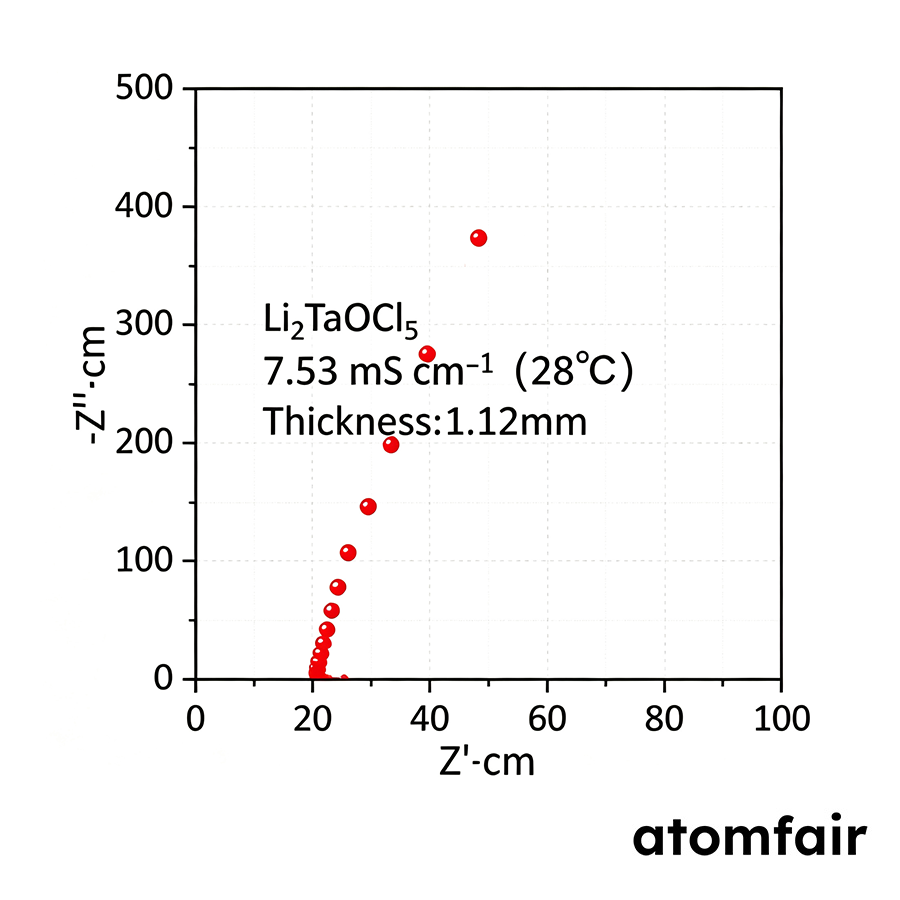
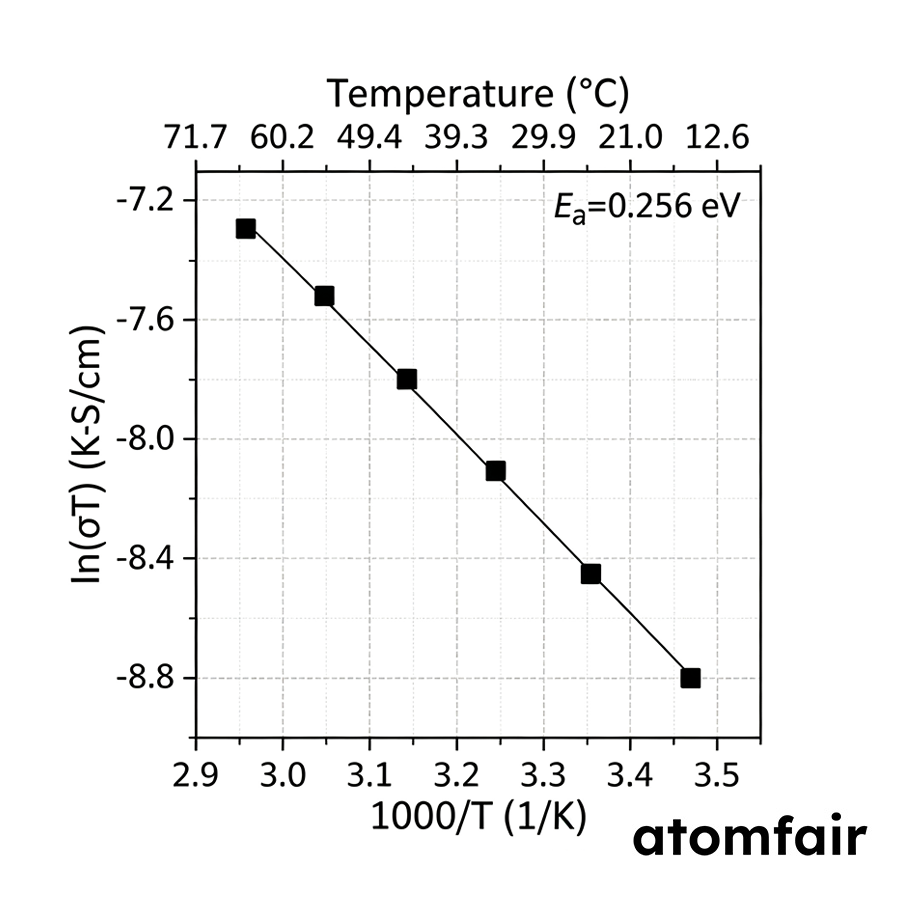
LTOC achieves 6–8 mS/cm ionic conductivity at 28°C, which matches sulfide electrolytes like LPSC, while offering stability up to 4.6 V vs Li/Li⁺. This eliminates the need for protective coatings on high-voltage cathodes, a common requirement for sulfides. However, LTOC is moisture-sensitive, requiring glovebox handling with dew point below –40°C.
Can Li2TaOCl5 be used directly with 4.6 V LCO or high-nickel NCM cathodes in all-solid-state batteries?
Yes, LTOC is stable up to 4.6 V vs Li/Li⁺, enabling direct compatibility with 4.6 V LCO and high-nickel NCM (Ni83) cathodes without additional coatings. It is specifically designed as a catholyte for high-voltage ASSLBs and can be paired with sulfide electrolytes like LPSC as an anode-side separator in composite architectures.
What are the critical storage and handling requirements for Li2TaOCl5 to prevent degradation?
LTOC is moisture-sensitive and must be stored sealed in an inert atmosphere (Ar or N₂ glovebox) with dew point below –40°C. It ships vacuum-sealed in moisture-barrier aluminum-laminated bags. After opening, reseal promptly and handle exclusively in a dry environment to maintain ionic conductivity and structural integrity.
Li2TaOCl5 (LTOC) is a tantalum-based halide-oxide solid-state electrolyte offering 6–8 mS/cm ionic conductivity at room temperature and electrochemical stability up to 4.6 V vs Li/Li⁺, enabling direct pairing with high-voltage cathodes such as LCO and high-nickel NCM for all-solid-state lithium batteries.
Positive
- High ionic conductivity at room temperature: With 6–8 mS/cm at 28 °C, LTOC delivers conductivity that matches sulfide electrolytes, enabling high-power solid-state cell designs.
- High-voltage cathode compatibility: Stable up to 4.6 V vs Li/Li⁺, LTOC is directly compatible with high-voltage LCO and high-nickel NCM cathodes, maximizing energy density without additional coating layers.
Trade-offs
- Moisture-sensitive handling required: LTOC is moisture-sensitive and must be handled exclusively in a dry environment with dew point below –40 °C; storage requires sealed Ar or N₂ glovebox conditions.
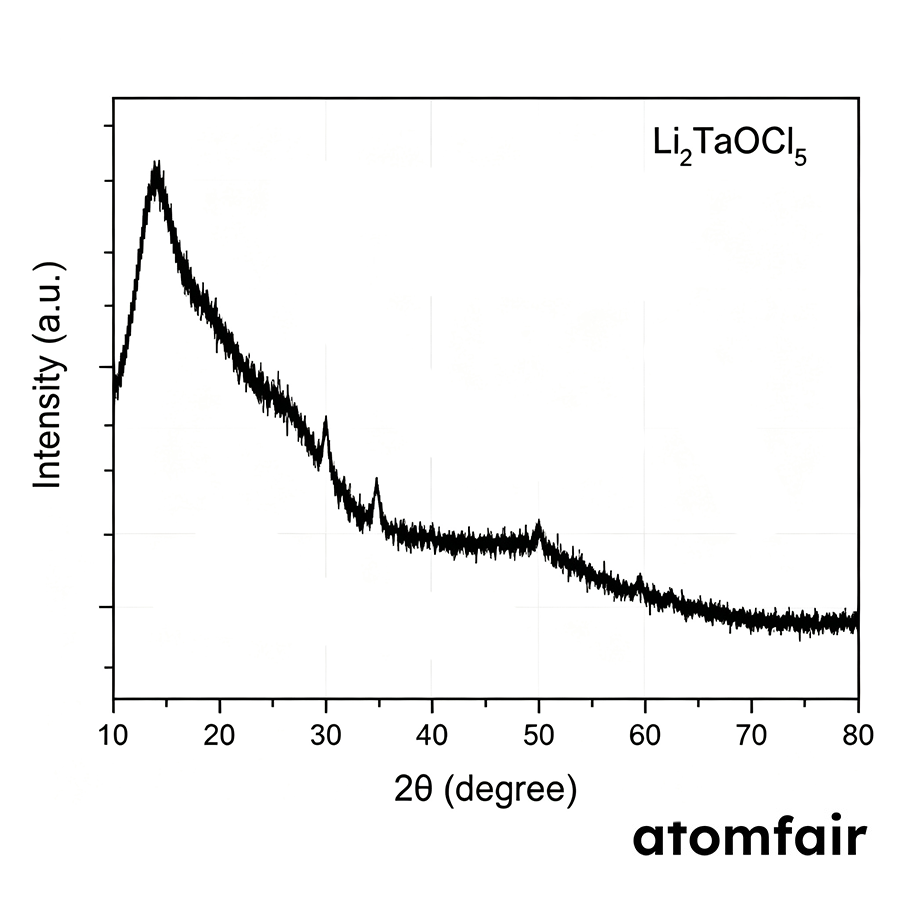
- Partially amorphous crystal structure: The tantalum halide-oxide framework is described as partially amorphous, which may introduce variability in ionic transport pathways and require careful process optimization for consistent performance.
Every advanced material, component, equipment, and instrument in our catalog is backed by rigorous testing. We maintain strict internal quality management frameworks and align with CE conformity metrics to deliver transparent, reproducible performance data via our public open-science repository.
To request raw batch performance data, submit formal vendor registration paperwork, or execute a fast-turnaround R&D manufacturing loop, contact us at inquiry@atomfair.com.
Item is dispatched under the Atomfair Shipping & Delivery Framework (Free worldwide shipping on orders over $59 USD excl. heavy equipment). Return is governed by the Atomfair Return & Refund Policy (7-day technical return window).