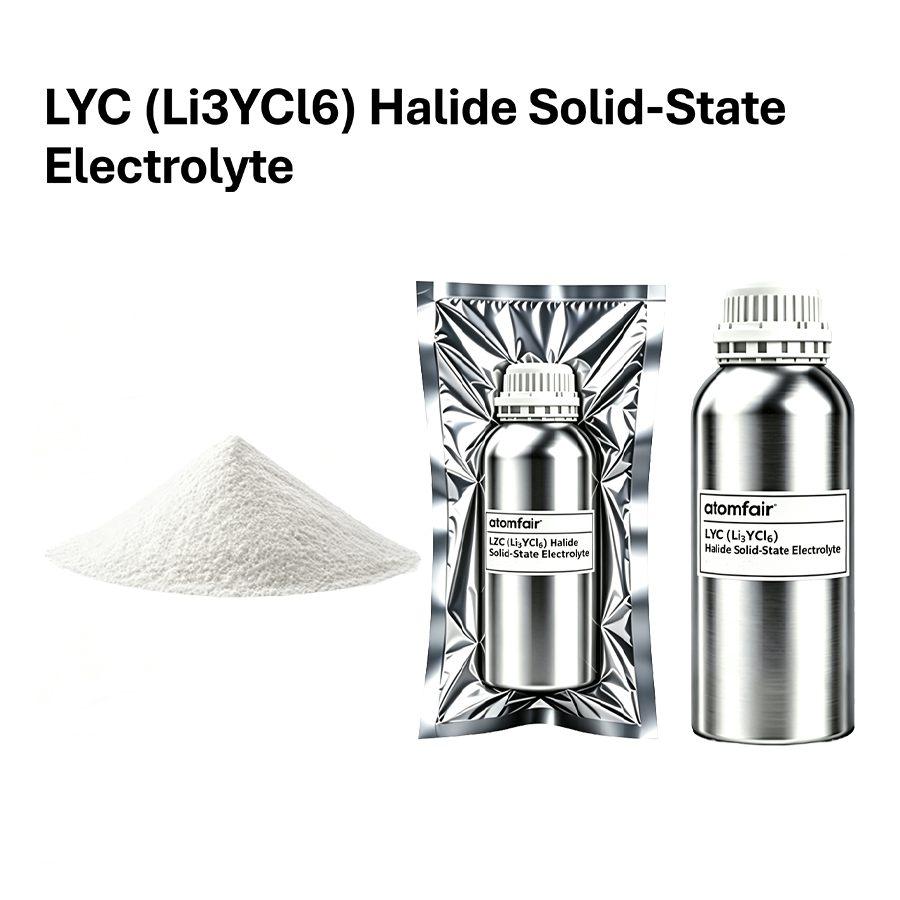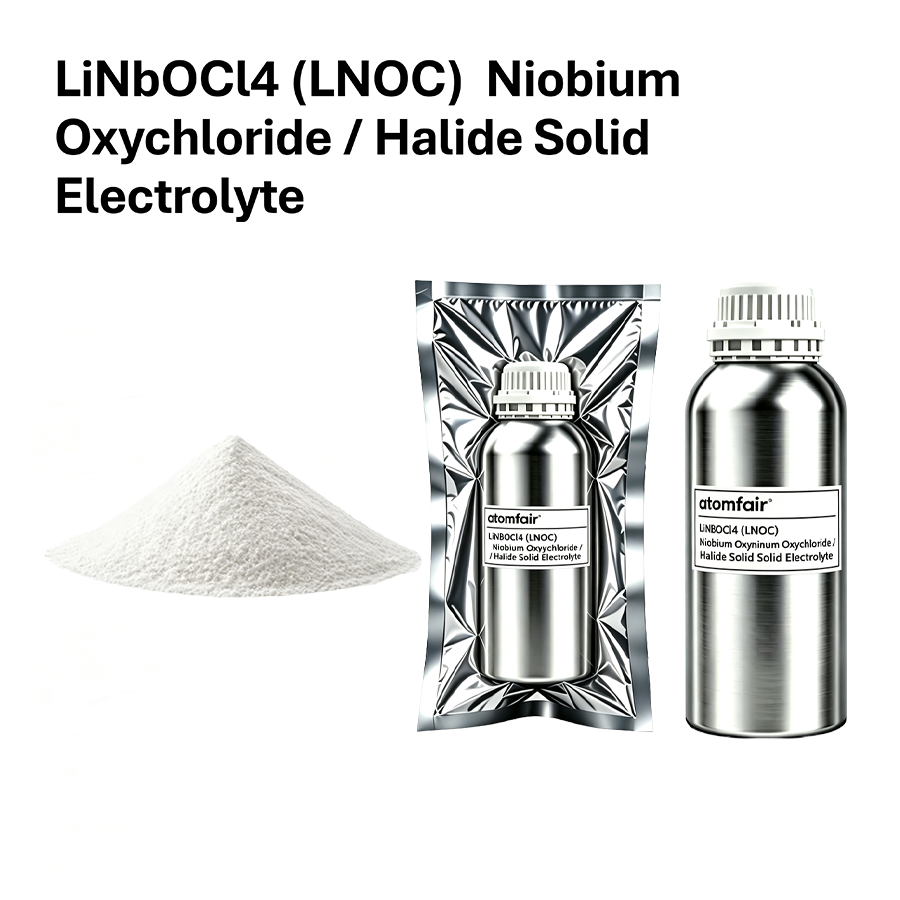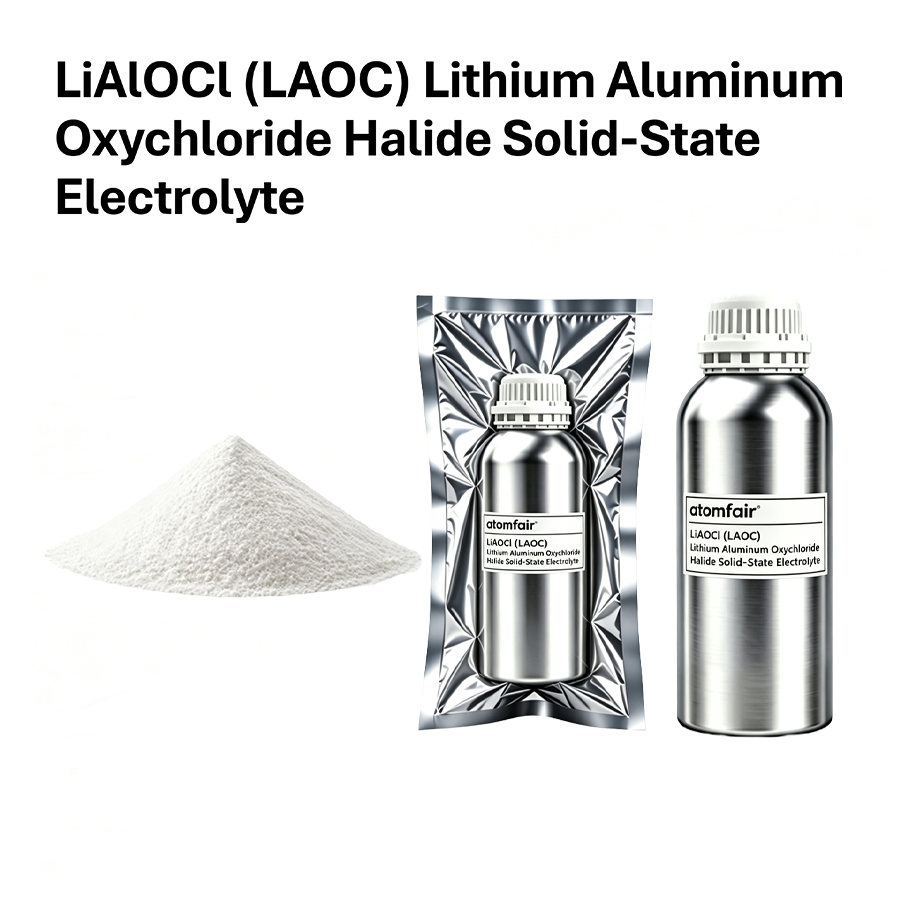
LiAlOCl (LAOC) Lithium Aluminum Oxychloride Halide Solid‑State ElectrolyteHalide Solid-State Electrolytes
|
|||||||||||||||||||||||||||
|
|||||||||||||||||||||||||||
|
This material is moisture-sensitive and must be stored and handled under inert atmosphere (argon or nitrogen) in a glovebox or dry room to prevent degradation. Exposure to water or humid air can compromise ionic conductivity and material integrity, requiring immediate resealing after each use.
- Moisture sensitivity: The material degrades upon contact with water or humid air, necessitating a dry environment at all times.
- Inert atmosphere storage: Store the sealed material in an argon- or nitrogen-filled glovebox or dry room to maintain stability.
- Packaging integrity: The vacuum-sealed moisture-barrier bag must remain intact until opened in a controlled dry atmosphere.
- Respiratory and dermal protection: Avoid inhalation of dust and contact with skin or eyes by using appropriate personal protective equipment.
This procedure describes safe handling and storage of moisture-sensitive LiAlOCl powder to maintain material integrity and prevent degradation. All steps must be performed in a dry, inert atmosphere using appropriate personal protective equipment.
Required Equipment: Argon or nitrogen glovebox, Personal protective equipment (gloves, safety goggles, lab coat), Local exhaust ventilation or respiratory protection
- Inspect packaging
Inspect the vacuum-sealed moisture-barrier bag for any damage before opening. - Transfer to glovebox
Transfer the sealed bag into an argon- or nitrogen-filled glovebox for further handling. - Store in inert atmosphere
Store the material sealed in the glovebox or dry room, protected from moisture. - Don personal protective equipment
Don gloves, safety goggles, and a lab coat before handling the material. - Reseal after use
Reseal the container promptly after each use to minimize moisture exposure.
What is the measured ionic conductivity of LiAlOCl at room temperature and how does its electronic conductivity compare?
LiAlOCl exhibits an ionic conductivity of 0.598 mS/cm at 26.7 °C and an electronic conductivity of 9.71 × 10⁻¹⁰ S/cm at 26.3 °C, yielding a high ionic-to-electronic conductivity ratio. This extremely low electronic conductivity is advantageous for solid-state electrolytes as it minimizes self-discharge and leakage currents in all-solid-state batteries.
What is the particle size distribution of LiAlOCl and how might it impact electrode–electrolyte interface compatibility studies?
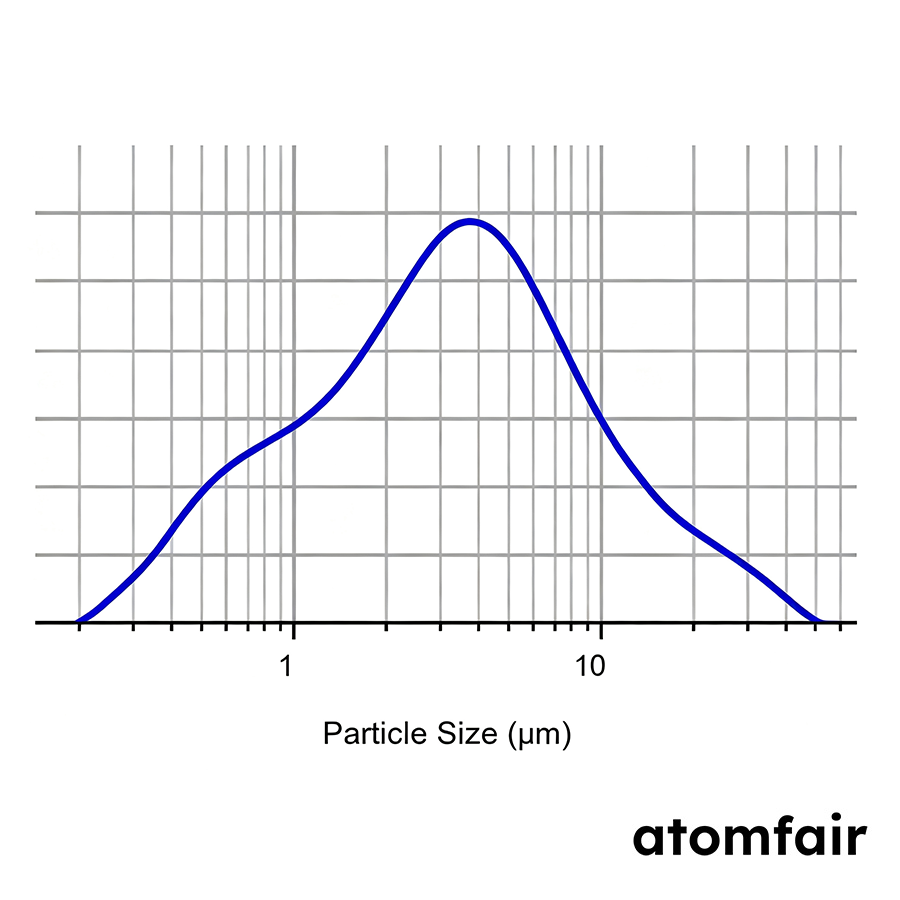
LiAlOCl has a D50 of 3.257 μm with D10 = 1.987 μm and D90 = 6.442 μm, indicating a relatively fine and narrow particle size distribution. This distribution is relevant for electrode–electrolyte interface compatibility research because particle size directly influences contact area, packing density, and interfacial ionic transport in solid-state battery assemblies.
What storage and handling precautions are required for LiAlOCl due to its moisture sensitivity?
LiAlOCl is a moisture-sensitive oxychloride solid electrolyte that ships vacuum-sealed under inert atmosphere in moisture-barrier aluminum-laminated bags. It must be stored and handled exclusively in an Ar or N₂ glovebox or dry room, protected from humid air, and resealed promptly after opening to prevent moisture degradation.
LiAlOCl (LAOC) is a lithium aluminum oxychloride halide solid-state electrolyte with a measured ionic conductivity of 0.598 mS/cm at 26.7°C and an extremely low electronic conductivity of 9.71×10⁻¹⁰ S/cm, making it suitable for all-solid-state battery electrolyte and interface research. The material is highly moisture-sensitive and must be handled in dry environments, and its fine particle size requires proper dust control measures.
Positive
- High ionic conductivity for solid-state electrolyte: LiAlOCl exhibits an ionic conductivity of 0.598 mS/cm at 26.7°C, which is competitive for halide solid electrolytes and supports research into all-solid-state battery performance.
- Extremely low electronic conductivity: With an electronic conductivity of 9.71×10⁻¹⁰ S/cm at 26.3°C, the material minimizes electronic leakage, preserving coulombic efficiency in solid-state cells.
Trade-offs
- Moisture sensitivity requires dry handling: As an oxychloride halide, LiAlOCl is highly sensitive to moisture; it must be stored and handled exclusively in an inert-atmosphere glovebox or dry room to prevent degradation.
- Fine particle size poses dust hazard: The median particle size of 3.257 μm results in a high surface area (9.731 m²/g) and potential for airborne dust; appropriate PPE and ventilation are required during handling.
Every advanced material, component, equipment, and instrument in our catalog is backed by rigorous testing. We maintain strict internal quality management frameworks and align with CE conformity metrics to deliver transparent, reproducible performance data via our public open-science repository.
To request raw batch performance data, submit formal vendor registration paperwork, or execute a fast-turnaround R&D manufacturing loop, contact us at inquiry@atomfair.com.
Item is dispatched under the Atomfair Shipping & Delivery Framework (Free worldwide shipping on orders over $59 USD excl. heavy equipment). Return is governed by the Atomfair Return & Refund Policy (7-day technical return window).