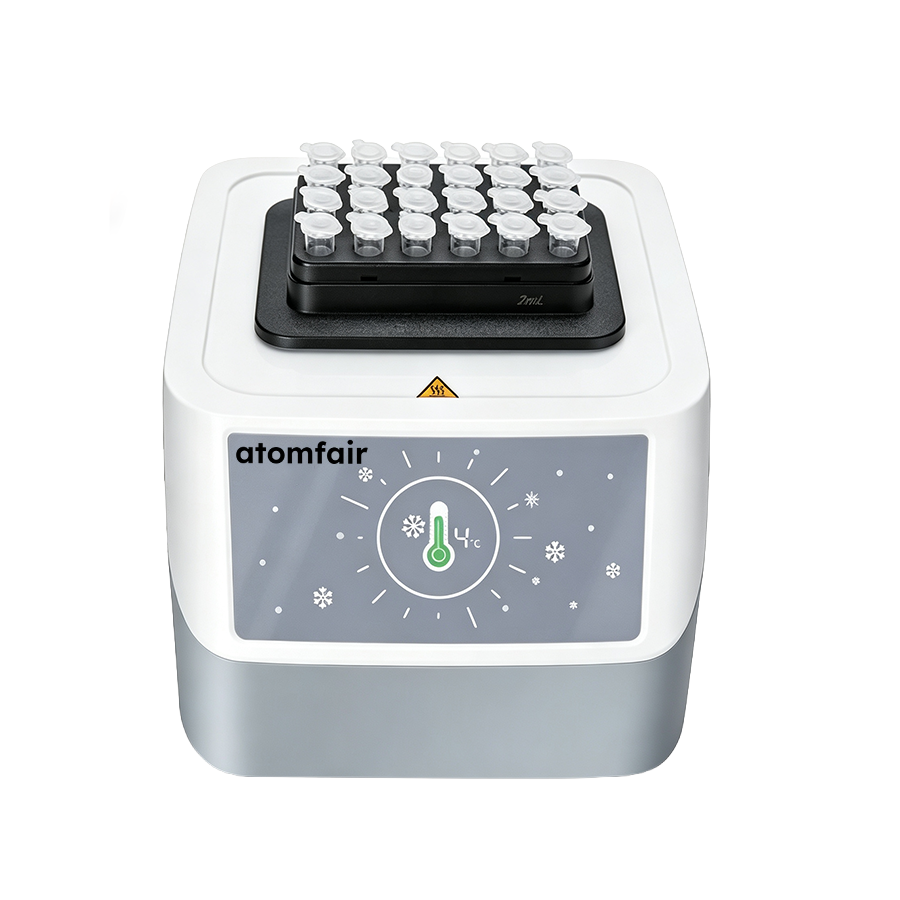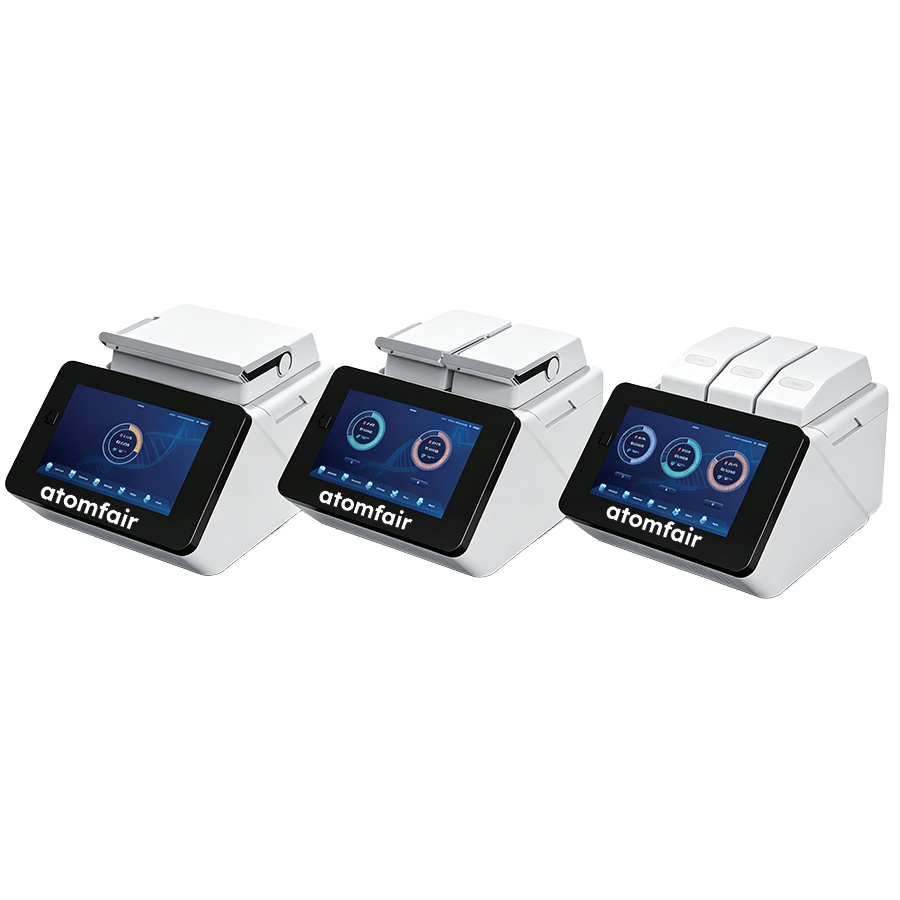
TC2000-G2 Gradient Thermal CyclerProduct Type: Temperature control instrument
Research-grade temperature control platform
|
|||||||||||||||||||||||||||||||||||||||||||||||||||||||||||
|
|||||||||||||||||||||||||||||||||||||||||||||||||||||||||||
|
TAILORED SOLUTIONS FOR RESEARCH
For bulk orders, OEM requirements, accessory matching or configuration confirmation, contact our engineering sales team.
EMAIL: inquiry@atomfair.com
|
|||||||||||||||||||||||||||||||||||||||||||||||||||||||||||
|
Supplier: Atomfair
Brand: ATOMFAIR®
|
The instrument requires an ambient environment of 5 to 40 °C and up to 80% relative humidity for stable operation. Power-off protection is supported, but the unit must be connected to a 100–240 V, 50/60 Hz supply rated at 1000 W.
- Temperature Uniformity Constraint: Temperature uniformity at 55 °C is specified as ±0.2 °C, which may affect reproducibility in high-precision assays if block loading is uneven.
- Gradient Range Constraint: The gradient setting range of 30 to 105 °C with a gradient range of 1 to 25 °C requires careful selection of sample positions to avoid unintended thermal stress.
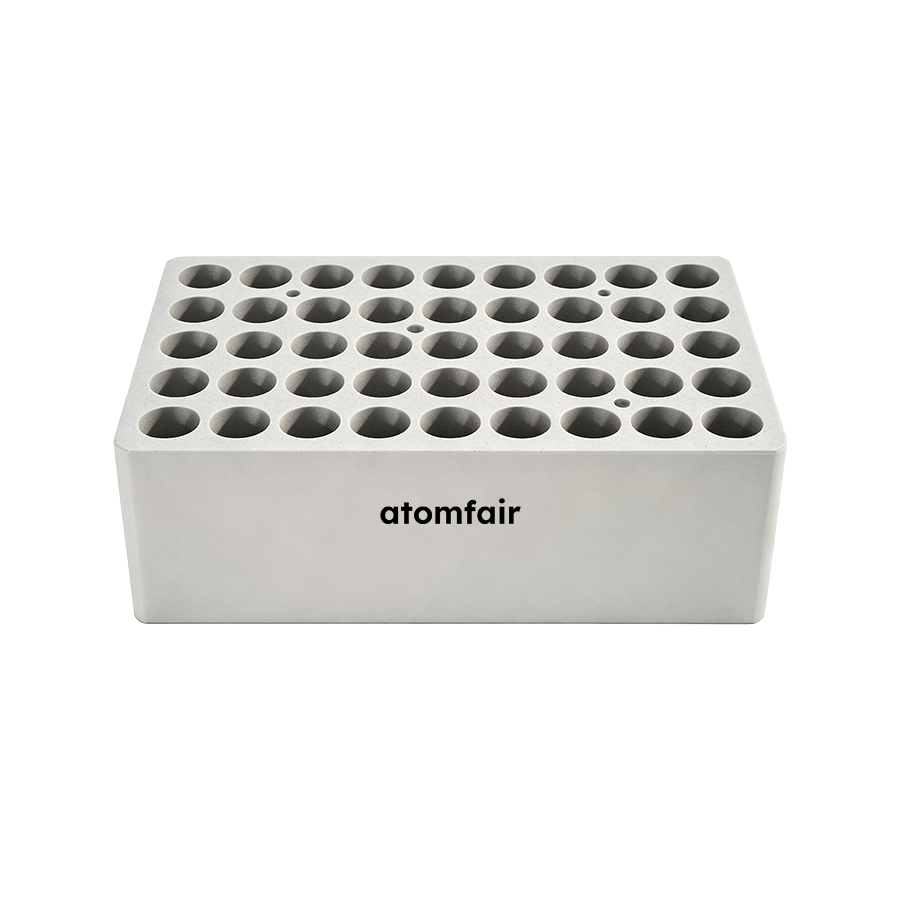
- Sample Module Compatibility Constraint: Only compatible heating blocks, modules, or sample vessels (96 x 0.2 mL PCR tubes, 12 x 0.2 mL 8-strip tubes, or 0.2 mL 96-well PCR plates) must be used to prevent block damage or poor thermal contact.
- Heated Lid Setting Constraint: The heated lid setting range of 30 to 115 °C must be matched to the sample vessel type to avoid lid condensation or sample evaporation.
This procedure covers initial setup, program entry, and safe operation of the dry-block thermal cycler. Follow each step sequentially to ensure correct temperature control and avoid sample loss.
Required Equipment: TC2000-G2 Gradient Thermal Cycler, Compatible heating block or sample module, USB flash drive (optional for program storage)
- Verify Installation Environment
Confirm the ambient temperature is between 5 and 40 °C and relative humidity does not exceed 80% before powering on the instrument. - Connect Power Supply
Plug the unit into a grounded outlet supplying 100–240 V, 50/60 Hz with a capacity of at least 1000 W. - Install Compatible Sample Module
Insert a validated heating block or module that matches your sample vessel format (e.g., 96 x 0.2 mL PCR tubes) and ensure it is fully seated. - Load Samples and Close Lid
Place samples into the block wells, close the heated lid, and set the lid temperature between 30 and 115 °C to prevent evaporation. - Program the Thermal Profile
Use the touch screen to define a program with up to 30 steps and up to 199 cycles, selecting block or tube control mode as required. - Start the Run and Monitor Progress
Initiate the program and verify that the display shows the target temperature with an accuracy of ±0.1 °C and uniformity within ±0.2 °C at 55 °C. - Retrieve Samples After Completion
Allow the block to cool below 40 °C before opening the lid and removing samples to avoid thermal shock or condensation.
How does the TC2000-G2 achieve ±0.1 °C temperature accuracy while maintaining a 5 °C/sec ramp rate, and what trade-off exists between uniformity and speed?
The TC2000-G2 achieves ±0.1 °C accuracy and a maximum ramp rate of 5 °C/sec through its dry-block control system, which directly heats the sample block without a shaking module. The temperature uniformity at 55 °C is ±0.2 °C, indicating that at higher ramp rates, minor thermal gradients across the block are expected. This trade-off is acceptable for most PCR and enzyme reaction workflows where rapid cycling is prioritized over absolute uniformity.
Can the TC2000-G2 be integrated with existing laboratory data management systems via USB or WiFi for automated program transfer and tracking?
Yes, the TC2000-G2 supports both USB and WiFi communication, enabling direct program transfer and data export to external systems. It stores over 20,000 programs and supports user-defined programs of up to 30 steps, with a tracking next step feature for real-time monitoring. Integration requires compatible software or middleware on the receiving system, as the instrument provides standard connectivity but no proprietary API is specified.
What are the infrastructure requirements for safe operation of the TC2000-G2 in a standard molecular biology laboratory?
The TC2000-G2 requires a 100–240 V, 50/60 Hz power supply with a maximum power draw of 1000 W, and should be operated in an environment of 5–40 °C with up to 80% relative humidity. The instrument weighs 11 kg and has a footprint of 310 x 422 x 264 mm, requiring a stable benchtop surface with adequate ventilation. No external cooling or water supply is needed, but the heated lid (30–115 °C) poses a burn hazard during operation.
The TC2000-G2 Gradient Thermal Cycler offers precise dry-block temperature control with ±0.1 °C accuracy and ±0.2 °C uniformity at 55 °C, suitable for PCR and sample preparation. However, it lacks a shaking module and requires 1000 W power, which may constrain some lab setups.
Positive
- High temperature accuracy and uniformity: Specified accuracy of ±0.1 °C and uniformity of ±0.2 °C at 55 °C enable consistent and reproducible thermal cycling for PCR and enzyme reactions.
- Wide gradient range for optimization: Gradient setting range of 30 to 105 °C with a gradient span of 1 to 25 °C allows efficient annealing temperature optimization in a single run.
Trade-offs
- No integrated shaking module: The instrument does not include a shaking module, limiting its use for workflows that require agitation during incubation, such as some enzymatic digestions or cell lysis.
- High power consumption and environmental limits: Rated at 1000 W (100–240 V), the unit requires adequate lab power capacity, and the operating environment is restricted to 5–40 °C and 80% RH, which may not suit unconditioned labs.
Every advanced material, component, equipment, and instrument in our catalog is backed by rigorous testing. We maintain strict internal quality management frameworks and align with CE conformity metrics to deliver transparent, reproducible performance data via our public open-science repository.
To request raw batch performance data, submit formal vendor registration paperwork, or execute a fast-turnaround R&D manufacturing loop, contact us at inquiry@atomfair.com.
Item is dispatched under the Atomfair Shipping & Delivery Framework (Free worldwide shipping on orders over $59 USD excl. heavy equipment). Return is governed by the Atomfair Return & Refund Policy (7-day technical return window).