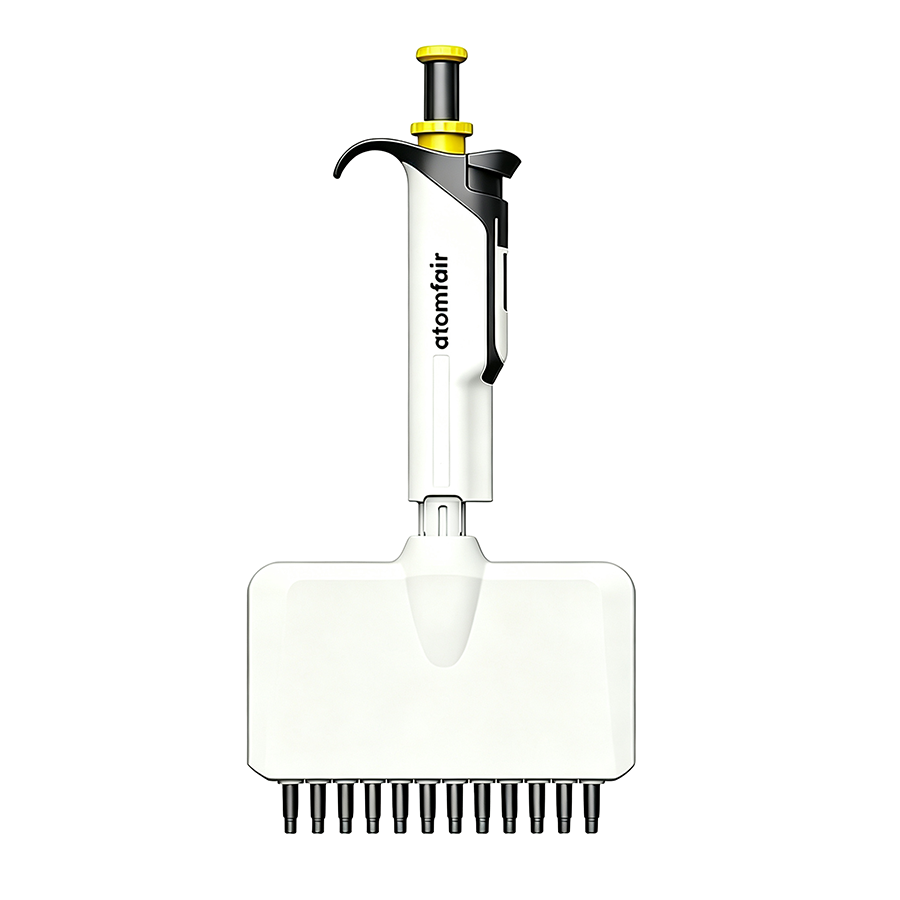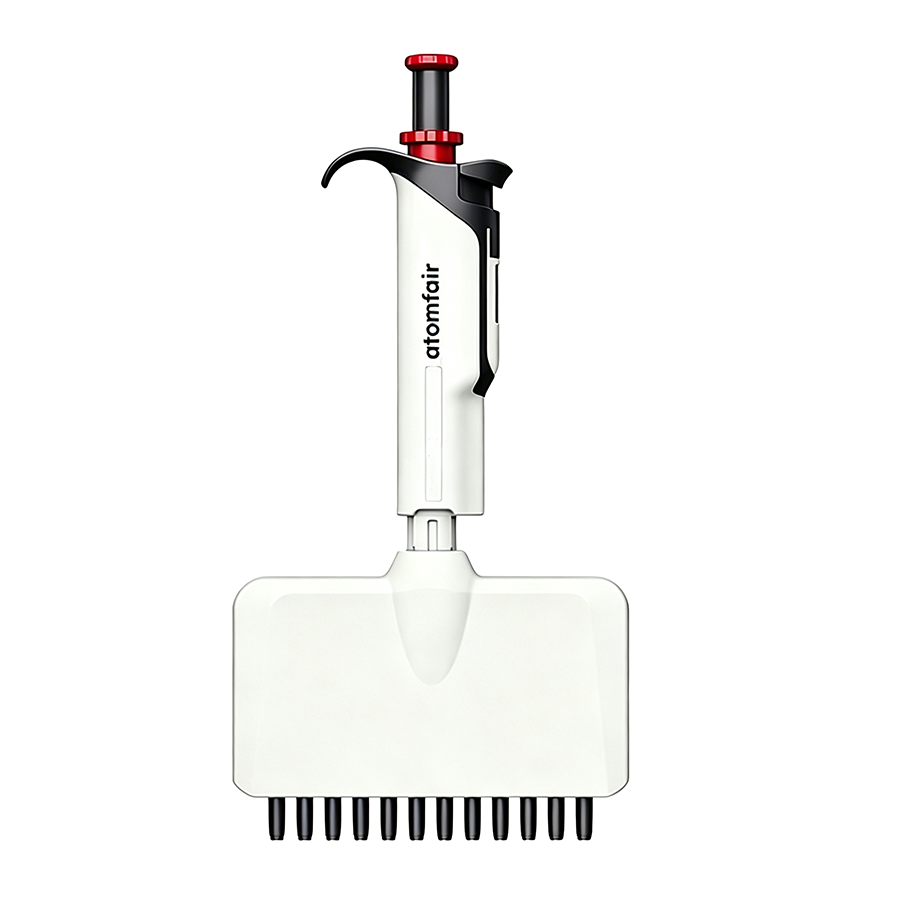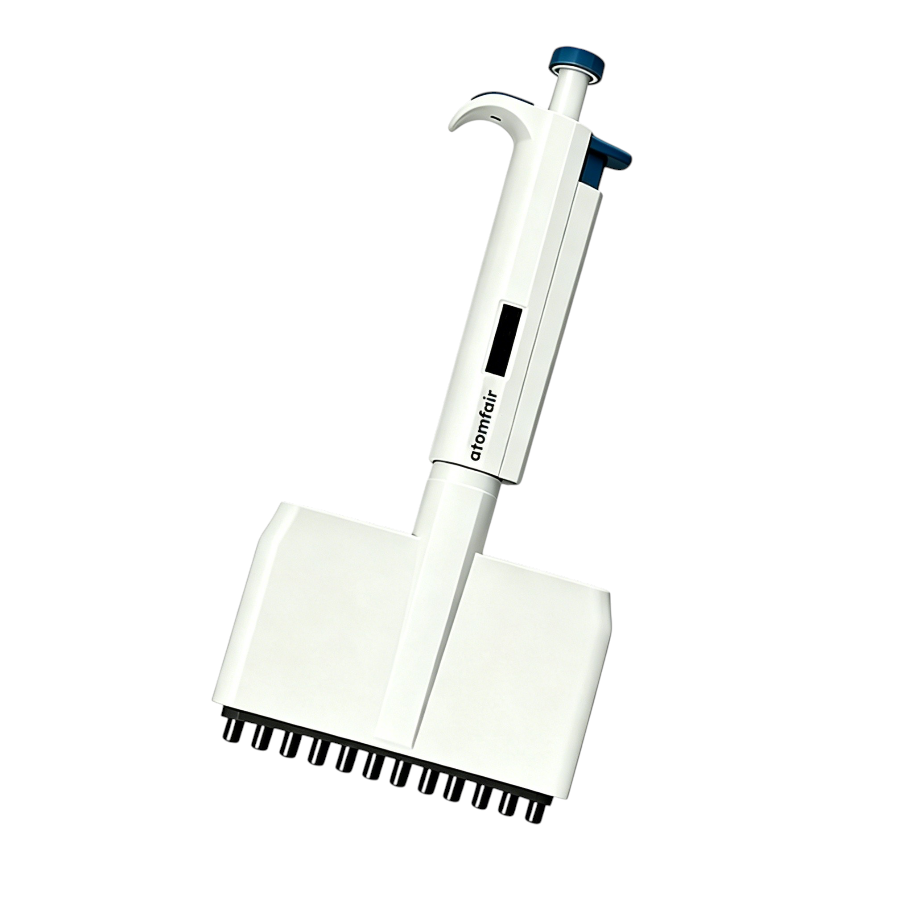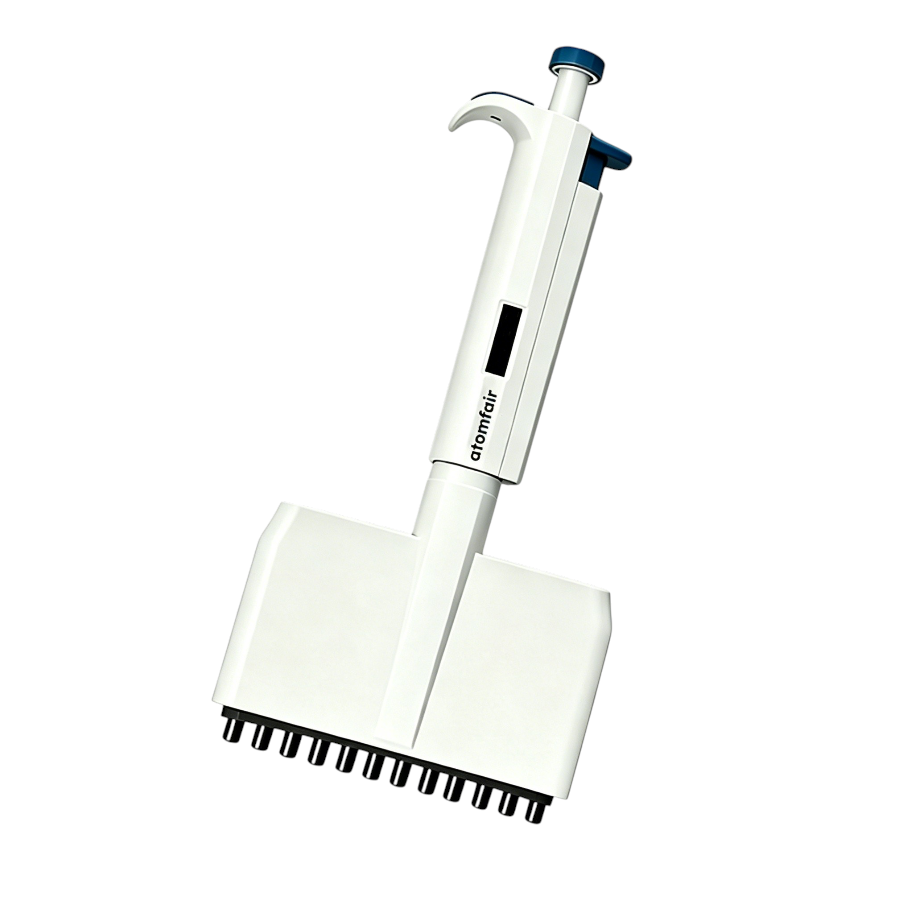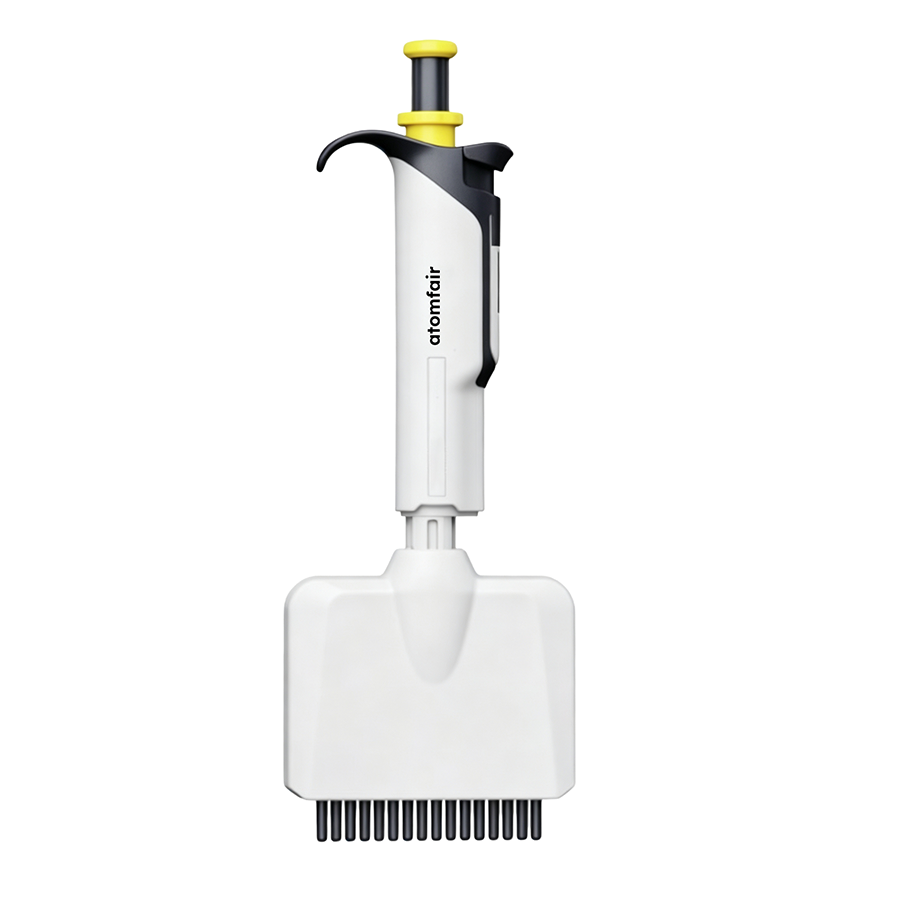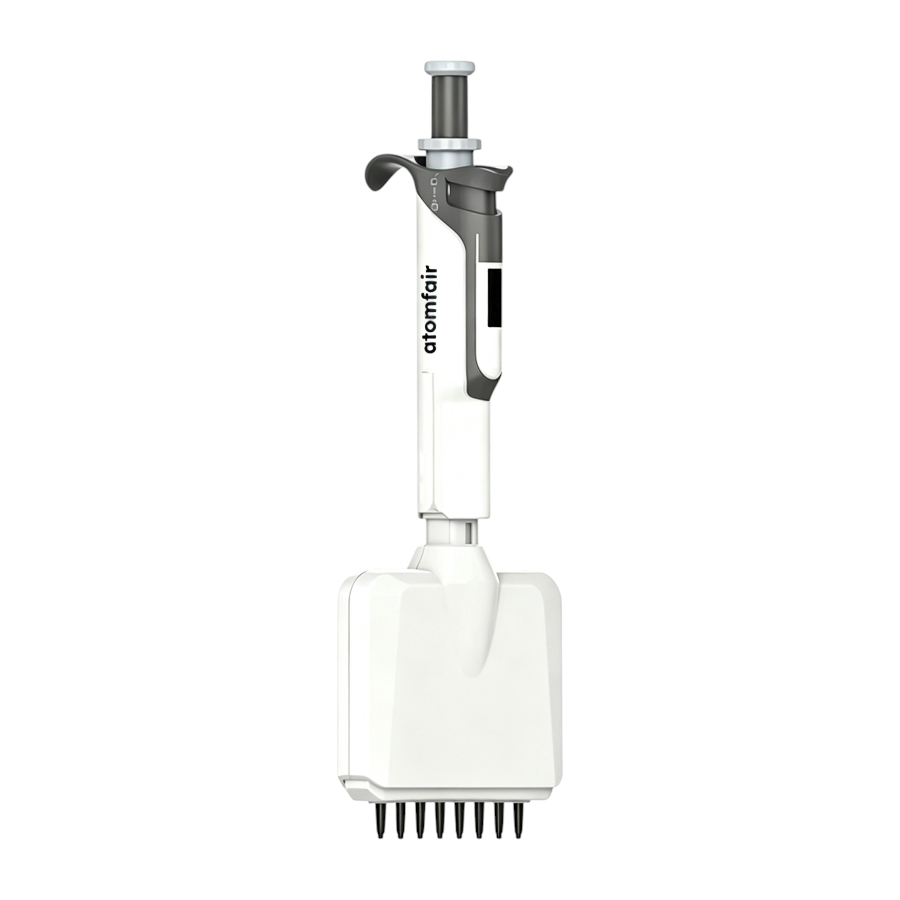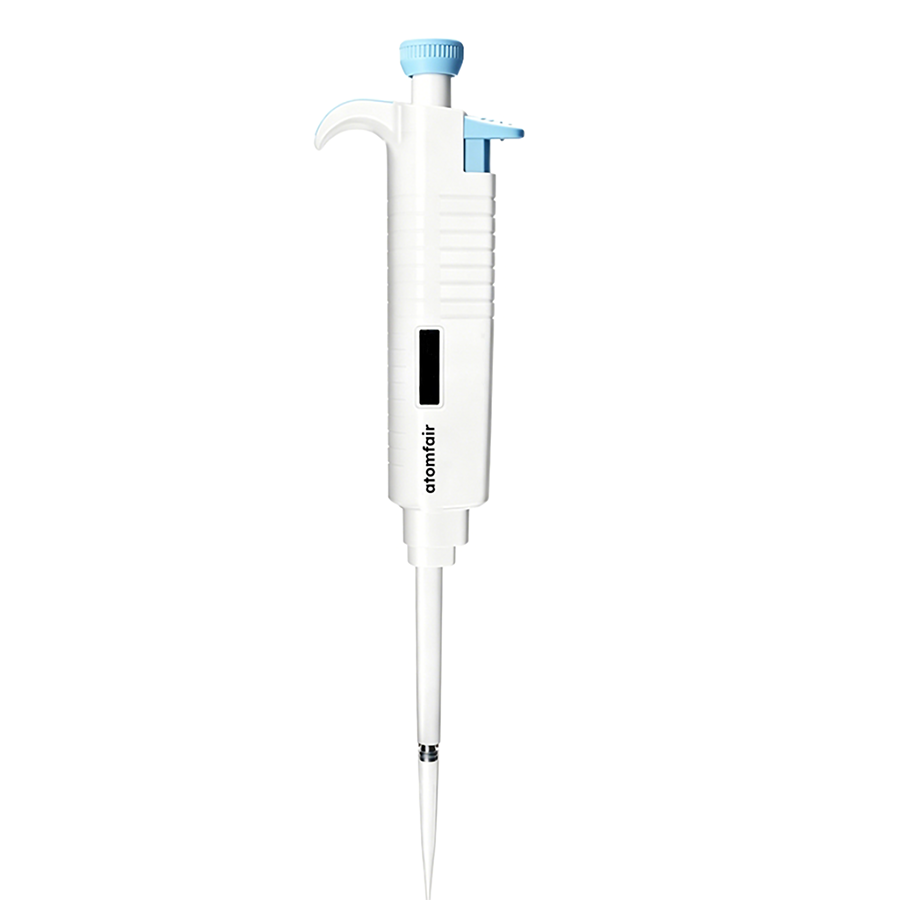
MicroPette Plus Single-channel 2-20 µL PipetteProduct Type: Fully autoclavable manual pipette
Research-grade liquid handling platform
|
|||||||||||||||||||||||||||||||
|
|||||||||||||||||||||||||||||||
|
TAILORED SOLUTIONS FOR RESEARCH
For bulk orders, OEM requirements, accessory matching, platform selection or configuration confirmation, contact our engineering sales team.
EMAIL: inquiry@atomfair.com
|
|||||||||||||||||||||||||||||||
|
Supplier: Atomfair
Brand: ATOMFAIR®
|
This pipette requires periodic calibration per ISO 8655-2 to maintain specified accuracy and precision across its volume range. Full autoclaving at 121°C is permitted for sterilization, but must be performed with the volume set to maximum and the pipette in an upright position to prevent damage.
- Calibration Requirement: Systematic and random error tolerances are defined at test volumes of 20, 10, and 2 µL, necessitating routine calibration verification using a gravimetric method.
- Sterilization Constraint: Autoclaving must be conducted at 121°C with the pipette set to its maximum volume and placed upright to avoid internal component deformation.
This procedure outlines the steps for gravimetric calibration verification and full autoclave sterilization of the pipette. Proper execution ensures measurement traceability and maintains instrument integrity over repeated use cycles.
Required Equipment: Analytical balance with 0.01 mg readability, Autoclave capable of 121°C sterilization cycle, Distilled water at 20-25°C
- Set pipette to test volume
Set the pipette to 20 µL and attach a compatible tip securely. - Perform gravimetric measurement
Aspirate and dispense distilled water onto the analytical balance pan, recording the mass for ten replicate measurements. - Compare results to specifications
Calculate the mean systematic error and random error from the recorded masses and compare against the stated tolerances at 20 µL. - Prepare pipette for autoclaving
Set the volume adjustment to the maximum setting (20 µL) and disassemble the lower tip cone assembly if recommended by the manual. - Autoclave the pipette components
Place the disassembled parts in an autoclave-safe container and run a standard 121°C cycle for 20 minutes. - Dry and reassemble after sterilization
Allow all components to cool and dry completely before reassembling the pipette. - Verify post-sterilization performance
Repeat the gravimetric measurement at 20 µL to confirm that accuracy remains within specification after autoclaving.
How does the accuracy of the MicroPette Plus 2-20 µL pipette at the lowest volume (2 µL) compare to its accuracy at the highest volume (20 µL), and what are the implications for low-volume assays?
At 20 µL, the systematic error is ±0.20 µL (±1.0%), while at 2 µL, the systematic error is ±0.10 µL (±5.0%). The relative error increases significantly at the lower end of the range, which is typical for manual pipettes. For low-volume assays requiring high precision, users should account for the higher relative error and may need to calibrate at the target volume to ensure accurate results.
What sterilization procedures are compatible with the MicroPette Plus 2-20 µL pipette, and does the autoclavable feature require disassembly before sterilization?
The pipette is specified as fully autoclavable, indicating it can withstand steam sterilization at standard conditions. While the product description does not detail disassembly steps, typical manual pipettes require the shaft, tip ejector, and piston assembly to be separated before autoclaving to prevent damage. Users should consult the user manual for specific disassembly and re-assembly instructions to maintain performance and calibration.
What calibration standards are used for the MicroPette Plus 2-20 µL pipette, and how should the reported systematic and random error values be interpreted for routine performance verification?
The pipette is calibrated according to ISO 8655-2, which is a standard for piston-operated volumetric apparatus. Systematic error (±0.10 µL to ±0.20 µL) and random error (±0.03 µL to ±0.06 µL) are provided at test volumes of 2, 10, and 20 µL. These values can be used as reference limits for in-house performance checks to verify that the pipette remains within specification between calibrations.
The MicroPette Plus Single-channel 2-20 µL pipette offers full autoclavability and ISO 8655-2 calibration traceability, but exhibits higher systematic error (±5.0%) at the 2 µL lower end and is limited to single-channel operation, which may constrain high-throughput applications.
Positive
- Fully autoclavable for sterility: The entire pipette can be autoclaved, enabling aseptic liquid handling in microbiology, PCR, and cell culture workflows without disassembly.
- ISO 8655-2 calibration traceability: Systematic and random error values are provided per test volume with reference to ISO 8655-2, supporting routine calibration verification and method compliance.
Trade-offs
- Elevated systematic error at 2 µL: At the minimum test volume of 2 µL, systematic error is ±5.0% (±0.10 µL), which may limit precision for low-volume applications requiring tighter tolerance.
- Single-channel throughput limitation: The single-channel format is optimized for single-tube tasks and is not suited for parallel plate processing, reducing efficiency in high-throughput workflows.
Every advanced material, component, equipment, and instrument in our catalog is backed by rigorous testing. We maintain strict internal quality management frameworks and align with CE conformity metrics to deliver transparent, reproducible performance data via our public open-science repository.
To request raw batch performance data, submit formal vendor registration paperwork, or execute a fast-turnaround R&D manufacturing loop, contact us at inquiry@atomfair.com.
Item is dispatched under the Atomfair Shipping & Delivery Framework (Free worldwide shipping on orders over $59 USD excl. heavy equipment). Return is governed by the Atomfair Return & Refund Policy (7-day technical return window).