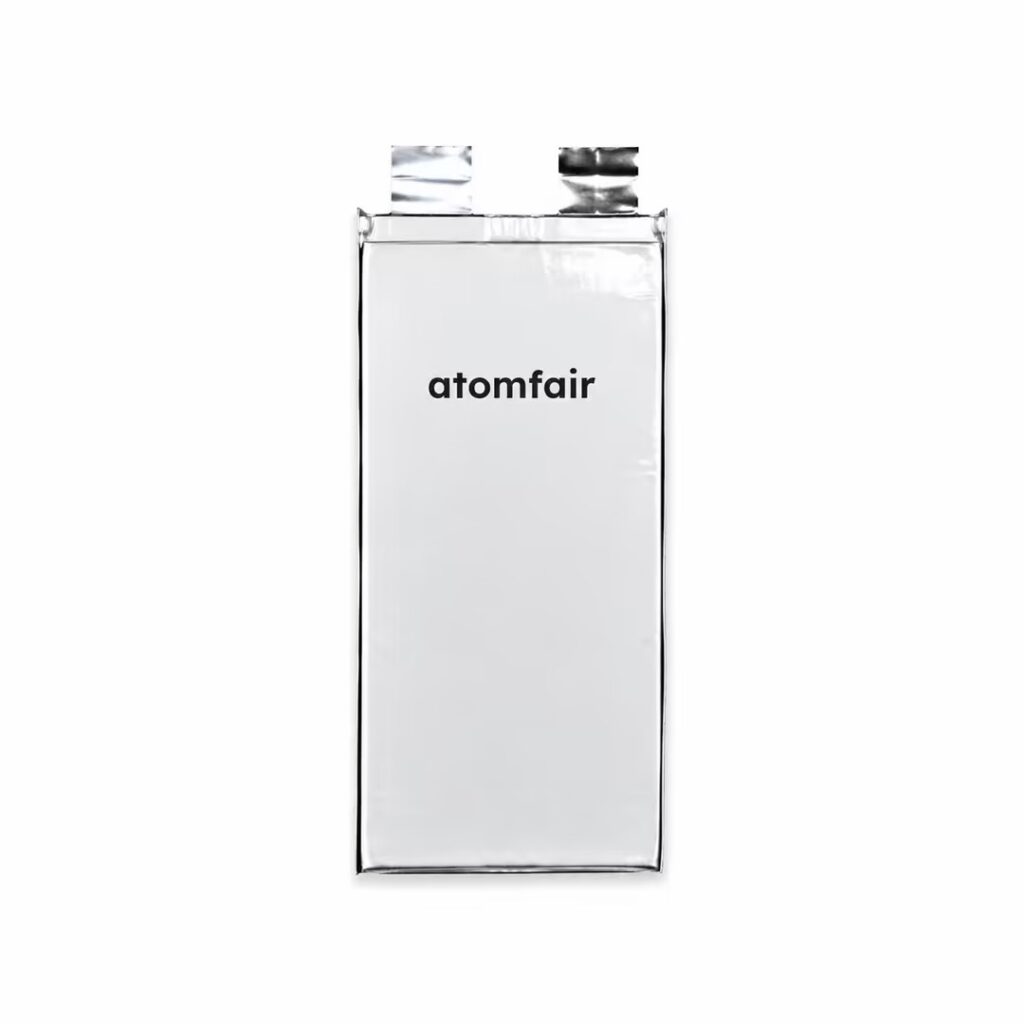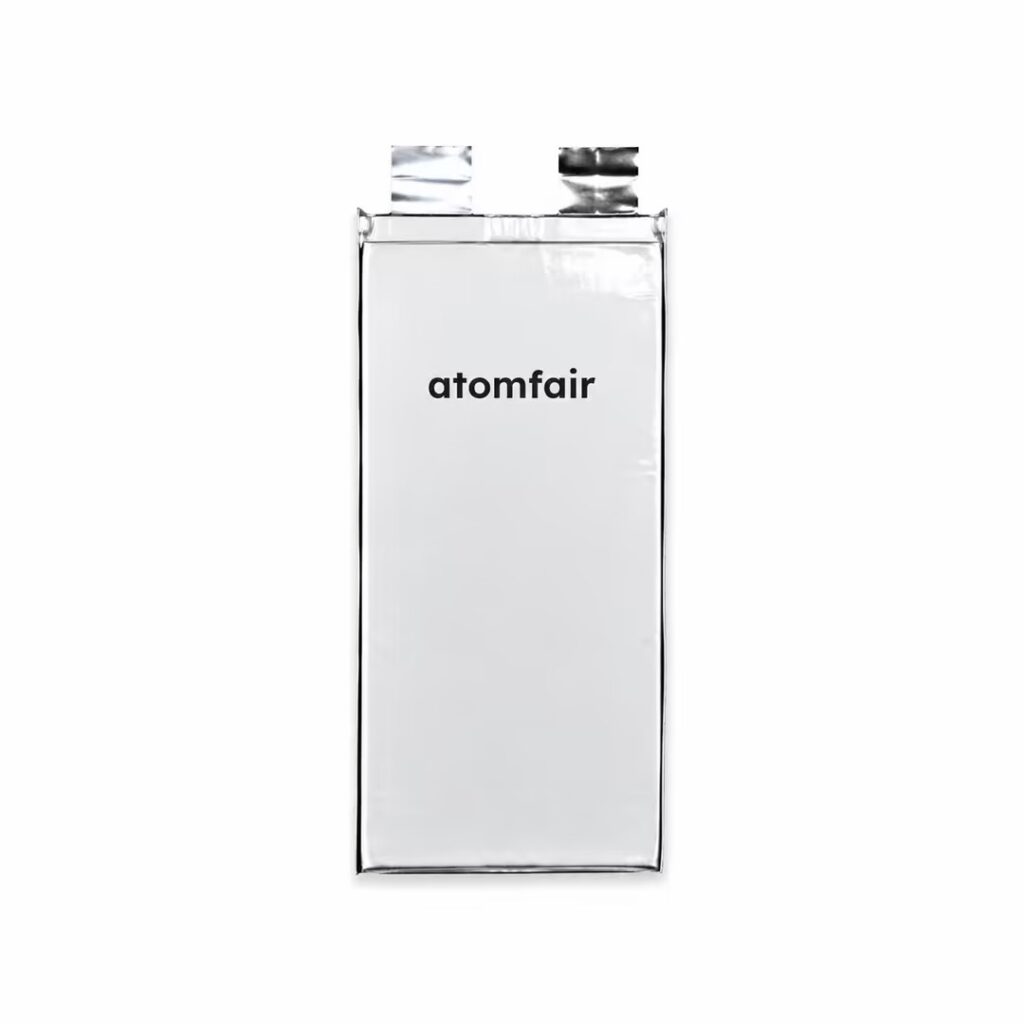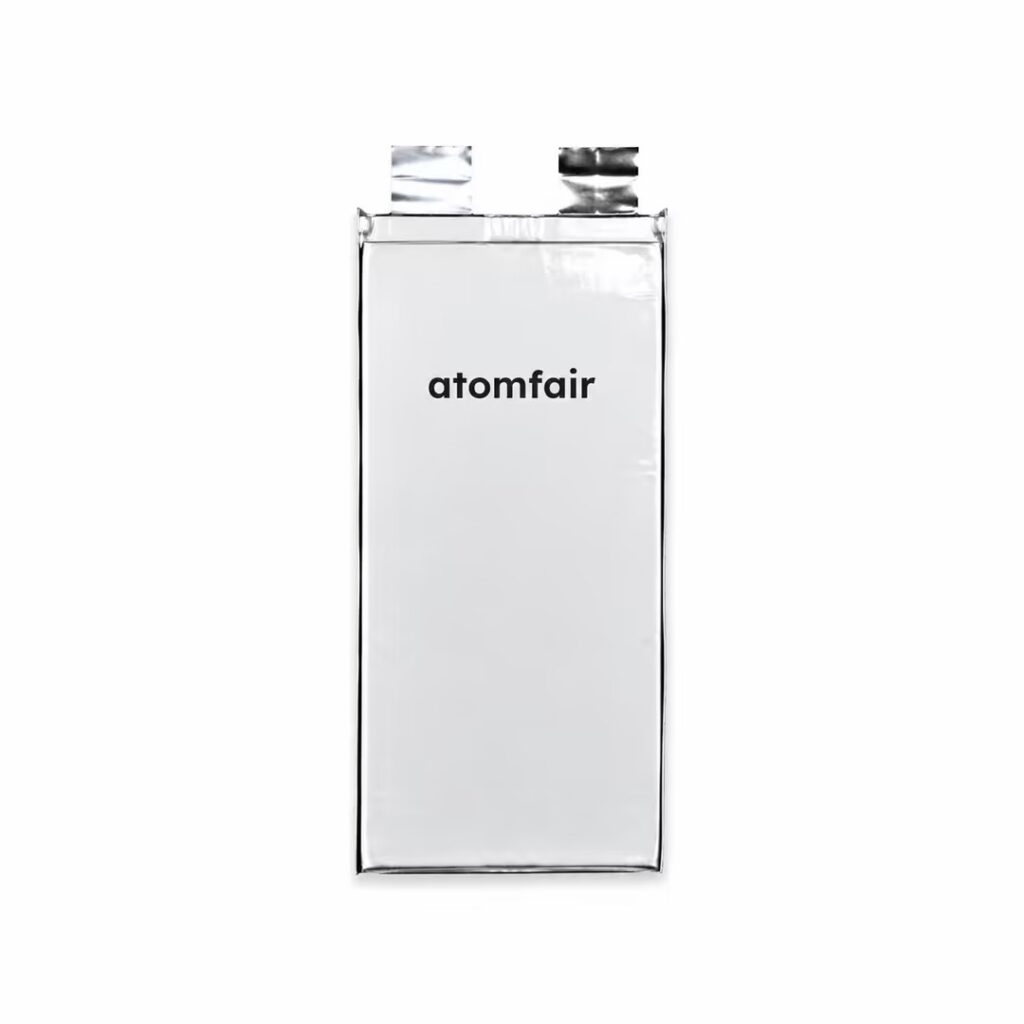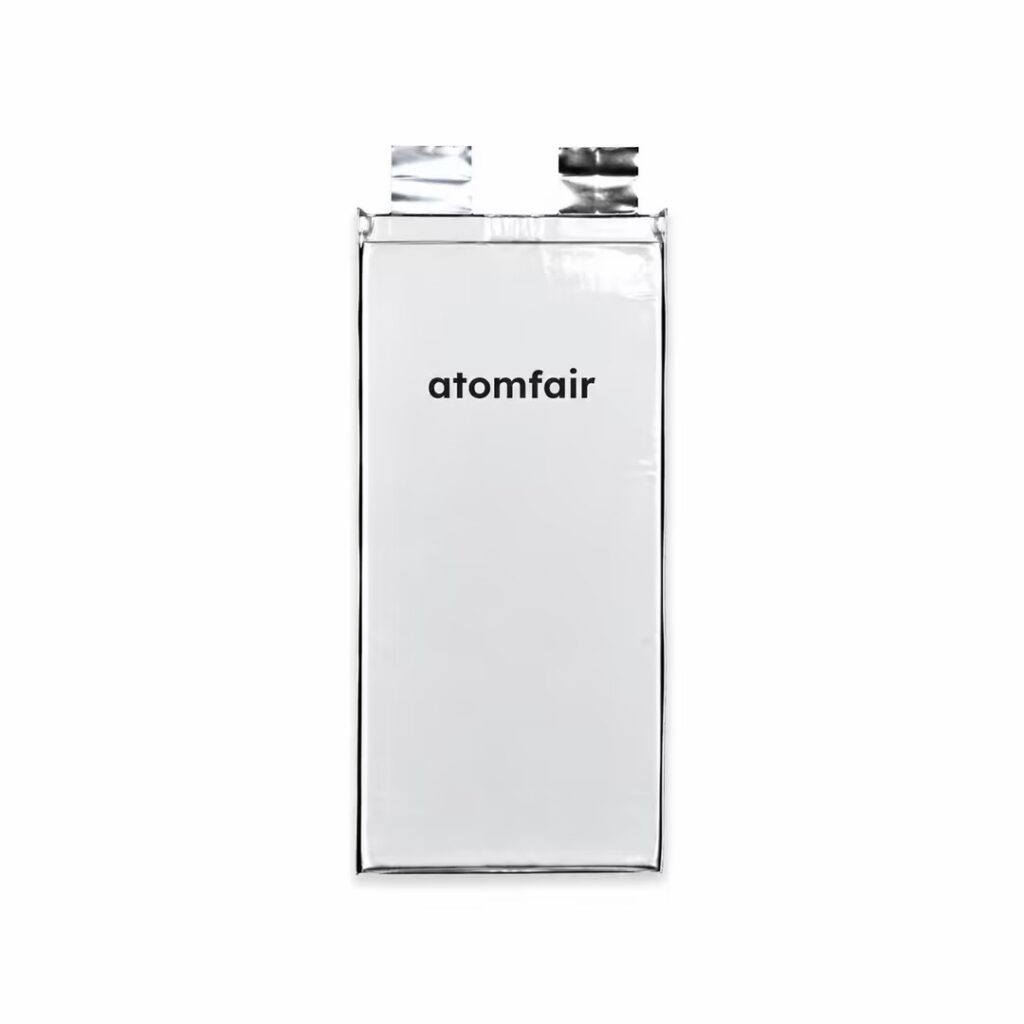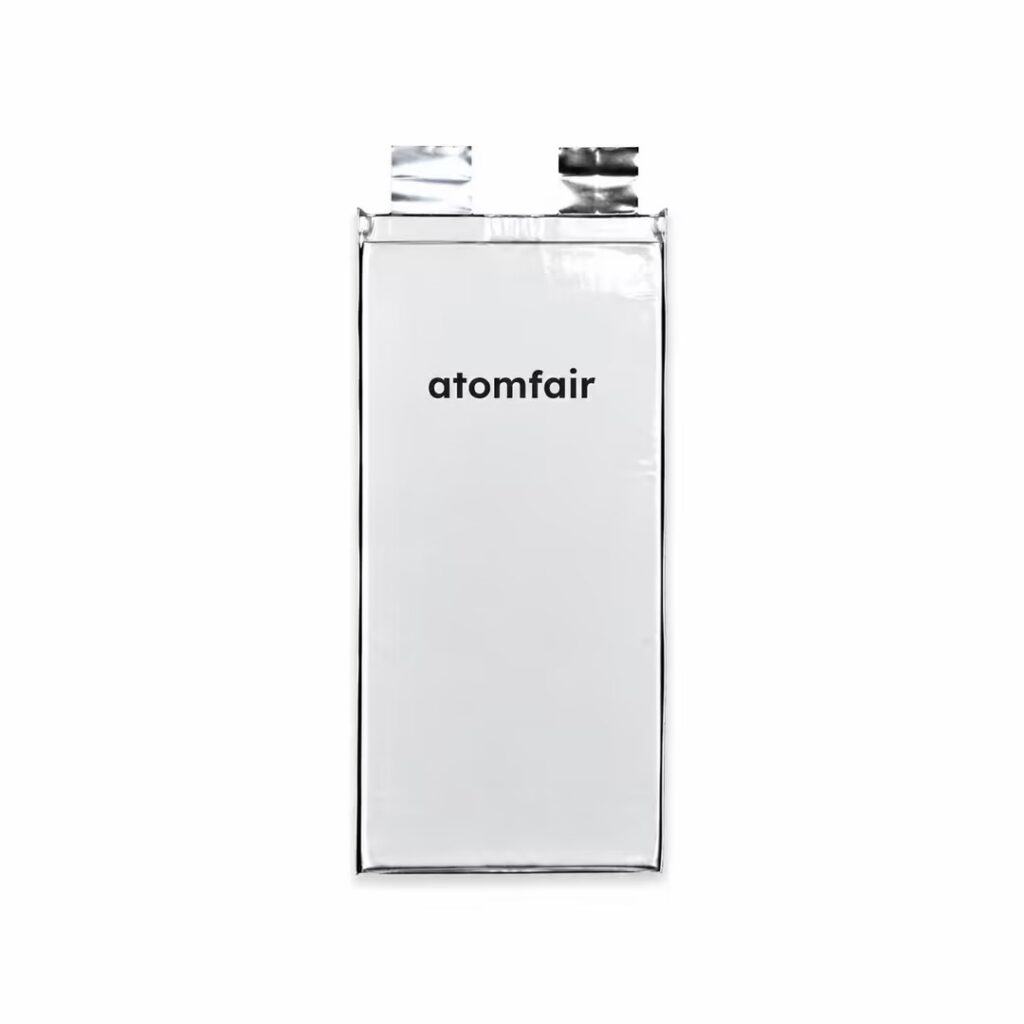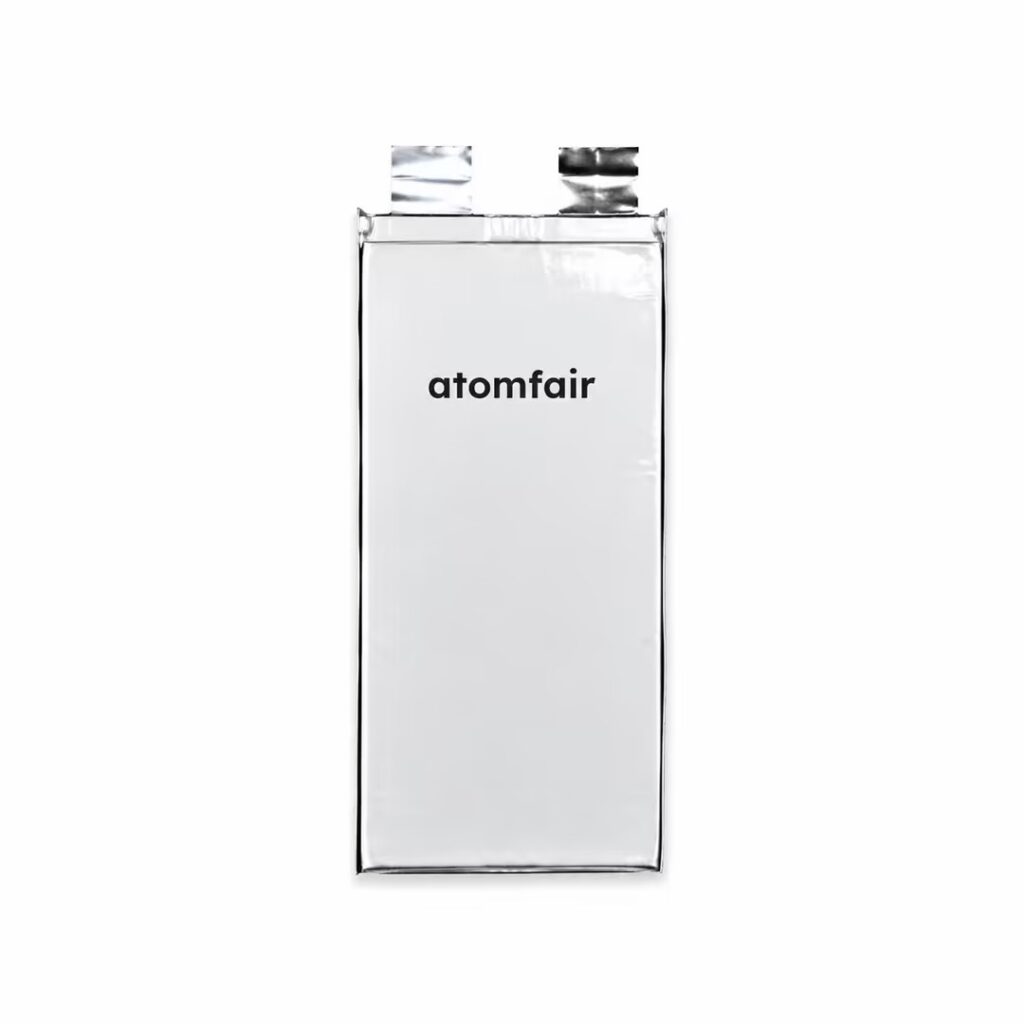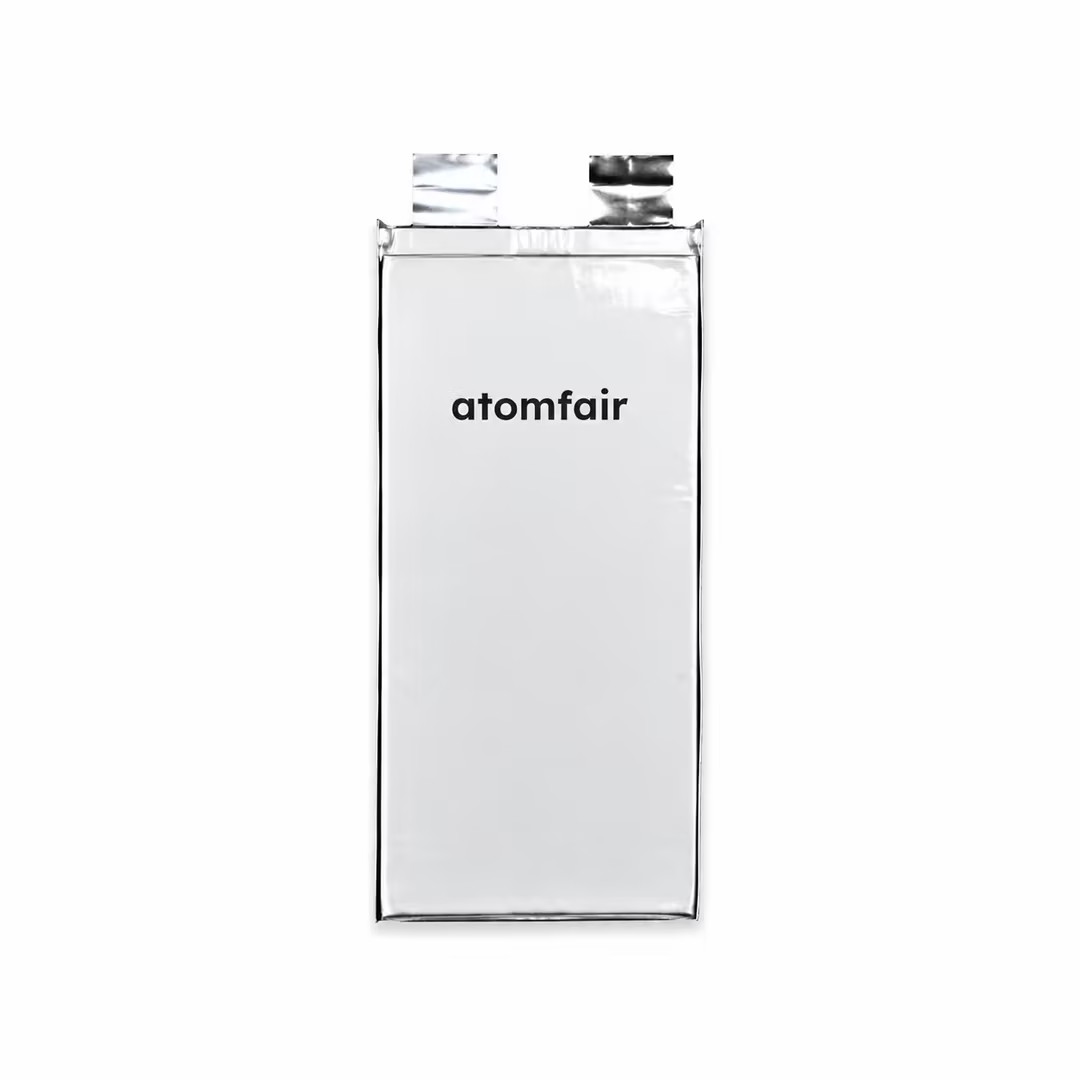
62AH HIGH-PERFORMANCE AND HIGH-SAFETY SOLID-STATE BATTERY | ATOMFAIRCOMMERCIAL GRADE · PRODUCTION
|
|||||||||||||||||||||||||||||||||||||
|
|||||||||||||||||||||||||||||||||||||
|
TAILORED SOLUTIONS FOR RESEARCH
Contact our engineering team for technical support or official institutional quotations.
EMAIL: INQUIRY@ATOMFAIR.COM
|
|||||||||||||||||||||||||||||||||||||
|
MANUFACTURER: ATOMFAIR LLC
BRAND: ATOMFAIR®
|
|||||||||||||||||||||||||||||||||||||
This solid-state pouch cell requires storage in a dry, ventilated area between 15-30°C to prevent thermal degradation. The cell must not be disassembled, punctured, or exposed to fire due to active electrochemical hazard potential.
- Temperature and Atmosphere Constraints: Store the cell in a dry, ventilated environment within 15-30°C to maintain electrolyte stability and prevent moisture ingress.
- Electrical Safety Limits: Do not exceed 3C continuous charge current or 5C continuous discharge current to avoid thermal runaway or capacity degradation.
- Peak Discharge Constraint: For 8C peak discharge bursts lasting up to 30 seconds, ensure the state of charge remains at or above 30% to prevent irreversible cell damage.
- Mechanical Integrity Warning: Do not disassemble, puncture, or expose the cell to fire, as the solid-state electrolyte and active materials pose combustion and toxicity risks.
This procedure covers safe unpacking, pre-use inspection, and initial charging of the solid-state pouch cell. Follow these steps to mitigate electrical and thermal hazards during first deployment.
Required Equipment: Insulated gloves, Multimeter with voltage measurement capability, Constant-current constant-voltage (CC-CV) battery cycler
- Inspect packaging and cell condition
Inspect the shock-damping hazardous material transport packaging for damage and verify the cell terminals are intact and free of corrosion. - Measure initial open-circuit voltage
Measure the open-circuit voltage across the cell terminals using a calibrated multimeter to confirm the cell is within the safe voltage range before charging. - Set charging parameters on the cycler
Set the CC-CV battery cycler to a maximum continuous charge current of 3C and a target voltage of 3.65 V, ensuring the ambient temperature is between -30°C and 70°C. - Connect cell to cycler and begin charging
Connect the cell terminals to the cycler leads with correct polarity, then initiate the charging sequence at a rate not exceeding 3C. - Monitor cell temperature during charge
Monitor the cell surface temperature continuously during charging and abort the process if the temperature exceeds 70°C. - Verify charge completion and disconnect
Verify that the cell reaches 3.65 V and the current tapers to near zero, then disconnect the cycler leads in reverse order of connection.
What is the cycle life trade-off when using 3C fast charge on this 62Ah solid-state battery?
The battery maintains ≥80% capacity after 1000 cycles under 1C/1C charge/discharge conditions. The documentation does not specify cycle life at 3C charge rates; however, adhering to the recommended 3C maximum continuous charge is expected to minimize accelerated degradation. For optimal longevity, charge within the specified current limits.
What are the key integration constraints when connecting this 62Ah solid-state cell into a multi-cell pack?
Each cell has a nominal voltage of 3.65V and dimensions 10.8 × 105 × 310 mm. The pack must be designed to support 3C continuous charge (186 A per cell), 5C continuous discharge (310 A), and 8C peak discharge (496 A) for up to 30 seconds with SOC ≥30%. The composite solid-state electrolyte enables safe series/parallel stacking, but a compatible BMS must enforce current and voltage limits.
What storage and handling precautions are required for this 62Ah solid-state battery?
Store the battery in a dry, ventilated area at 15–30°C. Do not disassemble, puncture, or expose to fire. Charge only within -30°C to 70°C, and ensure SOC ≥30% before applying 8C peak discharge. The composite solid-state electrolyte eliminates liquid leakage and enhances thermal stability, but safe handling procedures per the manufacturer's instructions must still be followed.
This 62Ah solid-state pouch cell delivers 310 Wh/kg and 640 Wh/L with a composite solid-state electrolyte for enhanced safety, but requires careful thermal management and has a limited cycle life of 1000 cycles at 1C/1C.
Positive
- High Energy Density: Achieves 310 Wh/kg gravimetric and 640 Wh/L volumetric energy density, enabling extended range for EVs, eVTOL aircraft, and marine vessels.
- Solid-State Electrolyte Safety: Composite solid-state electrolyte eliminates liquid leakage risks and enhances thermal stability, improving intrinsic safety in high-vibration or high-temperature applications.
Trade-offs
- Limited Cycle Life: Retains ≥80% capacity for only 1000 cycles at 1C/1C charge/discharge, which is a lower cycle life compared to many liquid electrolyte cells and may require earlier replacement in high-cycle applications.
- Peak Discharge Condition: 8C peak discharge is limited to 30 seconds and requires a state of charge ≥30%, imposing operational constraints that must be managed in system design.
Every advanced material, component, equipment, and instrument in our catalog is backed by rigorous testing. We maintain strict internal quality management frameworks and align with CE conformity metrics to deliver transparent, reproducible performance data via our public open-science repository.
To request raw batch performance data, submit formal vendor registration paperwork, or execute a fast-turnaround R&D manufacturing loop, contact us at inquiry@atomfair.com.
Item is dispatched under the Atomfair Shipping & Delivery Framework (Free worldwide shipping on orders over $59 USD excl. heavy equipment). Return is governed by the Atomfair Return & Refund Policy (7-day technical return window).