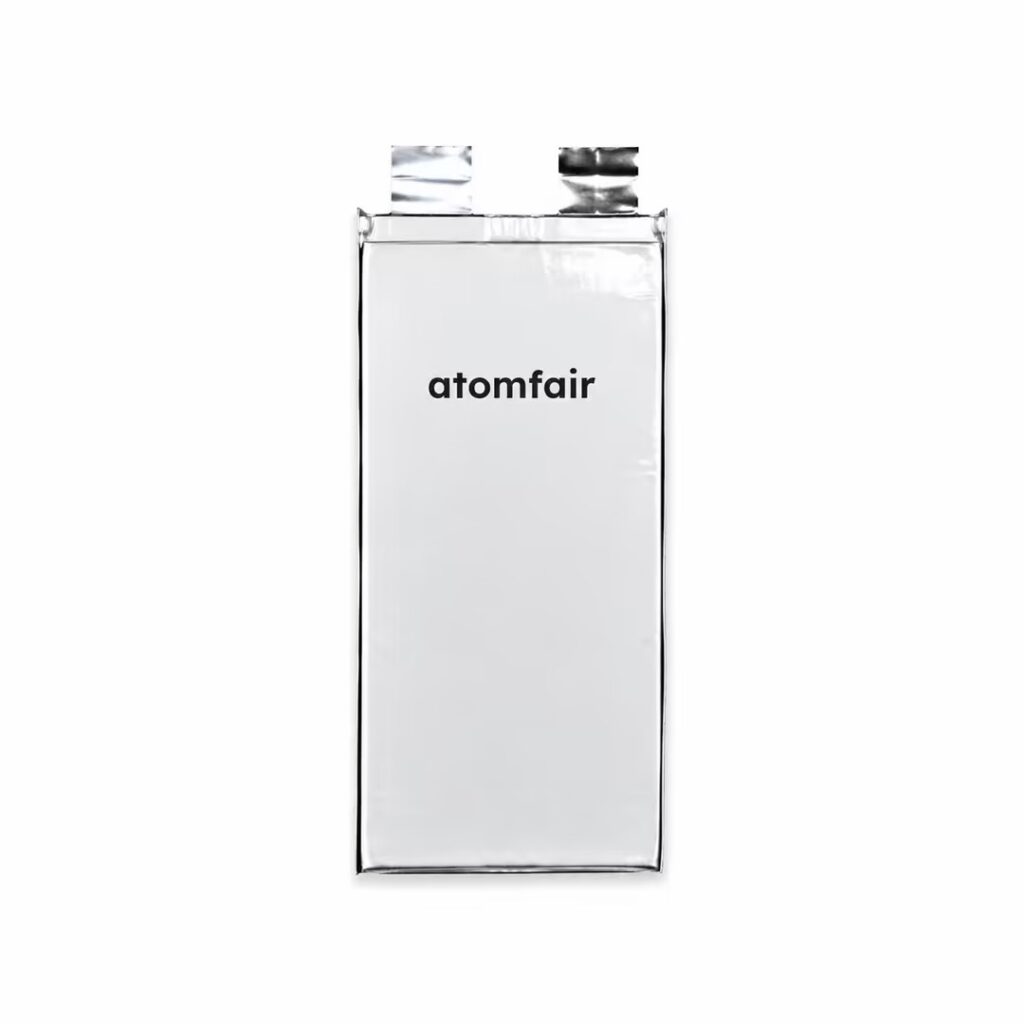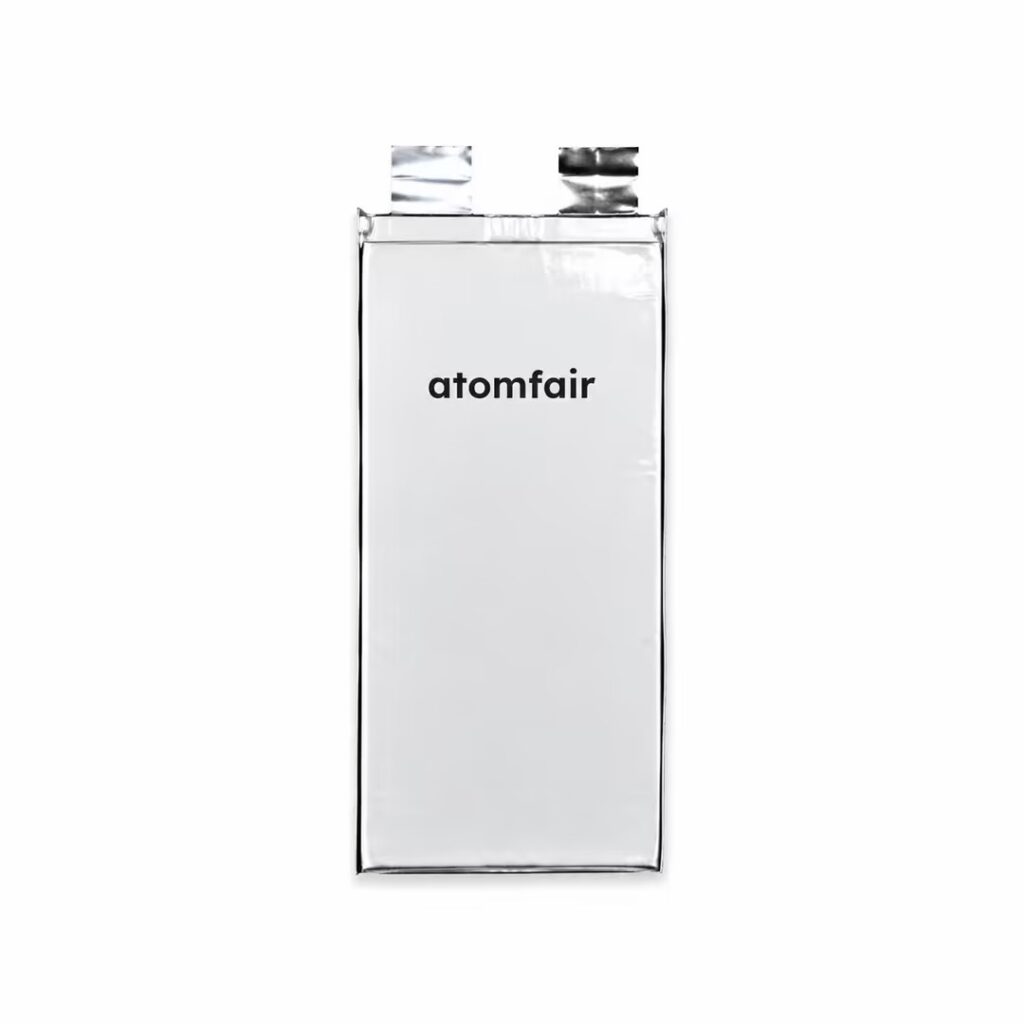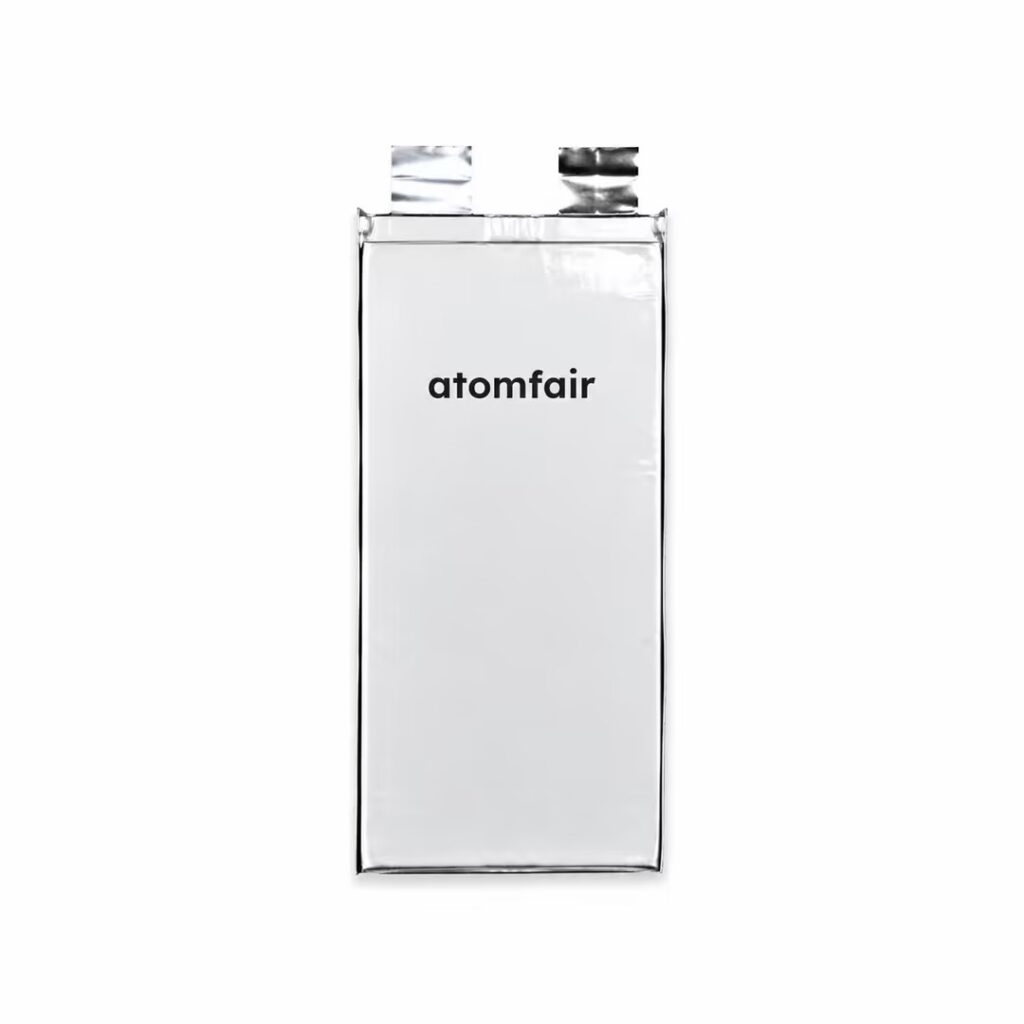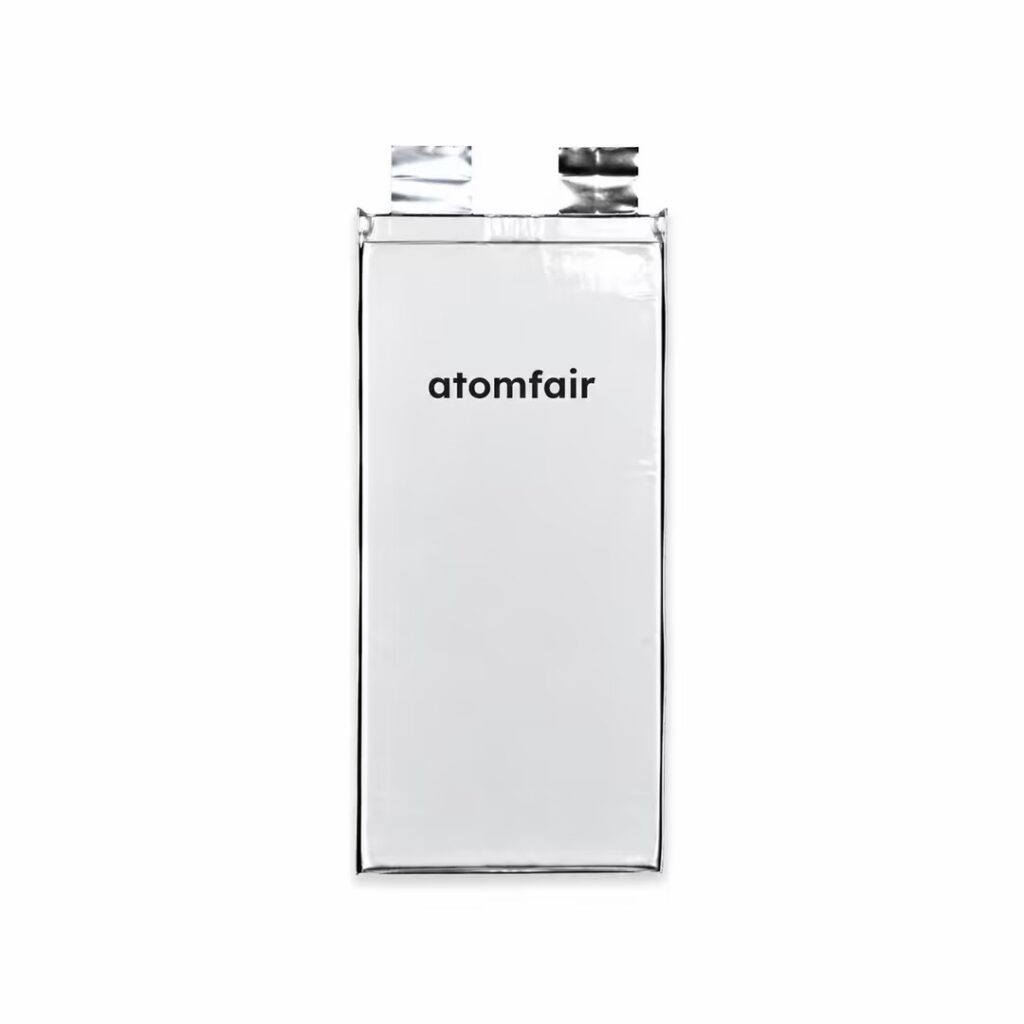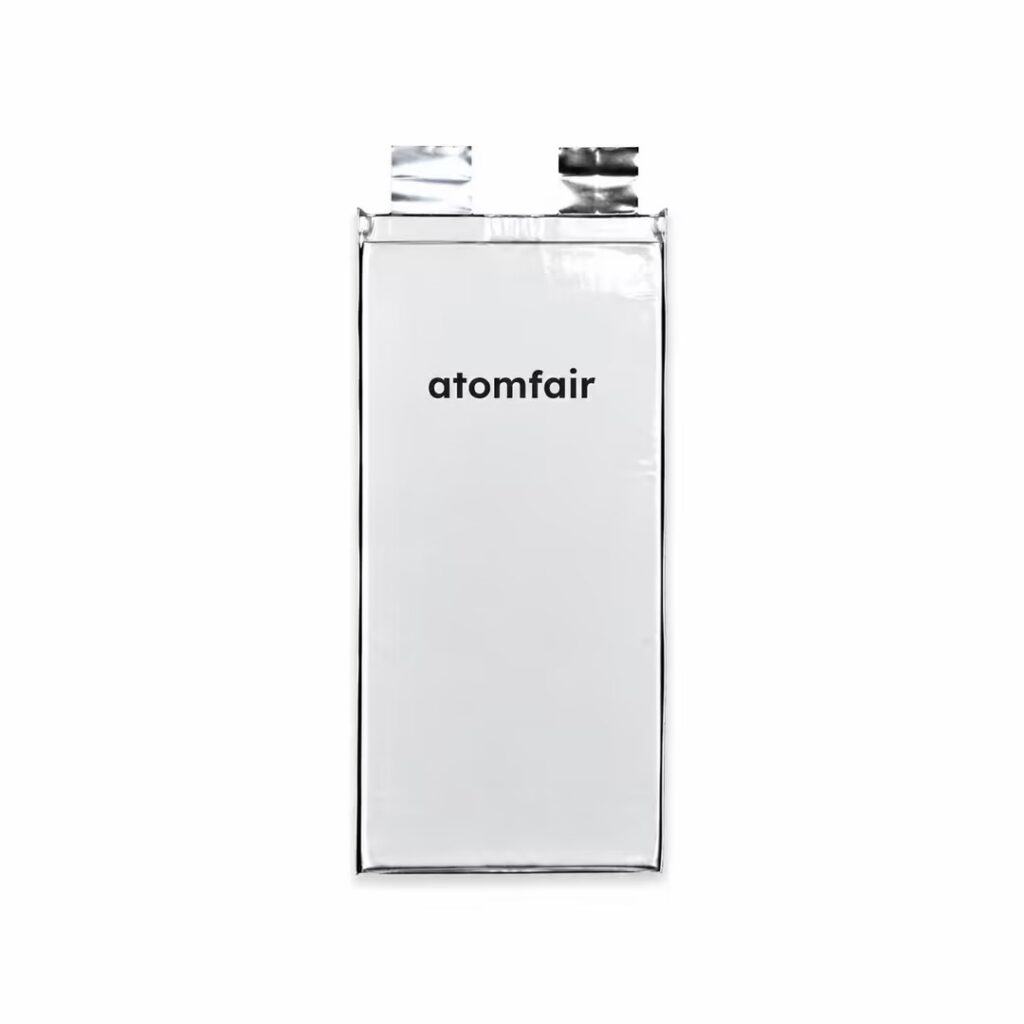
66AH HIGH-PERFORMANCE AND HIGH-SAFETY SOLID-STATE BATTERY | ATOMFAIRCOMMERCIAL GRADE · PRODUCTION
|
|||||||||||||||||||||||||||||||||||||
|
|||||||||||||||||||||||||||||||||||||
|
TAILORED SOLUTIONS FOR RESEARCH
Contact our engineering team for technical support or official institutional quotations.
EMAIL: INQUIRY@ATOMFAIR.COM
|
|||||||||||||||||||||||||||||||||||||
|
MANUFACTURER: ATOMFAIR LLC
BRAND: ATOMFAIR®
|
This high-energy solid-state pouch cell must be stored in a dry, ventilated area between 15-30°C. Charging must be performed within -30°C to 70°C and not exceed 3C continuous, while discharge must not exceed 5C continuous or 8C peak for 30s with SOC≥30%.
- Storage Environment: Store the battery in a dry, ventilated area with temperature maintained between 15°C and 30°C.
- Charging Limits: Charge only within -30°C to 70°C and at a continuous rate not exceeding 3C.
- Discharge Limits: Do not exceed 5C continuous discharge or 8C peak discharge for more than 30 seconds.
- Peak Discharge Condition: Peak 8C discharge is only permitted when state of charge is at least 30%.
- Prohibited Actions: Do not disassemble, puncture, or expose the battery to fire.
This procedure outlines safe handling and initialization steps for the 66Ah solid-state battery. Follow these steps to ensure safe operation and prevent damage or injury.
Required Equipment: Battery Management System (BMS), Constant Current Charger, Temperature Sensor, Safety Gloves
- Inspect Packaging
Inspect the battery packaging for any damage or leakage before opening. - Verify Ambient Temperature
Confirm the ambient temperature is between -30°C and 70°C before connecting the battery. - Connect BMS
Connect the battery to a certified battery management system that supports 3C charge and 5C discharge limits. - Set Charging Parameters
Set the charging current to a maximum of 3C and ensure the charger is within the specified voltage range. - Discharge Safely
Apply continuous discharge up to 5C or peak discharge up to 8C for 30 seconds only when state of charge is at least 30%. - Store When Not in Use
Store the battery in a dry, ventilated environment between 15°C and 30°C to maintain longevity.
What are the key advantages of this solid-state battery?
This solid-state cell offers intrinsic safety due to the composite solid electrolyte, high energy density (310 Wh/kg), high power (5C continuous, 8C peak), wide temperature range (-30°C to 70°C), and long cycle life (1000 cycles at 1C/1C with ≥80% retention). It is engineered for next-generation EVs, eVTOL, and electric vessels.
What is the recommended charging/discharging profile?
Standard charge/discharge is 1.0C. Maximum continuous charge is 3.0C, maximum continuous discharge is 5.0C, and peak discharge (30 seconds) is 8.0C (≥30% SOC). For optimal cycle life, operate within -30°C to 70°C.
How does solid-state chemistry improve safety compared to conventional Li-ion?
The composite solid-state electrolyte (C-SSE) is non-flammable and eliminates liquid electrolyte leakage, significantly reducing risks of thermal runaway, fire, or explosion. This makes the cell exceptionally safe for high-energy, high-power applications.
This 66Ah NCM-Gr/Si,C-SSE pouch cell delivers 310 Wh/kg with a composite solid-state electrolyte, offering high safety and wide-temperature operation, but requires ≥30% SOC for peak discharge and controlled storage conditions.
Positive
- High Safety Solid-State Electrolyte: The composite solid-state electrolyte (C-SSE) is non-flammable and eliminates liquid leakage, significantly reducing thermal runaway risk and enhancing intrinsic safety for high-energy applications.
- High Energy Density (310 Wh/kg): Achieves 310 Wh/kg gravimetric and 625 Wh/L volumetric energy density, enabling extended range for electric vehicles, eVTOL, and marine vessels without proportional weight increase.
Trade-offs
- Peak Discharge SOC Constraint: The 8C peak discharge (30 s) is only permitted when state of charge (SOC) is ≥30%, limiting burst power availability under low charge conditions.
- Controlled Storage Conditions: Cells must be stored in a dry, ventilated environment at 15–30°C to maintain electrolyte stability and prevent degradation, requiring climate-controlled storage infrastructure.
Every advanced material, component, equipment, and instrument in our catalog is backed by rigorous testing. We maintain strict internal quality management frameworks and align with CE conformity metrics to deliver transparent, reproducible performance data via our public open-science repository.
To request raw batch performance data, submit formal vendor registration paperwork, or execute a fast-turnaround R&D manufacturing loop, contact us at inquiry@atomfair.com.
Item is dispatched under the Atomfair Shipping & Delivery Framework (Free worldwide shipping on orders over $59 USD excl. heavy equipment). Return is governed by the Atomfair Return & Refund Policy (7-day technical return window).