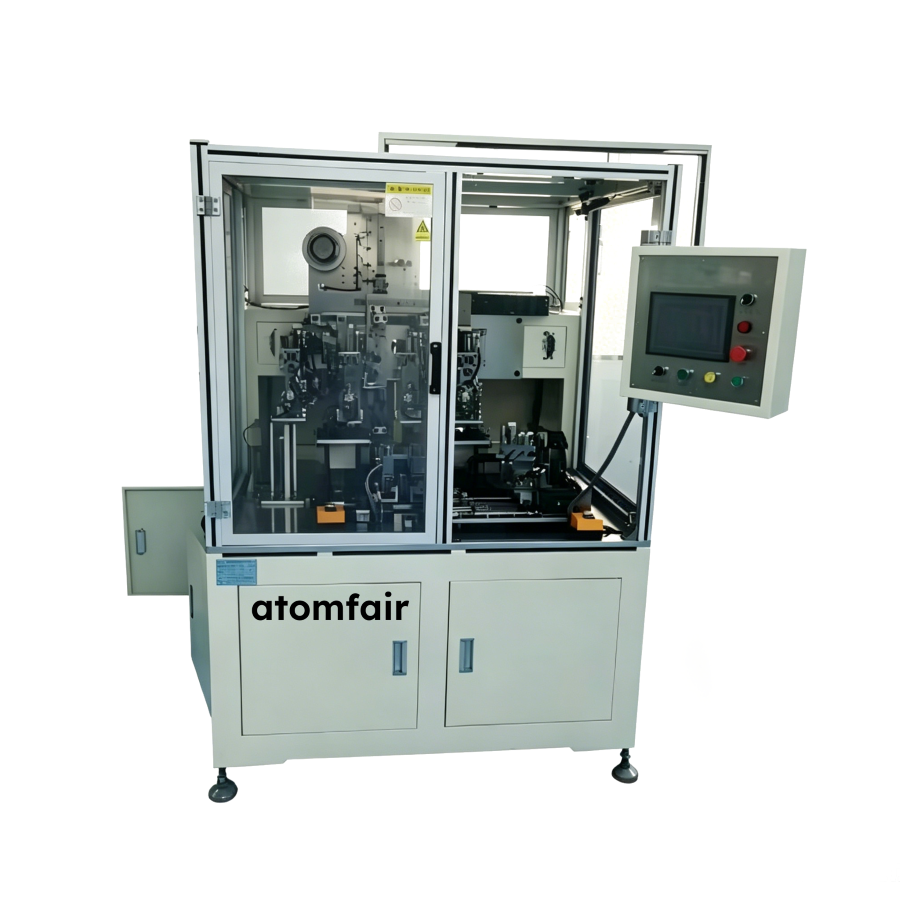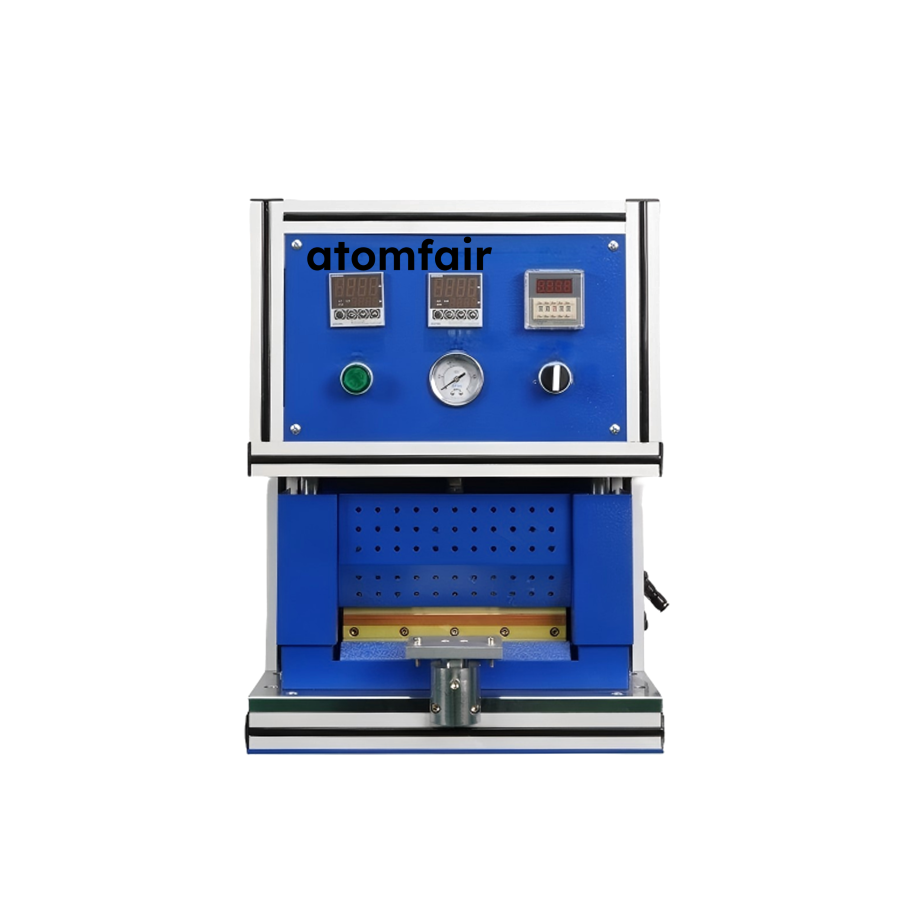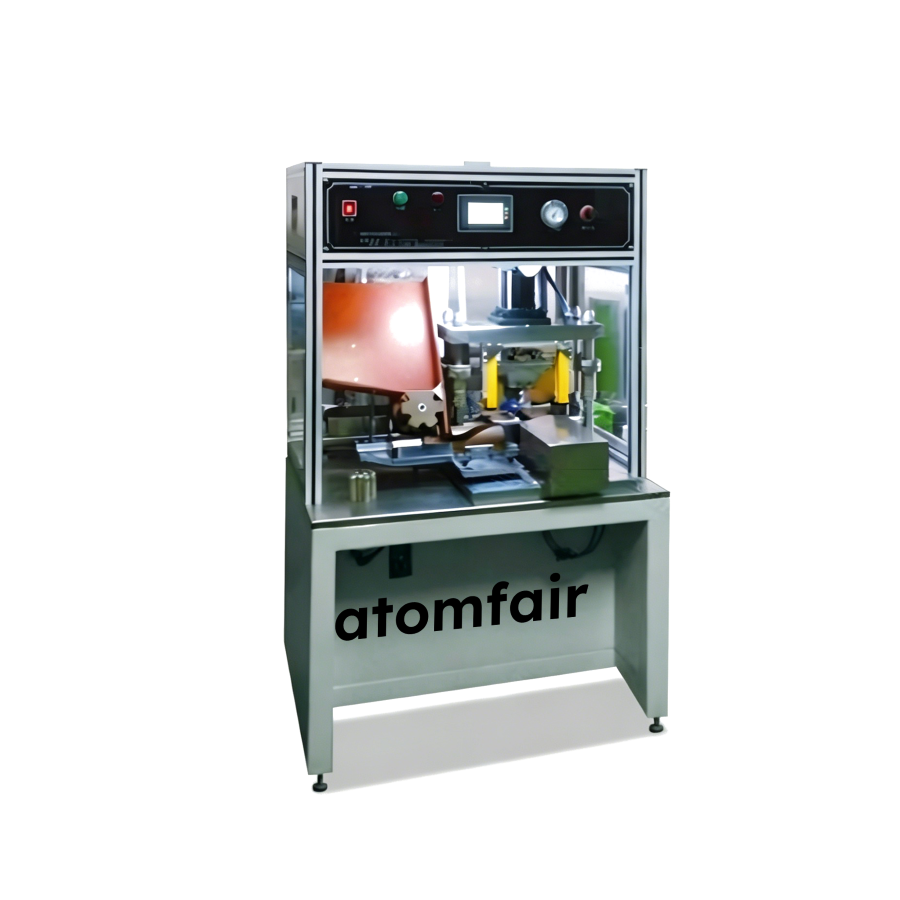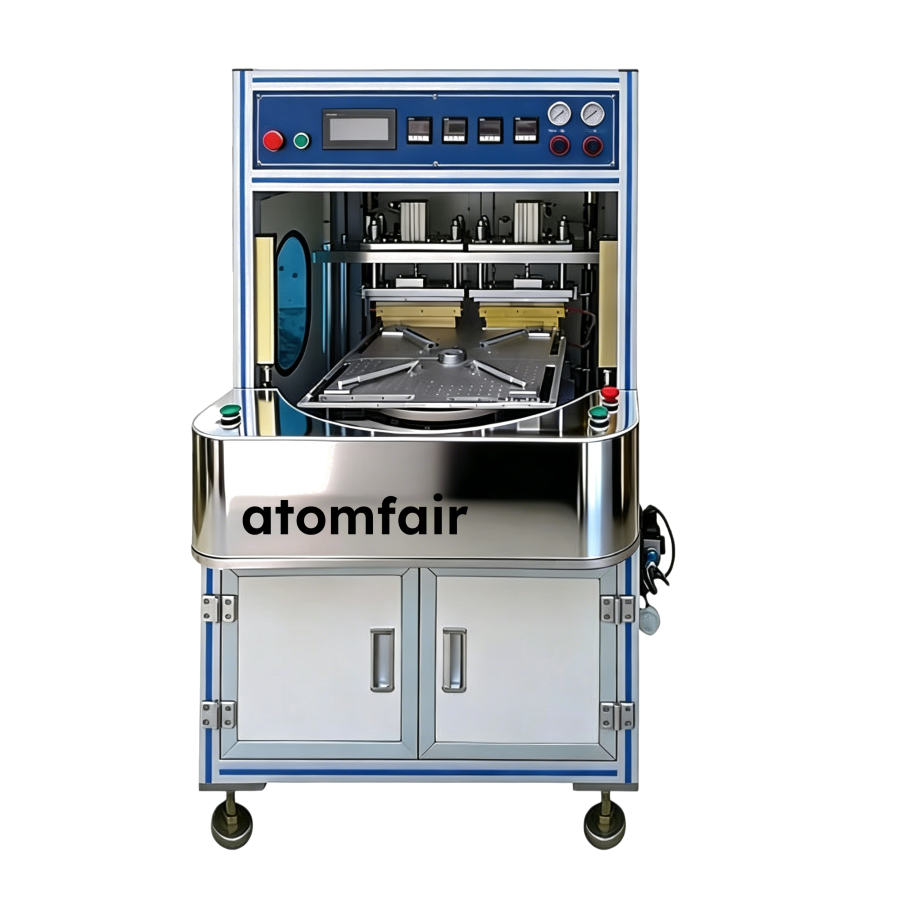
ATOMFAIR® 4-STATION ROTARY TOP & SIDE SEALING MACHINERESEARCH GRADE MATERIAL
|
|||||||||||||||||||||||||||||||||||||||||
|
|||||||||||||||||||||||||||||||||||||||||
|
TAILORED SOLUTIONS FOR RESEARCH
Contact our engineering team for technical support or official institutional quotations.
EMAIL: inquiry@atomfair.com
|
|||||||||||||||||||||||||||||||||||||||||
|
Manufacturer: Atomfair LLC
Brand: ATOMFAIR®
|
|||||||||||||||||||||||||||||||||||||||||
The sealing machine must operate within a stable environment to maintain temperature control accuracy of ±3°C and head parallelism within ±0.01mm. Regular calibration is required for the cam roller divider and mold stroke to ensure consistent sealing and prevent mechanical wear.
- Temperature and Parallelism Constraints: Sealing head temperature must be maintained within ±3°C of setpoint, and head parallelism must be verified to ±0.01mm using triple carbonless copy paper.
- Electrical and Thermal Safety: Operators must ensure proper electrical grounding and wear heat-resistant gloves when handling molds to prevent burns from sealing heads reaching up to 230°C.
This procedure covers the initialization and safe operation of the rotary sealing machine for pouch lithium-ion batteries. Proper setup of temperature, mold stroke, and rotary feeding is essential for achieving high-quality seals.
Required Equipment: Temperature controller, Mold adjustment tool, Triple carbonless copy paper
- Verify grounding
Confirm that the machine is properly grounded and all electrical connections are secure before applying power. - Set sealing temperature
Adjust the temperature controller to the desired sealing temperature within the range of room temperature to 230°C and allow the heads to stabilize. - Adjust mold stroke
Set the upper and lower mold stroke to accommodate the thickness of the pouch battery (0.16–0.3 mm). - Verify parallelism
Use triple carbonless copy paper to test and adjust head parallelism to within ±0.01 mm. - Load batteries
Place pouch batteries into the fixtures on the rotary stations, ensuring correct alignment for top and side sealing. - Start sealing cycle
Initiate the rotary feeding and monitor the sealing process for uniform seal quality and temperature consistency.
What is the relationship between the adjustable sealing time (0-99.9s) and the capacity range of 400-500 pcs/hour, and how does this affect sealing quality for thick pouches (0.3mm) vs thin (0.16mm)?
The sealing time from 0 to 99.9 seconds is fully adjustable to match pouch thicknesses between 0.16mm and 0.3mm. Longer times are employed for thicker pouches, which may reduce the capacity below the 400-500 pcs/hour range, but the 99% qualification rate is maintained across all thicknesses due to precise temperature control (±3°C) and head parallelism (±0.01mm).
Is the Atomfair-RTS369 compatible with both hard and soft sealing for top sealing, or is top sealing always soft as per the standard configuration?
The standard top sealing uses a soft seal process with a 3.5mm width and silicone lower mold plate. For applications requiring a hard seal top, custom hard seal heads can be supplied, making the machine compatible with both processes. Side sealing is always hard seal at 6mm width.
How does the rotary feeding accuracy of ≤30″ contribute to the overall qualification rate of 99%, and what maintenance ensures this accuracy over time?
The high-speed precision cam roller divider delivers ≤30″ indexing accuracy, ensuring consistent pouch alignment across all four sealing stations, which directly supports the 99% qualification rate. Periodic lubrication and inspection of the cam roller divider are standard practices to sustain this accuracy and achieve the 95% equipment uptime specification.
The Atomfair 4-Station Rotary Sealing Machine achieves ±0.01mm head parallelism and supports both hard and soft sealing for pouch cells, delivering a 99% qualification rate. Its 400–500 pcs/hr throughput depends on operator efficiency, and the ±3°C temperature control accuracy may constrain applications requiring tighter thermal uniformity.
Positive
- High-Precision Head Parallelism: Head parallelism of ±0.01mm, testable with triple carbonless copy paper, ensures uniform seal compression across the pouch cell surface.
- Dual-Sealing Process Compatibility: Compatible with hard and soft sealing processes, and supports quick model change, allowing the same machine to handle top and side seals for various pouch cell specifications.
Trade-offs
- Temperature Control Tolerance: Sealing head temperature control accuracy is ±3°C, which may be insufficient for processes that demand tighter thermal uniformity (±1°C or better) to avoid electrolyte degradation or seal defects.
- Operator-Dependent Throughput: Rated capacity of 400–500 pcs/hour is contingent on operator efficiency, and the 800 kg machine weight requires reinforced flooring and dedicated installation space.
Every advanced material, component, equipment, and instrument in our catalog is backed by rigorous testing. We maintain strict internal quality management frameworks and align with CE conformity metrics to deliver transparent, reproducible performance data via our public open-science repository.
To request raw batch performance data, submit formal vendor registration paperwork, or execute a fast-turnaround R&D manufacturing loop, contact us at inquiry@atomfair.com.
Item is dispatched under the Atomfair Shipping & Delivery Framework (Free worldwide shipping on orders over $59 USD excl. heavy equipment). Return is governed by the Atomfair Return & Refund Policy (7-day technical return window).