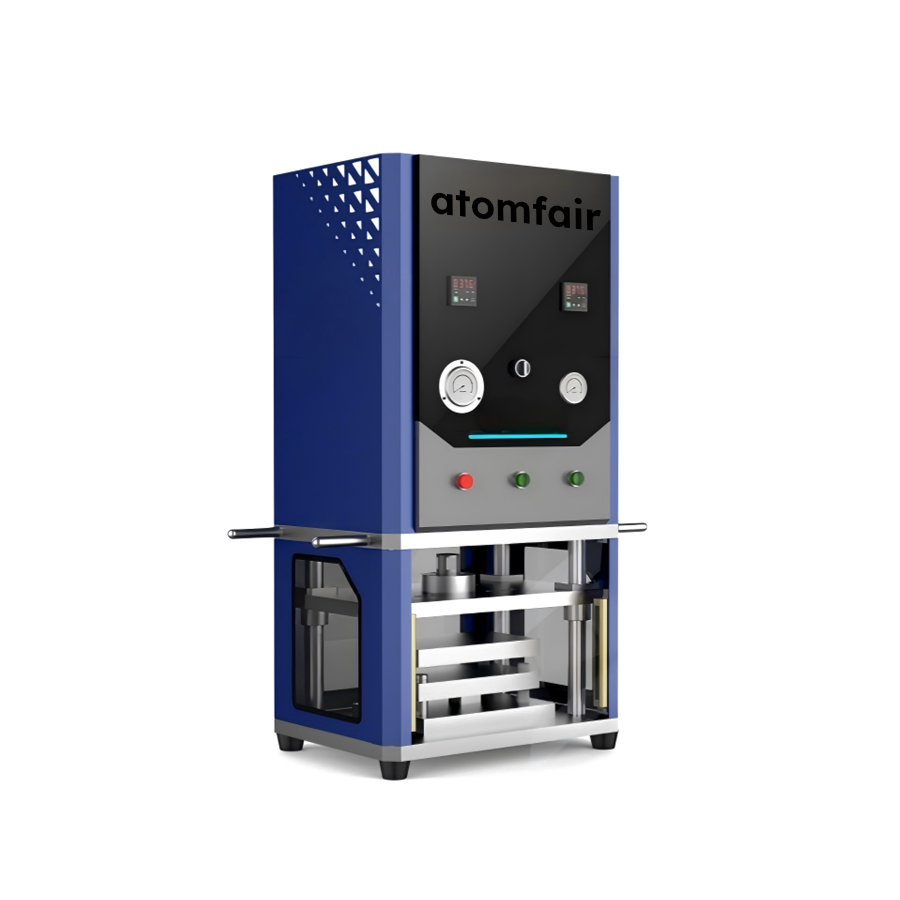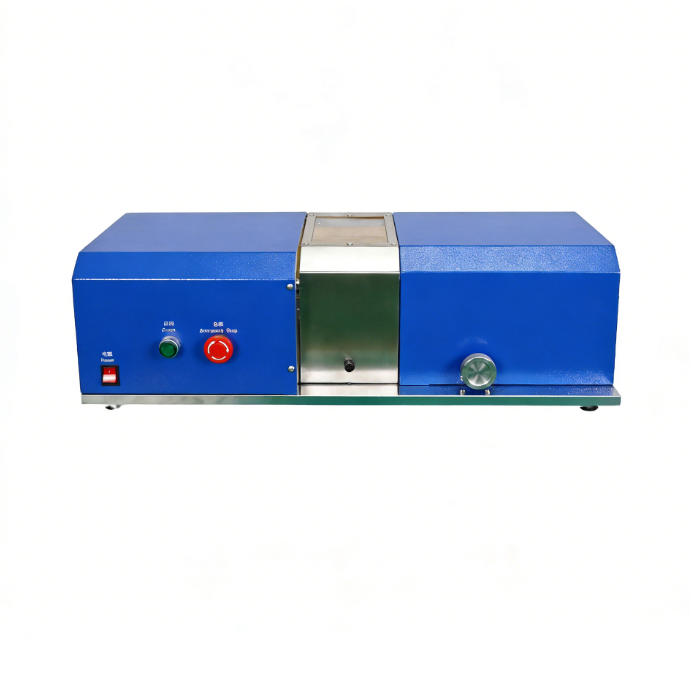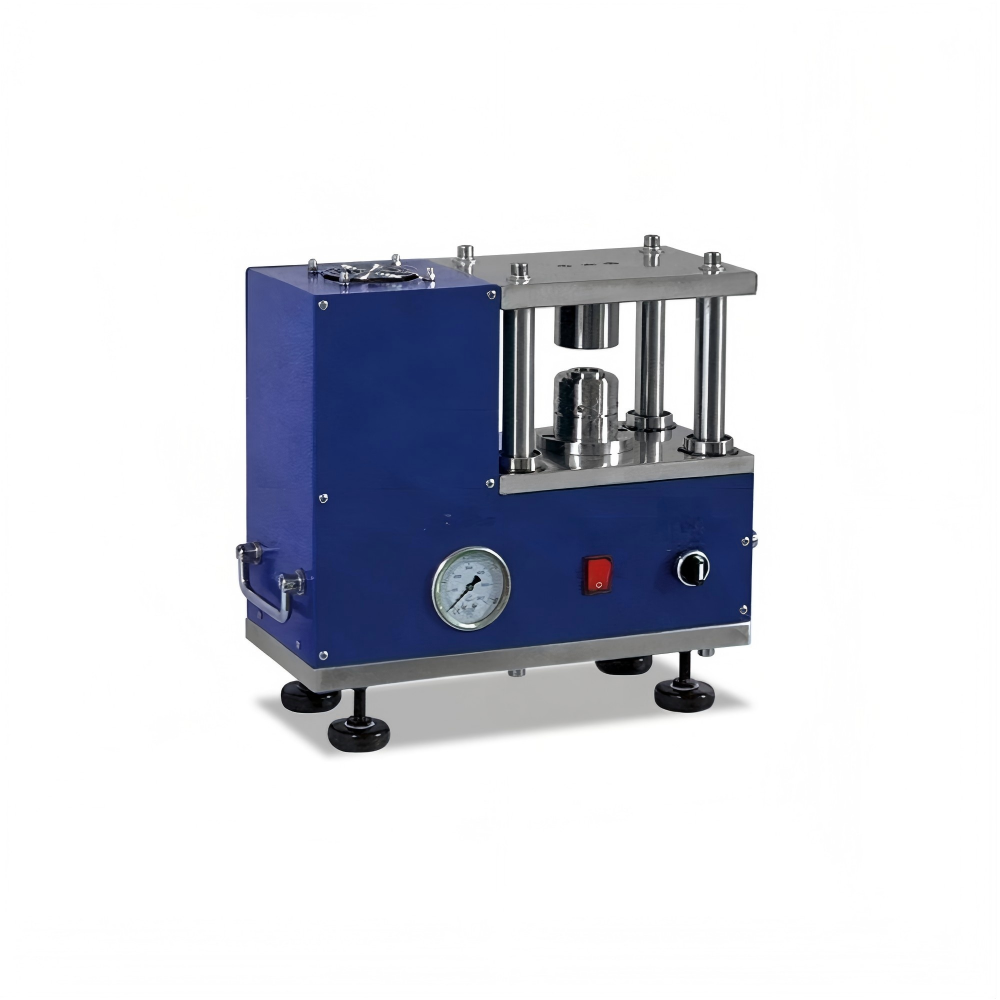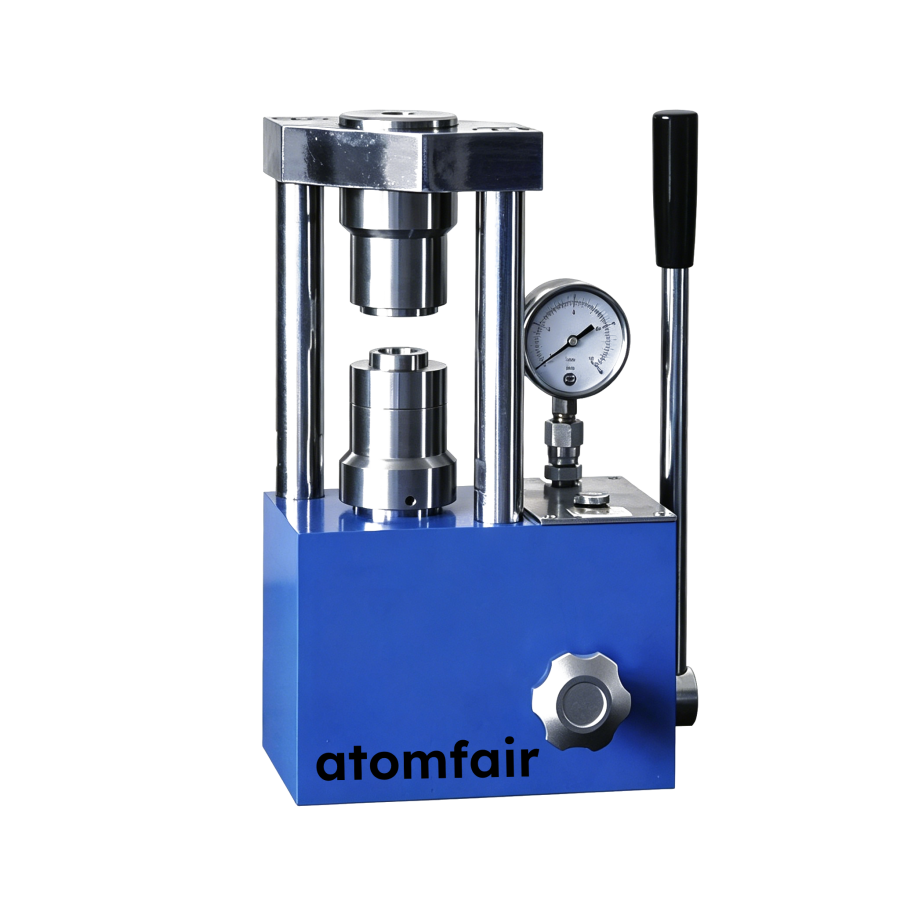
ATOMFAIR BCS-725 COIN CELL CRIMPER (0-2 TON)LAB-GRADE SEALING HARDWARE
|
|||||||||||||||||||||||||||
|
|||||||||||||||||||||||||||
|
TAILORED SOLUTIONS FOR RESEARCH
Contact our engineering team for technical support or customized hardware quotations.
EMAIL: INQUIRY@ATOMFAIR.COM
|
|||||||||||||||||||||||||||
|
Manufacturer: Atomfair LLC
Brand: ATOMFAIR
|
Operate the crimper only within its 0–2 ton rated capacity to prevent hydraulic line damage or mechanical failure. Prior to glovebox integration, ultrasonic clean with pure ethanol to remove organic residues and improve seal integrity.
- Storage Conditions: Store the crimper in its foam-lined transit case in a clean, dry laboratory environment to avoid dust accumulation and corrosion.
- Force Limit Warning: Never force the manual handle beyond 2 tons to maintain hydraulic tolerances and prevent seal blowout.
- Cleaning Requirement: Execute ultrasonic cleaning with pure ethanol before first use inside a high-purity nitrogen glovebox to purge residual processing vapors.
- Die Compatibility: Use only the dedicated die set matching the target coin cell variant (CR16, CR20, CR24, or CR30) to ensure correct deformation geometry.
- Pre-Use Inspection: Inspect the hydraulic cylinder, gauge, and die surfaces for damage or contamination before each deployment.
Follow these chronological steps to prepare, load, and seal a coin cell using the manual hydraulic crimper. Always verify die compatibility and gauge range before applying force.
Required Equipment: Ultrasonic cleaner, Interchangeable die set (CR16/20/24/30), Maintenance tool kit (supplied), Dual-scale mechanical pressure gauge (integrated)
- Inspect the crimper
Unpack the crimper from its foam-lined transit box and visually inspect for any shipping damage or debris. - Select the die set
Mount the interchangeable die set that matches your target coin cell profile (e.g., CR20) and secure it in the crimper base. - Clean the assembly
Place the crimper and die set in an ultrasonic bath filled with pure ethanol for 10 minutes to remove residual oils and particulates. - Transfer to glovebox
Move the cleaned and dried crimper through the airlock into a high-purity nitrogen or argon glovebox for moisture-sensitive cell assembly. - Load and seal the cell
Place the electrode stack and electrolyte-filled case into the die, then slowly actuate the hydraulic handle while monitoring the dual-scale gauge to stay below 2 tons. - Release and retrieve
Release the handle pressure, open the die, and remove the hermetically sealed coin cell for electrochemical testing. - Record the parameters
Log the applied peak force and cell type in the supplied performance log sheet for traceability and reproducibility.
How does the 0-2 ton force range of the BCS-725 crimper accommodate different coin cell sizes (CR16, CR20, CR24, CR30)?
The BCS-725 provides a calibrated 0-2 ton hydraulic piston that delivers the ideal compression force for each cell type. The dual-scale mechanical gauge allows precise adjustment, and the modular dies enable quick changeover between CR16, CR20, CR24, and CR30 form factors. The 2-ton maximum is sufficient to produce hermetic seals without causing internal short circuits.
What modifications or procedures are required to use the BCS-725 coin cell crimper inside a glovebox?
The BCS-725 is glove-box ready with a compact 12 kg footprint that fits through standard airlocks. Before integration, the device must undergo ultrasonic cleaning with pure ethanol to remove any processing vapors. Additionally, the manual handle should never be forced beyond the 2-ton rated maximum to maintain hydraulic stability in the inert environment.
What are the critical operational limits and maintenance requirements for the BCS-725 manual hydraulic crimper?
The crimper must never be operated beyond its 2-ton maximum force to avoid hydraulic line damage. Prior to glovebox use, thorough ultrasonic cleaning with ethanol is required. The device ships with a performance log sheet and standard maintenance tools, and regular inspection of the mechanical gauge and hydraulic seals is recommended to ensure consistent sealing quality.
The BCS-725 manual hydraulic coin cell crimper provides a 0-2 ton pressure range with dual-scale mechanical gauge, compatible with CR16/20/24/30 cells, and weighing 12 kg for glove-box integration.
Positive
- Calibrated 2-ton hydraulic piston: Delivers ideal compression force to securely deform metal caps without causing internal component short circuits.
- Compact 12 kg glove-box ready build: Ultra-light 12 kg layout allows easy maneuvering inside narrow inert gas environments and through standard airlocks.
Trade-offs
- Manual handle force ceiling: The handle must not be forced beyond the 2-ton maximum rating to maintain hydraulic line tolerance stability.
- Requires pre-cleaning before glovebox use: Prior to integration into a high-purity nitrogen glovebox, thorough ultrasonic cleaning with pure ethanol is required to purge processing vapors.
Every advanced material, component, equipment, and instrument in our catalog is backed by rigorous testing. We maintain strict internal quality management frameworks and align with CE conformity metrics to deliver transparent, reproducible performance data via our public open-science repository.
To request raw batch performance data, submit formal vendor registration paperwork, or execute a fast-turnaround R&D manufacturing loop, contact us at inquiry@atomfair.com.
Item is dispatched under the Atomfair Shipping & Delivery Framework (Free worldwide shipping on orders over $59 USD excl. heavy equipment). Return is governed by the Atomfair Return & Refund Policy (7-day technical return window).