Graphite Single-Sided Anode Sheet, 18.9 mg/cm2
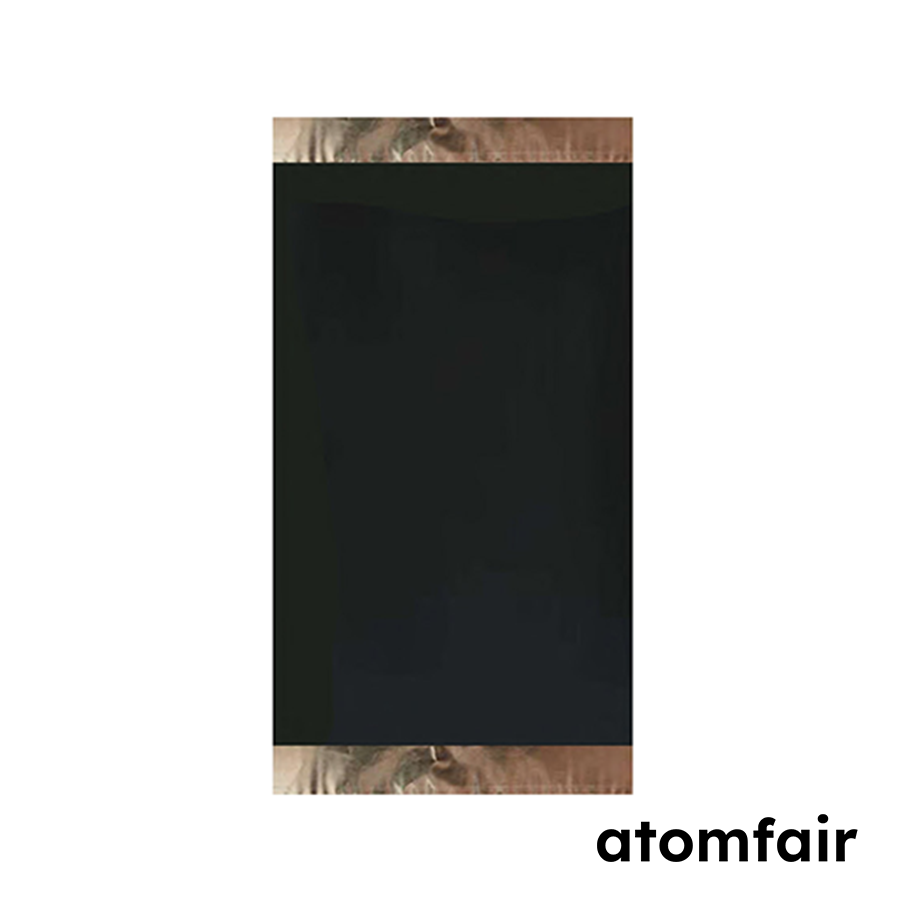
Graphite is a layered carbon anode material for lithium-ion batteries. This ready-to-use sheet is supplied for laboratory cell assembly and material evaluation in the listed Single-Sided, 18.9 mg/cm2, Dry Process configuration.
Material Characteristics
- Layered carbon structure
- Established lithium-ion negative-electrode material
- Coated sheet for half-cell and full-cell research
Typical Research Uses
Use for lithium-ion half-cell testing, full-cell assembly, electrolyte studies, and anode-cathode balancing.
How to Read This Configuration
Use the listed areal loading and side basis when matching graphite with a lithium-ion cathode sheet.
- Areal loading: 18.9 mg/cm2. Use this value as the coating-mass basis when comparing electrode configurations.
- Active material ratio: 96.00% is the listed active-material fraction of the coating formulation. The actual active mass still depends on the punched electrode mass.
- Compaction density: 1.31 g/cm3 is a physical electrode parameter. Interpret it with loading, thickness, porosity, and the source measurement method.
- Coating process: Dry Process is the listed preparation route. Keep process differences visible when comparing electrode data.
| Product Specification | Value / Description |
|---|---|
| Product Type | Single-Sided Anode Sheet |
| Active Material System | Graphite |
| Battery System | Lithium-Ion |
| Electrode Role | Anode |
| Coating Side | Single-Sided |
| Areal Loading | 18.9 mg/cm2 |
| Coating Process | Dry Process |
| Active Material Ratio | 96.00% |
| Compaction Density | 1.31 g/cm3 |
| SKU | AF-BM-S-AGRP-CS19-5P00 |
Drying and Handling
Before cell assembly, dry the electrode sheet at 90-100 C for 12-24 hours. Use a clean, dry handling environment after drying.
Avoid bending, scratching, or contaminating the coated surface during cutting, punching, transfer, and stacking.
| Research Need | Related Atomfair Category | Best For |
|---|---|---|
| Full-cell electrode pairing | Lithium-Ion Cathode Electrode Sheets | Selecting a matched lithium-ion cathode sheet for cell assembly |
| Material selection | Lithium-Ion Anode Materials | Comparing anode material options before custom electrode preparation |
| Custom configuration | Custom Battery Electrode Coating Service | Alternative loading, dimensions, current collector, or coating configuration |
This graphite anode sheet requires a dry handling environment and inert atmosphere storage to prevent moisture-induced degradation. The coated surface must be protected from physical contact, bending, scratching, and contamination to maintain electrode integrity.
- Moisture Sensitivity: Store opened sheets in a dry environment or inert atmosphere to reduce moisture exposure before use.
- Surface Protection: Avoid touching, bending, scratching, or contaminating the coated surface during punching, transfer, and stacking.
- Handling Environment: Use a dry handling environment before cell assembly to reduce moisture exposure on the coated electrode surface.
This procedure outlines the pre-use handling and storage steps for the graphite anode sheet to maintain electrode quality. The steps include environmental control, surface protection, and mass calculation for cell balancing.
- Prepare Dry Environment
Verify the handling environment is dry and free of moisture to minimize exposure on the coated electrode surface. - Store in Inert Atmosphere
Transfer opened sheets to an inert atmosphere or dry storage container to reduce moisture exposure before use. - Handle Coated Surface
Handle the coated surface without touching, bending, scratching, or contaminating it during punching, transfer, and stacking. - Calculate Active Mass
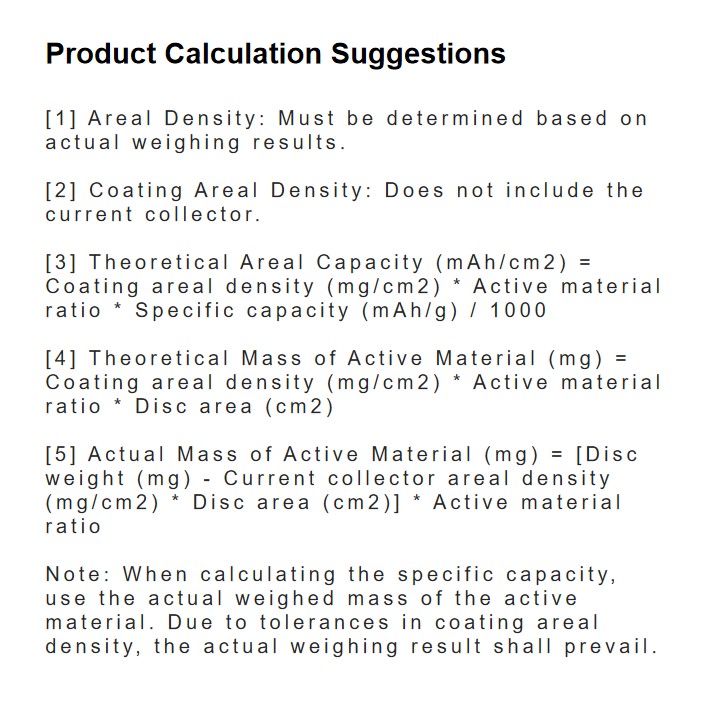
Calculate the active material mass from the coating loading, active material ratio, and punched electrode area for cell balancing.
What is the significance of the 1.31 g/cm³ compaction density for this dry-process graphite anode?
The compaction density of 1.31 g/cm³ indicates the density of the coated graphite layer after calendering, which directly influences electrode porosity and ionic transport. This value is specified in the product datasheet and is a key parameter for cell balancing and performance prediction in lithium-ion half-cell or full-cell experiments.
Is this single-sided graphite anode compatible with standard lithium-ion electrolytes and NMC cathodes?
Yes, this anode is designed as a baseline graphite electrode for lithium-ion R&D, including electrolyte screening and cathode matching. The 96.00% active material ratio and dry-process coating on carbon-coated copper foil make it suitable for pairing with common cathodes like NMC for full-cell balancing and N/P ratio studies.
What are the recommended storage conditions and handling precautions for this graphite anode sheet to prevent degradation?
Store opened sheets in a dry environment or inert atmosphere to minimize moisture exposure, and handle them in a dry environment before cell assembly. Avoid touching, bending, scratching, or contaminating the coated surface during punching, transfer, and stacking to preserve electrode integrity.
This single-sided graphite anode electrode sheet provides a well-defined 18.9 mg/cm2 dry-process baseline on carbon-coated copper foil for electrolyte screening, cathode matching, and N/P ratio studies, but its exposed coated surface requires moisture-controlled storage and careful handling during punching and cell assembly.
Positive
- Defined loading and active ratio: The 18.9 mg/cm2 coating loading with 96.00% active material ratio provides a direct calculation basis for punched-electrode active mass and cell balancing.
- Dry-process baseline anode: The single-sided dry-process graphite coating on carbon-coated copper foil supports repeatable baseline testing for electrolyte behavior and comparison with other graphite or high-capacity anode sheets.
Trade-offs
- Moisture-sensitive handling required: Use a dry handling environment before cell assembly and store opened sheets in a dry environment or inert atmosphere to reduce moisture exposure on the coated electrode surface.
- Coated surface requires careful handling: Avoid touching, bending, scratching, or contaminating the coated surface during punching, transfer, and stacking, and calculate active material mass from loading, active ratio, and punched area before testing.
Every advanced material, component, equipment, and instrument in our catalog is backed by rigorous testing. We maintain strict internal quality management frameworks and align with CE conformity metrics to deliver transparent, reproducible performance data via our public open-science repository.
To request raw batch performance data, submit formal vendor registration paperwork, or execute a fast-turnaround R&D manufacturing loop, contact us at inquiry@atomfair.com.
Item is dispatched under the Atomfair Shipping & Delivery Framework (Free worldwide shipping on orders over $59 USD excl. heavy equipment). Return is governed by the Atomfair Return & Refund Policy (7-day technical return window).