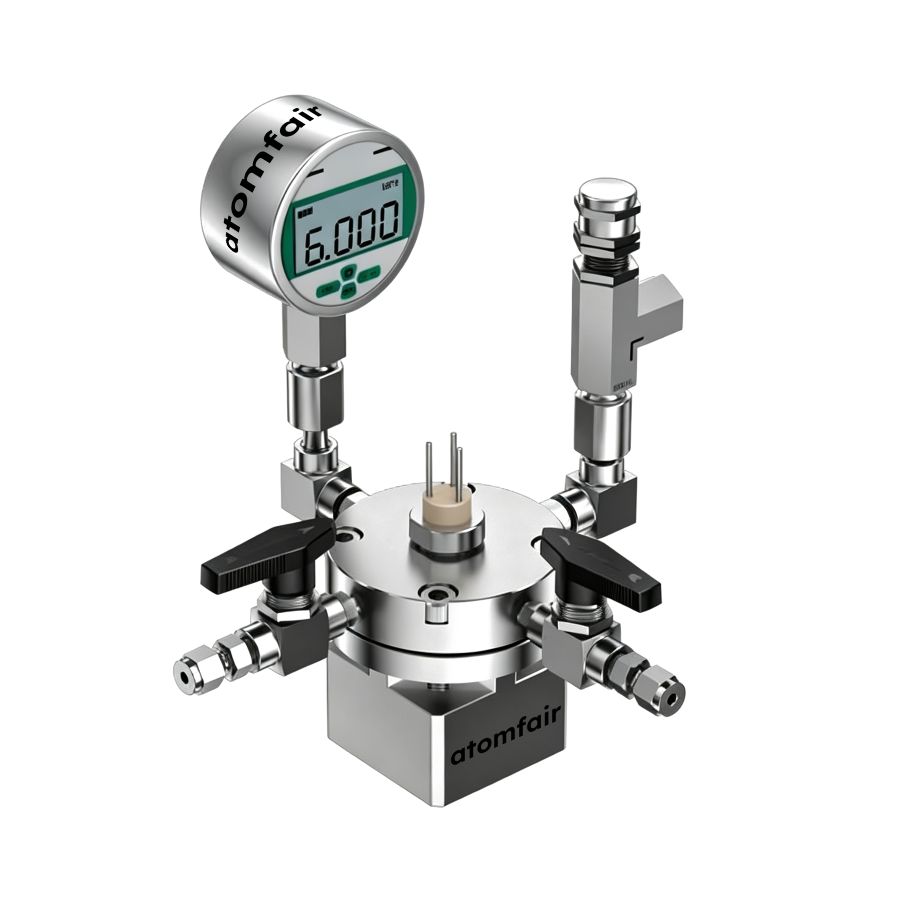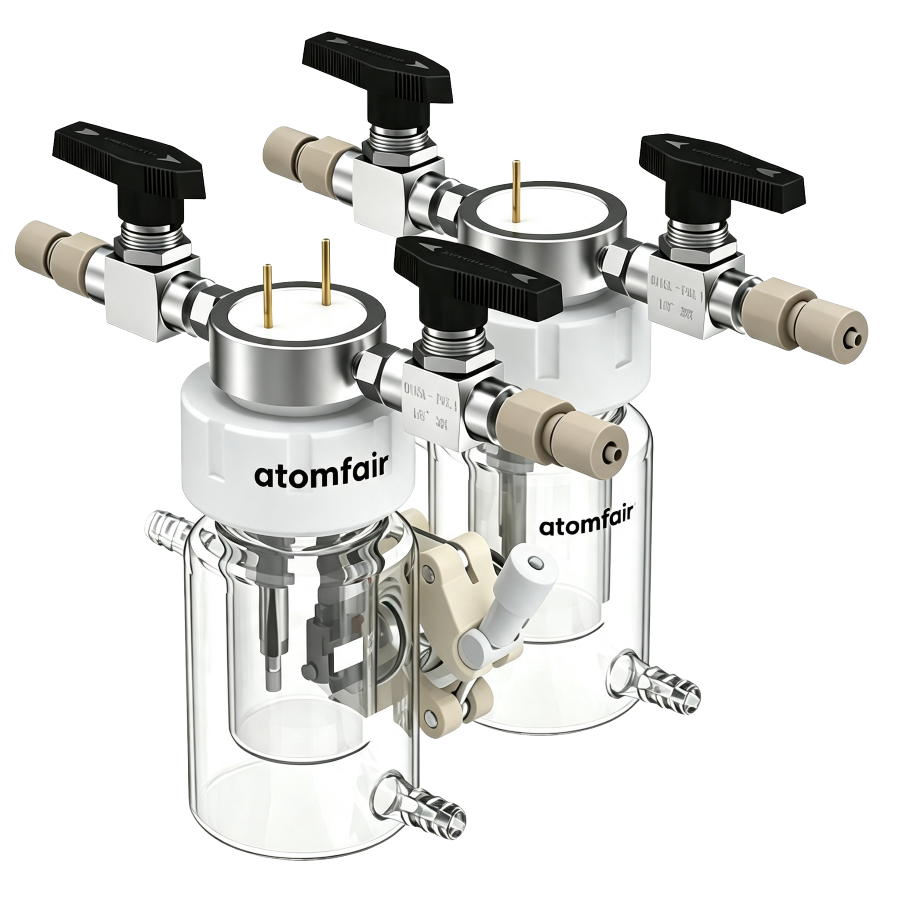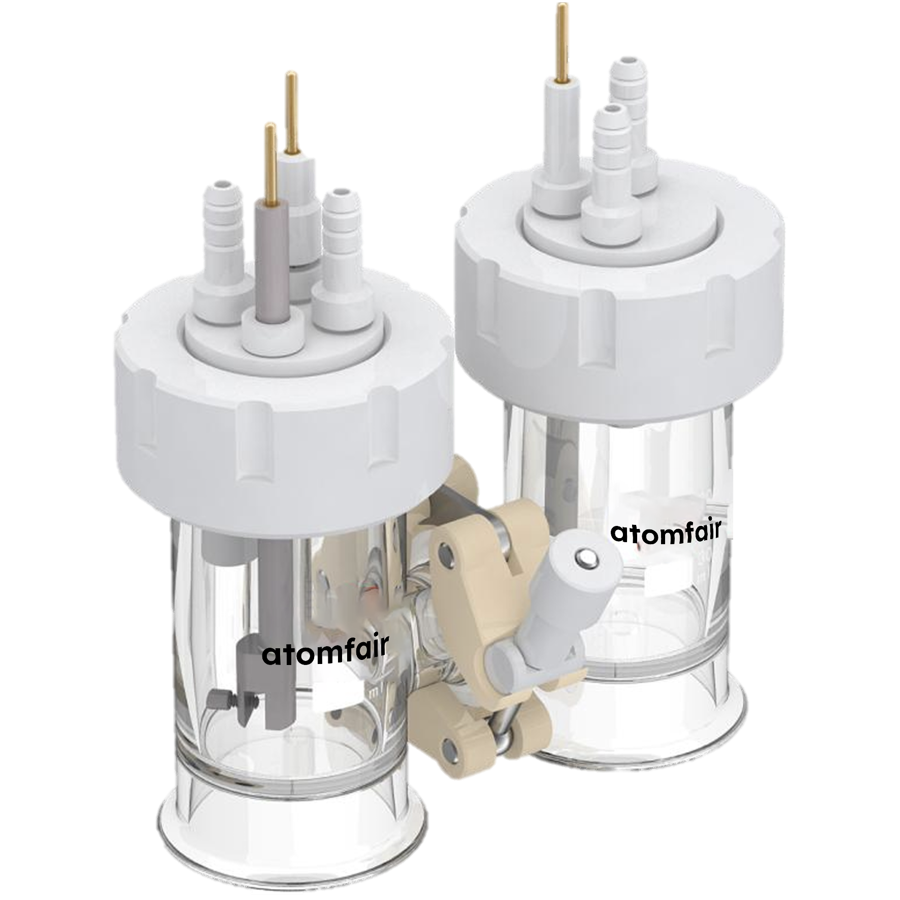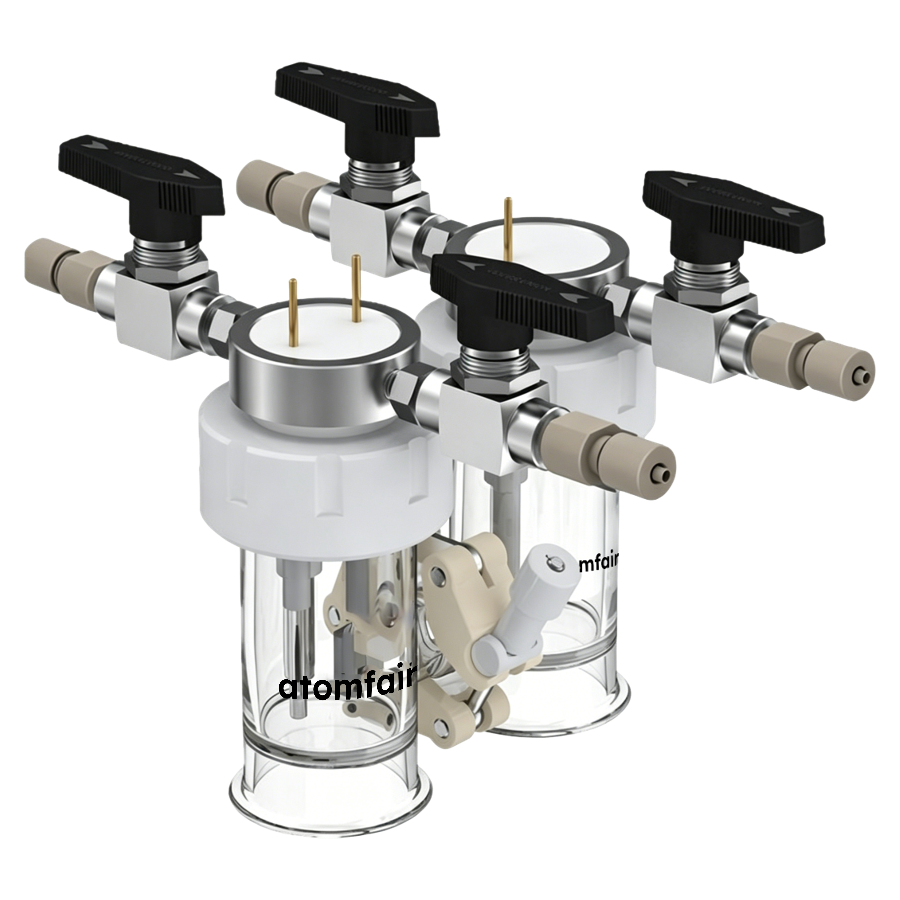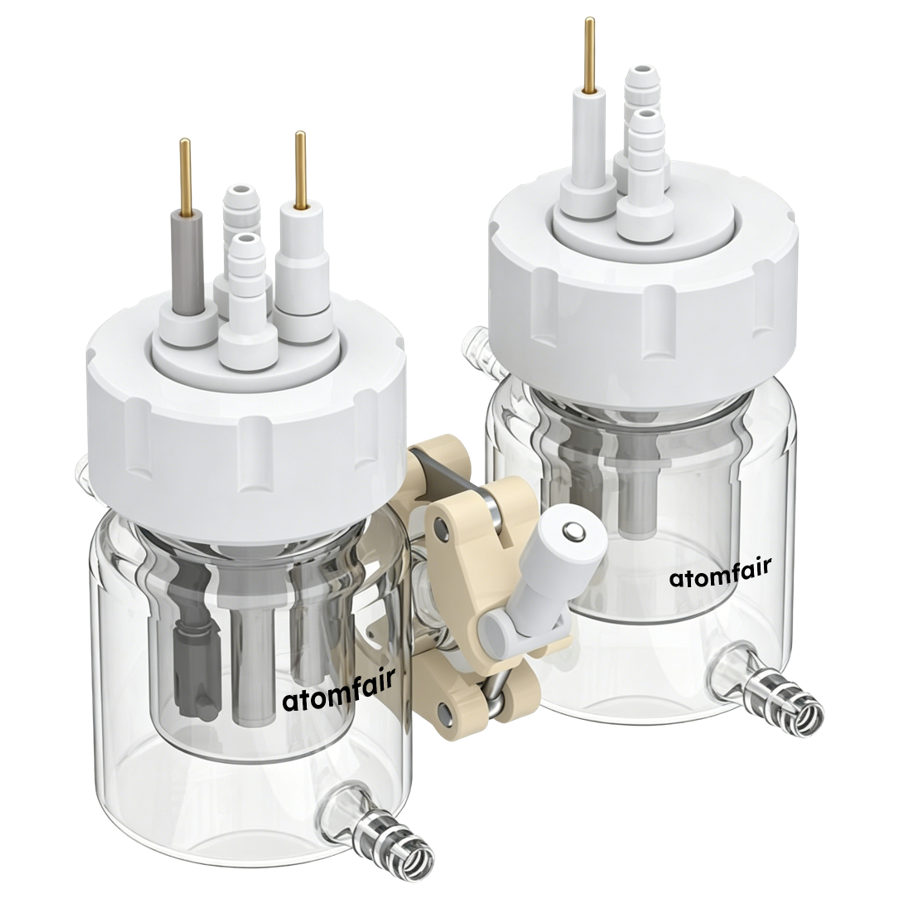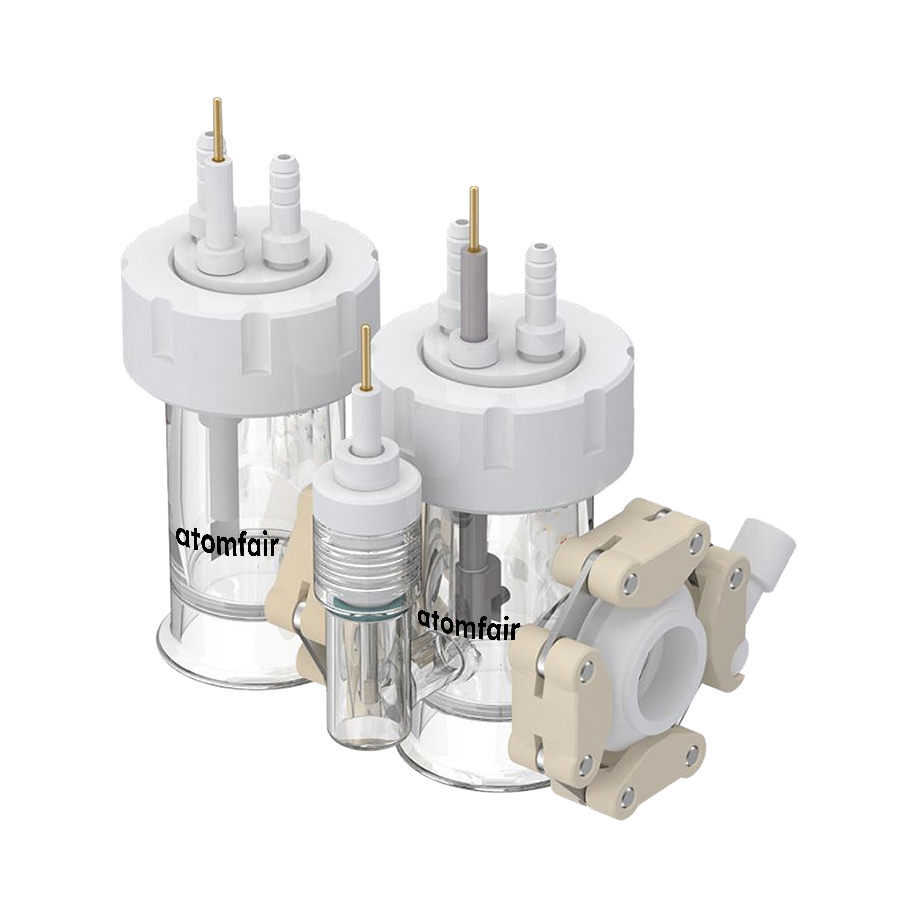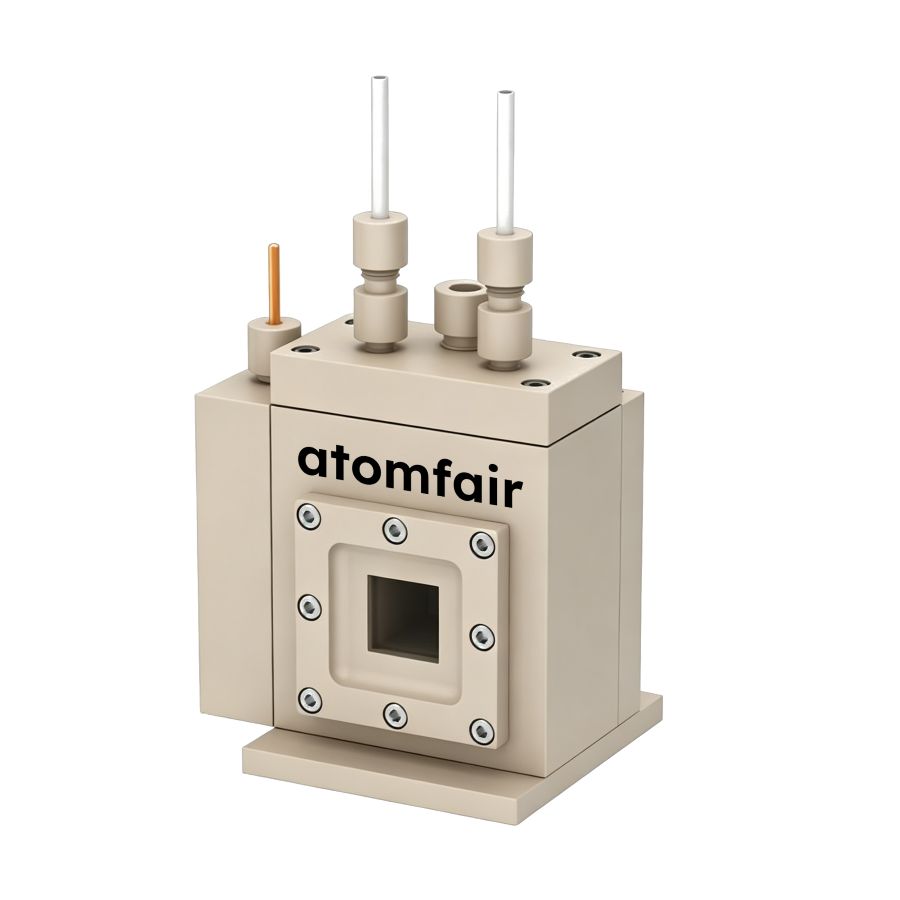
In-situ X-ray Absorption Spectroscopy Reactor Cell, Dual-Chamber H-TypeProduct Type: In-situ X-ray absorption spectroscopy reactor
Research-grade laboratory product
|
|||||||||||||||||||||||
|
|||||||||||||||||||||||
|
LABORATORY PROCUREMENT SUPPORT
For model selection, technical compatibility or configuration confirmation, contact our technical sales team.
E-MAIL: inquiry@atomfair.com
|
|||||||||||||||||||||||
|
Manufacturer: Atomfair LLC LLC
Brand: ATOMFAIR®
|
The cell requires user-prepared Kapton windows and selection of compatible electrodes and membranes. Gas ports demand proper sealing for atmosphere control, and electrode configuration must be set prior to operation.
- Window Preparation: Kapton film for the optical window must be prepared by the user to ensure X-ray transparency and proper sealing.
- Sealing and Atmosphere: Gas inlet and outlet ports require proper sealing to maintain controlled atmosphere during experiments.
- Electrode Configuration: The electrode system can be set to two-electrode or three-electrode configuration, requiring compatible electrode selection.
- Accessory Selection: Electrodes, membranes, windows, and gas diffusion electrodes must be selected separately based on the chosen configuration.
- Customization: Non-standard electrode sizes or window materials require specification in the inquiry for customization.
This guide outlines the initial assembly and sealing steps required to prepare the cell for in-situ XAS experiments. Proper preparation ensures gas-tight integrity and reliable electrochemical measurements.
- Prepare Kapton Window
Prepare the Kapton film to the required size for the optical window, ensuring it is clean and free of wrinkles. - Assemble Cell Components
Assemble the cell by inserting the prepared window, electrodes, and optional membrane into the dual-chamber PEEK body. - Connect Gas Ports
Connect gas inlet and outlet tubing to the ports and seal all connections to maintain atmosphere control. - Configure Electrode Wiring
Configure the electrode wiring for either two-electrode or three-electrode operation as required by the experimental setup. - Verify Sealing
Verify the cell sealing by pressurizing with inert gas and checking for leaks around the window and ports.
What are the key performance considerations when choosing between two-electrode and three-electrode configurations in the AF-XAFS-2 dual-chamber H-type reactor for in-situ XAFS experiments?
The two-electrode configuration offers simplified setup and lower impedance, suitable for basic electrochemical studies. The three-electrode configuration provides independent control of working and reference electrodes, enabling more accurate potential measurements. Both configurations are supported without hardware changes; the choice depends on whether the experiment requires precise potential control or a simpler circuit.
How does the use of user-prepared Kapton film windows impact the compatibility of this reactor with soft versus hard X-ray XAFS measurements?
Kapton film windows are user-prepared, so film thickness and quality directly affect X-ray transmission. Kapton absorbs strongly at low X-ray energies, which can limit transmission for soft X-ray measurements. For hard X-ray applications, Kapton is generally transparent. The user must select suitable thickness to ensure adequate transmission while maintaining a leak-tight seal.
What are the critical infrastructure requirements for introducing and controlling reactive or inert gases in the dual-chamber H-type reactor during in-situ XAFS experiments?
The reactor includes gas inlet and outlet ports for atmosphere control. Users must connect these ports to an external gas delivery system supplying the desired gas (e.g., Ar, N2, O2) at controlled flow rates and pressure. Proper sealing of the H-type chambers and tubing connections is essential to prevent leaks. No internal gas mixing or flow control components are integrated; all must be provided externally.
This dual-chamber H-type in-situ XAFS reactor cell features a PEEK body with user-prepared Kapton windows, offering customizable cell volume and electrode configuration for separated electrochemical testing under controlled atmosphere. Users must independently source and mount Kapton film and procure electrodes and membranes, which adds preparation steps but allows flexibility.
Positive
- Dual-chamber H-type design: Separates working and counter electrode compartments for clean in-situ XAFS measurements, avoiding cross-contamination between electrochemical reactions.
- PEEK body chemical resistance: The polyether ether ketone body resists a wide range of electrolytes and solvents, and its low X-ray absorption preserves signal quality during spectroscopy.
Trade-offs
- User-prepared Kapton window: The optical window must be prepared by the user from Kapton film, requiring careful mounting to ensure consistent X-ray transmission and leak-free sealing.
- Separate accessory procurement: Electrodes, membranes, and gas diffusion electrodes are not included and must be purchased separately, adding compatibility verification and lead time.
Every advanced material, component, equipment, and instrument in our catalog is backed by rigorous testing. We maintain strict internal quality management frameworks and align with CE conformity metrics to deliver transparent, reproducible performance data via our public open-science repository.
To request raw batch performance data, submit formal vendor registration paperwork, or execute a fast-turnaround R&D manufacturing loop, contact us at inquiry@atomfair.com.
Item is dispatched under the Atomfair Shipping & Delivery Framework (Free worldwide shipping on orders over $59 USD excl. heavy equipment). Return is governed by the Atomfair Return & Refund Policy (7-day technical return window).