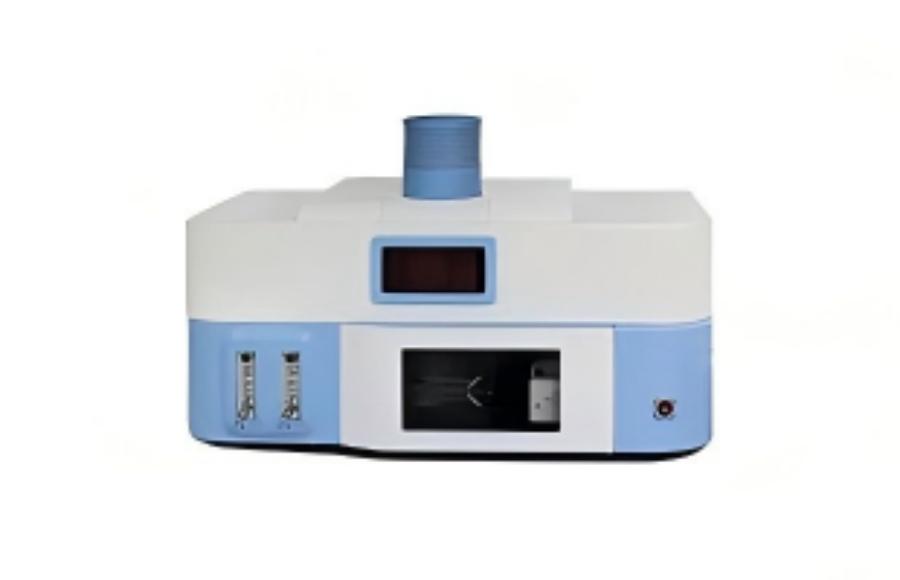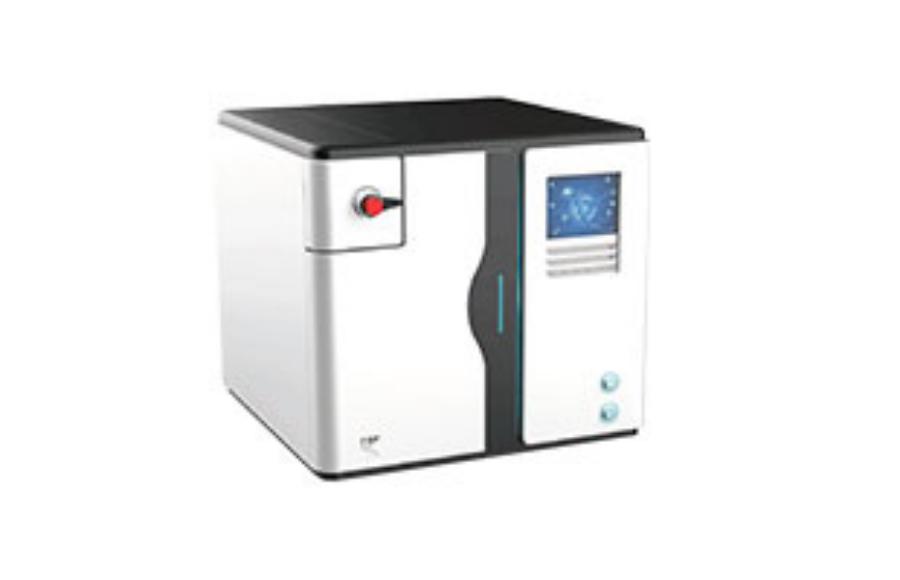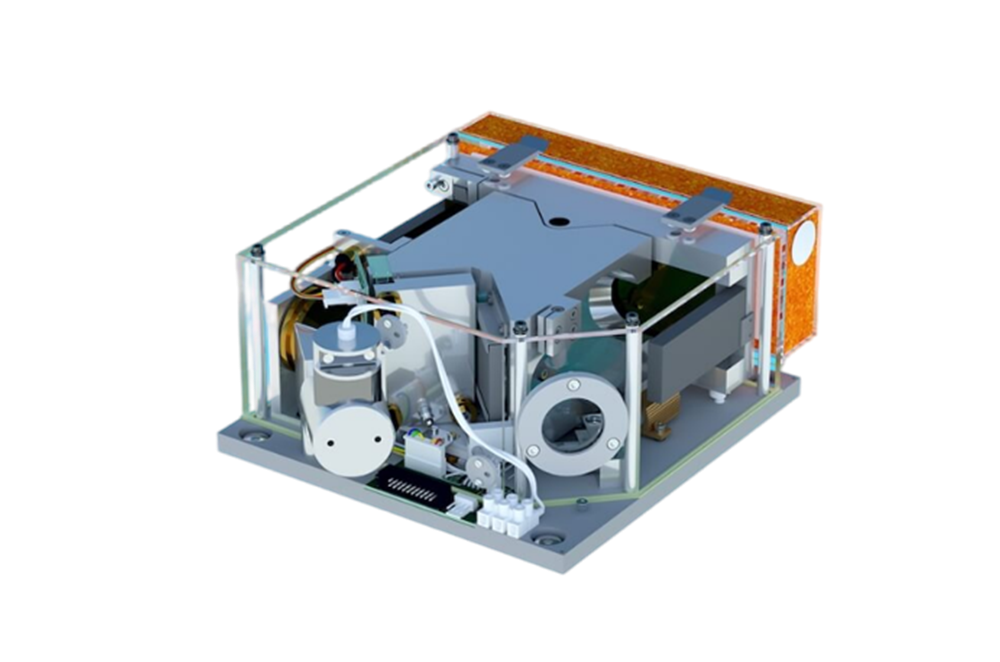
Atomfair UV-VIS 732 Ultraviolet-Visible Spectrophoteter
Product Overview
Core Features
- Wide spectral coverage: The spectral range covers 190 – 1100 nm, meeting the full band test requirements of ultraviolet and visible light.
- Ultra high precision: Wavelength accuracy ≤ ±0.1 nm, resolution up to 0.1 nm to ensure the accuracy of test data.
- Stable and efficient: Equipped with long-life deuterium lamp and tungsten lamp, automatic calibration for light source switching, supporting continuous and stable operation for a long time.
- User-friendly design: With intuitive operation interface and high-speed data transmission function, strong adaptability of sample cell and easy maintenance.
- Multi-functional adaptation: Support photometric measurement, quantitative analysis, spectral scanning and other test modes to meet diverse analysis scenarios.
Technical Specifications (International Standard)
| Parameter Name | Specifications |
|---|---|
| Spectral Range | 190 – 1100 nm |
| Wavelength Accuracy | ≤ ±0.1 nm (Hg lamp calibration) |
| Wavelength Repeatability | ≤ ±0.05 nm |
| Resolution | 0.1 nm (at 500 nm) |
| Photometric Range | -0.3 to 3.0 ABS, 0 to 200%T, 0 to 9999 C |
| Photometric Accuracy | ≤ ±0.002 ABS (0 – 0.5 ABS); ≤ ±0.004 ABS (0.5 – 1.0 ABS); ≤ ±0.3%T (0 – 100%T) |
| Photometric Repeatability | ≤ ±0.001 ABS (0 – 0.5 ABS); ≤ ±0.002 ABS (0.5 – 1.0 ABS); ≤ ±0.1%T (0 – 100%T) |
| Stray Light | ≤ 0.01%T (at 220 nm, NaI; at 340 nm, NaNO₂) |
| Baseline Flatness | ≤ ±0.001 ABS (200 – 1000 nm) |
| Scanning Speed | Fast: 3000 nm/min; Medium: 1500 nm/min; Slow: 750 nm/min |
| Light Source | Deuterium lamp (UV region), Tungsten lamp (Visible region), automatic switching and calibration |
| Monochromator | C-T monochromator, grating ruling 1200 lines/mm |
| Detector | High sensitivity silicon photodiode |
| Sample Cell | Adapt to 10 mm standard sample cell, support multiple specifications optional |
| Data Interface | USB 2.0 |
| OS Compatibility | Windows 7/8/10 (32/64 bit) |
| Power Supply | AC 100 – 240V, 50/60 Hz, 60W |
| Physical Dimensions (W × D × H) | 48 cm × 36 cm × 22 cm |
| Net Weight | 12 kg |
| Operating Temperature | 15 – 30 °C |
| Operating Humidity | ≤ 65% Relative Humidity (No condensation) |
Application Fields
What is the wavelength accuracy and resolution specification of the Atomfair UV-VIS 732, and how is it calibrated?
The Atomfair UV-VIS 732 achieves a wavelength accuracy of ≤±0.1 nm using mercury (Hg) lamp calibration, with a resolution of 0.1 nm at 500 nm. This high precision ensures reliable peak identification for quantitative and qualitative UV-Vis analysis across the full spectral range of 190–1100 nm.
What are the photometric accuracy and repeatability specifications across different absorbance ranges for the Atomfair UV-VIS 732?
The photometric accuracy is ≤±0.002 ABS in the 0–0.5 ABS range and ≤±0.004 ABS in the 0.5–1.0 ABS range. Photometric repeatability is ≤±0.001 ABS (0–0.5 ABS) and ≤±0.002 ABS (0.5–1.0 ABS). These specifications ensure consistent and reliable quantification for diverse sample concentrations.
What environmental conditions are required for stable baseline and stray light performance of the Atomfair UV-VIS 732?
Stable operation requires an ambient temperature of 15–30°C and relative humidity ≤65% (non-condensing). Under these conditions, the instrument achieves a baseline flatness of ≤±0.001 ABS (200–1000 nm) and stray light ≤0.01%T at 220 nm (NaI) and 340 nm (NaNO₂), preserving photometric integrity for high-accuracy measurements.
The Atomfair UV-VIS 732 delivers a 190–1100 nm spectral range with ±0.1 nm wavelength accuracy and 0.1 nm resolution, supported by a C-T monochromator and automatic deuterium/tungsten lamp switching. Its photometric accuracy to ±0.002 ABS and stray light ≤0.01%T make it suitable for quantitative and qualitative analysis across chemical, pharmaceutical, and materials applications, though operation is constrained to 15–30 °C and ≤65% RH without condensation.
Positive
- High spectral resolution and accuracy: Wavelength accuracy ≤ ±0.1 nm and resolution of 0.1 nm (at 500 nm) ensure precise peak identification and quantitative measurements, critical for demanding analytical methods.
- Low stray light and stable photometry: Stray light ≤0.01%T at 220/340 nm and photometric repeatability down to ±0.001 ABS provide reliable low-absorbance measurements, reducing baseline drift in long-term runs.
Trade-offs
- Environmental sensitivity: Requires controlled laboratory conditions of 15–30 °C and ≤65% RH without condensation; exceeding these limits can degrade wavelength stability and photometric accuracy.
- Sample cell size limitation: Standard 10 mm pathlength sample cells are required; larger or non-standard cuvettes may need optional adapters, limiting flexibility for non-standard sample geometries.
Every advanced material, component, equipment, and instrument in our catalog is backed by rigorous testing. We maintain strict internal quality management frameworks and align with CE conformity metrics to deliver transparent, reproducible performance data via our public open-science repository.
To request raw batch performance data, submit formal vendor registration paperwork, or execute a fast-turnaround R&D manufacturing loop, contact us at inquiry@atomfair.com.
Item is dispatched under the Atomfair Shipping & Delivery Framework (Free worldwide shipping on orders over $59 USD excl. heavy equipment). Return is governed by the Atomfair Return & Refund Policy (7-day technical return window).